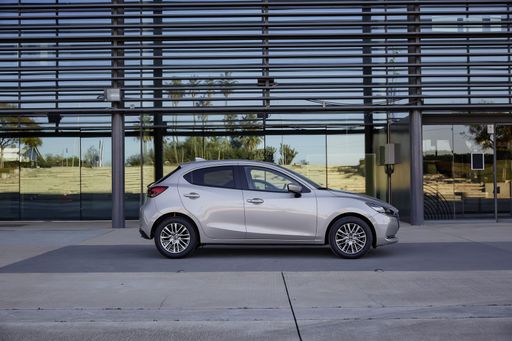
VS

MG MG3 vs Mazda 2 Hybrid comparison

Compare performance (194 HP vs 116 HP), boot space and price (15,400 £ vs 22,300 £ ) at a glance. Find out which car is the better choice for you – MG MG3 or Mazda 2 Hybrid?

MG MG3 vs Mazda 2 Hybrid: Key differences

MG MG3

5 (1 Reviews)
rate
  • significantly cheaper
  • clearly more power
  • visibly quicker 0–100 km/h
  • marginally more trunk space
details

Mazda 2 Hybrid

  • moderately more efficient
  • very slightly lighter
details

All details on performance, efficiency, range and trunk space can be found in the technical comparison below – including user reviews for both models.

By Achim Sedelmaier

MG3

Head-to-head: Mazda 2 Hybrid VS MG MG3 — what this comparison is about

Mazda 2 Hybrid and MG MG3 sit at the same small-car table but pursue different priorities: the Mazda leans hard into hybrid efficiency and tidy ergonomics, while the MG pushes value, punch and equipment for the money. In everyday terms that means the Mazda feels like a city-savvy, low-running-cost car that rewards careful use, whereas the MG3 gives a livelier shove off the line and a longer feature list that will please bargain-minded buyers. Both are compact and easy to park, yet they create very different owner experiences once you factor in noise, rear space and long-distance behavior. Read on for the practical trade-offs — from cabin feel to motorway manners — that matter more than headline specs.
2 Hybrid

Character and driving feel

The Mazda 2 Hybrid drives like a composed city car: smooth electric-assisted take-offs and well-weighted steering make urban manoeuvres effortless, but asking for sustained acceleration reveals a vocal three-cylinder and an e‑CVT that doesn’t hide strain. The MG MG3, by contrast, feels punchy from the traffic lights and often gives the impression of a small EV when pulling away, thanks to a stronger hybrid surge; that liveliness is its selling point. That extra shove in the MG3 comes with trade-offs — drivetrain shifts and higher noise under load that make spirited runs less refined than the Mazda. If you prioritise calm, predictable progress the Mazda wins the comfort-of-use battle, while the MG3 rewards drivers who want brisk responses and low purchase cost.

MG3

Comfort and long-distance behavior

In the city the Mazda 2 Hybrid excels with quiet low-speed EV phases and a suspension that feels purposeful, though the setup can be firmer over sharp bumps which shows up on rough surfaces. On longer roads the Mazda’s refinement drops when the engine works harder: highway accelerations and sustained high speeds bring more engine noise and higher consumption. The MG MG3 tends to ride a touch softer on country roads and can feel relaxed on rolling B‑roads, but it becomes notably louder and more wearing on motorways where wind and drivetrain noise climb. So for frequent motorways the Mazda’s economy advantage may be offset by cabin noise; for mixed use the MG3’s more comfortable ride at moderate speeds and stronger on-demand acceleration could be preferable despite the NVH compromise.

2 Hybrid

Practicality and daily usability

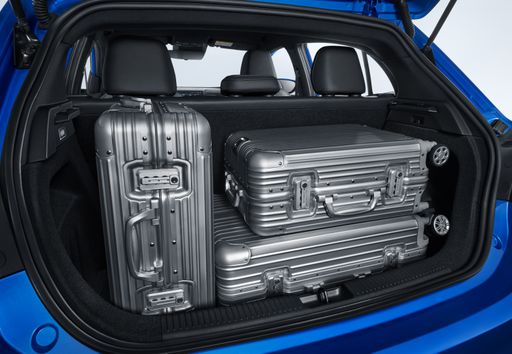
Both cars are compact and city-friendly, but they solve practicality differently: the Mazda 2 Hybrid focuses on efficient packaging and driver aids that simplify daily use, yet its boot is small and the rear bench is tighter once you load passengers or luggage. The MG MG3 generally gives you more kit for the money and a slightly roomier feel for average-height adults in the back, yet real-world luggage space and a high loading lip limit how useful that space is in practice. Mazda’s better driver-assist calibration can make rush‑hour commuting less stressful, while MG’s one-piece rear seat and simpler load layout demand more packing compromises. For owners who regularly carry bulky loads or need flexible rear space, neither is ideal — but the MG3’s pricing and warranty soften that pain for many buyers.

MG3

Cabin feel, materials and tech usability

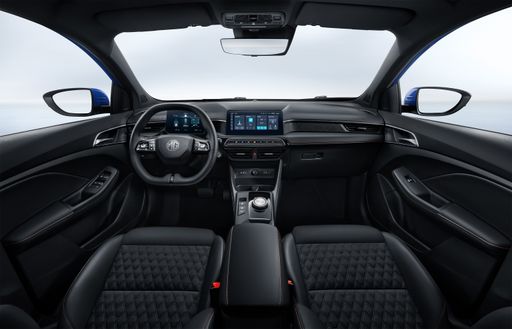
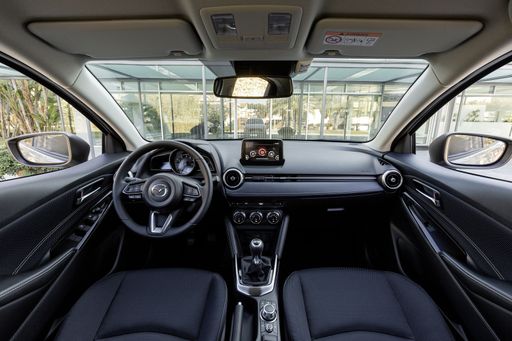
Step inside the Mazda 2 Hybrid and the atmosphere tilts toward restrained quality: surfaces and switchgear feel solid and operation is straightforward, with wireless smartphone mirroring and clearer menus in higher trims. The MG MG3 punches above its price with a large infotainment screen and lots of standard equipment, yet the system’s responsiveness and buried climate controls can frustrate daily use and the plastics read as more utilitarian. Mazda trades some flash for a tidier, less fussy interface that will feel more grown-up to owners sensitive to ergonomics, while MG targets buyers who value headline features and a long warranty over tactile refinement. In short, the Mazda’s cabin is the understated, user-friendly choice; the MG3 is the bargain-packed but rougher-around-the-edges option.

2 Hybrid

Which buyer fits each car best — and what to watch for next

If your priority is lowest possible running costs in town, straightforward controls and driver aids that make commuting less stressful, the Mazda 2 Hybrid is the more natural fit; it rewards calm driving and tidy packaging. If you want the strongest acceleration for the class, maximum equipment for your budget and a long manufacturer warranty to reduce ownership risk, the MG MG3 makes more sense even if you accept higher noise and clumsy infotainment. Both cars make compromises on rear-seat practicality and motorway refinement, so your choice should hinge on whether you value everyday efficiency and cabin polish (Mazda 2 Hybrid) or upfront value and punchy city performance (MG MG3). With those trade-offs clear, the technical comparison will show how drivetrain, consumption and costs map onto the differences you’ll feel every day.

Here’s where it gets real: The technical differences in detail

MG3

Costs and Efficiency:

When it comes to price and running costs, the biggest differences usually appear. This is often where you see which car fits your budget better in the long run.

MG MG3 is significantly cheaper – starting at 15,400 £ , while the Mazda 2 Hybrid costs 22,300 £ . That’s a price difference of around 6,857 £.

Fuel consumption also shows a difference: the Mazda 2 Hybrid uses 3.8 L/100km and is moderately more efficient than the MG MG3 with 4.4 L/100km. The difference is about 0.6 L/100km.

2 Hybrid

Engine and Performance:

Power, torque and acceleration are the classic benchmarks for car enthusiasts – and here, some clear differences start to show.

When it comes to engine power, the MG MG3 offers clearly more power – delivering 194 HP compared to 116 HP. That’s roughly 78 HP more horsepower.

When accelerating from 0 to 100 km/h, the MG MG3 is visibly quicker – completing the sprint in 8 s, while the Mazda 2 Hybrid takes 9.7 s. That’s about 1.7 s quicker.

MG3

Space and Everyday Use:

Cabin size, boot volume and payload all play a role in everyday practicality. Here, comfort and flexibility make the difference.

Both vehicles offer seating for 5 people.

In terms of curb weight, Mazda 2 Hybrid is very slightly lighter – 1,180 kg compared to 1,237 kg. The difference is around 57 kg.

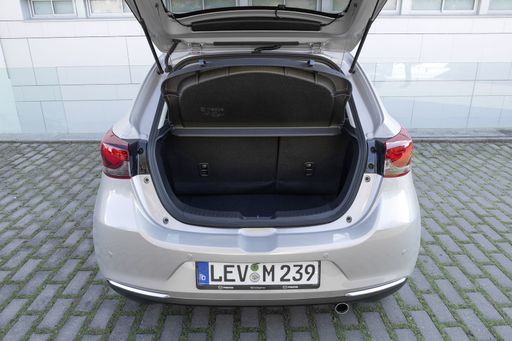
Looking at boot space, the MG MG3 offers marginally more boot space – 293 L compared to 286 L. That’s a difference of about 7 L.

When it comes to payload, the MG MG3 carries only slightly more – 448 kg compared to 435 kg. That’s a difference of about 13 kg.

Who wins the race in the data check?

The MG MG3 stands well ahead of its rival in the objective data comparison.
This result only shows which model scores more points on paper – not which of the two cars feels right for you.

from £15,400
MG3

MG MG3

  • Engine Type Petrol, Full Hybrid
  • Transmission Manuel, Automatic
  • Drive Type Front-Wheel Drive
  • Power HP 116 - 194 HP
  • Consumption L/100km 4.4 - 6.1 L/100km
MG MG3
Mazda 2 Hybrid

Costs and Consumption

View detailed analysis

Engine and Performance

View detailed analysis

Dimensions and Body

View detailed analysis

MG MG3

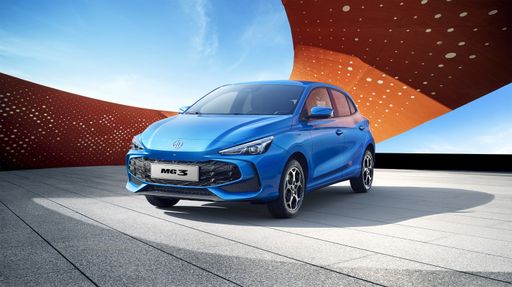
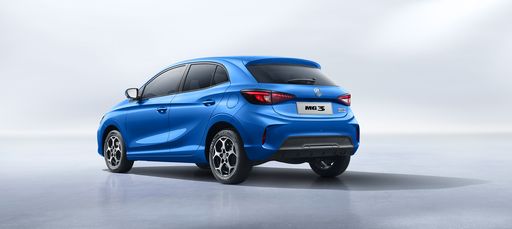
The MG3 is a cheeky city hatch that pairs bold, youthful styling with sprightly handling for drivers who want personality on a budget. Its cabin is bright and cleverly packaged, offering sensible space and a fun-to-drive character that turns mundane commutes into something a bit more enjoyable.

details

Mazda 2 Hybrid

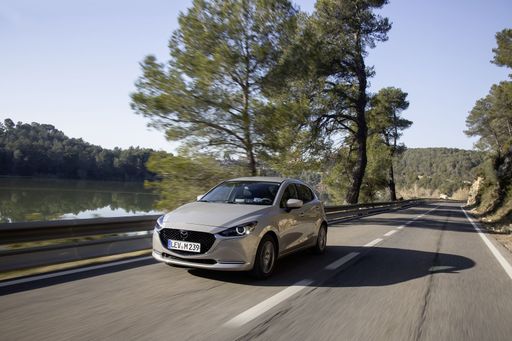
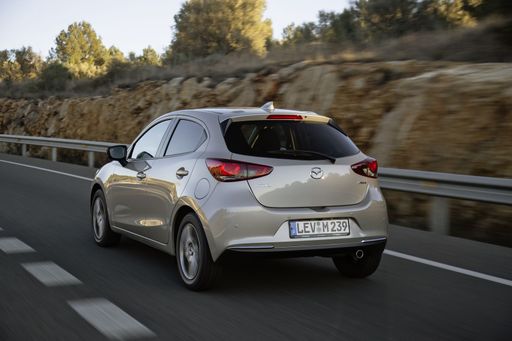
The Mazda 2 Hybrid brings Mazda’s trademark driving flair to the city, combining smooth, efficient running with unexpectedly eager handling that keeps short trips engaging. Compact, nicely finished and sensible on running costs, it’s a clever choice for buyers who want the economy of a small car without sacrificing cabin quality or personality.

details
MG MG3
Mazda 2 Hybrid

Costs and Consumption

Price
15,400 - 21,400 £
Price
22,300 - 28,300 £
Consumption L/100km
4.4 - 6.1 L/100km
Consumption L/100km
3.8 - 4 L/100km
Consumption kWh/100km
-
Consumption kWh/100km
-
Electric Range
-
Electric Range
-
Battery Capacity
-
Battery Capacity
-
co2
100 - 137 g/km
co2
87 - 93 g/km
Fuel tank capacity
-
Fuel tank capacity
-

Dimensions and Body

Body Type
Hatchback
Body Type
Hatchback
Seats
5
Seats
5
Doors
-
Doors
-
Curb weight
1,237 - 1,285 kg
Curb weight
1,180 kg
Trunk capacity
293 L
Trunk capacity
286 L
Length
-
Length
-
Width
1,797 mm
Width
1,745 mm
Height
-
Height
-
Max trunk capacity
-
Max trunk capacity
-
Payload
373 - 448 kg
Payload
435 kg

Engine and Performance

Engine Type
Petrol, Full Hybrid
Engine Type
Full Hybrid
Transmission
Manuel, Automatic
Transmission
Automatic
Transmission Detail
Manual Gearbox, Automatic Gearbox
Transmission Detail
CVT
Drive Type
Front-Wheel Drive
Drive Type
Front-Wheel Drive
Power HP
116 - 194 HP
Power HP
116 HP
Acceleration 0-100km/h
8 - 10.8 s
Acceleration 0-100km/h
9.7 s
Max Speed
-
Max Speed
-
Torque
148 Nm
Torque
-
Number of Cylinders
4
Number of Cylinders
3
Power kW
85 - 143 kW
Power kW
85 kW
Engine capacity
1,490 - 1,495 cm3
Engine capacity
1,490 cm3

General

Model Year
2025
Model Year
2025
CO2 Efficiency Class
E, C
CO2 Efficiency Class
B
Brand
MG
Brand
Mazda
DriveDuel uses data analysis and artificial intelligence to evaluate vehicle data and create content. Content is regularly reviewed and improved. The displayed prices are estimates based on German list prices, adjusted to the respective country’s VAT. Country-specific registration taxes are not included. This information is not legally binding.