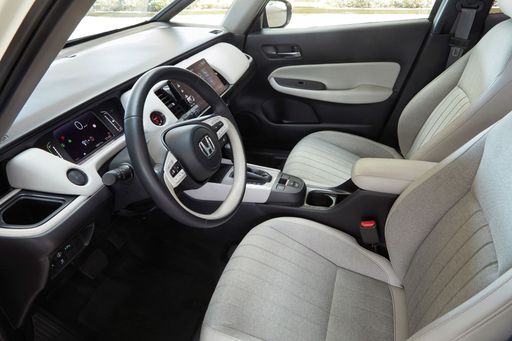
VS

Mitsubishi ASX vs Honda Jazz comparison

Compare performance (158 HP vs 122 HP), boot space and price (21,800 £ vs 22,200 £ ) at a glance. Find out which car is the better choice for you – Mitsubishi ASX or Honda Jazz?

Mitsubishi ASX vs Honda Jazz: Key differences

Mitsubishi ASX

4.9 (2 Reviews)
rate
  • barely cheaper
  • noticeably more power
  • marginally more efficient
  • marginally quicker 0–100 km/h
  • very slightly lighter
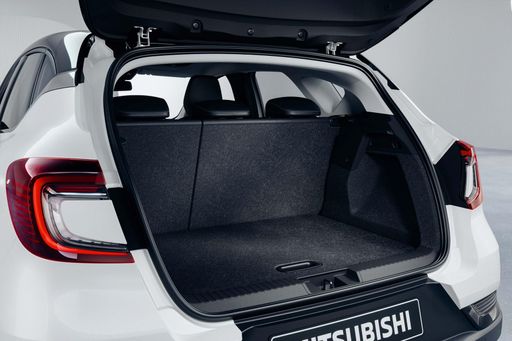
  • visibly more trunk space
details

Honda Jazz

4.5 (6 Reviews)
rate
details

All details on performance, efficiency, range and trunk space can be found in the technical comparison below – including user reviews for both models.

By Achim Sedelmaier

ASX

The Compact Showdown: Honda Jazz vs. Mitsubishi ASX

In the ever-evolving automotive landscape, the desire for fuel efficiency, compact dimensions, and drivability is stronger than ever. Two vehicles that are embodying these requirements are the Honda Jazz and Mitsubishi ASX. Despite their similarities in class as urban-friendly vehicles, each offers a distinct experience to the driving enthusiast. Let's dive into the specifics to see what makes each model unique in its own right.
Jazz

Body Type & Design

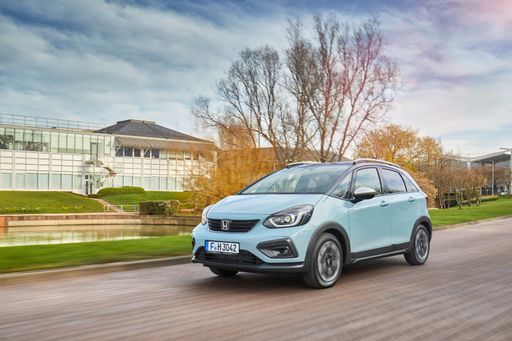
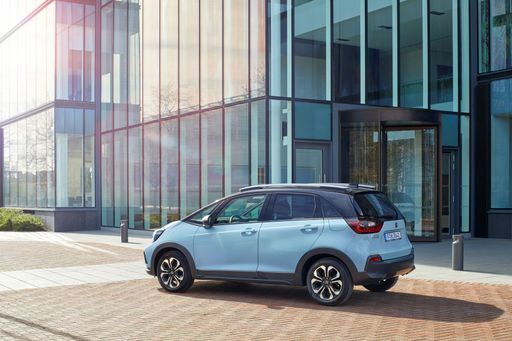
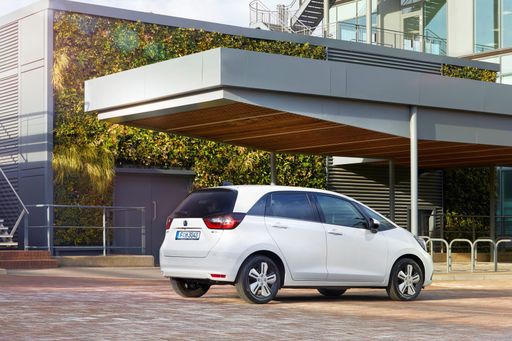
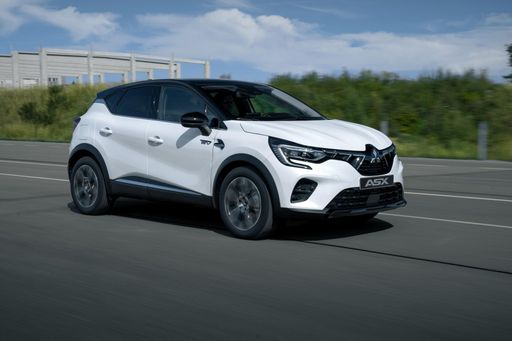
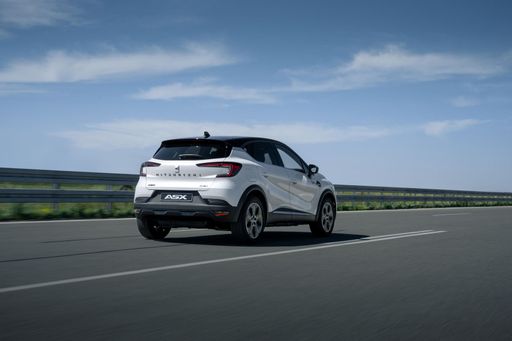
The Honda Jazz takes the form of a hatchback, optimized for city driving with its compact dimensions. Boasting a length ranging from 4089 to 4105 mm and a height between 1526 and 1556 mm, it fits snugly into tight parking spaces. On the other hand, the Mitsubishi ASX is an SUV, offering more height and length—4239 mm long and 1575 mm high—providing drivers with a higher driving position and more road presence.

ASX

Under the Hood: Power and Efficiency

Both vehicles come with innovative engine options, yet their performance figures cater to varying practical needs. The Honda Jazz is powered by a full hybrid engine delivering 122 HP and a torque of 253 Nm, paired with a CVT automatic transmission, ensuring a smooth and economical drive with a fuel consumption of 4.5 to 4.8 L/100 km.

The Mitsubishi ASX offers more variety in engine options including petrol, petrol mild hybrid (MHEV), and full hybrid versions. With power ranging from 91 HP to 158 HP, and torque figures from 160 Nm to 270 Nm, the ASX caters to both efficiency-minded and performance-seeking drivers. The ASX's fuel consumption varies depending on the engine, with figures from 4.7 to 6 L/100 km.

Jazz

Performance and Speed

For those interested in how quickly these vehicles can get moving, the Honda Jazz accelerates from 0 to 100 km/h in approximately 9.4 to 9.7 seconds, going up to a top speed of 175 km/h. Comparatively, the ASX provides a range between 8.5 to an unhurried 14 seconds to achieve the same speed, depending on the engine choice, and can reach a top speed of up to 180 km/h.

ASX

Efficiency and Environmental Impact

Environmental consciousness is a significant factor for today's drivers. The Honda Jazz comes with a CO2 efficiency class of C, emitting between 102 and 108 g/km. Meanwhile, the Mitsubishi ASX offers similar efficiency with a class C to D, and emissions varying from 107 to 135 g/km, depending on the model's powertrain configuration.

Jazz

Interior Space and Practicality

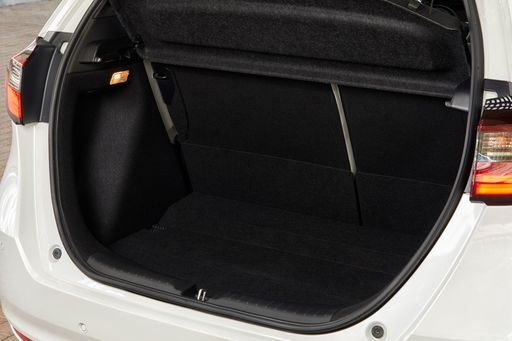
Comfort and space are key in both models, seating up to five passengers. The Jazz provides a trunk capacity of 304 L, focusing on compact practicality. The ASX, valuing cargo space, offers between 348 to 484 L, which might appeal more to those who frequently travel or carry larger loads.

ASX

Conclusion

In conclusion, the Honda Jazz and Mitsubishi ASX each cater to distinct customer preferences, from compact agility to roomy versatility. The Jazz excels in city environments with its hybrid efficiency and compact size, while the ASX blends urban usability with the robustness and space of an SUV. Whether you prioritize fuel efficiency, cargo space, or driving dynamics, both vehicles firmly represent their brand philosophies in today's eclectic automotive market.

Here’s where it gets real: The technical differences in detail

ASX

Costs and Efficiency:

Price and efficiency are often the first things buyers look at. Here it becomes clear which model has the long-term edge – whether at the pump, the plug, or in purchase price.

Mitsubishi ASX is barely cheaper – starting at 21,800 £ , while the Honda Jazz costs 22,200 £ . That’s a price difference of around 438 £.

Fuel consumption also shows a difference: the Mitsubishi ASX uses 4.3 L/100km and is marginally more efficient than the Honda Jazz with 4.5 L/100km. The difference is about 0.2 L/100km.

Jazz

Engine and Performance:

Under the bonnet, it becomes clear which model is tuned for sportiness and which one takes the lead when you hit the accelerator.

When it comes to engine power, the Mitsubishi ASX offers noticeably more power – delivering 158 HP compared to 122 HP. That’s roughly 36 HP more horsepower.

When accelerating from 0 to 100 km/h, the Mitsubishi ASX is marginally quicker – completing the sprint in 8.9 s, while the Honda Jazz takes 9.4 s. That’s about 0.5 s quicker.

There’s also a difference in torque: the Honda Jazz delivers marginally more torque with 253 Nm compared to 245 Nm. That’s about 8 Nm more.

ASX

Space and Everyday Use:

Beyond pure performance, interior space and usability matter most in daily life. This is where you see which car is more practical and versatile.

Both vehicles offer seating for 5 people.

In terms of curb weight, Mitsubishi ASX is very slightly lighter – 1,296 kg compared to 1,302 kg. The difference is around 6 kg.

Looking at boot space, the Mitsubishi ASX offers visibly more boot space – 484 L compared to 304 L. That’s a difference of about 180 L.

When it comes to payload, the Mitsubishi ASX carries somewhat more – 445 kg compared to 388 kg. That’s a difference of about 57 kg.

Who wins the race in the data check?

The Mitsubishi ASX holds a decisive overall lead in the objective data comparison.
This result only shows which model scores more points on paper – not which of the two cars feels right for you.

from £21,800
ASX

Mitsubishi ASX

  • Engine Type Petrol, Petrol MHEV, Full Hybrid
  • Transmission Manuel, Automatic
  • Drive Type Front-Wheel Drive
  • Power HP 115 - 158 HP
  • Consumption L/100km 4.3 - 6 L/100km
Mitsubishi ASX
Honda Jazz

Costs and Consumption

View detailed analysis

Engine and Performance

View detailed analysis

Dimensions and Body

View detailed analysis

Mitsubishi ASX

The Mitsubishi ASX is a compact crossover that mixes practicality with a no-nonsense personality, making it an easy choice for buyers who want sensible space without the showroom theatrics. It won't set your pulse racing, but its composed ride and user-friendly kit make it a dependable companion for daily errands and weekend escapes — reliable rather than flashy.

details

Honda Jazz

The Honda Jazz is a supremely practical small hatch that hides clever packaging and more usable space than it lets on, with friendly styling and an unfussy charm. It’s economical to run, easy to park and perfect for buyers who want reliable, versatile daily motoring without the hassle.

details
Mitsubishi ASX
Honda Jazz

Costs and Consumption

Price
21,800 - 32,700 £
Price
22,200 - 25,900 £
Consumption L/100km
4.3 - 6 L/100km
Consumption L/100km
4.5 - 4.8 L/100km
Consumption kWh/100km
-
Consumption kWh/100km
-
Electric Range
-
Electric Range
-
Battery Capacity
-
Battery Capacity
-
co2
99 - 136 g/km
co2
102 - 108 g/km
Fuel tank capacity
-
Fuel tank capacity
-

Dimensions and Body

Body Type
SUV
Body Type
Hatchback
Seats
5
Seats
5
Doors
-
Doors
-
Curb weight
1,296 - 1,493 kg
Curb weight
1,302 - 1,321 kg
Trunk capacity
348 - 484 L
Trunk capacity
304 L
Length
-
Length
-
Width
1,797 mm
Width
1,694 mm
Height
-
Height
-
Max trunk capacity
-
Max trunk capacity
-
Payload
397 - 445 kg
Payload
369 - 388 kg

Engine and Performance

Engine Type
Petrol, Petrol MHEV, Full Hybrid
Engine Type
Full Hybrid
Transmission
Manuel, Automatic
Transmission
Automatic
Transmission Detail
Manual Gearbox, Dual-Clutch Automatic, Automatic Gearbox
Transmission Detail
Automatic Gearbox
Drive Type
Front-Wheel Drive
Drive Type
Front-Wheel Drive
Power HP
115 - 158 HP
Power HP
122 HP
Acceleration 0-100km/h
8.9 - 12.3 s
Acceleration 0-100km/h
9.4 - 9.7 s
Max Speed
-
Max Speed
-
Torque
190 - 245 Nm
Torque
253 Nm
Number of Cylinders
3 - 4
Number of Cylinders
4
Power kW
84 - 116 kW
Power kW
90 kW
Engine capacity
1,199 - 1,789 cm3
Engine capacity
1,498 cm3

General

Model Year
2,025 - 2,026
Model Year
2025
CO2 Efficiency Class
D, E, C
CO2 Efficiency Class
C
Brand
Mitsubishi
Brand
Honda
DriveDuel uses data analysis and artificial intelligence to evaluate vehicle data and create content. Content is regularly reviewed and improved. The displayed prices are estimates based on German list prices, adjusted to the respective country’s VAT. Country-specific registration taxes are not included. This information is not legally binding.