
 Deutschland
 France
 Nederland
 Great Britain
 Sverige
 Norge
Norge Danmark
 Suomi
Suomi Italia
 Polska
 España
VS
Mitsubishi ASX vs Toyota Land Cruiser - Differences and prices compared
Compare performance (158 HP vs 205 HP), boot space and price (20600 £ vs 70700 £) at a glance. Find out which car is the better choice for you – Mitsubishi ASX or Toyota Land Cruiser?
ASX
Costs and Efficiency:
Price and efficiency are often the first things buyers look at. Here it becomes clear which model has the long-term edge – whether at the pump, the plug, or in purchase price.
Mitsubishi ASX has a clearly advantage in terms of price – it starts at 20600 £, while the Toyota Land Cruiser costs 70700 £. That’s a price difference of around 50143 £.
Fuel consumption also shows a difference: Mitsubishi ASX manages with 4.40 L and is therefore significantly more efficient than the Toyota Land Cruiser with 10.60 L. The difference is about 6.20 L per 100 km.
Land Cruiser
Engine and Performance:
Under the bonnet, it becomes clear which model is tuned for sportiness and which one takes the lead when you hit the accelerator.
When it comes to engine power, the Toyota Land Cruiser has a evident edge – offering 205 HP compared to 158 HP. That’s roughly 47 HP more horsepower.
In acceleration from 0 to 100 km/h, the Mitsubishi ASX is convincingly quicker – completing the sprint in 8.50 s, while the Toyota Land Cruiser takes 12.30 s. That’s about 3.80 s faster.
In terms of top speed, the Mitsubishi ASX performs slight better – reaching 180 km/h, while the Toyota Land Cruiser tops out at 170 km/h. The difference is around 10 km/h.
There’s also a difference in torque: Toyota Land Cruiser pulls convincingly stronger with 500 Nm compared to 270 Nm. That’s about 230 Nm difference.
Ad · Affiliate
As an Amazon Associate, we earn from qualifying purchases.
ASX
Space and Everyday Use:
Beyond pure performance, interior space and usability matter most in daily life. This is where you see which car is more practical and versatile.
Seats: Toyota Land Cruiser offers evident more seating capacity – 7 vs 5.
In curb weight, Mitsubishi ASX is convincingly lighter – 1296 kg compared to 2610 kg. The difference is around 1314 kg.
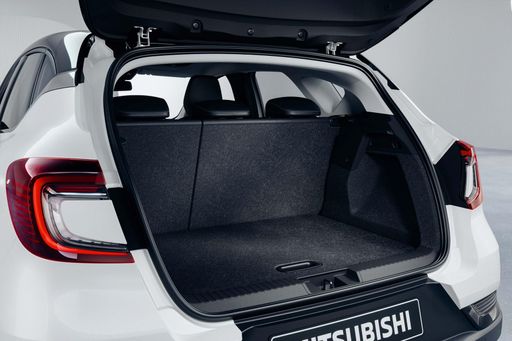
In terms of boot space, the Toyota Land Cruiser offers evident more room – 742 L compared to 484 L. That’s a difference of about 258 L.
In maximum load capacity, the Toyota Land Cruiser performs somewhat better – up to 1895 L, which is about 299 L more than the Mitsubishi ASX.
When it comes to payload, Toyota Land Cruiser to a small extent takes the win – 540 kg compared to 449 kg. That’s a difference of about 91 kg.
Who wins the race?
The Mitsubishi ASX proves to be wins the duel decisively and therefore becomes our DriveDuel Champion!
Mitsubishi ASX is the better all-rounder in this comparison.
from about £20,600
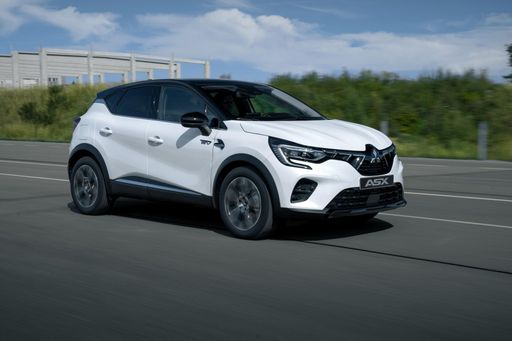
Mitsubishi ASX
Mitsubishi ASX
Toyota Land Cruiser
Costs and Consumption
View detailed analysis
View detailed analysis
Engine and Performance
View detailed analysis
View detailed analysis
Dimensions and Body
View detailed analysis
View detailed analysis
Mitsubishi ASX
5 (1 Reviews)
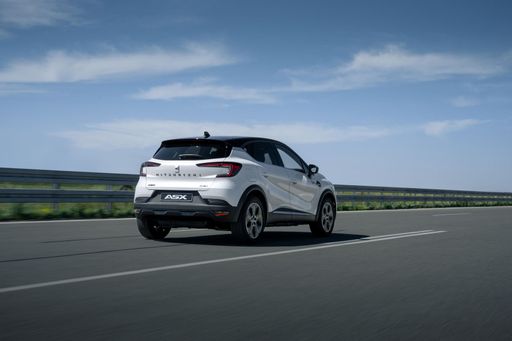
The Mitsubishi ASX is a compact crossover that mixes practicality with a no-nonsense personality, making it an easy choice for buyers who want sensible space without the showroom theatrics. It won't set your pulse racing, but its composed ride and user-friendly kit make it a dependable companion for daily errands and weekend escapes — reliable rather than flashy.
details

Toyota Land Cruiser
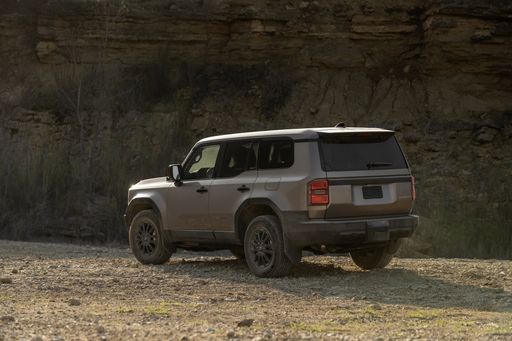
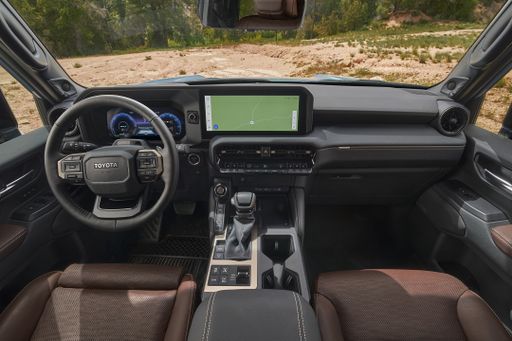
The Toyota Land Cruiser is the kind of SUV that makes you feel ready to abandon the map and take the long way home, with legendary go-anywhere capability wrapped in reassuringly solid build quality. Inside it's surprisingly comfortable and grown-up — a practical luxury for buyers who want reliability and presence rather than fleeting flash.
details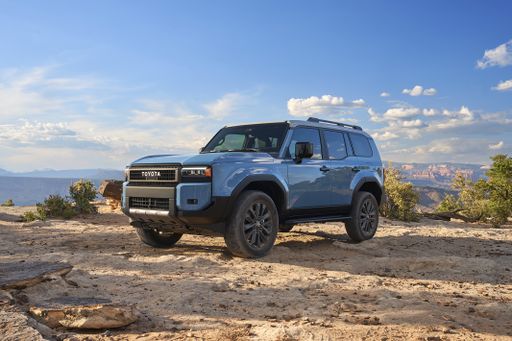
Mitsubishi ASX
Toyota Land Cruiser
Costs and Consumption |
|
|---|---|
|
Price
20600 - 32500 £
|
Price
70700 - 79300 £
|
|
Consumption L/100km
4.4 - 6 L
|
Consumption L/100km
10.6 - 10.8 L
|
|
Consumption kWh/100km
-
|
Consumption kWh/100km
-
|
|
Electric Range
-
|
Electric Range
-
|
|
Battery Capacity
-
|
Battery Capacity
-
|
|
co2
99 - 135 g/km
|
co2
278 - 284 g/km
|
|
Fuel tank capacity
48 L
|
Fuel tank capacity
80 L
|
Dimensions and Body |
|
|---|---|
|
Body Type
SUV
|
Body Type
Off-Roader
|
|
Seats
5
|
Seats
5 - 7
|
|
Doors
5
|
Doors
5
|
|
Curb weight
1296 - 1493 kg
|
Curb weight
2610 kg
|
|
Trunk capacity
348 - 484 L
|
Trunk capacity
143 - 742 L
|
|
Length
4239 mm
|
Length
4925 mm
|
|
Width
1797 mm
|
Width
1980 mm
|
|
Height
1575 mm
|
Height
1935 mm
|
|
Max trunk capacity
1458 - 1596 L
|
Max trunk capacity
1829 - 1895 L
|
|
Payload
397 - 449 kg
|
Payload
540 kg
|
Engine and Performance |
|
|---|---|
|
Engine Type
Petrol, Petrol MHEV, Full Hybrid
|
Engine Type
Diesel
|
|
Transmission
Manuel, Automatic
|
Transmission
Automatic
|
|
Transmission Detail
Manual Gearbox, Dual-Clutch Automatic, Automatic Gearbox
|
Transmission Detail
Automatic Gearbox
|
|
Drive Type
Front-Wheel Drive
|
Drive Type
All-Wheel Drive
|
|
Power HP
91 - 158 HP
|
Power HP
205 HP
|
|
Acceleration 0-100km/h
8.5 - 14 s
|
Acceleration 0-100km/h
12.30 s
|
|
Max Speed
168 - 180 km/h
|
Max Speed
170 km/h
|
|
Torque
160 - 270 Nm
|
Torque
500 Nm
|
|
Number of Cylinders
3 - 4
|
Number of Cylinders
4
|
|
Power kW
67 - 116 kW
|
Power kW
151 kW
|
|
Engine capacity
999 - 1789 cm3
|
Engine capacity
2755 cm3
|
General |
|
|---|---|
|
Model Year
2024 - 2025
|
Model Year
2025
|
|
CO2 Efficiency Class
D, C
|
CO2 Efficiency Class
G
|
|
Brand
Mitsubishi
|
Brand
Toyota
|
What drive types are available for the Mitsubishi ASX?
Available configurations include Front-Wheel Drive.
The prices and data displayed are estimates based on German list prices and may vary by country. This information is not legally binding.