VS

Mitsubishi Outlander vs VW Tayron comparison

Compare performance (306 HP vs 272 HP), boot space and price (42,800 £ vs 40,200 £ ) at a glance. Find out which car is the better choice for you – Mitsubishi Outlander or VW Tayron?

Mitsubishi Outlander vs VW Tayron: Key differences

Mitsubishi Outlander

4.7 (5 Reviews)
rate
  • a bit more power
details

VW Tayron

4.5 (6 Reviews)
rate
  • only slightly cheaper
  • substantially more efficient
  • clearly more electric range
  • visibly quicker 0–100 km/h
  • visibly lighter
  • substantially more trunk space
details

All details on performance, efficiency, range and trunk space can be found in the technical comparison below – including user reviews for both models.

By Achim Sedelmaier

Outlander

Mitsubishi Outlander vs. VW Tayron: A Clash of the SUVs

As the automotive landscape continuously evolves, two SUVs are garnering attention for their blend of innovation and performance: the Mitsubishi Outlander and the VW Tayron. Both vehicles are renowned for their advanced features and engineering excellence. Let's dive into a comprehensive comparison to see how these titans stack up against each other in terms of technical prowess and driving experience.

Tayron

Powertrain and Performance

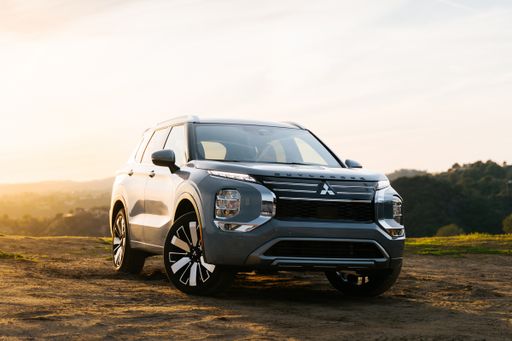
The Mitsubishi Outlander offers a significant punch with its plugin hybrid engine, delivering a robust 306 HP (225 kW). Acceleration is smooth, sprinting from 0 to 100 km/h in just 7.9 seconds, and it tops out at a respectable 170 km/h. Engineered for efficiency, it boasts an impressive consumption rate of just 0.8 L/100km and emits only 18 g/km of CO2, aligning with a B efficiency class. With the combined capacity of a 2360 cm3 engine and electric motor, it showcases the innovation at the heart of Mitsubishi's design ethos.

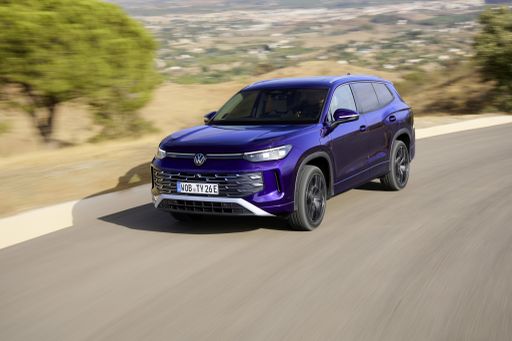
On the other hand, the VW Tayron presents multiple powertrain options, including petrol mild hybrid EV, plugin hybrid, diesel, and petrol versions. The top-performing variant achieves an exhilarating 272 HP (200 kW), accelerating from 0 to 100 km/h in just 6.1 seconds, with a max speed reaching 240 km/h. While the Tayron's plugin hybrid option shines with a consumption rate as low as 0.4 L/100km and CO2 emissions of 9 g/km, the broad spectrum of power and efficiency in its lineup underscores VW's commitment to tailoring to diverse driving needs.


Outlander

Driving Dynamics and Handling

The Outlander is all about adaptability, featuring all-wheel drive for enhanced traction and stability under various driving conditions. Coupled with its plugin hybrid technology, it promises an electric range between 84 to 86 km, providing daily commuting convenience with eco-friendly benefits.

The Tayron's offering extends to both front-wheel and all-wheel drive options, supported by a sophisticated dual-clutch automatic transmission for smooth gear shifts and responsive performance. With an electric range extending up to 126 km, the plugin hybrid option ensures that longer journeys are tackled with minimal environmental impact.

Tayron

Design and Comfort

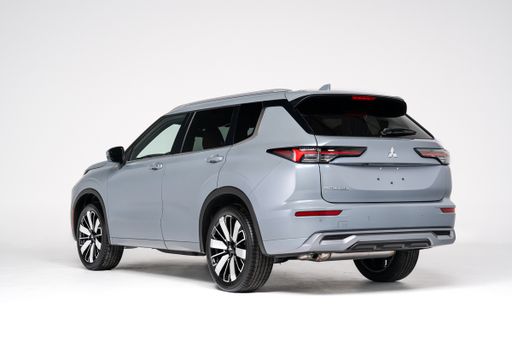
Mitsubishi has sculpted the Outlander with attention to modern aesthetics and practicality. With a length of 4719 mm and a height scaling up to 1750 mm, it presents a spacious interior, accommodating five passengers comfortably. Its substantial trunk capacity of 495 L provides ample storage for adventurers and families alike.

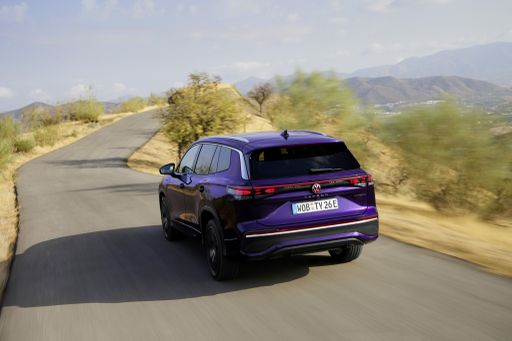
The VW Tayron stands slightly longer at 4792 mm in length and offers impressive cargo space with 885 L of trunk capacity, perfect for larger loads. The exterior design reflects VW's modern styling language with a focus on sleekness and aerodynamics.

Outlander

Conclusion

Both the Mitsubishi Outlander and VW Tayron showcase compelling features that cater to the discerning SUV buyer. The Outlander emerges as a front-runner for those valuing fuel efficiency and eco-friendliness, whereas the Tayron presents dynamic versatility and a broad spectrum of powertrain options tailored to diverse driving preferences. With technology and innovations at their cores, both models are a testament to forward-thinking in automotive design.

Here’s where it gets real: The technical differences in detail

Outlander

Costs and Efficiency:

Looking at overall running costs, both models reveal some interesting differences in everyday economy.

VW Tayron is only slightly cheaper – starting at 40,200 £ , while the Mitsubishi Outlander costs 42,800 £ . That’s a price difference of around 2,627 £.

Fuel consumption also shows a difference: the VW Tayron uses 1.5 L/100km and is substantially more efficient than the Mitsubishi Outlander with 2.6 L/100km. The difference is about 1.1 L/100km.

As for electric range, the VW Tayron offers clearly more range – reaching up to 123 km, about 38 km more than the Mitsubishi Outlander.

Tayron

Engine and Performance:

Under the bonnet, it becomes clear which model is tuned for sportiness and which one takes the lead when you hit the accelerator.

When it comes to engine power, the Mitsubishi Outlander offers a bit more power – delivering 306 HP compared to 272 HP. That’s roughly 34 HP more horsepower.

When accelerating from 0 to 100 km/h, the VW Tayron is visibly quicker – completing the sprint in 6.1 s, while the Mitsubishi Outlander takes 7.9 s. That’s about 1.8 s quicker.

Outlander

Space and Everyday Use:

Cabin size, boot volume and payload all play a role in everyday practicality. Here, comfort and flexibility make the difference.

Both vehicles offer seating for 5 people.

In terms of curb weight, VW Tayron is visibly lighter – 1,682 kg compared to 2,156 kg. The difference is around 474 kg.

Looking at boot space, the VW Tayron offers substantially more boot space – 885 L compared to 498 L. That’s a difference of about 387 L.

When it comes to payload, the VW Tayron carries marginally more – 573 kg compared to 529 kg. That’s a difference of about 44 kg.

Who wins the race in the data check?

The VW Tayron is far ahead overall in the objective data comparison.
This result only shows which model scores more points on paper – not which of the two cars feels right for you.

from £40,200
Tayron

VW Tayron

  • Engine Type Petrol MHEV, Diesel, Petrol, Plugin Hybrid
  • Transmission Automatic
  • Drive Type Front-Wheel Drive, All-Wheel Drive
  • Power HP 150 - 272 HP
  • Consumption L/100km 1.5 - 8.5 L/100km
  • Electric Range 116 - 123 km
Mitsubishi Outlander
VW Tayron

Costs and Consumption

View detailed analysis

Engine and Performance

View detailed analysis

Dimensions and Body

View detailed analysis

Mitsubishi Outlander

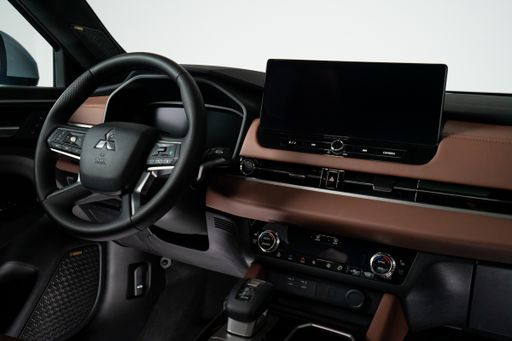
The Mitsubishi Outlander is a sensible family SUV that blends roomy practicality with a calm, assured ride—ideal for school runs and weekend getaways. It won’t set pulses racing, but its tidy interior, straightforward equipment and low-stress ownership make it a smart, unfussy pick for buyers who prefer reliability over flash.

details

VW Tayron

The VW Tayron combines a roomy, practical interior with a composed, comfortable ride that suits both daily commuting and longer journeys. With a restrained, modern design and a focus on straightforward tech and safety, it’s a sensible choice for buyers who want Volkswagen refinement without unnecessary flash.

details
Mitsubishi Outlander
VW Tayron

Costs and Consumption

Price
42,800 - 54,600 £
Price
40,200 - 56,000 £
Consumption L/100km
2.6 - 2.7 L/100km
Consumption L/100km
1.5 - 8.5 L/100km
Consumption kWh/100km
-
Consumption kWh/100km
-
Electric Range
83 - 85 km
Electric Range
116 - 123 km
Battery Capacity
-
Battery Capacity
-
co2
60 g/km
co2
33 - 192 g/km
Fuel tank capacity
-
Fuel tank capacity
-

Dimensions and Body

Body Type
SUV
Body Type
SUV
Seats
5
Seats
5
Doors
-
Doors
-
Curb weight
2,156 - 2,232 kg
Curb weight
1,682 - 1,948 kg
Trunk capacity
498 L
Trunk capacity
705 - 885 L
Length
-
Length
-
Width
1,862 mm
Width
1,853 - 1,866 mm
Height
-
Height
-
Max trunk capacity
-
Max trunk capacity
-
Payload
453 - 529 kg
Payload
497 - 573 kg

Engine and Performance

Engine Type
Plugin Hybrid
Engine Type
Petrol MHEV, Diesel, Petrol, Plugin Hybrid
Transmission
-
Transmission
Automatic
Transmission Detail
-
Transmission Detail
Dual-Clutch Automatic
Drive Type
All-Wheel Drive
Drive Type
Front-Wheel Drive, All-Wheel Drive
Power HP
306 HP
Power HP
150 - 272 HP
Acceleration 0-100km/h
7.9 s
Acceleration 0-100km/h
6.1 - 9.7 s
Max Speed
-
Max Speed
-
Torque
-
Torque
250 - 400 Nm
Number of Cylinders
4
Number of Cylinders
4
Power kW
225 kW
Power kW
110 - 200 kW
Engine capacity
2,360 cm3
Engine capacity
1,498 - 1,984 cm3

General

Model Year
2,025 - 2,026
Model Year
2,025 - 2,026
CO2 Efficiency Class
B
CO2 Efficiency Class
E, F, B, G
Brand
Mitsubishi
Brand
VW
DriveDuel uses data analysis and artificial intelligence to evaluate vehicle data and create content. Content is regularly reviewed and improved. The displayed prices are estimates based on German list prices, adjusted to the respective country’s VAT. Country-specific registration taxes are not included. This information is not legally binding.