
 Deutschland
 France
 Nederland
 Great Britain
 Sverige
 Danmark
 Suomi
Suomi Italia
 Polska
 Česko
Česko España
VS
Mitsubishi Space Star vs Alpine A390 comparison
Compare performance (71 HP vs 470 HP), boot space and price (11,600 £ vs 57,900 £ ) at a glance. Find out which car is the better choice for you – Mitsubishi Space Star or Alpine A390?
Space Star
Costs and Efficiency:
Price and efficiency are often the first things buyers look at. Here it becomes clear which model has the long-term edge – whether at the pump, the plug, or in purchase price.
Mitsubishi Space Star is clearly cheaper – starting at 11,600 £ , while the Alpine A390 costs 57,900 £ . That’s a price difference of around 46,209 £.
A390
Engine and Performance:
Power, torque and acceleration are the classic benchmarks for car enthusiasts – and here, some clear differences start to show.
When it comes to engine power, the Alpine A390 offers clearly more power – delivering 470 HP compared to 71 HP. That’s roughly 399 HP more horsepower.
When accelerating from 0 to 100 km/h, the Alpine A390 is considerably quicker – completing the sprint in 3.9 s, while the Mitsubishi Space Star takes 14.1 s. That’s about 10.2 s quicker.
There’s also a difference in torque: the Alpine A390 delivers substantially more torque with 824 Nm compared to 102 Nm. That’s about 722 Nm more.
Space Star
Space and Everyday Use:
Cabin size, boot volume and payload all play a role in everyday practicality. Here, comfort and flexibility make the difference.
Both vehicles offer seating for 5 people.
In terms of curb weight, Mitsubishi Space Star is significantly lighter – 940 kg compared to 2,121 kg. The difference is around 1,181 kg.
Looking at boot space, the Alpine A390 offers substantially more boot space – 532 L compared to 235 L. That’s a difference of about 297 L.
When it comes to payload, the Alpine A390 carries slightly more – 484 kg compared to 400 kg. That’s a difference of about 84 kg.
Who wins the race in the data check?
The Alpine A390 is far ahead overall in the objective data comparison.
This result only shows which model scores more points on paper – not which of the two cars feels right for you.
from £57,900
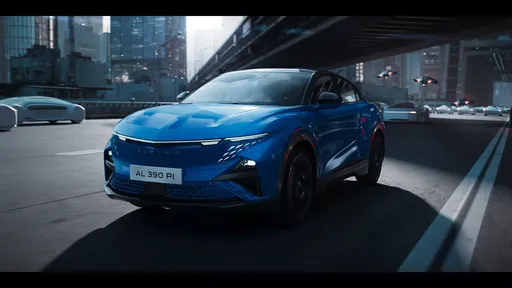
Alpine A390
Mitsubishi Space Star
Alpine A390
Costs and Consumption
View detailed analysis
View detailed analysis
Engine and Performance
View detailed analysis
View detailed analysis
Dimensions and Body
View detailed analysis
View detailed analysis
Mitsubishi Space Star
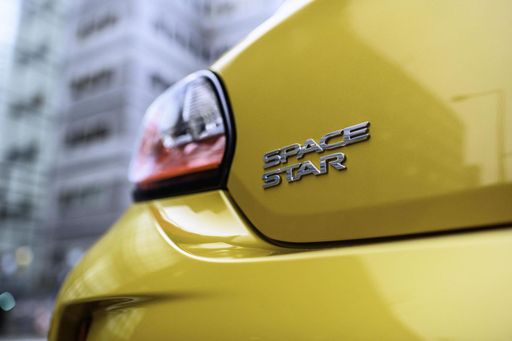
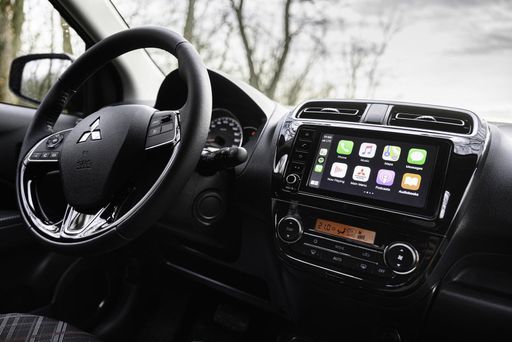
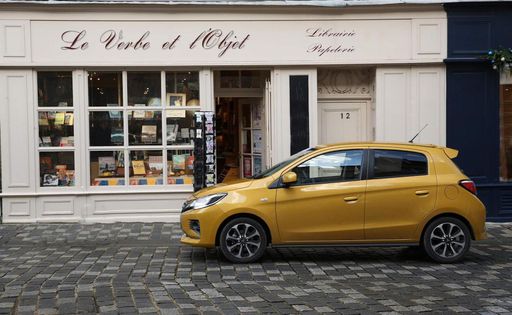
The Mitsubishi Space Star is a tidy, no-nonsense city car that squeezes surprising interior space into a compact, easy-to-park package. It's not a thrill-seeker's toy, but for buyers after low running costs, fuss-free reliability and sensible day-to-day practicality, it's a clever and cheerful choice that keeps your wallet and nerves happy.
details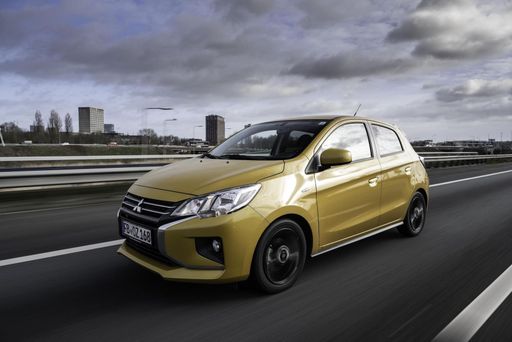
Alpine A390
The Alpine A390 is the brand’s leap into the fast electric crossover arena, wrapping Dieppe’s lightweight ethos in a sleek, coupe-ish body with real everyday usability. If the steering and chassis feel echo the A110, this could be the enthusiast’s family EV—subtle, sharp, and très chic, with enough theatre to make the school run feel like a pit lane exit.
details
Mitsubishi Space Star
Alpine A390
Costs and Consumption |
|
|---|---|
|
Price
11,600 - 18,700 £
|
Price
57,900 - 66,900 £
|
|
Consumption L/100km
4.9 - 5.5 L/100km
|
Consumption L/100km
-
|
|
Consumption kWh/100km
-
|
Consumption kWh/100km
18.7 - 20.4 kWh/100km
|
|
Electric Range
-
|
Electric Range
503 - 551 km
|
|
Battery Capacity
-
|
Battery Capacity
-
|
|
co2
112 - 125 g/km
|
co2
0 g/km
|
|
Fuel tank capacity
35 L
|
Fuel tank capacity
-
|
Dimensions and Body |
|
|---|---|
|
Body Type
Hatchback
|
Body Type
SUV
|
|
Seats
5
|
Seats
5
|
|
Doors
5
|
Doors
-
|
|
Curb weight
940 - 1,011 kg
|
Curb weight
2,121 - 2,124 kg
|
|
Trunk capacity
209 - 235 L
|
Trunk capacity
532 L
|
|
Length
3,845 mm
|
Length
-
|
|
Width
1,665 mm
|
Width
1,885 mm
|
|
Height
1,505 mm
|
Height
-
|
|
Max trunk capacity
881 - 912 L
|
Max trunk capacity
-
|
|
Payload
359 - 400 kg
|
Payload
481 - 484 kg
|
Engine and Performance |
|
|---|---|
|
Engine Type
Petrol
|
Engine Type
Electric
|
|
Transmission
Manual, Automatic
|
Transmission
Automatic
|
|
Transmission Detail
Manual Gearbox, CVT
|
Transmission Detail
Reduction Gearbox
|
|
Drive Type
Front-Wheel Drive
|
Drive Type
All-Wheel Drive
|
|
Power HP
71 HP
|
Power HP
400 - 470 HP
|
|
Acceleration 0-100km/h
14.1 - 15.8 s
|
Acceleration 0-100km/h
3.9 - 4.8 s
|
|
Max Speed
163 - 167 km/h
|
Max Speed
-
|
|
Torque
102 Nm
|
Torque
661 - 824 Nm
|
|
Number of Cylinders
3
|
Number of Cylinders
-
|
|
Power kW
52 kW
|
Power kW
295 - 345 kW
|
|
Engine capacity
1,193 cm3
|
Engine capacity
-
|
General |
|
|---|---|
|
Model Year
2,020 - 2,022
|
Model Year
2026
|
|
CO2 Efficiency Class
C, D
|
CO2 Efficiency Class
A
|
|
Brand
Mitsubishi
|
Brand
Alpine
|
DriveDuel uses data analysis and artificial intelligence to evaluate vehicle data and create content. Content is regularly reviewed and improved.
The displayed prices are estimates based on German list prices, adjusted to the respective country’s VAT. Country-specific registration taxes are not included. This information is not legally binding.