VS

Mitsubishi Space Star vs Suzuki Ignis comparison

Compare performance (71 HP vs 83 HP), boot space and price (11600 £ vs 15600 £ ) at a glance. Find out which car is the better choice for you – Mitsubishi Space Star or Suzuki Ignis?

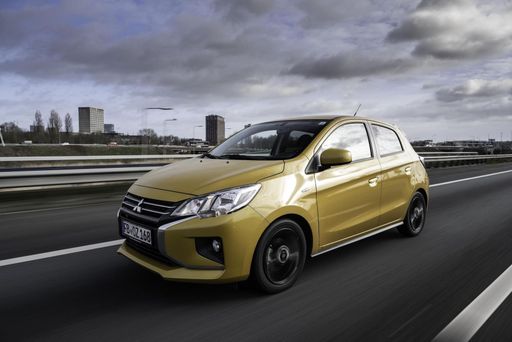
Space Star

A Clash of Compact Titans: Mitsubishi Space Star vs Suzuki Ignis

The compact car segment presents two noteworthy contenders: the Mitsubishi Space Star and the Suzuki Ignis. Both vehicles cater to the urban adventurer seeking a balance of economy, style, and functionality. Let's dive into the specs and innovations each brings to the table.
Ignis

The Engine and Performance

Under the hood, the Space Star packs a 1.2-liter petrol engine churning out 71 horsepower, delivering a modest but practical performance. The car features both manual and automatic transmissions, with the automatic option utilizing a CVT for smooth shifting. Acceleration from 0-100 km/h ranges from a relaxed 14.1 to 15.8 seconds, with a top speed of 163 to 167 km/h, making it suitable for daily commuting.

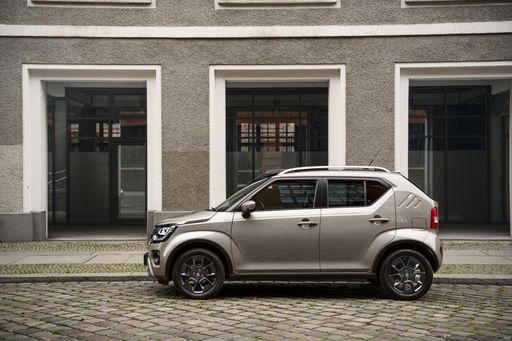
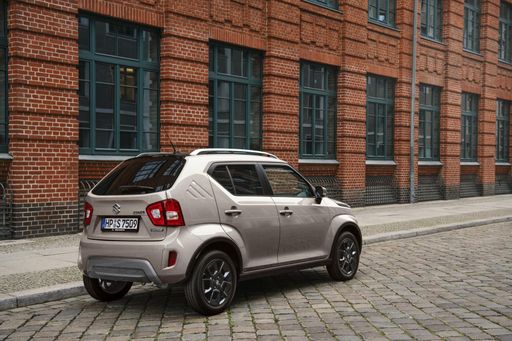
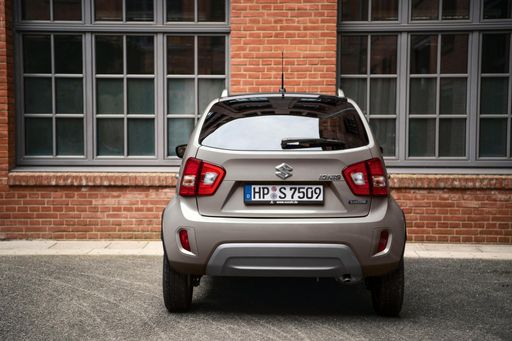
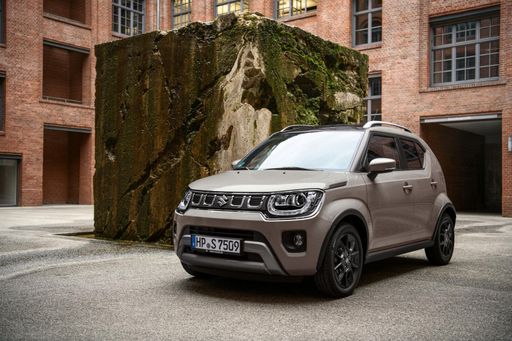
In contrast, the Suzuki Ignis showcases a slightly larger 1.2-liter petrol mild-hybrid engine with 83 horsepower. It offers both manual and CVT options and can be configured with front-wheel or all-wheel drive. This configuration allows for slightly quicker acceleration, reaching 0-100 km/h in 12.7 to 12.8 seconds, and achieves a top speed of 155 to 165 km/h.

Space Star

Fuel Efficiency and Environmental Impact

Fuel efficiency is a strong suit for both cars. The Space Star's consumption figures range between 4.9 to 5.5 liters per 100 kilometers, while the Ignis boasts comparable consumption rates of 4.9 to 5.4 liters per 100 kilometers. These fuel-efficient engines are complemented by their CO2 emissions, with the Space Star producing between 112 to 125 g/km and the Ignis at 110 to 122 g/km. Both offer a C to D CO2 efficiency class, underlining their commitment to reduced environmental impact.

Ignis

Dimensions and Practicality

Dimension-wise, the Space Star measures 3845 mm in length, 1665 mm in width, and stands 1505 mm tall. This compact footprint houses a trunk capacity of 209 to 235 liters, suitable for light cargo. Meanwhile, the Ignis measures 3700 mm in length, with a width of 1690 mm and height of 1605 mm, offering slightly more headroom. It compensates with a higher trunk capacity ranging from 204 to 267 liters, proving its versatility for urban errands and leisure travel.

Space Star

Comfort and Seating

Both vehicles comfortably seat five passengers, although the Ignis offers a slight variation with potential 4-seat configurations for specific models. This flexibility is a bonus for those who prioritize space over the number of seats.

Ignis

Technology and Innovation

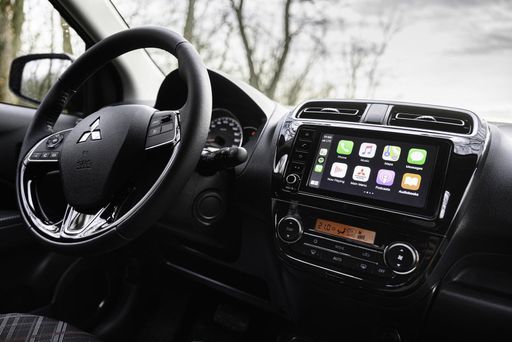
In terms of technology, both vehicles provide standard infotainment systems designed to enhance the driving experience. The inclusion of modern connectivity options in newer models ensures drivers remain connected and entertained on the road.

Space Star

Conclusion: Urban Warriors

The Mitsubishi Space Star and the Suzuki Ignis each offer a distinctive appeal. Whether it’s the Space Star's simplicity and economy or the Ignis's hybrid technology and versatility, buyers are presented with compelling choices in the compact segment. Ultimately, the decision hinges on individual preferences, whether prioritizing fuel efficiency, performance, or interior space.

Mitsubishi Space Star vs Suzuki Ignis: Key differences

Mitsubishi Space Star

  • noticeable cheaper

Suzuki Ignis

4.7 (1 Reviews)
rate
  • slightly more power
  • somewhat quicker from 0–100 km/h
  • slight lighter
  • slightly more trunk space

Here’s where it gets real: The technical differences in detail

Ignis

Costs and Efficiency:

Looking at overall running costs, both models reveal some interesting differences in everyday economy.

Mitsubishi Space Star has a noticeable advantage in terms of price – it starts at 11600 £ , while the Suzuki Ignis costs 15600 £ . That’s a price difference of around 3960 £.

Both cars consume an average of 4.90 L per 100 km – no difference here.

Engine and Performance:

Under the bonnet, it becomes clear which model is tuned for sportiness and which one takes the lead when you hit the accelerator.

When it comes to engine power, the Suzuki Ignis has a slightly edge – offering 83 HP compared to 71 HP. That’s roughly 12 HP more horsepower.

In acceleration from 0 to 100 km/h, the Suzuki Ignis is somewhat quicker – completing the sprint in 12.70 s, while the Mitsubishi Space Star takes 14.10 s. That’s about 1.40 s faster.

In terms of top speed, the Mitsubishi Space Star performs slight better – reaching 167 km/h, while the Suzuki Ignis tops out at 165 km/h. The difference is around 2 km/h.

There’s also a difference in torque: Suzuki Ignis pulls barely noticeable stronger with 107 Nm compared to 102 Nm. That’s about 5 Nm difference.

Space and Everyday Use:

Cabin size, boot volume and payload all play a role in everyday practicality. Here, comfort and flexibility make the difference.

Both vehicles offer seating for 5 people.

In curb weight, Suzuki Ignis is slight lighter – 935 kg compared to 940 kg. The difference is around 5 kg.

In terms of boot space, the Suzuki Ignis offers slightly more room – 267 L compared to 235 L. That’s a difference of about 32 L.

In maximum load capacity, the Suzuki Ignis performs somewhat better – up to 1100 L, which is about 188 L more than the Mitsubishi Space Star.

When it comes to payload, Mitsubishi Space Star minimal takes the win – 400 kg compared to 395 kg. That’s a difference of about 5 kg.

Who wins the race in the data check?

The Suzuki Ignis stands out in the key areas in the objective data comparison.
This result only shows which model scores more points on paper – not which of the two cars feels right for you.

Mitsubishi Space Star
Suzuki Ignis

Costs and Consumption

View detailed analysis

Engine and Performance

View detailed analysis

Dimensions and Body

View detailed analysis
from about £15,600
Ignis

Suzuki Ignis

  • Engine Type : Petrol MHEV
  • Transmission : Manuel, Automatic
  • Drive Type : Front-Wheel Drive, All-Wheel Drive
  • Power HP : 83 HP
  • Consumption L/100km : 4.9 - 5.4 L

Mitsubishi Space Star

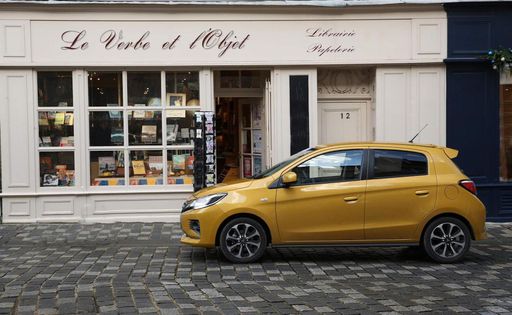
The Mitsubishi Space Star is a tidy, no-nonsense city car that squeezes surprising interior space into a compact, easy-to-park package. It's not a thrill-seeker's toy, but for buyers after low running costs, fuss-free reliability and sensible day-to-day practicality, it's a clever and cheerful choice that keeps your wallet and nerves happy.

details

Suzuki Ignis

4.7 (1 Reviews)
rate

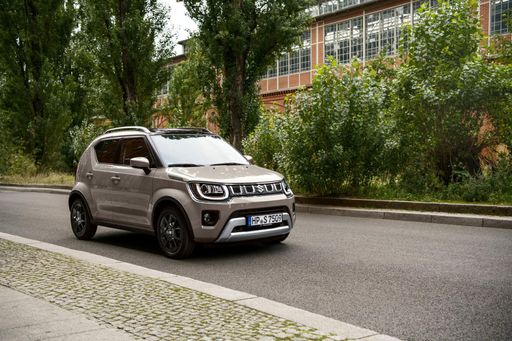
The Suzuki Ignis is a cheeky compact crossover that turns city chores into cheerful adventures, with chunky styling and a surprisingly practical cabin. It won't pretend to be a sports car, but its nimble manners, low running costs and ample personality make it an ideal pick for urban buyers who want fun without pretension.

details
Mitsubishi Space Star
Suzuki Ignis

Costs and Consumption

Price
11600 - 18700 £
Price
15600 - 19500 £
Consumption L/100km
4.9 - 5.5 L
Consumption L/100km
4.9 - 5.4 L
Consumption kWh/100km
-
Consumption kWh/100km
-
Electric Range
-
Electric Range
-
Battery Capacity
-
Battery Capacity
-
co2
112 - 125 g/km
co2
110 - 122 g/km
Fuel tank capacity
35 L
Fuel tank capacity
30 - 32 L

Dimensions and Body

Body Type
Hatchback
Body Type
SUV
Seats
5
Seats
4 - 5
Doors
5
Doors
5
Curb weight
940 - 1011 kg
Curb weight
935 - 995 kg
Trunk capacity
209 - 235 L
Trunk capacity
204 - 267 L
Length
3845 mm
Length
3700 mm
Width
1665 mm
Width
1690 mm
Height
1505 mm
Height
1605 mm
Max trunk capacity
881 - 912 L
Max trunk capacity
1086 - 1100 L
Payload
359 - 400 kg
Payload
335 - 395 kg

Engine and Performance

Engine Type
Petrol
Engine Type
Petrol MHEV
Transmission
Manuel, Automatic
Transmission
Manuel, Automatic
Transmission Detail
Manual Gearbox, CVT
Transmission Detail
Manual Gearbox, CVT
Drive Type
Front-Wheel Drive
Drive Type
Front-Wheel Drive, All-Wheel Drive
Power HP
71 HP
Power HP
83 HP
Acceleration 0-100km/h
14.1 - 15.8 s
Acceleration 0-100km/h
12.7 - 12.8 s
Max Speed
163 - 167 km/h
Max Speed
155 - 165 km/h
Torque
102 Nm
Torque
107 Nm
Number of Cylinders
3
Number of Cylinders
4
Power kW
52 kW
Power kW
61 kW
Engine capacity
1193 cm3
Engine capacity
1197 cm3

General

Model Year
2020 - 2022
Model Year
2020
CO2 Efficiency Class
C, D
CO2 Efficiency Class
C, D
Brand
Mitsubishi
Brand
Suzuki
What drivetrain options does the Mitsubishi Space Star have?

Available configurations include Front-Wheel Drive.

The prices shown are estimates based on German list prices, adjusted for local VAT. Local registration taxes (e.g. NoVA, BPM or CO2 malus) are not included. This information is not legally binding.