
 Deutschland
 France
 Nederland
 Great Britain
 Sverige
 Danmark
 Suomi
Suomi Italia
 Polska
 Česko
Česko España
VS
NIO EL7 vs Hyundai Inster comparison
Compare performance (653 HP vs 115 HP), boot space and price (63,300 £ vs 20,900 £ ) at a glance. Find out which car is the better choice for you – NIO EL7 or Hyundai Inster?
NIO EL7 vs Hyundai Inster: Key differences
All details on performance, efficiency, range and trunk space can be found in the technical comparison below – including user reviews for both models.
EL7
Costs and Efficiency:
Looking at overall running costs, both models reveal some interesting differences in everyday economy.
Hyundai Inster is clearly cheaper – starting at 20,900 £ , while the NIO EL7 costs 63,300 £ . That’s a price difference of around 42,428 £.
In terms of energy consumption, the Hyundai Inster is clearly more efficient: consuming 14.3 kWh/100km compared to 22.1 kWh/100km for the NIO EL7. That’s a difference of about 7.8 kWh/100km.
As for electric range, the NIO EL7 offers visibly more range – reaching up to 501 km, about 131 km more than the Hyundai Inster.
Inster
Engine and Performance:
Power, torque and acceleration say a lot about how a car feels on the road. This is where you see which model delivers more driving dynamics.
When it comes to engine power, the NIO EL7 offers considerably more power – delivering 653 HP compared to 115 HP. That’s roughly 538 HP more horsepower.
When accelerating from 0 to 100 km/h, the NIO EL7 is significantly quicker – completing the sprint in 3.9 s, while the Hyundai Inster takes 10.6 s. That’s about 6.7 s quicker.
There’s also a difference in torque: the NIO EL7 delivers significantly more torque with 850 Nm compared to 147 Nm. That’s about 703 Nm more.
EL7
Space and Everyday Use:
Cabin size, boot volume and payload all play a role in everyday practicality. Here, comfort and flexibility make the difference.
Seats: NIO EL7 offers more seats – 5 vs 4.
In terms of curb weight, Hyundai Inster is significantly lighter – 1,380 kg compared to 2,421 kg. The difference is around 1,041 kg.
Looking at boot space, the NIO EL7 offers significantly more boot space – 570 L compared to 280 L. That’s a difference of about 290 L.
When it comes to payload, the NIO EL7 carries visibly more – 469 kg compared to 357 kg. That’s a difference of about 112 kg.
Who wins the race in the data check?
The NIO EL7 is far ahead overall in the objective data comparison.
This result only shows which model scores more points on paper – not which of the two cars feels right for you.
from £63,300
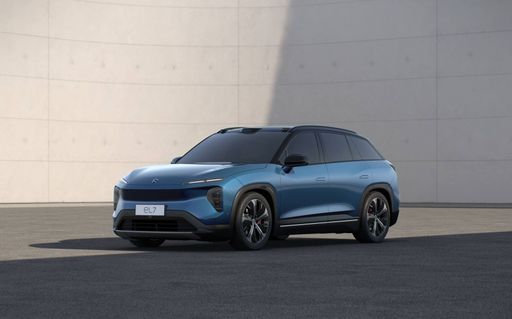
NIO EL7
NIO EL7
Hyundai Inster
Costs and Consumption
View detailed analysis
View detailed analysis
Engine and Performance
View detailed analysis
View detailed analysis
Dimensions and Body
View detailed analysis
View detailed analysis
NIO EL7
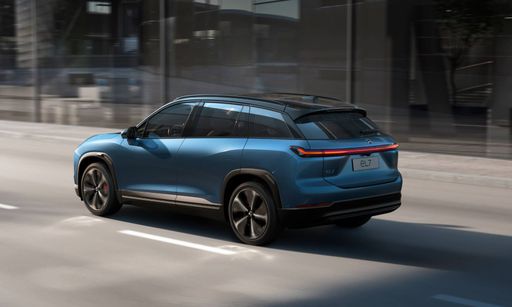
The NIO EL7 arrives as a roomy electric SUV that pairs restrained elegance with bold design cues, and its interior feels like a calm, tech-forward lounge rather than a gadget parade. For buyers who crave effortless cruising, spirited performance and a tastefully premium experience — with just the right amount of showmanship for the driveway — the EL7 is an enticing, slightly theatrical choice.
details
Hyundai Inster
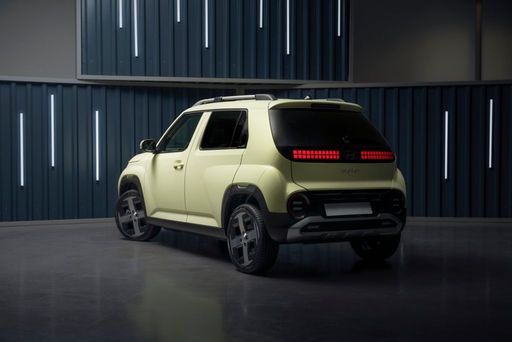
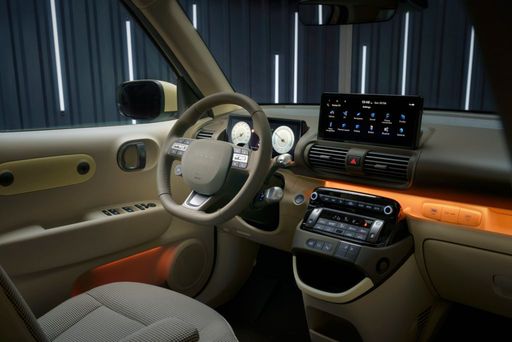
The Inster has quickly captured the attention of automotive enthusiasts with its striking design and dynamic performance. This model seamlessly blends advanced technology with comfort, making it an ideal choice for both daily commutes and adventurous road trips. With its spacious interior and innovative features, the Inster promises an exhilarating driving experience that doesn’t compromise on practicality.
details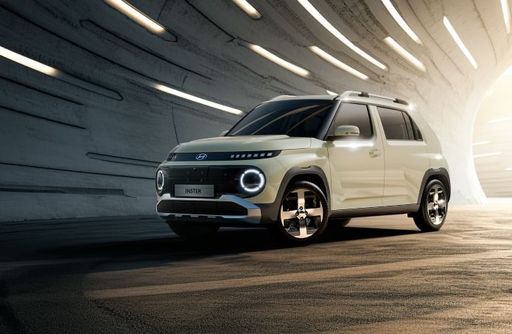
NIO EL7
Hyundai Inster
Costs and Consumption |
|
|---|---|
|
Price
63,300 - 81,300 £
|
Price
20,900 - 26,200 £
|
|
Consumption L/100km
-
|
Consumption L/100km
-
|
|
Consumption kWh/100km
22.1 - 22.4 kWh/100km
|
Consumption kWh/100km
14.3 - 15.1 kWh/100km
|
|
Electric Range
384 - 501 km
|
Electric Range
327 - 370 km
|
|
Battery Capacity
73.5 - 90 kWh
|
Battery Capacity
-
|
|
co2
0 g/km
|
co2
0 g/km
|
|
Fuel tank capacity
-
|
Fuel tank capacity
-
|
Dimensions and Body |
|
|---|---|
|
Body Type
SUV
|
Body Type
SUV
|
|
Seats
5
|
Seats
4
|
|
Doors
5
|
Doors
-
|
|
Curb weight
2,421 - 2,441 kg
|
Curb weight
1,380 - 1,433 kg
|
|
Trunk capacity
570 L
|
Trunk capacity
238 - 280 L
|
|
Length
4,912 mm
|
Length
-
|
|
Width
1,987 mm
|
Width
1,610 mm
|
|
Height
1,720 mm
|
Height
-
|
|
Max trunk capacity
1,545 L
|
Max trunk capacity
-
|
|
Payload
449 - 469 kg
|
Payload
317 - 357 kg
|
Engine and Performance |
|
|---|---|
|
Engine Type
Electric
|
Engine Type
Electric
|
|
Transmission
Automatic
|
Transmission
Automatic
|
|
Transmission Detail
Reduction Gearbox
|
Transmission Detail
Reduction Gearbox
|
|
Drive Type
All-Wheel Drive
|
Drive Type
Front-Wheel Drive
|
|
Power HP
653 HP
|
Power HP
97 - 115 HP
|
|
Acceleration 0-100km/h
3.9 s
|
Acceleration 0-100km/h
10.6 - 11.7 s
|
|
Max Speed
200 km/h
|
Max Speed
-
|
|
Torque
850 Nm
|
Torque
147 Nm
|
|
Number of Cylinders
-
|
Number of Cylinders
-
|
|
Power kW
480 kW
|
Power kW
71 - 85 kW
|
|
Engine capacity
-
|
Engine capacity
-
|
General |
|
|---|---|
|
Model Year
2023
|
Model Year
2025
|
|
CO2 Efficiency Class
A
|
CO2 Efficiency Class
A
|
|
Brand
NIO
|
Brand
Hyundai
|
DriveDuel uses data analysis and artificial intelligence to evaluate vehicle data and create content. Content is regularly reviewed and improved.
The displayed prices are estimates based on German list prices, adjusted to the respective country’s VAT. Country-specific registration taxes are not included. This information is not legally binding.