
 Deutschland
 France
 Nederland
 Great Britain
 Sverige
 Danmark
 Suomi
Suomi Italia
 Polska
 España
VS
NIO EL8 vs XPeng P7 comparison
Compare performance (653 HP vs 473 HP), boot space and price (71,100 £ vs 42,500 £ ) at a glance. Find out which car is the better choice for you – NIO EL8 or XPeng P7?
EL8
Costs and Efficiency:
Price and efficiency are often the first things buyers look at. Here it becomes clear which model has the long-term edge – whether at the pump, the plug, or in purchase price.
XPeng P7 is clearly cheaper – starting at 42,500 £ , while the NIO EL8 costs 71,100 £ . That’s a price difference of around 28,543 £.
In terms of energy consumption, the XPeng P7 is clearly more efficient: consuming 16.8 kWh/100km compared to 21.2 kWh/100km for the NIO EL8. That’s a difference of about 4.4 kWh/100km.
As for electric range, the XPeng P7 offers somewhat more range – reaching up to 576 km, about 66 km more than the NIO EL8.
P7
Engine and Performance:
Under the bonnet, it becomes clear which model is tuned for sportiness and which one takes the lead when you hit the accelerator.
When it comes to engine power, the NIO EL8 offers visibly more power – delivering 653 HP compared to 473 HP. That’s roughly 180 HP more horsepower.
Both models accelerate almost equally fast – 4.1 s from 0 to 100 km/h.
There’s no difference in top speed – both reach 200 km/h.
There’s also a difference in torque: the NIO EL8 delivers a bit more torque with 850 Nm compared to 757 Nm. That’s about 93 Nm more.
Space and Everyday Use:
Whether family car or daily driver – which one offers more room, flexibility and comfort?
Seats: NIO EL8 offers more seats – 6 vs 5.
In terms of curb weight, XPeng P7 is markedly lighter – 2,020 kg compared to 2,613 kg. The difference is around 593 kg.
Looking at boot space, the XPeng P7 offers markedly more boot space – 440 L compared to 265 L. That’s a difference of about 175 L.
When it comes to payload, the NIO EL8 carries clearly more – 577 kg compared to 430 kg. That’s a difference of about 147 kg.
Who wins the race in the data check?
The XPeng P7 holds a solid overall lead in the objective data comparison.
This result only shows which model scores more points on paper – not which of the two cars feels right for you.
from £42,500
XPeng P7
NIO EL8
XPeng P7
Costs and Consumption
View detailed analysis
View detailed analysis
Engine and Performance
View detailed analysis
View detailed analysis
Dimensions and Body
View detailed analysis
View detailed analysis
NIO EL8
The NIO EL8 feels like a tech-savvy living room on wheels, blending upscale comfort with playful design for buyers who want electric refinement without the clinical vibe. It’s roomy, packed with clever features and a relaxed driving character that turns everyday trips into something a little more fun.
details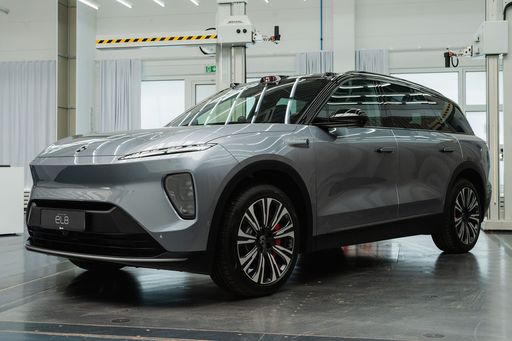
XPeng P7
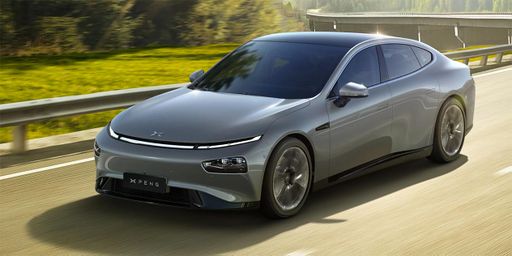
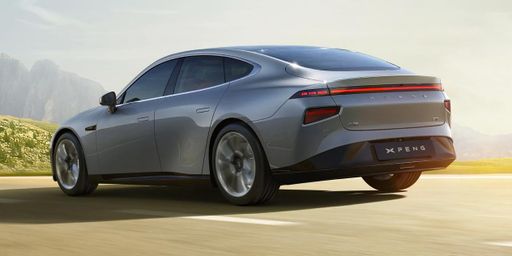
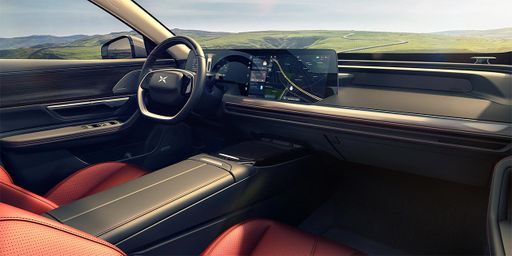
The XPeng P7 cuts a sleek, coupe-like silhouette that looks like a tech firm's idea of a stylish electric sedan, and its minimalist cabin packs smart screens and handy features that actually improve everyday life. Underneath the future-facing image it drives with surprising poise and comes loaded with advanced driver aids, making it a tempting choice for buyers who want electric charisma without the hype.
details
NIO EL8
XPeng P7
Costs and Consumption |
|
|---|---|
|
Price
71,100 - 90,800 £
|
Price
42,500 - 50,200 £
|
|
Consumption L/100km
-
|
Consumption L/100km
-
|
|
Consumption kWh/100km
21.2 - 22 kWh/100km
|
Consumption kWh/100km
16.8 - 19.2 kWh/100km
|
|
Electric Range
390 - 510 km
|
Electric Range
505 - 576 km
|
|
Battery Capacity
73.5 - 90 kWh
|
Battery Capacity
82.7 kWh
|
|
co2
0 g/km
|
co2
0 g/km
|
|
Fuel tank capacity
-
|
Fuel tank capacity
-
|
Dimensions and Body |
|
|---|---|
|
Body Type
SUV
|
Body Type
Sedan
|
|
Seats
6
|
Seats
5
|
|
Doors
5
|
Doors
5
|
|
Curb weight
2,613 - 2,633 kg
|
Curb weight
2,020 - 2,140 kg
|
|
Trunk capacity
265 L
|
Trunk capacity
440 L
|
|
Length
5,099 mm
|
Length
4,888 mm
|
|
Width
1,989 mm
|
Width
1,896 mm
|
|
Height
1,750 mm
|
Height
1,450 mm
|
|
Max trunk capacity
810 L
|
Max trunk capacity
-
|
|
Payload
557 - 577 kg
|
Payload
430 kg
|
Engine and Performance |
|
|---|---|
|
Engine Type
Electric
|
Engine Type
Electric
|
|
Transmission
Automatic
|
Transmission
Automatic
|
|
Transmission Detail
Reduction Gearbox
|
Transmission Detail
Reduction Gearbox
|
|
Drive Type
All-Wheel Drive
|
Drive Type
Rear-Wheel Drive, All-Wheel Drive
|
|
Power HP
653 HP
|
Power HP
276 - 473 HP
|
|
Acceleration 0-100km/h
4.1 s
|
Acceleration 0-100km/h
4.1 - 6.7 s
|
|
Max Speed
200 km/h
|
Max Speed
200 km/h
|
|
Torque
850 Nm
|
Torque
440 - 757 Nm
|
|
Number of Cylinders
-
|
Number of Cylinders
-
|
|
Power kW
480 kW
|
Power kW
203 - 348 kW
|
|
Engine capacity
-
|
Engine capacity
-
|
General |
|
|---|---|
|
Model Year
2,024
|
Model Year
2,024
|
|
CO2 Efficiency Class
A
|
CO2 Efficiency Class
A
|
|
Brand
NIO
|
Brand
XPeng
|
DriveDuel uses data analysis and artificial intelligence to evaluate vehicle data and create content. Content is regularly reviewed and improved.
The displayed prices are estimates based on German list prices, adjusted to the respective country’s VAT. Country-specific registration taxes are not included. This information is not legally binding.