
 Deutschland
 France
 Nederland
 Great Britain
 Sverige
 Danmark
 Suomi
Suomi Italia
 Polska
 Česko
Česko España
VS
Nissan Juke vs Tesla Model 3 comparison
Compare performance (143 HP vs 460 HP), boot space and price (21,400 £ vs 31,700 £ ) at a glance. Find out which car is the better choice for you – Nissan Juke or Tesla Model 3?
Nissan Juke vs Tesla Model 3: Key differences
All details on performance, efficiency, range and trunk space can be found in the technical comparison below – including user reviews for both models.
Juke
Costs and Efficiency:
Looking at overall running costs, both models reveal some interesting differences in everyday economy.
Nissan Juke is substantially cheaper – starting at 21,400 £ , while the Tesla Model 3 costs 31,700 £ . That’s a price difference of around 10,320 £.
Model 3
Engine and Performance:
Power, torque and acceleration are the classic benchmarks for car enthusiasts – and here, some clear differences start to show.
When it comes to engine power, the Tesla Model 3 offers significantly more power – delivering 460 HP compared to 143 HP. That’s roughly 317 HP more horsepower.
When accelerating from 0 to 100 km/h, the Tesla Model 3 is clearly quicker – completing the sprint in 3.1 s, while the Nissan Juke takes 10.1 s. That’s about 7 s quicker.
There’s also a difference in torque: the Tesla Model 3 delivers substantially more torque with 660 Nm compared to 200 Nm. That’s about 460 Nm more.
Juke
Space and Everyday Use:
Beyond pure performance, interior space and usability matter most in daily life. This is where you see which car is more practical and versatile.
Both vehicles offer seating for 5 people.
In terms of curb weight, Nissan Juke is clearly lighter – 1,274 kg compared to 1,772 kg. The difference is around 498 kg.
Looking at boot space, the Tesla Model 3 offers visibly more boot space – 594 L compared to 422 L. That’s a difference of about 172 L.
When it comes to payload, the Nissan Juke carries slightly more – 427 kg compared to 377 kg. That’s a difference of about 50 kg.
Who wins the race in the data check?
The Tesla Model 3 is decisively ahead in the objective data comparison.
This result only shows which model scores more points on paper – not which of the two cars feels right for you.
from £31,700
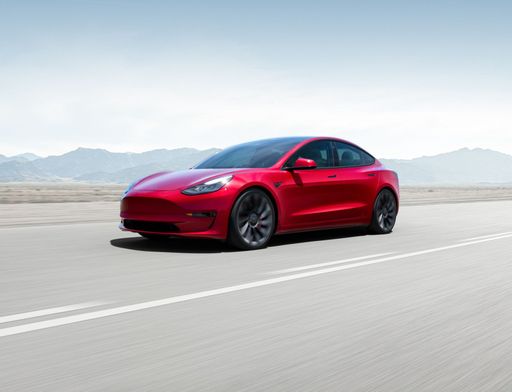
Tesla Model 3
Nissan Juke
Tesla Model 3
Costs and Consumption
View detailed analysis
View detailed analysis
Engine and Performance
View detailed analysis
View detailed analysis
Dimensions and Body
View detailed analysis
View detailed analysis
Nissan Juke
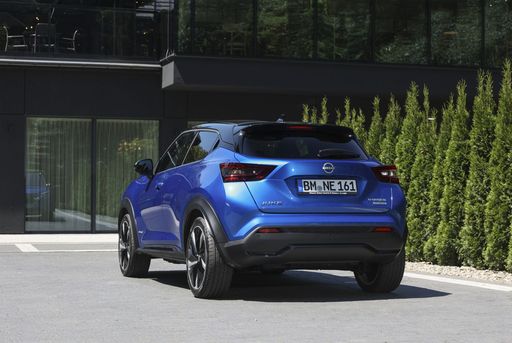
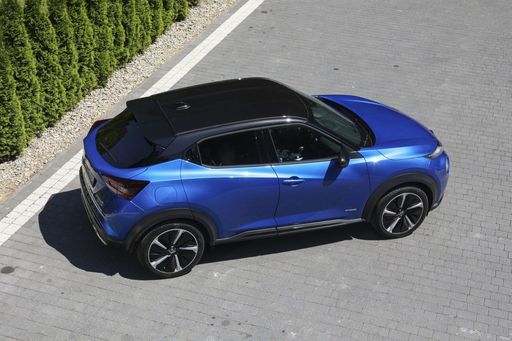
The Nissan Juke is a pocket-sized crossover that refuses to blend in, with quirky styling and a cheeky stance that turns heads at every traffic light. It’s ideal for shoppers who value personality and nimble urban driving over maximum practicality, delivering surprising pep and a well-equipped feel for everyday fun.
details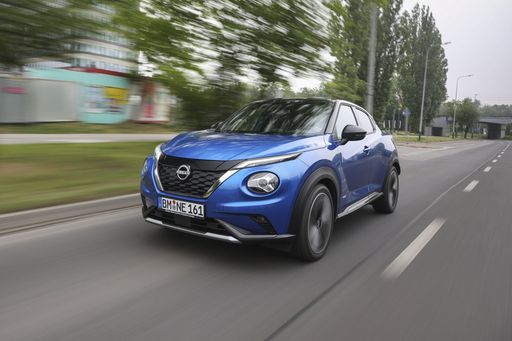

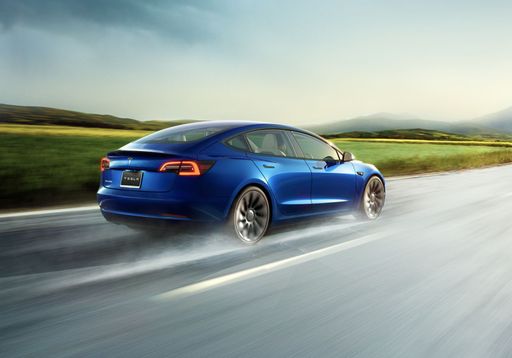
Tesla Model 3
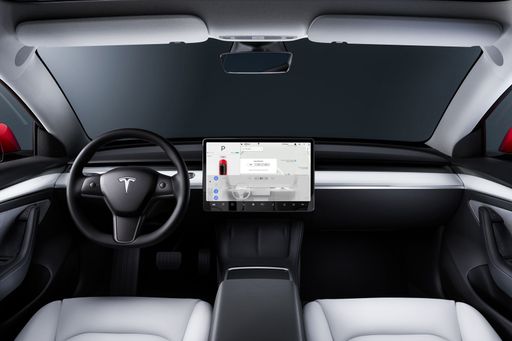
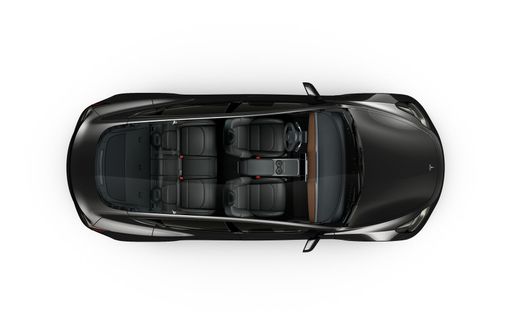
The Tesla Model 3 slices through daily commuting with a silent, confident shove that makes petrolheads reassess their life choices, while its minimalist cabin feels more like a slick gadget gallery than a traditional car interior. For buyers after a fuss-free, tech-forward electric with plenty of grin factor and low running drama, it’s hard to beat—just don't be surprised when the car updates itself overnight.
details
Nissan Juke
Tesla Model 3
Costs and Consumption |
|
|---|---|
|
Price
21,400 - 31,800 £
|
Price
31,700 - 50,100 £
|
|
Consumption L/100km
4.7 - 6 L/100km
|
Consumption L/100km
-
|
|
Consumption kWh/100km
-
|
Consumption kWh/100km
13 - 16.5 kWh/100km
|
|
Electric Range
-
|
Electric Range
534 - 750 km
|
|
Battery Capacity
-
|
Battery Capacity
-
|
|
co2
105 - 136 g/km
|
co2
0 g/km
|
|
Fuel tank capacity
-
|
Fuel tank capacity
-
|
Dimensions and Body |
|
|---|---|
|
Body Type
SUV
|
Body Type
Sedan
|
|
Seats
5
|
Seats
5
|
|
Doors
-
|
Doors
-
|
|
Curb weight
1,274 - 1,405 kg
|
Curb weight
1,772 - 1,929 kg
|
|
Trunk capacity
354 - 422 L
|
Trunk capacity
594 L
|
|
Length
-
|
Length
-
|
|
Width
1,800 mm
|
Width
1,850 mm
|
|
Height
-
|
Height
-
|
|
Max trunk capacity
-
|
Max trunk capacity
-
|
|
Payload
405 - 427 kg
|
Payload
303 - 377 kg
|
Engine and Performance |
|
|---|---|
|
Engine Type
Petrol, Full Hybrid
|
Engine Type
Electric
|
|
Transmission
Manuel, Automatic
|
Transmission
Automatic
|
|
Transmission Detail
Manual Gearbox, Dual-Clutch Automatic, Automatic Gearbox
|
Transmission Detail
Reduction Gearbox
|
|
Drive Type
Front-Wheel Drive
|
Drive Type
All-Wheel Drive, Rear-Wheel Drive
|
|
Power HP
114 - 143 HP
|
Power HP
283 - 460 HP
|
|
Acceleration 0-100km/h
10.1 - 11.8 s
|
Acceleration 0-100km/h
3.1 - 6.2 s
|
|
Max Speed
-
|
Max Speed
-
|
|
Torque
200 Nm
|
Torque
420 - 660 Nm
|
|
Number of Cylinders
3 - 4
|
Number of Cylinders
-
|
|
Power kW
84 - 105 kW
|
Power kW
208 - 338 kW
|
|
Engine capacity
999 - 1,598 cm3
|
Engine capacity
-
|
General |
|
|---|---|
|
Model Year
2025
|
Model Year
2025
|
|
CO2 Efficiency Class
D, E, C
|
CO2 Efficiency Class
A
|
|
Brand
Nissan
|
Brand
Tesla
|
DriveDuel uses data analysis and artificial intelligence to evaluate vehicle data and create content. Content is regularly reviewed and improved.
The displayed prices are estimates based on German list prices, adjusted to the respective country’s VAT. Country-specific registration taxes are not included. This information is not legally binding.