VS

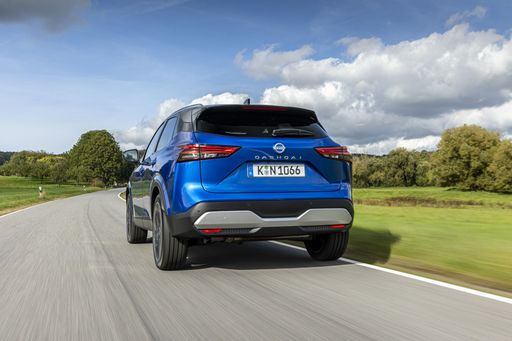
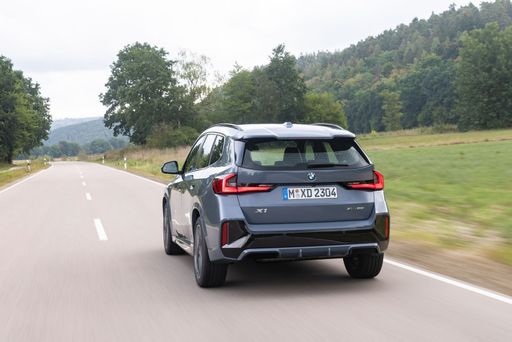
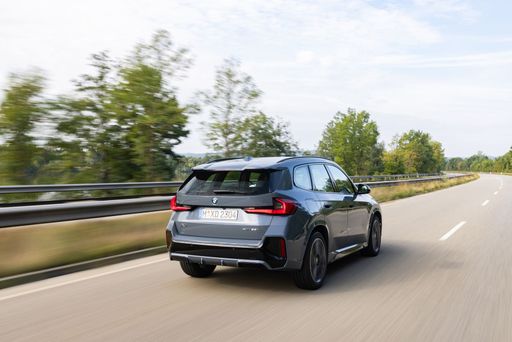
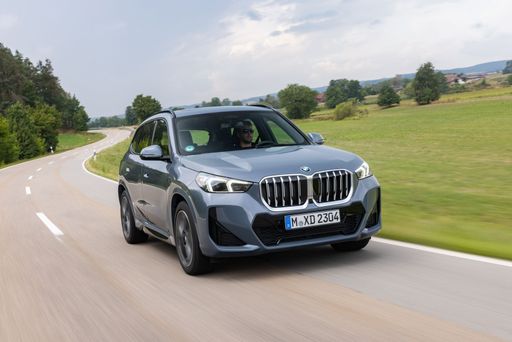
Nissan Qashqai vs BMW X1 comparison

Compare performance (205 HP vs 326 HP), boot space and price (29,600 £ vs 38,200 £ ) at a glance. Find out which car is the better choice for you – Nissan Qashqai or BMW X1?

Nissan Qashqai vs BMW X1: Key differences

Nissan Qashqai

4.9 (3 Reviews)
rate
  • clearly cheaper
  • somewhat lighter

BMW X1

4.2 (6 Reviews)
rate
  • markedly more power
  • substantially more efficient
  • substantially quicker 0–100 km/h
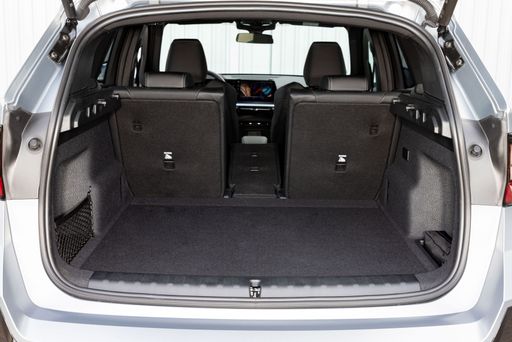
  • very slightly more trunk space

All details on performance, efficiency, range and trunk space can be found in the technical comparison below – including user reviews for both models.

Qashqai

Introduction: A Clash of the Compact SUVs

In the realm of compact SUVs, two heavyweights emerge: the BMW X1 and the Nissan Qashqai. Both vehicles boast exceptional build quality, advanced technology, and versatility, but they cater to different preferences. In this comparison, we'll delve into the technical aspects, innovations, and overall driving experiences offered by each model.
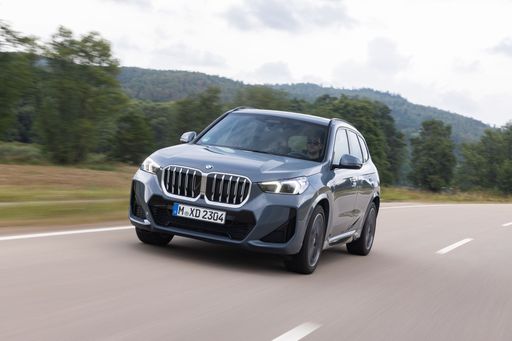
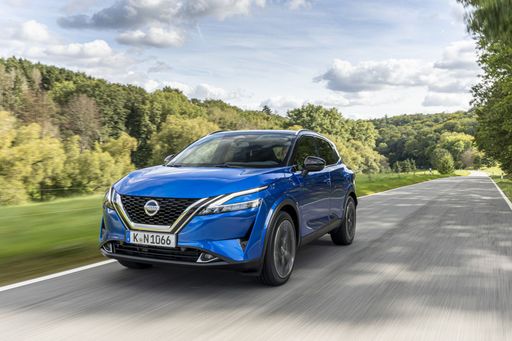
X1

Performance and Engine Options

The BMW X1 offers a broader range of engine options compared to the Nissan Qashqai, including Diesel, Petrol, Diesel MHEV, and Petrol MHEV variants, as well as a Plugin Hybrid model. Power ratings range from 136 HP to a robust 326 HP, providing drivers with an exhilarating driving experience alongside efficient performance. With the top engine capable of achieving 0 to 100 km/h in just 5.4 seconds, the X1 is designed for those who crave speed and agility.

On the other hand, the Nissan Qashqai is equipped with a selection of Petrol MHEV and Full Hybrid engines, delivering a maximum of 190 HP. Acceleration from 0 to 100 km/h ranges from 7.9 seconds to 10.2 seconds, making it slightly less spirited than its BMW rival. However, for city-dwellers looking for efficiency over raw power, the Qashqai presents a compelling option.

Qashqai

Fuel Efficiency and Emissions

Fuel efficiency is a crucial consideration for many buyers. The BMW X1 delivers impressive figures, with consumption ranging from 4.6 to 7.7 L/100km depending on the chosen engine. Its highest-performing Diesel Plug-in Hybrid variant boasts an electric range of 83 km, supported by a 14.2 kWh battery, making it a strong contender for eco-conscious drivers.

The Nissan Qashqai, meanwhile, also showcases competitive fuel consumption figures, ranging from 5.1 to 6.8 L/100km. While it may not offer a Plug-in Hybrid option, its hybrid configurations provide an effective balance of power and efficiency, catering especially to urban buyers.

X1

Interior Comfort and Features

Both SUVs provide a comfortable cabin for five passengers, with the X1 offering a spacious trunk capacity of up to 540 liters compared to the Qashqai's 504 liters. The interior of the BMW X1 fuses luxury with technology, featuring high-quality materials, advanced infotainment systems, and customizable ambient lighting.

The Nissan Qashqai, on the other hand, emphasizes practicality with its smart storage solutions and user-friendly infotainment interface. Nissan’s latest tech innovations, including the ProPILOT Assist system, enhance driving safety and convenience, positioning the Qashqai as a leader in driver assistance technology.

Qashqai

Driving Dynamics and Ride Comfort

The driving experience is where these two compact SUVs truly differentiate themselves. The BMW X1, equipped with either Front-Wheel Drive or All-Wheel Drive, provides a sporty handling dynamic combined with refined ride comfort. Its lower curb weight, ranging from 1650 kg to 1765 kg, contributes to nimble maneuverability.

The Nissan Qashqai also offers Front-Wheel Drive and All-Wheel Drive configurations, but with a lighter curb weight of between 1420 kg and 1665 kg. While it may not match the X1 in terms of sportiness, it provides a smooth ride with excellent sound insulation, making it a solid choice for long journeys.

X1

Safety Innovations and Ratings

When it comes to safety, both the BMW X1 and Nissan Qashqai are equipped with a suite of active and passive safety features. The X1 benefits from cutting-edge driver assistance technologies, such as lane-keeping assist, adaptive cruise control, and automatic emergency braking.

The Nissan Qashqai stands out with its advanced ProPILOT technology, offering semi-autonomous driving capabilities that help alleviate the stress of commuting. Both cars have earned high safety ratings, reinforcing their commitment to providing peace of mind for drivers and passengers.

Qashqai

Conclusion: Choosing Your Perfect Compact SUV

The battle between the BMW X1 and Nissan Qashqai is a compelling one. If you prioritize luxury, performance, and cutting-edge technology, the X1 is undoubtedly a superior choice. Conversely, if you seek practical features, efficient performance, and advanced driver-assistance systems without the premium price tag, the Nissan Qashqai should not be overlooked.

Ultimately, your choice will depend on your individual preferences, driving style, and lifestyle needs, proving that both models have unique offerings worthy of consideration in the competitive compact SUV segment.

Here’s where it gets real: The technical differences in detail

Qashqai

Costs and Efficiency:

Price and efficiency are key factors when choosing a car – and this is often where the real differences emerge.

Nissan Qashqai is clearly cheaper – starting at 29,600 £ , while the BMW X1 costs 38,200 £ . That’s a price difference of around 8,623 £.

Fuel consumption also shows a difference: the BMW X1 uses 2.5 L/100km and is substantially more efficient than the Nissan Qashqai with 4.5 L/100km. The difference is about 2 L/100km.

X1

Engine and Performance:

Under the bonnet, it becomes clear which model is tuned for sportiness and which one takes the lead when you hit the accelerator.

When it comes to engine power, the BMW X1 offers markedly more power – delivering 326 HP compared to 205 HP. That’s roughly 121 HP more horsepower.

When accelerating from 0 to 100 km/h, the BMW X1 is substantially quicker – completing the sprint in 5.4 s, while the Nissan Qashqai takes 7.6 s. That’s about 2.2 s quicker.

Looking at top speed, the BMW X1 is a bit faster – reaching 233 km/h, while the Nissan Qashqai tops out at 206 km/h. The difference is around 27 km/h.

There’s also a difference in torque: the BMW X1 delivers markedly more torque with 477 Nm compared to 330 Nm. That’s about 147 Nm more.

Qashqai

Space and Everyday Use:

Whether family car or daily driver – which one offers more room, flexibility and comfort?

Both vehicles offer seating for 5 people.

In terms of curb weight, Nissan Qashqai is somewhat lighter – 1,420 kg compared to 1,575 kg. The difference is around 155 kg.

Looking at boot space, the BMW X1 offers very slightly more boot space – 540 L compared to 504 L. That’s a difference of about 36 L.

For maximum load capacity, the BMW X1 offers marginally more capacity – up to 1,545 L, about 98 L more than the Nissan Qashqai.

When it comes to payload, the Nissan Qashqai carries only slightly more – 520 kg compared to 500 kg. That’s a difference of about 20 kg.

Who wins the race in the data check?

The BMW X1 is clearly superior overall in the objective data comparison.
This result only shows which model scores more points on paper – not which of the two cars feels right for you.

from £38,200
X1

BMW X1

  • Engine Type : Diesel MHEV, Petrol MHEV, Petrol, Diesel, Plugin Hybrid
  • Transmission : Automatic
  • Drive Type : Front-Wheel Drive, All-Wheel Drive
  • Power HP : 136 - 326 HP
  • Consumption L/100km : 2.5 - 7.7 L/100km
  • Electric Range : 81 km
Nissan Qashqai
BMW X1

Costs and Consumption

View detailed analysis

Engine and Performance

View detailed analysis

Dimensions and Body

View detailed analysis

Nissan Qashqai

The Nissan Qashqai blends practical, family-friendly packaging with SUV styling that refuses to shout, making it a sensible and dependable choice for everyday life. It’s comfortable to live with, economical on the road, and neatly equipped enough to feel modern without ever feeling precious — perfect if you want crossover versatility without the drama.

details

BMW X1

The BMW X1 brings a premium feel to compact crossover life, wrapping practical space and agile handling into a tidy, upscale package. It’s ideal for buyers who want BMW driving dynamics without the bulk, offering everyday comfort and a few clever tricks to keep the commute interesting.

details
Nissan Qashqai
BMW X1

Costs and Consumption

Price
29,600 - 39,900 £
Price
38,200 - 55,500 £
Consumption L/100km
4.5 - 6.8 L/100km
Consumption L/100km
2.5 - 7.7 L/100km
Consumption kWh/100km
-
Consumption kWh/100km
-
Electric Range
-
Electric Range
81 km
Battery Capacity
-
Battery Capacity
14.2 kWh
co2
102 - 154 g/km
co2
57 - 175 g/km
Fuel tank capacity
55 L
Fuel tank capacity
47 - 54 L

Dimensions and Body

Body Type
SUV
Body Type
SUV
Seats
5
Seats
5
Doors
5
Doors
5
Curb weight
1,420 - 1,665 kg
Curb weight
1,575 - 1,935 kg
Trunk capacity
479 - 504 L
Trunk capacity
490 - 540 L
Length
4,425 mm
Length
4,500 mm
Width
1,835 mm
Width
1,845 mm
Height
1,625 mm
Height
1,630 - 1,642 mm
Max trunk capacity
1,422 - 1,447 L
Max trunk capacity
1,495 - 1,545 L
Payload
466 - 520 kg
Payload
490 - 500 kg

Engine and Performance

Engine Type
Petrol MHEV, Full Hybrid
Engine Type
Diesel MHEV, Petrol MHEV, Petrol, Diesel, Plugin Hybrid
Transmission
Manuel, Automatic
Transmission
Automatic
Transmission Detail
Manual Gearbox, CVT, Reduction Gearbox
Transmission Detail
Dual-Clutch Automatic
Drive Type
Front-Wheel Drive, All-Wheel Drive
Drive Type
Front-Wheel Drive, All-Wheel Drive
Power HP
140 - 205 HP
Power HP
136 - 326 HP
Acceleration 0-100km/h
7.6 - 10.2 s
Acceleration 0-100km/h
5.4 - 9.2 s
Max Speed
170 - 206 km/h
Max Speed
190 - 233 km/h
Torque
240 - 330 Nm
Torque
230 - 477 Nm
Number of Cylinders
3 - 4
Number of Cylinders
3 - 4
Power kW
103 - 151 kW
Power kW
100 - 240 kW
Engine capacity
1,332 - 1,498 cm3
Engine capacity
1,499 - 1,998 cm3

General

Model Year
2,025 - 2,026
Model Year
2,024 - 2,025
CO2 Efficiency Class
E, C
CO2 Efficiency Class
D, E, F, B
Brand
Nissan
Brand
BMW
DriveDuel uses data analysis and artificial intelligence to evaluate vehicle data and create content. Content is regularly reviewed and improved. The displayed prices are estimates based on German list prices, adjusted to the respective country’s VAT. Country-specific registration taxes are not included. This information is not legally binding.