VS

Nissan Qashqai vs Mazda CX-60 comparison

Compare performance (205 HP vs 327 HP), boot space and price (29,600 £ vs 43,700 £ ) at a glance. Find out which car is the better choice for you – Nissan Qashqai or Mazda CX-60?

Nissan Qashqai vs Mazda CX-60: Key differences

Nissan Qashqai

4.9 (3 Reviews)
rate
  • substantially cheaper
  • markedly lighter
details

Mazda CX-60

4.7 (8 Reviews)
rate
  • noticeably more power
  • a bit more efficient
  • clearly quicker 0–100 km/h
  • moderately more trunk space
details

All details on performance, efficiency, range and trunk space can be found in the technical comparison below – including user reviews for both models.

By Achim Sedelmaier

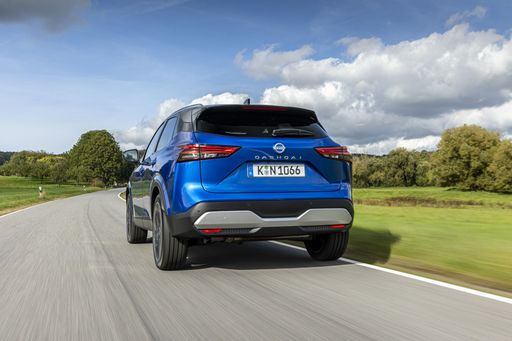
Qashqai

The rapidly evolving automotive landscape presents consumers with a plethora of choices, especially in the competitive compact SUV segment. Two standout vehicles vying for attention are the Mazda CX-60 and the Nissan Qashqai. Each brings unique features, cutting-edge technology, and performance capabilities that cater to different preferences. In this article, we will delve into a comprehensive comparison of these two models, examining various technical aspects and innovations.
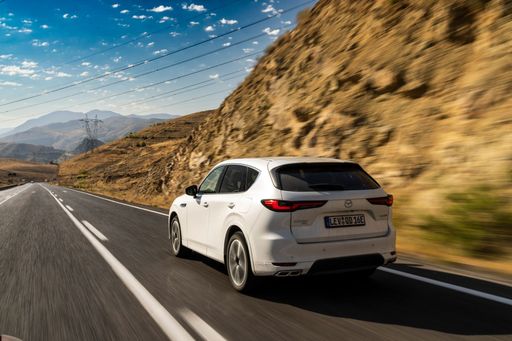
CX-60

Design and Dimensions

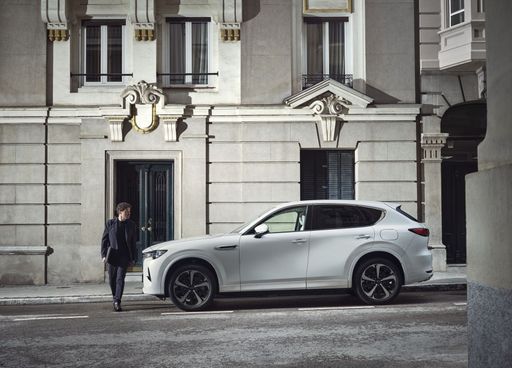
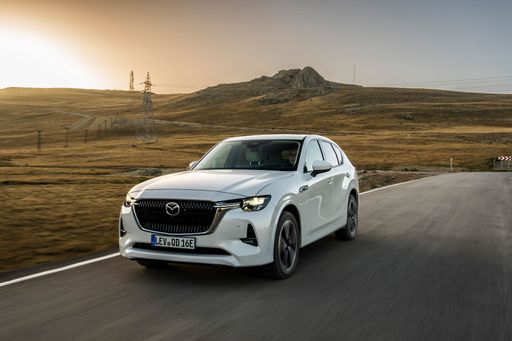
The Mazda CX-60 showcases a bold and sporty design characterized by its dynamic, sleek lines and a muscular stance. With a length of 4745 mm, width of 1890 mm, and a height ranging from 1680 mm to 1688 mm, it offers a substantial presence on the road. The five-door layout seamlessly blends aesthetics with functionality, ensuring ample cabin space for passengers and cargo.

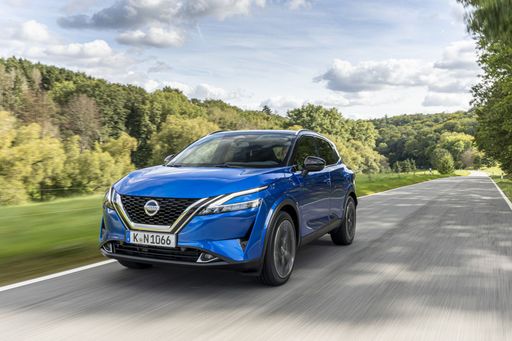
On the other hand, the Nissan Qashqai, measuring 4425 mm in length and 1835 mm in width while standing at 1625 mm in height, presents a more compact and agile silhouette. Also featuring a five-door configuration, it is ideal for urban environments where maneuverability is key. The Qashqai’s design emphasizes modern lines and a refined front fascia, appealing to a wide demographic.

Qashqai

Powertrains and Performance

The Mazda CX-60 offers an array of engine options, including a powerful 327 HP plug-in hybrid system, a diesel MHEV with up to 200 HP, and a potent 254 HP gasoline variant. Coupled with advanced automatic transmissions, the CX-60 provides a seamless driving experience across varying terrains. Notably, the plug-in hybrid variant boasts an impressive electric range of 64 km, catering to eco-conscious drivers.

In contrast, the Nissan Qashqai is equipped with petrol MHEV and full hybrid options, producing power outputs ranging from 140 HP to 190 HP. With a choice of manual and automatic transmissions (CVT), the Qashqai is designed for both performance and efficiency. The acceleration figures reveal that while the Qashqai can achieve 0-100 km/h in as fast as 7.9 seconds, it traditionally lags behind the CX-60’s top-performing models.

CX-60

Fuel Efficiency and Emissions

When it comes to fuel consumption, the Mazda CX-60 shines with dramatically low figures, particularly in its hybrid variant, which achieves an astounding 1.4 L/100km. The diesel variant also performs admirably, consuming around 5 L/100km. This efficiency contributes significantly to its lower emissions, with CO2 figures starting from just 31 g/km.

The Nissan Qashqai's fuel consumption ranges from 5.1 to 6.8 L/100km, depending on the selected engine and configuration. Its emissions range between 116 g/km and 154 g/km, indicating that while it is efficient, it does not quite match the CX-60 in this regard.

Qashqai

Interior and Technology

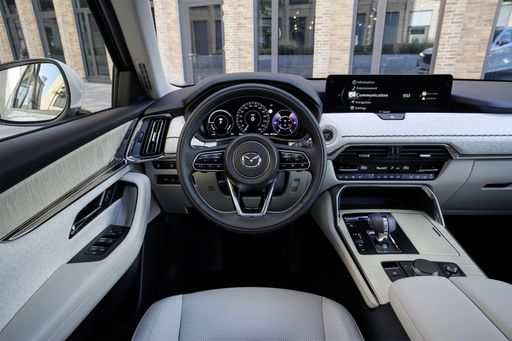
Both vehicles impress with their interiors, highlighting modern design, quality materials, and advanced technology. The CX-60 boasts a spacious cabin with a trunk capacity of 570 liters, providing ample room for luggage and everyday items. Technological innovations include a user-friendly infotainment system and advanced driver assistance features designed to enhance safety and comfort.

Similarly, the Nissan Qashqai offers a comfortable interior with refined finishes and practicality. The trunk space measures between 479 and 504 liters, accommodating various cargo needs. The Qashqai stands out with its cutting-edge technology, offering a comprehensive suite of safety features and an intuitive infotainment system to keep drivers connected.

CX-60

Driving Experience

The Mazda CX-60 is constructed with a focus on engaging driving dynamics, delivering exceptional handling thanks to its rear-wheel drive layout in some variants and advanced all-wheel drive options. It caters to enthusiasts looking for a spirited and responsive driving experience, especially with its acceleration capabilities, reaching 0-100 km/h in as quick as 5.8 seconds.

Conversely, the Nissan Qashqai, while providing a composed ride, emphasizes comfort and practicality over sportiness. Its handling is surprisingly responsive for its segment, with various driving modes allowing drivers to tailor the experience based on road conditions. However, it does not exhibit the same level of athleticism as the CX-60.

Qashqai

Conclusion

In conclusion, both the Mazda CX-60 and Nissan Qashqai offer compelling options within the compact SUV market. The CX-60 excels in terms of performance, efficiency, and driving engagement, making it an enticing option for those seeking a robust driving experience. In contrast, the Qashqai prioritizes comfort and urban practicality, appealing to a broader audience seeking a reliable daily driver.

Ultimately, the choice between these two vehicles hinges on individual preferences—whether one desires a sportier drive with advanced hybrid technology or a comfortably equipped SUV tailored for everyday ease. Both models undoubtedly deliver exceptional value in their respective niches.

Here’s where it gets real: The technical differences in detail

Qashqai

Costs and Efficiency:

Price and efficiency are key factors when choosing a car – and this is often where the real differences emerge.

Nissan Qashqai is substantially cheaper – starting at 29,600 £ , while the Mazda CX-60 costs 43,700 £ . That’s a price difference of around 14,066 £.

Fuel consumption also shows a difference: the Mazda CX-60 uses 3.8 L/100km and is a bit more efficient than the Nissan Qashqai with 4.3 L/100km. The difference is about 0.5 L/100km.

CX-60

Engine and Performance:

Power, torque and acceleration are the classic benchmarks for car enthusiasts – and here, some clear differences start to show.

When it comes to engine power, the Mazda CX-60 offers noticeably more power – delivering 327 HP compared to 205 HP. That’s roughly 122 HP more horsepower.

When accelerating from 0 to 100 km/h, the Mazda CX-60 is clearly quicker – completing the sprint in 5.8 s, while the Nissan Qashqai takes 7.6 s. That’s about 1.8 s quicker.

There’s also a difference in torque: the Mazda CX-60 delivers markedly more torque with 550 Nm compared to 330 Nm. That’s about 220 Nm more.

Qashqai

Space and Everyday Use:

Whether family car or daily driver – which one offers more room, flexibility and comfort?

Both vehicles offer seating for 5 people.

In terms of curb weight, Nissan Qashqai is markedly lighter – 1,420 kg compared to 1,890 kg. The difference is around 470 kg.

Looking at boot space, the Mazda CX-60 offers moderately more boot space – 570 L compared to 504 L. That’s a difference of about 66 L.

When it comes to payload, the Mazda CX-60 carries slightly more – 612 kg compared to 516 kg. That’s a difference of about 96 kg.

Who wins the race in the data check?

The Mazda CX-60 stands well ahead of its rival in the objective data comparison.
This result only shows which model scores more points on paper – not which of the two cars feels right for you.

from £43,700
CX-60

Mazda CX-60

  • Engine Type : Plugin Hybrid, Diesel MHEV
  • Transmission : Automatic
  • Drive Type : All-Wheel Drive, Rear-Wheel Drive
  • Power HP : 200 - 327 HP
  • Consumption L/100km : 3.8 - 5.2 L/100km
  • Electric Range : 63 km
Nissan Qashqai
Mazda CX-60

Costs and Consumption

View detailed analysis

Engine and Performance

View detailed analysis

Dimensions and Body

View detailed analysis

Nissan Qashqai

The Nissan Qashqai blends practical, family-friendly packaging with SUV styling that refuses to shout, making it a sensible and dependable choice for everyday life. It’s comfortable to live with, economical on the road, and neatly equipped enough to feel modern without ever feeling precious — perfect if you want crossover versatility without the drama.

details

Mazda CX-60

The Mazda CX-60 pairs sculpted, understated looks with poised handling and a cabin that punches above its class, making long drives feel unexpectedly civilized. For buyers who want a premium feel without the showroom swagger, it's the sort of car that earns respect quietly — and still manages a wink when you push on.

details
Nissan Qashqai
Mazda CX-60

Costs and Consumption

Price
29,600 - 39,900 £
Price
43,700 - 57,900 £
Consumption L/100km
4.3 - 6.8 L/100km
Consumption L/100km
3.8 - 5.2 L/100km
Consumption kWh/100km
-
Consumption kWh/100km
-
Electric Range
-
Electric Range
63 km
Battery Capacity
-
Battery Capacity
-
co2
98 - 152 g/km
co2
85 - 137 g/km
Fuel tank capacity
-
Fuel tank capacity
-

Dimensions and Body

Body Type
SUV
Body Type
SUV
Seats
5
Seats
5
Doors
-
Doors
-
Curb weight
1,420 - 1,624 kg
Curb weight
1,890 - 2,055 kg
Trunk capacity
479 - 504 L
Trunk capacity
570 L
Length
-
Length
-
Width
1,835 mm
Width
1,890 mm
Height
-
Height
-
Max trunk capacity
-
Max trunk capacity
-
Payload
446 - 516 kg
Payload
581 - 612 kg

Engine and Performance

Engine Type
Petrol MHEV, Full Hybrid
Engine Type
Plugin Hybrid, Diesel MHEV
Transmission
Manuel, Automatic
Transmission
Automatic
Transmission Detail
Manual Gearbox, CVT, Reduction Gearbox
Transmission Detail
Automatic Gearbox
Drive Type
Front-Wheel Drive, All-Wheel Drive
Drive Type
All-Wheel Drive, Rear-Wheel Drive
Power HP
158 - 205 HP
Power HP
200 - 327 HP
Acceleration 0-100km/h
7.6 - 9.9 s
Acceleration 0-100km/h
5.8 - 8.4 s
Max Speed
-
Max Speed
-
Torque
260 - 330 Nm
Torque
450 - 550 Nm
Number of Cylinders
3 - 4
Number of Cylinders
4 - 6
Power kW
116 - 151 kW
Power kW
147 - 241 kW
Engine capacity
1,332 - 1,498 cm3
Engine capacity
2,488 - 3,283 cm3

General

Model Year
2,025 - 2,026
Model Year
2025
CO2 Efficiency Class
E, C
CO2 Efficiency Class
B, D, E
Brand
Nissan
Brand
Mazda
DriveDuel uses data analysis and artificial intelligence to evaluate vehicle data and create content. Content is regularly reviewed and improved. The displayed prices are estimates based on German list prices, adjusted to the respective country’s VAT. Country-specific registration taxes are not included. This information is not legally binding.