VS

Nissan Qashqai vs Renault Scénic comparison

Compare performance (205 HP vs 218 HP), boot space and price (29,600 £ vs 34,600 £ ) at a glance. Find out which car is the better choice for you – Nissan Qashqai or Renault Scénic?

Nissan Qashqai vs Renault Scénic: Key differences

Nissan Qashqai

4.9 (3 Reviews)
rate
  • slightly cheaper
  • very slightly quicker 0–100 km/h
  • markedly lighter
details

Renault Scénic

4.6 (4 Reviews)
rate
  • barely more power
  • barely more trunk space
details

All details on performance, efficiency, range and trunk space can be found in the technical comparison below – including user reviews for both models.

By Achim Sedelmaier

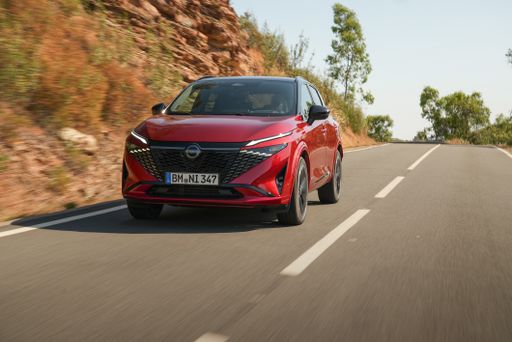
Qashqai

The Battle of the SUVs: Nissan Qashqai vs. Renault Scénic

In the bustling world of SUVs, the 2024 Nissan Qashqai and the Renault Scénic have made significant marks. While both come from renowned automakers, they cater to slightly different audiences due to their unique offerings and innovations. Here’s a detailed comparison for potential buyers to make an informed decision.
Scénic

Design and Dimensions

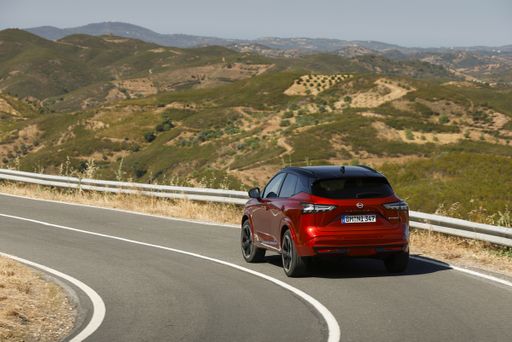
The Nissan Qashqai boasts modern SUV aesthetics with dimensions measuring 4425 mm in length, 1835 mm in width, and 1625 mm in height. It confidently stands as a compact SUV, offering a practical yet stylish presence on the road.

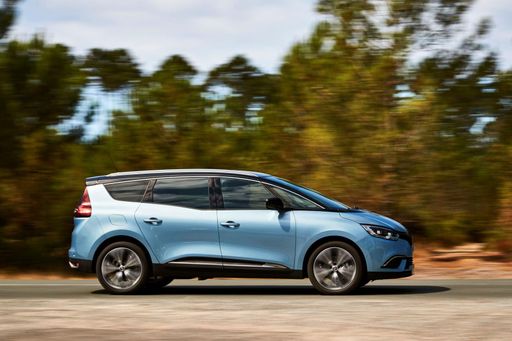
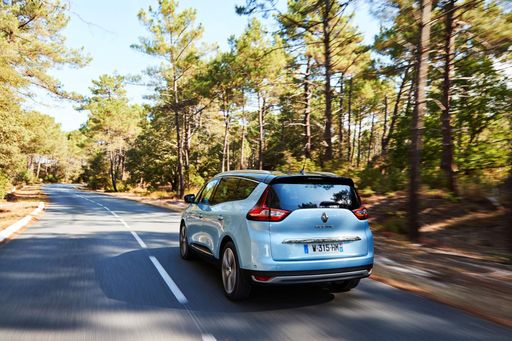
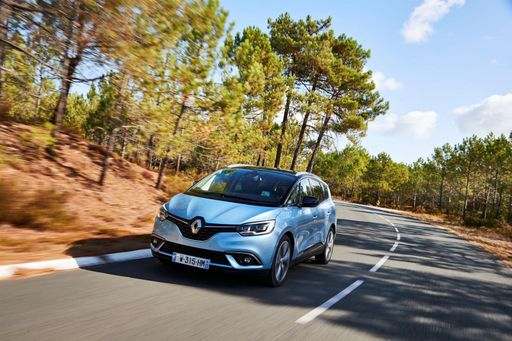
The Renault Scénic, meanwhile, offers a slightly longer body with dimensions of 4470 mm in length, 1864 mm in width, and 1571 mm in height. The design leans into its futuristic electric drive appeal, providing sleek lines and a contemporary vibe.

Qashqai

Engine Options and Performance

The Nissan Qashqai presents a diverse engine lineup, offering both petrol mild hybrid (MHEV) and full hybrid options. The power spectrum ranges from 140 HP to 190 HP, supported by different transmissions, including a Manual Gearbox and CVT, suitable for versatile driving preferences. Notably, the Qashqai can accelerate from 0 to 100 km/h between 9.9 seconds and 7.9 seconds, clearly showcasing its proficiency in satisfying varying power needs.

The Renault Scénic is solely an electric marvel. Available with power outputs of 170 HP and 220 HP, it accelerates faster than some combustion engines, reaching 0 to 100 km/h in as little as 7.9 seconds. The electric-only drive epitomizes clean energy, offering up to a 598 km range — an impressive figure for long commutes or city drives.

Scénic

Fuel Efficiency and Environmental Influence

Nissan shone its spotlight on fuel efficiency, with petrol MHEV variants consuming approximately 6.3 to 5.1 L/100 km. Despite this, the full hybrid offers a slightly higher efficiency as part of its charm. In terms of ecological influence, the Qashqai's CO2 emissions range between 116 and 154 g/km, secured within the E to D efficiency classes.

Conversely, the Renault Scénic stands as an ambassador of zero emissions, clocking 0 g/km of CO2 output thanks to its all-electric engine. With consumption rates of 16.7 to 17.6 kWh/100 km, its electric efficiency is both environmentally friendly and cost-effective — cementing its A-class efficiency status.

Qashqai

Interior Comfort and Cargo Space

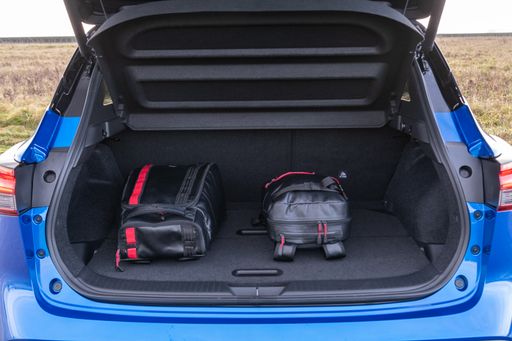
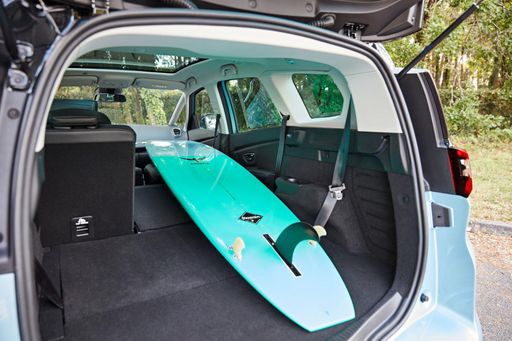
Both vehicles comfortably seat five travelers, ensuring each journey is undertaken in maximum comfort. The Qashqai's trunk capacity stands at 504 liters, fulfilling everyday utility needs with ease. Adding to this, the Renault Scénic presents a slightly more extensive trunk capacity of 545 liters, catering well to families needing that extra space for travel necessities.

Scénic

Final Thoughts – Choosing Your SUV

When positioning the 2024 Nissan Qashqai against the Renault Scénic, buyers are posed with a classic conundrum of fuel versus electric. The Qashqai, with its versatile engine types and hybrid options, appeals to those who desire diversity and choice. On the opposite end, the Scénic offers a leap into the future with its electric-only proposition, promising both eco-friendliness and high performance.

Ultimately, the choice between the Nissan Qashqai and Renault Scénic hinges on individual priorities: whether it be the adaptability of hybrid technology or the forward-thinking embrace of electric innovation.

Here’s where it gets real: The technical differences in detail

Qashqai

Costs and Efficiency:

When it comes to price and running costs, the biggest differences usually appear. This is often where you see which car fits your budget better in the long run.

Nissan Qashqai is slightly cheaper – starting at 29,600 £ , while the Renault Scénic costs 34,600 £ . That’s a price difference of around 5,023 £.

Scénic

Engine and Performance:

Under the bonnet, it becomes clear which model is tuned for sportiness and which one takes the lead when you hit the accelerator.

When it comes to engine power, the Renault Scénic offers barely more power – delivering 218 HP compared to 205 HP. That’s roughly 13 HP more horsepower.

When accelerating from 0 to 100 km/h, the Nissan Qashqai is very slightly quicker – completing the sprint in 7.6 s, while the Renault Scénic takes 7.9 s. That’s about 0.3 s quicker.

There’s also a difference in torque: the Nissan Qashqai delivers marginally more torque with 330 Nm compared to 300 Nm. That’s about 30 Nm more.

Qashqai

Space and Everyday Use:

Cabin size, boot volume and payload all play a role in everyday practicality. Here, comfort and flexibility make the difference.

Both vehicles offer seating for 5 people.

In terms of curb weight, Nissan Qashqai is markedly lighter – 1,420 kg compared to 1,822 kg. The difference is around 402 kg.

Looking at boot space, the Renault Scénic offers barely more boot space – 545 L compared to 504 L. That’s a difference of about 41 L.

When it comes to payload, the Renault Scénic carries only slightly more – 518 kg compared to 516 kg. That’s a difference of about 2 kg.

Who wins the race in the data check?

The Renault Scénic is far ahead overall in the objective data comparison.
This result only shows which model scores more points on paper – not which of the two cars feels right for you.

from £34,600
Scénic

Renault Scénic

  • Engine Type : Electric
  • Transmission : Automatic
  • Drive Type : Front-Wheel Drive
  • Power HP : 170 - 218 HP
  • Consumption kWh/100km : 16.6 - 17.5 kWh/100km
  • Electric Range : 420 - 598 km
Nissan Qashqai
Renault Scénic

Costs and Consumption

View detailed analysis

Engine and Performance

View detailed analysis

Dimensions and Body

View detailed analysis

Nissan Qashqai

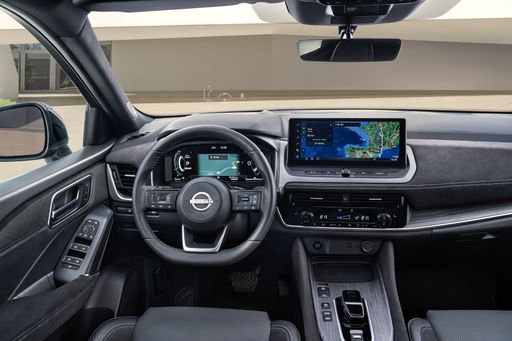
The Nissan Qashqai is a compact crossover that blends everyday practicality with a comfortable, composed driving experience and a smart, well finished interior. It feels sensible and versatile for city life and longer trips, appealing to buyers who want a reliable, low fuss family car.

details

Renault Scénic

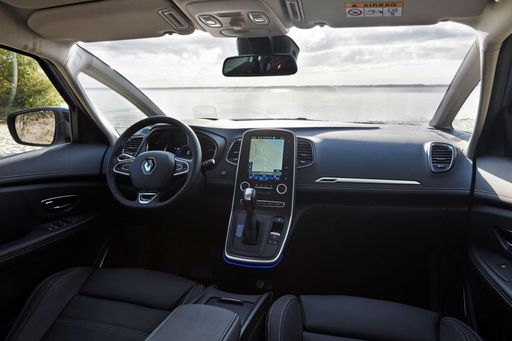
The Renault Scenic is a practical and comfortable family car that prioritises interior flexibility and everyday usability. With a composed ride and clever storage solutions, it suits buyers who want a versatile, easy-to-live-with vehicle for family duties and daily driving.

details
Nissan Qashqai
Renault Scénic

Costs and Consumption

Price
29,600 - 39,900 £
Price
34,600 - 44,000 £
Consumption L/100km
4.3 - 6.8 L/100km
Consumption L/100km
-
Consumption kWh/100km
-
Consumption kWh/100km
16.6 - 17.5 kWh/100km
Electric Range
-
Electric Range
420 - 598 km
Battery Capacity
-
Battery Capacity
-
co2
98 - 152 g/km
co2
0 g/km
Fuel tank capacity
-
Fuel tank capacity
-

Dimensions and Body

Body Type
SUV
Body Type
SUV
Seats
5
Seats
5
Doors
-
Doors
5
Curb weight
1,420 - 1,624 kg
Curb weight
1,822 - 1,927 kg
Trunk capacity
479 - 504 L
Trunk capacity
545 L
Length
-
Length
4,470 mm
Width
1,835 mm
Width
1,864 mm
Height
-
Height
1,571 mm
Max trunk capacity
-
Max trunk capacity
1,670 L
Payload
446 - 516 kg
Payload
514 - 518 kg

Engine and Performance

Engine Type
Petrol MHEV, Full Hybrid
Engine Type
Electric
Transmission
Manuel, Automatic
Transmission
Automatic
Transmission Detail
Manual Gearbox, CVT, Reduction Gearbox
Transmission Detail
Reduction Gearbox
Drive Type
Front-Wheel Drive, All-Wheel Drive
Drive Type
Front-Wheel Drive
Power HP
158 - 205 HP
Power HP
170 - 218 HP
Acceleration 0-100km/h
7.6 - 9.9 s
Acceleration 0-100km/h
7.9 - 8.6 s
Max Speed
-
Max Speed
150 - 170 km/h
Torque
260 - 330 Nm
Torque
280 - 300 Nm
Number of Cylinders
3 - 4
Number of Cylinders
-
Power kW
116 - 151 kW
Power kW
125 - 160 kW
Engine capacity
1,332 - 1,498 cm3
Engine capacity
-

General

Model Year
2,025 - 2,026
Model Year
2025
CO2 Efficiency Class
E, C
CO2 Efficiency Class
A
Brand
Nissan
Brand
Renault
DriveDuel uses data analysis and artificial intelligence to evaluate vehicle data and create content. Content is regularly reviewed and improved. The displayed prices are estimates based on German list prices, adjusted to the respective country’s VAT. Country-specific registration taxes are not included. This information is not legally binding.