@ Nissan Motor Corporation
@ Peugeot / Stellantis Media
VS

Nissan X-Trail vs Peugeot 3008 – Which model is better for everyday use?

Both models have their strengths – but which one suits you more?
Compare performance, efficiency, price and space directly: Nissan X-Trail or Peugeot 3008?

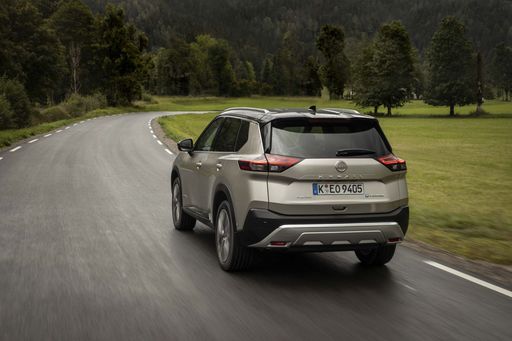
X-Trail @ Nissan Motor Corporation

Comparing SUVs: Nissan X-Trail vs. Peugeot 3008

The SUV segment has become a competitive battleground, with manufacturers offering a range of models designed to cater to diverse needs and preferences. Two popular contenders, the Nissan X-Trail and the Peugeot 3008, have been gaining traction thanks to their blend of performance, technology, and innovation. In this comparison, we delve into the technical nuances and standout features of these two models to see how they stack up against each other for the 2024 model year.
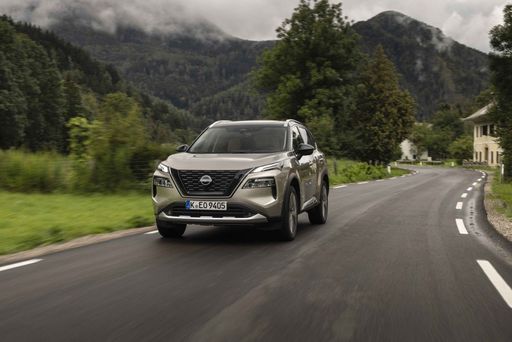
3008 @ Peugeot / Stellantis Media

Engine and Performance

The Nissan X-Trail offers a choice between petrol mild hybrid and full hybrid engine options, delivering power outputs of 163, 204, and 213 horsepower. It's available in both front-wheel drive and all-wheel drive configurations, providing flexibility depending on terrain and driving preferences. When it comes to acceleration, the X-Trail can reach 0-100 km/h in as little as 7 seconds, topping out at a maximum speed of 200 km/h.

On the other hand, the Peugeot 3008 presents a broad spectrum of powertrains, including petrol mild hybrid, plug-in hybrid, and electric versions, with power ranging from 136 to 231 horsepower. Like its rival, it features a front-wheel drive system. The 3008’s electric variant offers an impressive range of up to 524 km, a notable consideration for eco-conscious drivers.

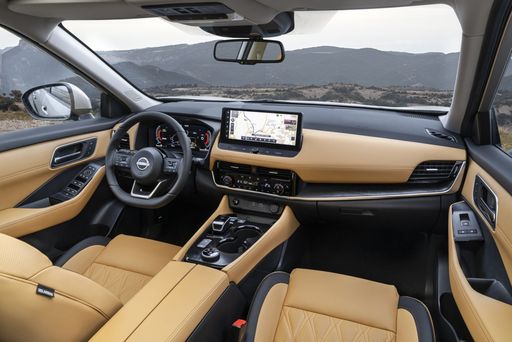
X-Trail @ Nissan Motor Corporation

Fuel Efficiency and Emissions

The fuel consumption figures for the Nissan X-Trail range between 5.7 and 6.9 L/100km, with CO2 emissions between 131 to 161 g/km. This places the X-Trail mainly in efficiency classes D to F, indicating room for improvement in its environmental impact.

The Peugeot 3008 showcases superior eco-credentials. With fuel consumption as low as 0.9 L/100km for hybrid models and CO2 emissions that go as low as 19 g/km, it outperforms it in terms of eco-friendliness, garnering efficiency ratings ranging from A to D.

3008 @ Peugeot / Stellantis Media

Interior Comfort and Practicality

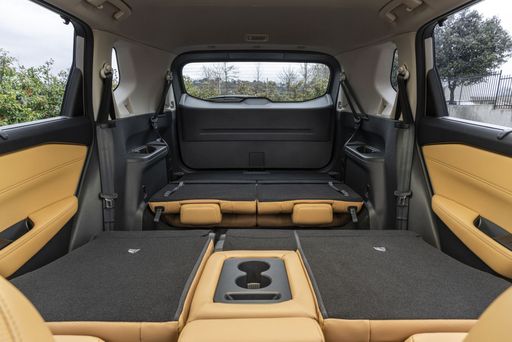
The Nissan X-Trail provides spacious accommodation with options for five or seven seats, a feature that may attract families. The trunk capacity varies between 585 and 575 liters, depending on seat configuration, offering ample room for luggage.

Conversely, the Peugeot 3008 is engineered for a five-seat configuration, focusing on passenger space and comfort. Its trunk capacity measures 520 liters, slightly less than the X-Trail, but still offers substantial storage capacity.

X-Trail @ Nissan Motor Corporation

Technology and Innovations

The latest Nissan X-Trail is equipped with cutting-edge technology, including an advanced CVT transmission and reduction gearbox. Its driver-assistance features and infotainment systems are designed to blend innovation with ease of use.

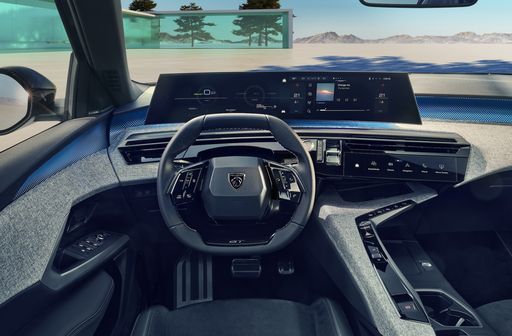
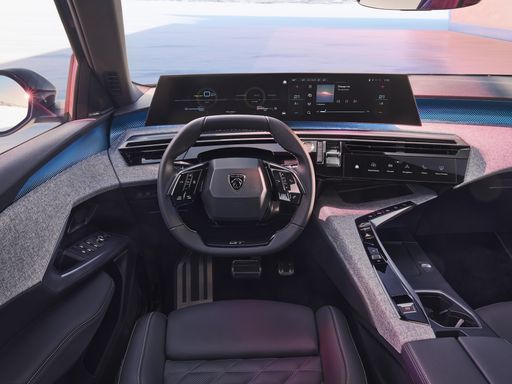
Peugeot 3008, renowned for its futuristic design, displays an intuitive dual-clutch automatic transmission alongside innovative plug-in hybrid systems. Additionally, the 3008's i-Cockpit design and infotainment interface provide a modern driving experience, enhancing both connectivity and safety.

3008 @ Peugeot / Stellantis Media

Dimensions and Road Presence

With a length of 4680 mm, a width of 1840 mm, and a height of 1720 mm, the Nissan X-Trail boasts a robust presence on the road, designed for versatility on various terrains.

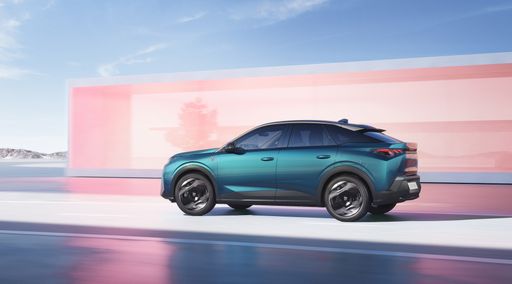
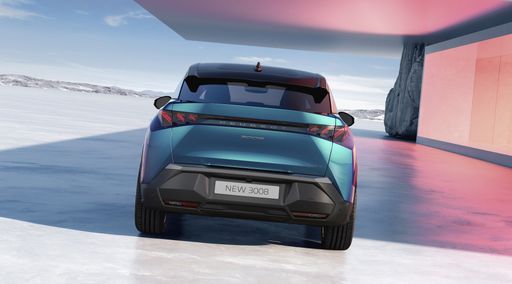
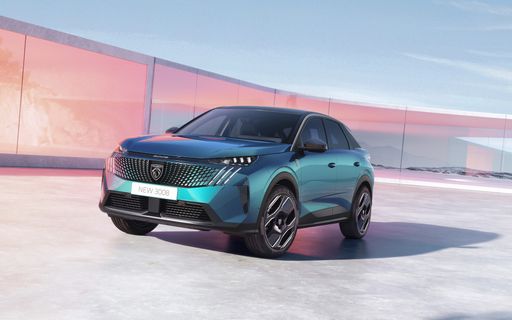
The Peugeot 3008, slightly more compact at 4542 mm in length, 1895 mm in width, and 1641 mm in height, conveys a sporty and sleek aesthetic while maintaining a powerful road presence suitable for urban environments.

X-Trail @ Nissan Motor Corporation

Conclusion

The choice between the Nissan X-Trail and the Peugeot 3008 ultimately hinges on individual preferences and priorities. The X-Trail may appeal more to those seeking a versatile family SUV with multiple seating configurations, while the 3008 attracts with its eco-friendly options and innovative technology. Both models offer distinct strengths, making them worthy contenders in the competitive SUV market.

Here’s where it gets real: The technical differences in detail

3008 @ Peugeot / Stellantis Media

Costs and Efficiency:

Looking at overall running costs, both models reveal some interesting differences in everyday economy.

Nissan X-Trail has a barely noticeable advantage in terms of price – it starts at 34000 £, while the Peugeot 3008 costs 35100 £. That’s a price difference of around 1114 £.

Fuel consumption also shows a difference: Peugeot 3008 manages with 2.40 L and is therefore decisively more efficient than the Nissan X-Trail with 5.70 L. The difference is about 3.30 L per 100 km.

Engine and Performance:

Power, torque and acceleration are the classic benchmarks for car enthusiasts – and here, some clear differences start to show.

When it comes to engine power, the Peugeot 3008 has a clearly perceptible edge – offering 325 HP compared to 213 HP. That’s roughly 112 HP more horsepower.

In acceleration from 0 to 100 km/h, the Peugeot 3008 is slightly quicker – completing the sprint in 6 s, while the Nissan X-Trail takes 7 s. That’s about 1 s faster.

In terms of top speed, the Peugeot 3008 performs slight better – reaching 220 km/h, while the Nissan X-Trail tops out at 200 km/h. The difference is around 20 km/h.

There’s also a difference in torque: Nissan X-Trail pulls minimal stronger with 525 Nm compared to 511 Nm. That’s about 14 Nm difference.

Space and Everyday Use:

Whether family car or daily driver – which one offers more room, flexibility and comfort?

Seats: Nissan X-Trail offers noticeable more seating capacity – 7 vs 5.

In curb weight, Peugeot 3008 is barely noticeable lighter – 1648 kg compared to 1668 kg. The difference is around 20 kg.

In terms of boot space, the Nissan X-Trail offers somewhat more room – 585 L compared to 520 L. That’s a difference of about 65 L.

In maximum load capacity, the Peugeot 3008 performs barely noticeable better – up to 1480 L, which is about 56 L more than the Nissan X-Trail.

When it comes to payload, Nissan X-Trail somewhat takes the win – 574 kg compared to 467 kg. That’s a difference of about 107 kg.

Who comes out on top?

Overall, the Peugeot 3008 shows itself to be wins the duel decisively and secures the title of DriveDuel Champion.
It convinces with the more balanced overall package and proves to be the more versatile choice for everyday use.

from about £35,100
3008 @ Peugeot / Stellantis Media

Peugeot 3008

  • Engine Type : Electric, Petrol MHEV, Plugin Hybrid
  • Transmission : Automatic
  • Drive Type : Front-Wheel Drive, All-Wheel Drive
  • Power HP : 145 - 325 HP
  • Consumption L/100km : 2.4 - 5.4 L
  • Consumption kWh/100km : 16.9 - 17.6 kWh
  • Electric Range : 81 - 698 km

Nissan X-Trail

5 (1)
rate

The Nissan X-Trail is a roomy, no-nonsense family SUV that mixes sensible practicality with a quietly modern look, making it an easy choice for busy lives and weekend escapes. It drives with calm confidence, delivers a comfortable ride and sensible tech, and won’t demand drama while doing the everyday heavy lifting.

details

Peugeot 3008

5 (1)
rate

The Peugeot 3008 blends bold French styling with a surprisingly grown-up interior that makes even dull commutes feel a little bit special. Practical enough for family life yet lively to drive, it’s a clever all‑rounder that stands out from the crossover crowd without shouting for attention.

details
Nissan X-Trail
Peugeot 3008
X-Trail @ Nissan Motor Corporation
3008 @ Peugeot / Stellantis Media

Costs and Consumption

Price
34000 - 50400 £
Price
35100 - 52000 £
Consumption L/100km
5.7 - 6.9 L
Consumption L/100km
2.4 - 5.4 L
Consumption kWh/100km
-
Consumption kWh/100km
16.9 - 17.6 kWh
Electric Range
-
Electric Range
81 - 698 km
Battery Capacity
-
Battery Capacity
0.4 - 96.9 kWh
co2
131 - 161 g/km
co2
0 - 121 g/km
Fuel tank capacity
55 L
Fuel tank capacity
55 L

Dimensions and Body

Body Type
SUV
Body Type
SUV
Seats
5 - 7
Seats
5
Doors
5
Doors
5
Curb weight
1668 - 1961 kg
Curb weight
1648 - 2266 kg
Trunk capacity
177 - 585 L
Trunk capacity
470 - 520 L
Length
4680 mm
Length
4542 mm
Width
1840 mm
Width
1895 mm
Height
1720 mm
Height
1641 mm
Max trunk capacity
1396 - 1424 L
Max trunk capacity
1430 - 1480 L
Payload
432 - 574 kg
Payload
432 - 467 kg

Engine and Performance

Engine Type
Petrol MHEV, Full Hybrid
Engine Type
Electric, Petrol MHEV, Plugin Hybrid
Transmission
Automatic
Transmission
Automatic
Transmission Detail
CVT, Reduction Gearbox
Transmission Detail
Reduction Gearbox, Dual-Clutch Automatic
Drive Type
Front-Wheel Drive, All-Wheel Drive
Drive Type
Front-Wheel Drive, All-Wheel Drive
Power HP
163 - 213 HP
Power HP
145 - 325 HP
Acceleration 0-100km/h
7 - 9.6 s
Acceleration 0-100km/h
6 - 10.2 s
Max Speed
170 - 200 km/h
Max Speed
170 - 220 km/h
Torque
300 - 525 Nm
Torque
230 - 511 Nm
Number of Cylinders
3
Number of Cylinders
3 - 4
Power kW
120 - 157 kW
Power kW
107 - 239 kW
Engine capacity
1497 cm3
Engine capacity
1199 - 1598 cm3

General

Model Year
2024
Model Year
2024 - 2025
CO2 Efficiency Class
F, D, E
CO2 Efficiency Class
A, D, B
Brand
Nissan
Brand
Peugeot
Is the Nissan X-Trail offered with different drivetrains?

The Nissan X-Trail is offered with Front-Wheel Drive or All-Wheel Drive.

The prices and data displayed are estimates based on German list prices and may vary by country. This information is not legally binding.