
 Deutschland
 France
 Nederland
 Great Britain
 Sverige
 Norge
Norge Danmark
 Suomi
Suomi Italia
 Polska
 España
VS
Vauxhall Combo Cargo vs Peugeot 308 – Which model is better for everyday use?
308
@ Peugeot / Stellantis Media
Costs and Efficiency:
Price and efficiency are key factors when choosing a car – and this is often where the real differences emerge.
Vauxhall Combo Cargo has a noticeable advantage in terms of price – it starts at 22400 £, while the Peugeot 308 costs 29200 £. That’s a price difference of around 6797 £.
Fuel consumption also shows a difference: Peugeot 308 manages with 2.30 L and is therefore convincingly more efficient than the Vauxhall Combo Cargo with 5.20 L. The difference is about 2.90 L per 100 km.
In terms of energy consumption, the advantage goes to the Peugeot 308: with 15.60 kWh per 100 km, it’s somewhat more efficient than the Vauxhall Combo Cargo with 17.40 kWh. That’s a difference of about 1.80 kWh.
As for range, the Peugeot 308 performs clearly perceptible better – achieving up to 450 km, about 96 km more than the Vauxhall Combo Cargo.
308
@ Peugeot / Stellantis Media
Engine and Performance:
Power, torque and acceleration are the classic benchmarks for car enthusiasts – and here, some clear differences start to show.
When it comes to engine power, the Peugeot 308 has a noticeable edge – offering 195 HP compared to 136 HP. That’s roughly 59 HP more horsepower.
In acceleration from 0 to 100 km/h, the Peugeot 308 is convincingly quicker – completing the sprint in 7.60 s, while the Vauxhall Combo Cargo takes 11.20 s. That’s about 3.60 s faster.
In terms of top speed, the Peugeot 308 performs a bit better – reaching 225 km/h, while the Vauxhall Combo Cargo tops out at 183 km/h. The difference is around 42 km/h.
Both models offer the same torque – 300 Nm.
308
@ Peugeot / Stellantis Media
Space and Everyday Use:
Cabin size, boot volume and payload all play a role in everyday practicality. Here, comfort and flexibility make the difference.
Seats: Vauxhall Combo Cargo offers a bit more seating capacity – 6 vs 5.
In curb weight, Vauxhall Combo Cargo is slight lighter – 1329 kg compared to 1453 kg. The difference is around 124 kg.
In maximum load capacity, the Vauxhall Combo Cargo performs decisively better – up to 3900 L, which is about 2577 L more than the Peugeot 308.
When it comes to payload, Vauxhall Combo Cargo convincingly takes the win – 991 kg compared to 503 kg. That’s a difference of about 488 kg.
Who comes out on top?
Overall, the Peugeot 308 shows itself to be wins the duel decisively and secures the title of DriveDuel Champion.
It convinces with the more balanced overall package and proves to be the more versatile choice for everyday use.
Vauxhall Combo Cargo
Peugeot 308
Costs and Consumption
View detailed analysis
View detailed analysis
Engine and Performance
View detailed analysis
View detailed analysis
Dimensions and Body
View detailed analysis
View detailed analysis
from about £29,200
 @ Peugeot / Stellantis Media
Peugeot 308
Vauxhall Combo Cargo
The Opel Combo van is a versatile and practical choice for both businesses and families, offering ample space and comfort. Its efficient design provides ease of manoeuvrability in urban settings, while also delivering a smooth and reliable performance on longer journeys. The interior is thoughtfully equipped with modern features, ensuring a convenient and enjoyable driving experience.
detailsPeugeot 308
5 (1 Reviews)
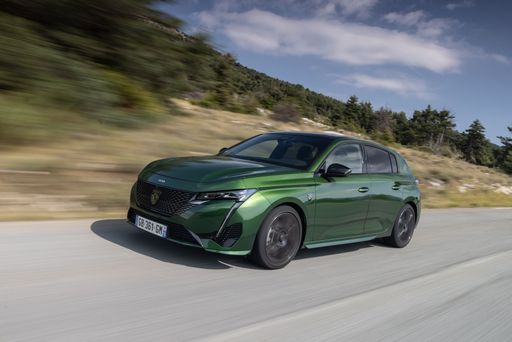
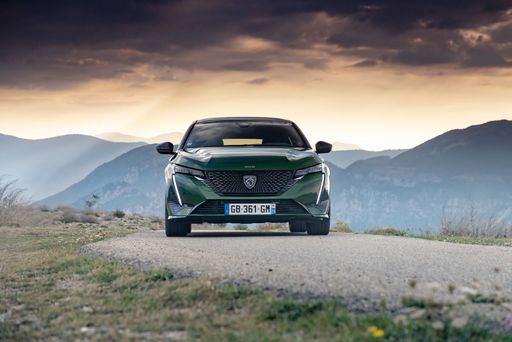
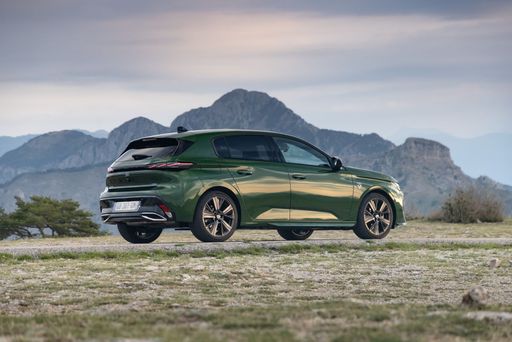
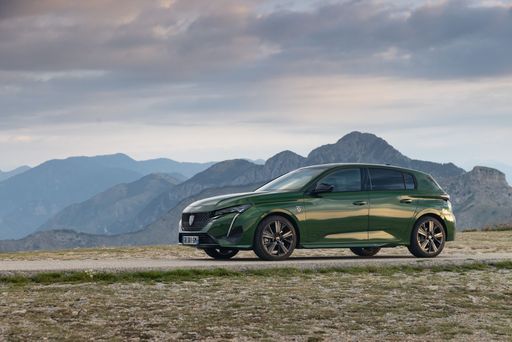
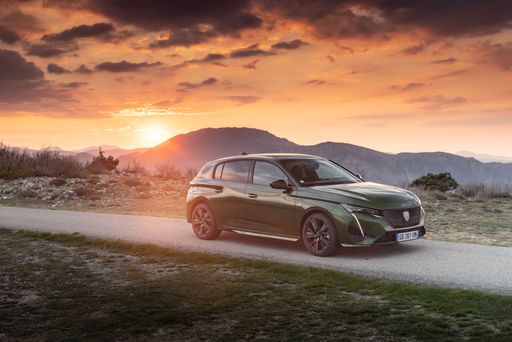
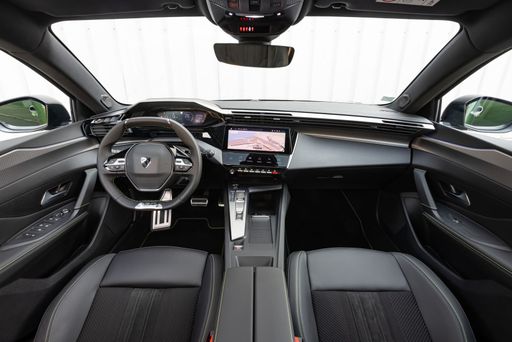
The Peugeot 308 brings a sleek, feline profile and an unexpectedly upscale cabin, with clever packaging and materials that feel a touch more premium than you might expect. It’s composed on the road, easy to live with for daily life, and a smart choice if you want a stylish hatch that still behaves when the road gets interesting.
details
@ Peugeot / Stellantis Media
 @ Peugeot / Stellantis Media
 @ Peugeot / Stellantis Media
 @ Peugeot / Stellantis Media
 @ Peugeot / Stellantis Media
 @ Peugeot / Stellantis Media
Vauxhall Combo Cargo
Peugeot 308
|
@ Peugeot / Stellantis Media
|
|
|
|
|
Costs and Consumption |
|
|---|---|
|
Price
22400 - 34700 £
|
Price
29200 - 42600 £
|
|
Consumption L/100km
5.2 - 6.3 L
|
Consumption L/100km
2.3 - 5 L
|
|
Consumption kWh/100km
17.40 kWh
|
Consumption kWh/100km
15.60 kWh
|
|
Electric Range
354 km
|
Electric Range
78 - 450 km
|
|
Battery Capacity
-
|
Battery Capacity
0.40 kWh
|
|
co2
0 - 143 g/km
|
co2
0 - 129 g/km
|
|
Fuel tank capacity
53 - 61 L
|
Fuel tank capacity
42 - 52 L
|
Dimensions and Body |
|
|---|---|
|
Body Type
Cargo Van
|
Body Type
Hatchback
|
|
Seats
2 - 6
|
Seats
5
|
|
Doors
4 - 5
|
Doors
5
|
|
Curb weight
1329 - 1813 kg
|
Curb weight
1453 - 1749 kg
|
|
Trunk capacity
-
|
Trunk capacity
314 - 412 L
|
|
Length
4401 - 4751 mm
|
Length
4367 mm
|
|
Width
1848 mm
|
Width
1852 mm
|
|
Height
1820 - 1825 mm
|
Height
1438 mm
|
|
Max trunk capacity
3300 - 3900 L
|
Max trunk capacity
1258 - 1323 L
|
|
Payload
611 - 991 kg
|
Payload
430 - 503 kg
|
Engine and Performance |
|
|---|---|
|
Engine Type
Diesel, Petrol, Electric
|
Engine Type
Petrol MHEV, Diesel, Plugin Hybrid, Electric
|
|
Transmission
Manuel, Automatic
|
Transmission
Automatic
|
|
Transmission Detail
Manual Gearbox, Automatic Gearbox, Reduction Gearbox
|
Transmission Detail
Dual-Clutch Automatic, Automatic Gearbox, Reduction Gearbox
|
|
Drive Type
Front-Wheel Drive
|
Drive Type
Front-Wheel Drive
|
|
Power HP
102 - 136 HP
|
Power HP
131 - 195 HP
|
|
Acceleration 0-100km/h
11.20 s
|
Acceleration 0-100km/h
7.6 - 10.6 s
|
|
Max Speed
135 - 183 km/h
|
Max Speed
170 - 225 km/h
|
|
Torque
205 - 300 Nm
|
Torque
230 - 300 Nm
|
|
Number of Cylinders
3 - 4
|
Number of Cylinders
3 - 4
|
|
Power kW
75 - 100 kW
|
Power kW
96 - 144 kW
|
|
Engine capacity
1199 - 1499 cm3
|
Engine capacity
1199 - 1598 cm3
|
General |
|
|---|---|
|
Model Year
2024
|
Model Year
2025
|
|
CO2 Efficiency Class
E, A
|
CO2 Efficiency Class
C, D, B, A
|
|
Brand
Vauxhall
|
Brand
Peugeot
|
What drivetrain options does the Vauxhall Combo Cargo have?
The Vauxhall Combo Cargo is offered with Front-Wheel Drive.
The prices and data displayed are estimates based on German list prices and may vary by country. This information is not legally binding.