VS

Vauxhall Combo vs Ford Tourneo Connect comparison

Compare performance (136 HP vs 150 HP), boot space and price (22,900 £ vs 27,300 £ ) at a glance. Find out which car is the better choice for you – Vauxhall Combo or Ford Tourneo Connect?

Vauxhall Combo vs Ford Tourneo Connect: Key differences

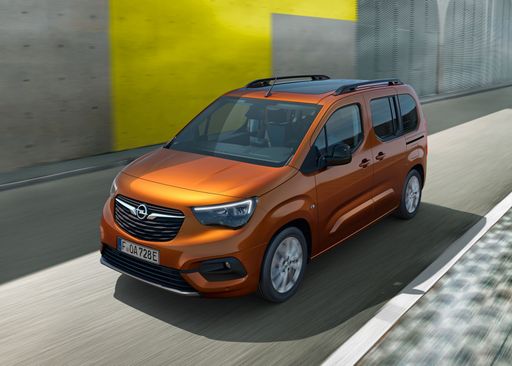
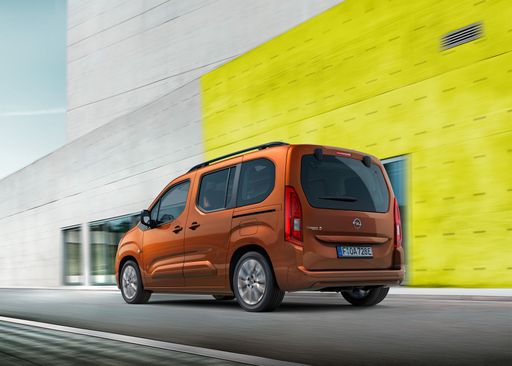
Vauxhall Combo

  • somewhat cheaper
  • considerably more electric range
  • barely lighter
details

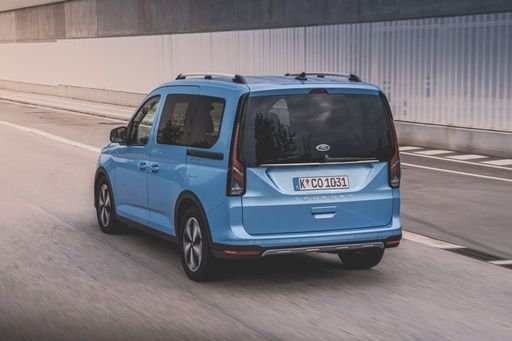
Ford Tourneo Connect

4.9 (1 Reviews)
rate
  • only slightly more power
  • considerably more efficient
  • moderately quicker 0–100 km/h
  • clearly more trunk space
details

By Achim Sedelmaier

Combo

Ford Tourneo Connect vs. Opel Combo: A Detailed Comparison

In the realm of high roof wagons, the 2024 Ford Tourneo Connect and Opel Combo are two contenders that offer an intriguing mix of practicality, performance, and innovation. Both vehicles, while sharing similar body styles, differ significantly in technical specifications and the innovations they bring to the table. Let's dive into the specifics of these models to understand what sets them apart.
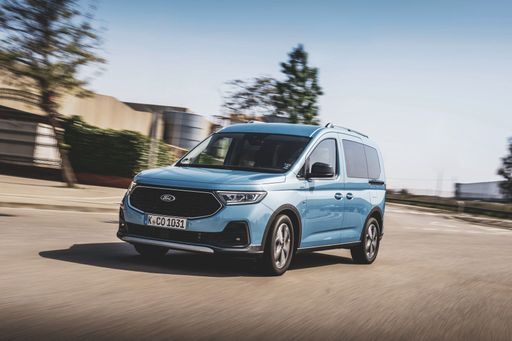
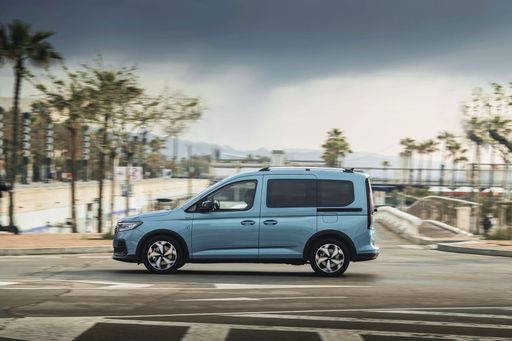
Tourneo Connect

Engine Options and Performance

The Ford Tourneo Connect offers a versatile range of engine options including petrol, diesel, and a plug-in hybrid variant. With power outputs ranging from 102 to 150 HP and top speeds between 175 to 186 km/h, the Tourneo Connect caters to a variety of preferences. It balances power with efficiency, offering a range of consumption figures from 5.4 to 7 L/100km. Its maximum torque of up to 350 Nm ensures that it remains responsive and capable across various driving scenarios.

Conversely, the Opel Combo leans towards a more streamlined approach with its diesel and electric engine offerings. The electric variant stands out with a power output of 136 HP and an impressive range of up to 345 km, making it an excellent choice for environmentally-conscious drivers. The diesel engines range up to 130 HP with consumption figures from 5.5 to 5.9 L/100km, aligning closely with the Ford's efficiency. Maximum torque reaches up to 300 Nm, offering competitive performance particularly in the electric model's swift 11.3-second 0-100 km/h acceleration.

Combo

Transmission and Drive Dynamics

Both vehicles provide plenty of choice in terms of transmission. The Ford Tourneo Connect features a dual-clutch automatic and manual gearbox, catering to those who value either convenience or driver engagement. Front-wheel drive is standard, providing consistent road holding. The Opel Combo also provides flexible transmission options, including a reduction gearbox for its electric variant and automatic or manual options for the diesel models, maintaining front-wheel drive as a standard configuration.

Tourneo Connect

Space, Comfort, and Practicality

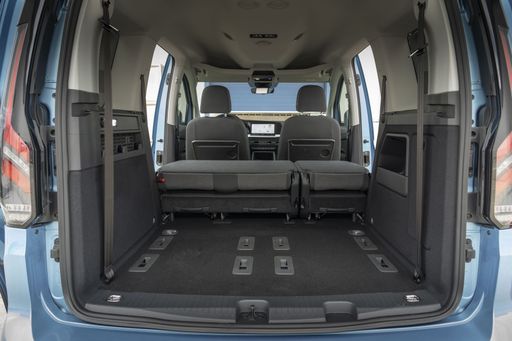
When it comes to space, the Ford Tourneo Connect extends its length from 4500 mm to 4868 mm depending on the configuration, offering substantial trunk capacities between 1213 and 1720 liters. The Tourneo's payload capacity peaks at 618 kg, accommodating a diverse range of cargo needs.

The Opel Combo, on the other hand, offers lengths up to 4760 mm and trunk capacities ranging from 597 to 850 liters. Though slightly less voluminous than the Ford, the Combo offers a seven-seat configuration, adding an extra layer of versatility for larger families. Its payload can reach up to 840 kg, slightly surpassing the Tourneo in this regard.

Combo

Environmental Impact and Efficiency

The Ford Tourneo Connect presents a mixed bag in terms of emissions, with CO2 ratings ranging from 10 to 158 g/km and varying CO2 efficiency classes from B to F. This makes certain variants more efficient and eco-friendly than others, particularly the plug-in hybrid.

In contrast, the Opel Combo's electric variant boasts zero emissions, an attractive proposition for eco-conscious buyers. Diesel variants emit between 145 and 155 g/km of CO2 and are classified in the A to E efficiency classes, reflecting a commendable effort towards reducing environmental impact.

Tourneo Connect

Conclusion

Choosing between the Ford Tourneo Connect and the Opel Combo ultimately depends on what the driver values most—be it a spacious interior, efficient driving, or environmental sustainability. The Ford impresses with its versatile engine lineup and substantial cargo capacity, while the Opel's electric variant provides clear advantages in eco-friendliness and future-proof energy use. Both models stand as strong competitors in the high roof wagon segment, each bringing its unique set of strengths to the fore.

Here’s where it gets real: The technical differences in detail

Combo

Costs and Efficiency:

Looking at overall running costs, both models reveal some interesting differences in everyday economy.

Vauxhall Combo is somewhat cheaper – starting at 22,900 £ , while the Ford Tourneo Connect costs 27,300 £ . That’s a price difference of around 4,465 £.

Fuel consumption also shows a difference: the Ford Tourneo Connect uses 0.5 L/100km and is considerably more efficient than the Vauxhall Combo with 5.4 L/100km. The difference is about 4.9 L/100km.

As for electric range, the Vauxhall Combo offers considerably more range – reaching up to 345 km, about 226 km more than the Ford Tourneo Connect.

Tourneo Connect

Engine and Performance:

Under the bonnet, it becomes clear which model is tuned for sportiness and which one takes the lead when you hit the accelerator.

When it comes to engine power, the Ford Tourneo Connect offers only slightly more power – delivering 150 HP compared to 136 HP. That’s roughly 14 HP more horsepower.

When accelerating from 0 to 100 km/h, the Ford Tourneo Connect is moderately quicker – completing the sprint in 10.1 s, while the Vauxhall Combo takes 11.3 s. That’s about 1.2 s quicker.

There’s also a difference in torque: the Ford Tourneo Connect delivers slightly more torque with 350 Nm compared to 300 Nm. That’s about 50 Nm more.

Combo

Space and Everyday Use:

Whether family car or daily driver – which one offers more room, flexibility and comfort?

Seats: Vauxhall Combo offers more seats – 7 vs 5.

In terms of curb weight, Vauxhall Combo is barely lighter – 1,505 kg compared to 1,542 kg. The difference is around 37 kg.

Looking at boot space, the Ford Tourneo Connect offers clearly more boot space – 1,720 L compared to 1,050 L. That’s a difference of about 670 L.

When it comes to payload, the Ford Tourneo Connect carries somewhat more – 818 kg compared to 695 kg. That’s a difference of about 123 kg.

Who wins the race in the data check?

The Ford Tourneo Connect is far ahead overall in the objective data comparison.
This result only shows which model scores more points on paper – not which of the two cars feels right for you.

from £27,300
Tourneo Connect

Ford Tourneo Connect

  • Engine Type : Plugin Hybrid, Petrol, Diesel
  • Transmission : Automatic, Manuel
  • Drive Type : Front-Wheel Drive, All-Wheel Drive
  • Power HP : 102 - 150 HP
  • Consumption L/100km : 0.5 - 6.9 L/100km
  • Electric Range : 116 - 119 km
Vauxhall Combo
Ford Tourneo Connect

Costs and Consumption

View detailed analysis

Engine and Performance

View detailed analysis

Dimensions and Body

View detailed analysis

Vauxhall Combo

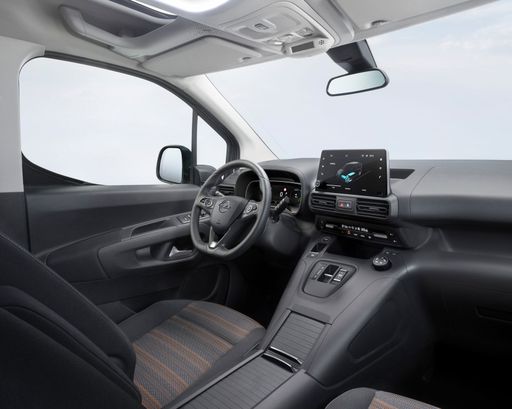
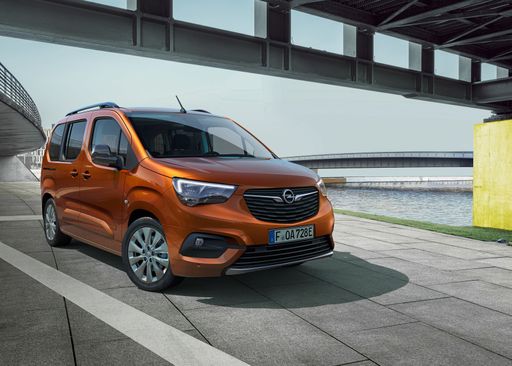
The Opel Combo is a hardworking and surprisingly polished small van that blends van-like practicality with car-like comfort, making it a sensible choice for families and tradespeople who need versatility without fuss. It may not grab attention on the style front, but clever packaging and a levelheaded approach mean you spend more time getting things done and less time worrying about compromise.

details

Ford Tourneo Connect

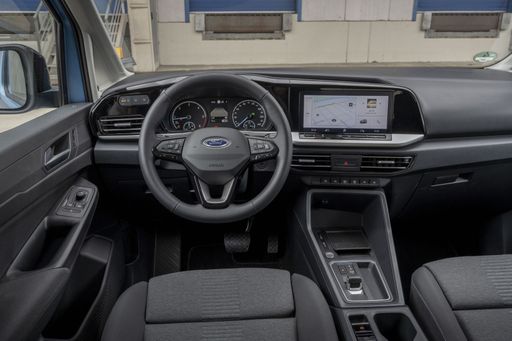
The Ford Tourneo Connect is a practical, surprisingly polished people-mover that balances family-friendly flexibility with car-like driving manners. With clever storage, sliding doors and a bright, airy cabin it’s a smart choice for buyers who want sensible versatility without sacrificing everyday comfort — and it’s oddly enjoyable to drive for its size.

details
Vauxhall Combo
Ford Tourneo Connect

Costs and Consumption

Price
22,900 - 36,500 £
Price
27,300 - 41,900 £
Consumption L/100km
5.4 - 5.8 L/100km
Consumption L/100km
0.5 - 6.9 L/100km
Consumption kWh/100km
18.5 - 18.8 kWh/100km
Consumption kWh/100km
-
Electric Range
333 - 345 km
Electric Range
116 - 119 km
Battery Capacity
-
Battery Capacity
-
co2
0 - 151 g/km
co2
11 - 164 g/km
Fuel tank capacity
-
Fuel tank capacity
-

Dimensions and Body

Body Type
High Roof Estate
Body Type
High Roof Estate
Seats
5 - 7
Seats
5
Doors
4 - 5
Doors
-
Curb weight
1,505 - 1,922 kg
Curb weight
1,542 - 1,781 kg
Trunk capacity
0 - 1,050 L
Trunk capacity
1,213 - 1,720 L
Length
4,410 - 4,760 mm
Length
-
Width
1,848 mm
Width
1,855 mm
Height
1,812 - 1,818 mm
Height
-
Max trunk capacity
2,126 - 2,693 L
Max trunk capacity
-
Payload
430 - 695 kg
Payload
563 - 818 kg

Engine and Performance

Engine Type
Electric, Diesel
Engine Type
Plugin Hybrid, Petrol, Diesel
Transmission
Automatic, Manuel
Transmission
Automatic, Manuel
Transmission Detail
Reduction Gearbox, Manual Gearbox
Transmission Detail
Dual-Clutch Automatic, Manual Gearbox
Drive Type
Front-Wheel Drive
Drive Type
Front-Wheel Drive, All-Wheel Drive
Power HP
102 - 136 HP
Power HP
102 - 150 HP
Acceleration 0-100km/h
11.3 s
Acceleration 0-100km/h
10.1 - 13.5 s
Max Speed
135 km/h
Max Speed
-
Torque
250 - 300 Nm
Torque
220 - 350 Nm
Number of Cylinders
4
Number of Cylinders
4
Power kW
75 - 100 kW
Power kW
75 - 110 kW
Engine capacity
1,499 cm3
Engine capacity
1,498 - 1,968 cm3

General

Model Year
2,024 - 2,025
Model Year
2,024 - 2,025
CO2 Efficiency Class
A, E
CO2 Efficiency Class
B, E, F
Brand
Vauxhall
Brand
Ford
DriveDuel uses data analysis and artificial intelligence to evaluate vehicle data and create content. Content is regularly reviewed and improved. The displayed prices are estimates based on German list prices, adjusted to the respective country’s VAT. Country-specific registration taxes are not included. This information is not legally binding.