VS

Vauxhall Corsa vs Peugeot 208 comparison

Compare performance (156 HP vs 156 HP), boot space and price (19,600 £ vs 21,000 £ ) at a glance. Find out which car is the better choice for you – Vauxhall Corsa or Peugeot 208?

Vauxhall Corsa vs Peugeot 208: Key differences

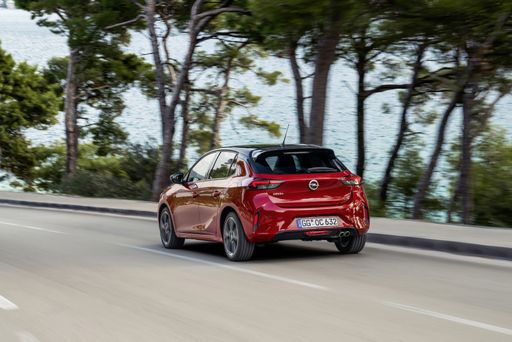
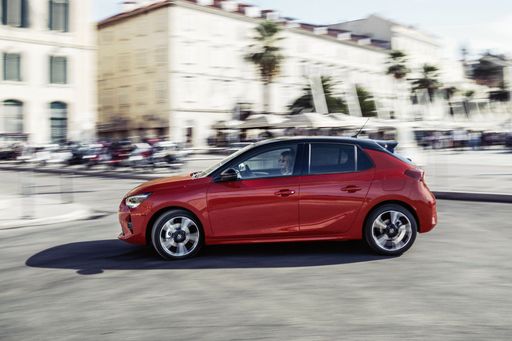
Vauxhall Corsa

  • marginally cheaper
  • marginally quicker 0–100 km/h
details

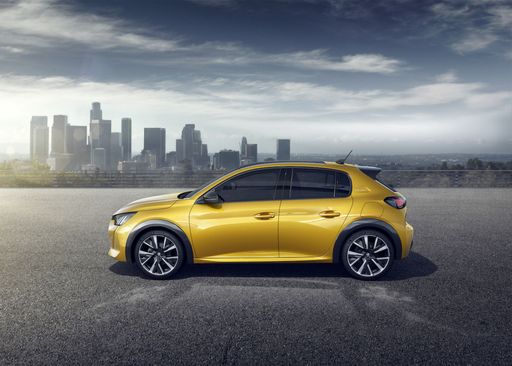
Peugeot 208

4 (2 Reviews)
rate
  • only slightly more efficient
  • only slightly more electric range
  • very slightly lighter
  • a bit more trunk space
details

All details on performance, efficiency, range and trunk space can be found in the technical comparison below – including user reviews for both models.

By Achim Sedelmaier

Corsa

Vauxhall Corsa VS Peugeot 208: what this head‑to‑head is about

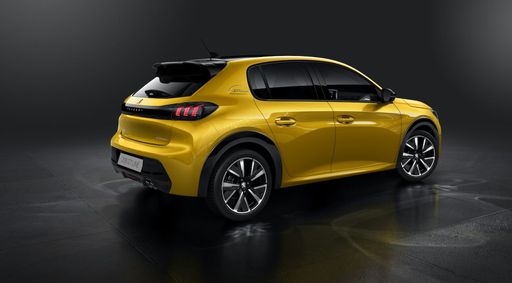
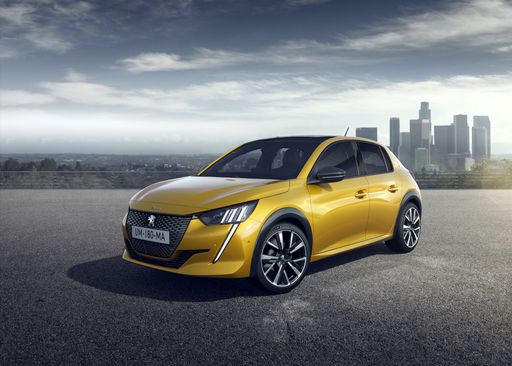
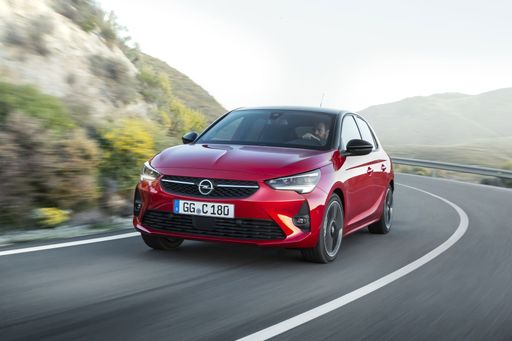
Vauxhall Corsa and Peugeot 208 sit on the same small‑hatch stage but take very different tacks: the Corsa leans toward straightforward efficiency and city agility, while the 208 sells a quieter, more upscale cabin and a stronger style statement. This comparison focuses on real‑world use — how they feel behind the wheel, how the cabins behave on a long run, and which buyer each car actually fits. Reviewers repeatedly flag the Corsa for crisp steering and low running costs, and the 208 for its perceived quality and relaxed motorway manners. Expect trade‑offs rather than one clear winner: the Corsa is pragmatic and direct, the 208 is refined and characterful. Read on to see which strengths matter for your everyday driving.
208

Character and driving feel

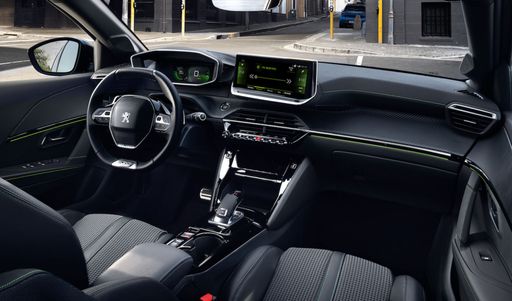
The Vauxhall Corsa presents itself as an earnest, slightly firm small car that rewards precise inputs and city manoeuvres, whereas the Peugeot 208 aims for a smoother, more composed personality on both town streets and country lanes. Corsa steering is direct and rewards confident cornering, giving a taut, driver‑focused impression; the 208 trades a touch of agility for a more composed, plush feel that most drivers find relaxed rather than sporty. The Peugeot’s i‑Cockpit layout reinforces that different character — it creates a distinct driving position and feel that some love and others find odd. If you prefer an honest, no‑nonsense hatchback the Vauxhall Corsa will feel natural; if you want a hatchback that feels a small step up in refinement, the Peugeot 208 will suit better.

Corsa

Comfort and cabin feel

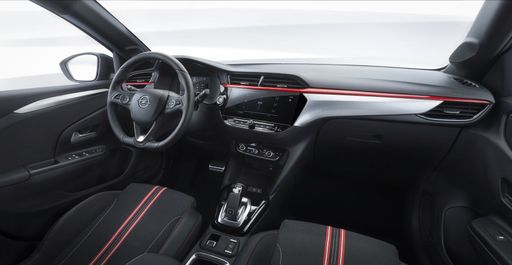
Inside, the Peugeot 208 clearly aims higher on perceived quality with softer surfaces, thoughtful detailing and a generally quieter ambience, while the Vauxhall Corsa keeps things more utilitarian with durable finishes and useful physical controls. Corsa’s front seats tend to be comfortable for longer stints and the climate controls are simple and immediate, which makes daily life easier; Peugeot’s seats and materials reward those who prioritise cabin polish and a more premium touch. Both cars share the same practical weakness: rear‑seat space is modest, but the 208’s nicer trim can make short rear trips feel less cramped. In short, choose the 208 if cabin feel and low‑noise cruising matter most, and the Corsa if front‑seat comfort and straightforward ergonomics top your list.

208

Practicality and everyday usability

Both are compact and easy to park, but they solve everyday usability differently: the Corsa emphasises visibility up front and button‑led simplicity, while the 208 leans on clever packaging and tech to compensate for its deeper styling cues. Boot and rear space are not the Corsa’s strong suit — the opening is narrower and loading bulky items takes a bit more patience — and the 208 isn’t a room champion either, though its perceived cabin organisation often feels more thought‑out. Parking and tight‑space work are easy in either car thanks to short overhangs and small turning circles, but buyers who regularly haul strollers, bulky luggage or adult passengers in the back will quickly notice the limits in both models. Practical buyers will therefore weigh the Corsa’s no‑nonsense layout against the 208’s marginally smarter packaging when deciding which compromises they can live with.

Corsa

Long‑distance behaviour and running costs

On motorways the Peugeot 208 generally impresses as the quieter, more relaxed companion — reviewers often praise its superior acoustic insulation and composed high‑speed manners — while the Vauxhall Corsa stays more alert and a touch firmer, which some will find engaging and others a little tiring. Both deliver competitive running costs in real use, with the Corsa frequently touted for low day‑to‑day consumption in its mild‑hybrid or efficient petrol guises, and the 208 standing out for an impressively efficient hybrid/electric balance and practical charging behaviour on its electric variants. If you plan long runs with a heavy emphasis on serenity and a premium cabin feel, the 208 nudges ahead; if you prioritise low running costs and a more immediate, controlled ride, the Corsa keeps pace and can be the more economical choice over time. Note too that electric buyers should consider differences in charging and cold‑weather behaviour: the two brands take different approaches that affect real‑world EV usability.

208

Which buyer each car suits best

If your life is mostly urban and you want a compact car that is easy to park, economical to run and straightforward to operate, the Vauxhall Corsa is the pragmatic pick — it feels honest, simple and efficient in daily use. If you care more about cabin ambience, motorway quietness and a car that feels a level up in style and perceived quality, the Peugeot 208 will likely satisfy you more even if you pay a little extra for that refinement. Families who need regular rear‑seat space or lots of luggage should consider alternatives, but between these two the decision comes down to whether you prioritise tidy efficiency and tactile controls (Corsa) or interior polish and relaxed cruising (208). The following technical comparison will break down how those differences translate into numbers and real‑world performance so you can match the trade‑offs to your routine.

Here’s where it gets real: The technical differences in detail

Corsa

Costs and Efficiency:

Price and efficiency are often the first things buyers look at. Here it becomes clear which model has the long-term edge – whether at the pump, the plug, or in purchase price.

Vauxhall Corsa is marginally cheaper – starting at 19,600 £ , while the Peugeot 208 costs 21,000 £ . That’s a price difference of around 1,362 £.

Both cars consume an average of 4.5 L/100km – no difference here.

In terms of energy consumption, the Peugeot 208 is only slightly more efficient: consuming 14.1 kWh/100km compared to 14.2 kWh/100km for the Vauxhall Corsa. That’s a difference of about 0.1 kWh/100km.

As for electric range, the Peugeot 208 offers only slightly more range – reaching up to 432 km, about 3 km more than the Vauxhall Corsa.

208

Engine and Performance:

Under the bonnet, it becomes clear which model is tuned for sportiness and which one takes the lead when you hit the accelerator.

Both models deliver identical power – 156 HP each.

When accelerating from 0 to 100 km/h, the Vauxhall Corsa is marginally quicker – completing the sprint in 7.9 s, while the Peugeot 208 takes 8.3 s. That’s about 0.4 s quicker.

There’s also a difference in torque: the Peugeot 208 delivers only slightly more torque with 270 Nm compared to 260 Nm. That’s about 10 Nm more.

Corsa

Space and Everyday Use:

Beyond pure performance, interior space and usability matter most in daily life. This is where you see which car is more practical and versatile.

Both vehicles offer seating for 5 people.

In terms of curb weight, Peugeot 208 is very slightly lighter – 1,165 kg compared to 1,175 kg. The difference is around 10 kg.

Looking at boot space, the Peugeot 208 offers a bit more boot space – 352 L compared to 309 L. That’s a difference of about 43 L.

When it comes to payload, the Vauxhall Corsa carries barely more – 445 kg compared to 430 kg. That’s a difference of about 15 kg.

Who wins the race in the data check?

The Peugeot 208 sits just ahead overall in the objective data comparison.
This result only shows which model scores more points on paper – not which of the two cars feels right for you.

from £21,000
208

Peugeot 208

  • Engine Type Petrol MHEV, Electric, Petrol
  • Transmission Automatic, Manuel
  • Drive Type Front-Wheel Drive
  • Power HP 101 - 156 HP
  • Consumption L/100km 4.5 - 5.1 L/100km
  • Consumption kWh/100km 14.1 - 15.4 kWh/100km
  • Electric Range 363 - 432 km
Vauxhall Corsa
Peugeot 208

Costs and Consumption

View detailed analysis

Engine and Performance

View detailed analysis

Dimensions and Body

View detailed analysis

Vauxhall Corsa

The Opel Corsa is a tidy little package that blends cheeky styling with sensible practicality, perfect for city streets and weekend escapes alike. It’s easy to live with, economical to run and just lively enough to make daily driving a bit more fun.

details

Peugeot 208

The Peugeot 208 feels like a city-savvy fox: compact, stylish and surprisingly grown-up, with a cabin that punches above its weight and enough personality to make daily commutes a little less boring. It’s a smart pick for buyers who want chic practicality without the showroom bluster — easy to park, thrifty to run and oddly fun when the road tightens up.

details
Vauxhall Corsa
Peugeot 208

Costs and Consumption

Price
19,600 - 30,600 £
Price
21,000 - 33,200 £
Consumption L/100km
4.5 - 5.1 L/100km
Consumption L/100km
4.5 - 5.1 L/100km
Consumption kWh/100km
14.2 - 15.7 kWh/100km
Consumption kWh/100km
14.1 - 15.4 kWh/100km
Electric Range
357 - 429 km
Electric Range
363 - 432 km
Battery Capacity
-
Battery Capacity
-
co2
0 - 116 g/km
co2
0 - 116 g/km
Fuel tank capacity
-
Fuel tank capacity
-

Dimensions and Body

Body Type
Hatchback
Body Type
Hatchback
Seats
5
Seats
5
Doors
-
Doors
-
Curb weight
1,175 - 1,544 kg
Curb weight
1,165 - 1,530 kg
Trunk capacity
267 - 309 L
Trunk capacity
309 - 352 L
Length
-
Length
-
Width
1,765 mm
Width
1,745 mm
Height
-
Height
-
Max trunk capacity
-
Max trunk capacity
-
Payload
376 - 445 kg
Payload
380 - 430 kg

Engine and Performance

Engine Type
Electric, Petrol MHEV, Petrol
Engine Type
Petrol MHEV, Electric, Petrol
Transmission
Automatic, Manuel
Transmission
Automatic, Manuel
Transmission Detail
Reduction Gearbox, Dual-Clutch Automatic, Manual Gearbox
Transmission Detail
Dual-Clutch Automatic, Reduction Gearbox, Manual Gearbox
Drive Type
Front-Wheel Drive
Drive Type
Front-Wheel Drive
Power HP
100 - 156 HP
Power HP
101 - 156 HP
Acceleration 0-100km/h
7.9 - 9.9 s
Acceleration 0-100km/h
8.3 - 10.9 s
Max Speed
-
Max Speed
-
Torque
205 - 260 Nm
Torque
205 - 270 Nm
Number of Cylinders
3
Number of Cylinders
3
Power kW
74 - 115 kW
Power kW
74 - 115 kW
Engine capacity
1,199 cm3
Engine capacity
1,199 cm3

General

Model Year
2,024 - 2,025
Model Year
2,025 - 2,026
CO2 Efficiency Class
A, C, D
CO2 Efficiency Class
C, A, D
Brand
Vauxhall
Brand
Peugeot
DriveDuel uses data analysis and artificial intelligence to evaluate vehicle data and create content. Content is regularly reviewed and improved. The displayed prices are estimates based on German list prices, adjusted to the respective country’s VAT. Country-specific registration taxes are not included. This information is not legally binding.