VS

Vauxhall Frontera vs Hyundai Kona comparison

Compare performance (145 HP vs 218 HP), boot space and price (20,700 £ vs 23,100 £ ) at a glance. Find out which car is the better choice for you – Vauxhall Frontera or Hyundai Kona?

Vauxhall Frontera vs Hyundai Kona: Key differences

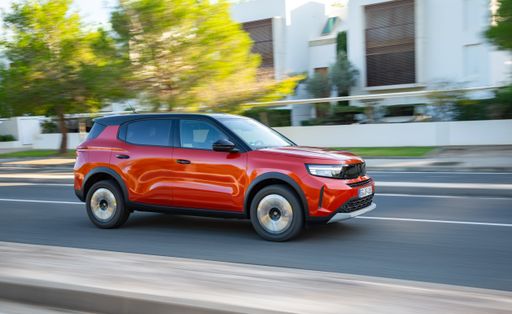
Vauxhall Frontera

4.5 (3 Reviews)
rate
  • somewhat cheaper

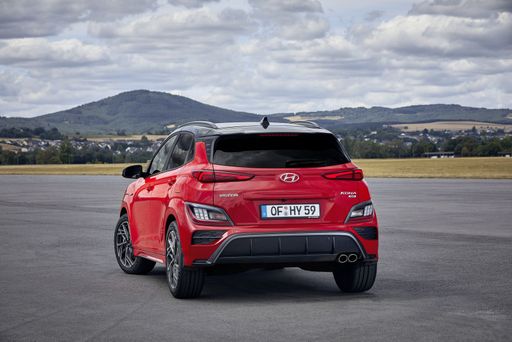
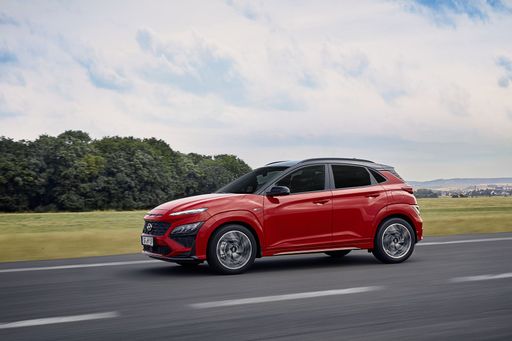
Hyundai Kona

5 (1 Reviews)
rate
  • noticeably more power
  • moderately more efficient
  • only slightly more efficient
  • noticeably more electric range
  • a bit quicker 0–100 km/h
  • marginally lighter
  • very slightly more trunk space

All details on performance, efficiency, range and trunk space can be found in the technical comparison below – including user reviews for both models.

Frontera

Hyundai Kona vs Opel Frontera: A Comparative Analysis

The automotive market is fiercely competitive, with manufacturers like Hyundai and Opel pushing the envelope of innovation and performance. Both the Hyundai Kona and the Opel Frontera cater to drivers looking for reliability, comfort, and advanced technology in a compact package. Here’s a detailed comparison focused on their technical specifications and innovations.
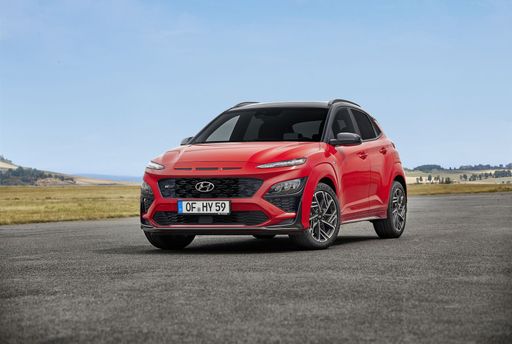
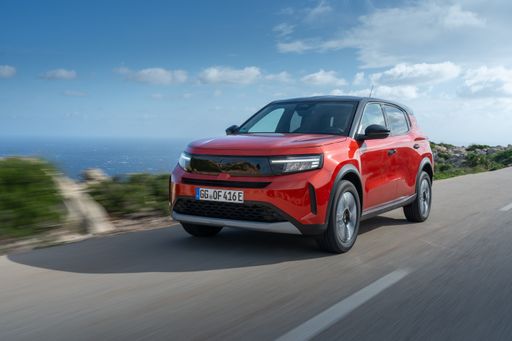
Kona

Body Type and Design

The Hyundai Kona is classified as a compact SUV, renowned for its appealing aesthetics and urban agility. It measures 4,350 mm in length, 1,825 mm in width, and 1,585 mm in height, offering a modern and sleek design. On the other hand, the Opel Frontera is an off-roader, with a slightly larger frame stretching to 4,385 mm in length, 1,795 mm in width, and 1,635 mm in height. While both vehicles feature a five-door configuration, the Kona puts more emphasis on a sporty look, whereas the Frontera appeals to those keen on rugged exploration.

Frontera

Powertrain Options

The Hyundai Kona boasts a versatile powertrain lineup with options including petrol, full hybrid, and electric engines. The petrol variants come with power outputs ranging from 100 HP to 170 HP, with the electric variant offering a substantial 218 HP. Customers can choose between manual and automatic transmissions, including dual-clutch options, adding to the vehicle’s adaptability. The Kona features both front-wheel drive and all-wheel drive configurations, catering to diverse driving needs.

In contrast, the Opel Frontera offers fewer options, featuring petrol MHEV and electric variants. Its power output ranges from 100 HP to 136 HP, coupled exclusively with an automatic transmission. Notably, the Frontera focuses on efficiency with a modest fuel consumption of 5.5 L/100km and an electric range of up to 305 km, which may appeal to urban drivers looking for an eco-friendly option.

Kona

Performance Metrics

Acceleration is a critical metric for both vehicles. The Kona impressively accelerates from 0 to 100 km/h in as little as 7.8 seconds with its high-end variants. This performance is supported by a torque range of up to 265 Nm, making it a agile performer on city streets and highways alike. The Frontera, while slightly slower with a best acceleration time of 9 seconds, still holds its own with a solid torque output of 230 Nm, making it a capable off-road companion.

Frontera

Efficiency and Range

When analyzing efficiency, the Kona showcases an impressive consumption figure of 4.5 L/100km for its hybrid model, while electric variants offer a consumption rate of as low as 14.6 kWh/100km, achieving a driving range of up to 514 km. This makes the Kona a striking choice for eco-conscious drivers.

The Frontera’s petrol engine offers decent fuel efficiency, albeit at a slightly higher consumption rate. Its electric variants, however, exhibit a higher consumption of 18.2 kWh/100km, which may deter some buyers from a long-range, electric driving experience.

Kona

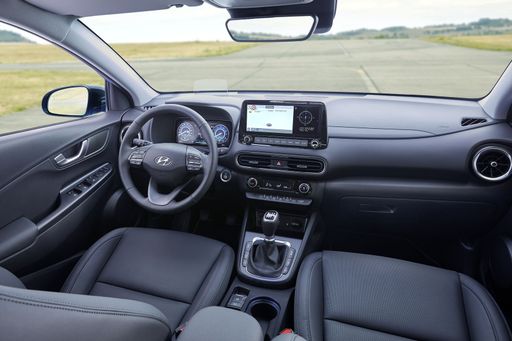
Interior and Comfort

Both models seat five passengers comfortably, with the Kona providing a trunk space of 466 liters, ideal for urban living and weekend trips. The Frontera, meanwhile, has a slightly smaller trunk capacity at 460 liters but offers additional versatility with its optional seven-seat configuration, aimed at those who need extra passenger space.

Frontera

Innovative Features

Hyundai has integrated advanced technology features into the Kona, including a state-of-the-art infotainment system, driver-assistance technologies, and smart connectivity options that enhance the overall driving experience. The Kona’s array of safety features, including lane-keeping assist and adaptive cruise control, reflects Hyundai’s commitment to driver safety.

On the other hand, the Opel Frontera focuses not just on technology but also on ruggedness, with features designed for off-road adventures, including a robust all-terrain handling system. The vehicle’s design is functional, intending to cater to outdoor enthusiasts looking for a durable companion.

Kona

Conclusion: Choosing the Right Adventure Companion

The Hyundai Kona and Opel Frontera serve different niches in the automotive landscape. If you prioritize performance, cutting-edge technology, and efficiency, the Kona may be your best bet. However, if you are an adventure seeker who values off-road capabilities paired with versatility, the Frontera could be a worthy choice. Ultimately, your decision should align with your lifestyle and driving preferences.

Here’s where it gets real: The technical differences in detail

Frontera

Costs and Efficiency:

Price and efficiency are often the first things buyers look at. Here it becomes clear which model has the long-term edge – whether at the pump, the plug, or in purchase price.

Vauxhall Frontera is somewhat cheaper – starting at 20,700 £ , while the Hyundai Kona costs 23,100 £ . That’s a price difference of around 2,323 £.

Fuel consumption also shows a difference: the Hyundai Kona uses 4.6 L/100km and is moderately more efficient than the Vauxhall Frontera with 5.2 L/100km. The difference is about 0.6 L/100km.

In terms of energy consumption, the Hyundai Kona is only slightly more efficient: consuming 14.6 kWh/100km compared to 15.8 kWh/100km for the Vauxhall Frontera. That’s a difference of about 1.2 kWh/100km.

As for electric range, the Hyundai Kona offers noticeably more range – reaching up to 514 km, about 106 km more than the Vauxhall Frontera.

Kona

Engine and Performance:

Under the bonnet, it becomes clear which model is tuned for sportiness and which one takes the lead when you hit the accelerator.

When it comes to engine power, the Hyundai Kona offers noticeably more power – delivering 218 HP compared to 145 HP. That’s roughly 73 HP more horsepower.

When accelerating from 0 to 100 km/h, the Hyundai Kona is a bit quicker – completing the sprint in 7.8 s, while the Vauxhall Frontera takes 9.1 s. That’s about 1.3 s quicker.

Looking at top speed, the Hyundai Kona is moderately faster – reaching 172 km/h, while the Vauxhall Frontera tops out at 143 km/h. The difference is around 29 km/h.

There’s also a difference in torque: the Hyundai Kona delivers somewhat more torque with 265 Nm compared to 230 Nm. That’s about 35 Nm more.

Frontera

Space and Everyday Use:

Whether family car or daily driver – which one offers more room, flexibility and comfort?

Seats: Vauxhall Frontera offers more seats – 7 vs 5.

In terms of curb weight, Hyundai Kona is marginally lighter – 1,370 kg compared to 1,394 kg. The difference is around 24 kg.

Looking at boot space, the Hyundai Kona offers very slightly more boot space – 466 L compared to 460 L. That’s a difference of about 6 L.

For maximum load capacity, the Vauxhall Frontera offers slightly more capacity – up to 1,600 L, about 300 L more than the Hyundai Kona.

When it comes to payload, the Vauxhall Frontera carries somewhat more – 570 kg compared to 490 kg. That’s a difference of about 80 kg.

Who wins the race in the data check?

The Hyundai Kona holds a decisive overall lead in the objective data comparison.
This result only shows which model scores more points on paper – not which of the two cars feels right for you.

from £23,100
Kona

Hyundai Kona

  • Engine Type : Electric, Petrol, Full Hybrid
  • Transmission : Automatic, Manuel
  • Drive Type : Front-Wheel Drive, All-Wheel Drive
  • Power HP : 115 - 218 HP
  • Consumption L/100km : 4.6 - 7 L/100km
  • Consumption kWh/100km : 14.6 - 16.8 kWh/100km
  • Electric Range : 377 - 514 km
Vauxhall Frontera
Hyundai Kona

Costs and Consumption

View detailed analysis

Engine and Performance

View detailed analysis

Dimensions and Body

View detailed analysis

Vauxhall Frontera

The Opel Frontera wears its rugged, go-anywhere intentions proudly, serving up a simple, no-nonsense package that feels as comfortable off the beaten track as it does at the supermarket. It won’t set hearts racing with glamour, but its honest practicality and rugged charm make it a smart pick for buyers who prefer substance over style.

details

Hyundai Kona

The Hyundai Kona wears its personality on the outside with bold styling and sprightly handling that turns city driving into something a little more fun than a commute. It blends practical space, modern tech and sensible running costs into a compact, stylish package — a smart pick if you want flair without paying luxury prices.

details
Vauxhall Frontera
Hyundai Kona

Costs and Consumption

Price
20,700 - 30,000 £
Price
23,100 - 41,600 £
Consumption L/100km
5.2 - 5.3 L/100km
Consumption L/100km
4.6 - 7 L/100km
Consumption kWh/100km
15.8 - 18.3 kWh/100km
Consumption kWh/100km
14.6 - 16.8 kWh/100km
Electric Range
305 - 408 km
Electric Range
377 - 514 km
Battery Capacity
-
Battery Capacity
48.4 - 65.4 kWh
co2
0 - 119 g/km
co2
0 - 163 g/km
Fuel tank capacity
-
Fuel tank capacity
-

Dimensions and Body

Body Type
SUV
Body Type
SUV
Seats
5 - 7
Seats
5
Doors
5
Doors
5
Curb weight
1,394 - 1,610 kg
Curb weight
1,370 - 1,773 kg
Trunk capacity
460 L
Trunk capacity
466 L
Length
4,385 mm
Length
4,355 - 4,385 mm
Width
1,795 mm
Width
1,825 mm
Height
1,635 mm
Height
1,580 mm
Max trunk capacity
1,600 L
Max trunk capacity
1,300 L
Payload
436 - 570 kg
Payload
420 - 490 kg

Engine and Performance

Engine Type
Electric, Petrol MHEV
Engine Type
Electric, Petrol, Full Hybrid
Transmission
Automatic
Transmission
Automatic, Manuel
Transmission Detail
Reduction Gearbox, Dual-Clutch Automatic
Transmission Detail
Reduction Gearbox, Manual Gearbox, Dual-Clutch Automatic
Drive Type
Front-Wheel Drive
Drive Type
Front-Wheel Drive, All-Wheel Drive
Power HP
110 - 145 HP
Power HP
115 - 218 HP
Acceleration 0-100km/h
9.1 - 14.2 s
Acceleration 0-100km/h
7.8 - 11.9 s
Max Speed
143 km/h
Max Speed
162 - 172 km/h
Torque
125 - 230 Nm
Torque
200 - 265 Nm
Number of Cylinders
3
Number of Cylinders
3 - 4
Power kW
81 - 107 kW
Power kW
85 - 160 kW
Engine capacity
1,199 cm3
Engine capacity
998 - 1,598 cm3

General

Model Year
2,024 - 2,025
Model Year
2,024 - 2,025
CO2 Efficiency Class
A, D
CO2 Efficiency Class
A, D, C, E, F
Brand
Vauxhall
Brand
Hyundai
DriveDuel uses data analysis and artificial intelligence to evaluate vehicle data and create content. Content is regularly reviewed and improved. The displayed prices are estimates based on German list prices, adjusted to the respective country’s VAT. Country-specific registration taxes are not included. This information is not legally binding.