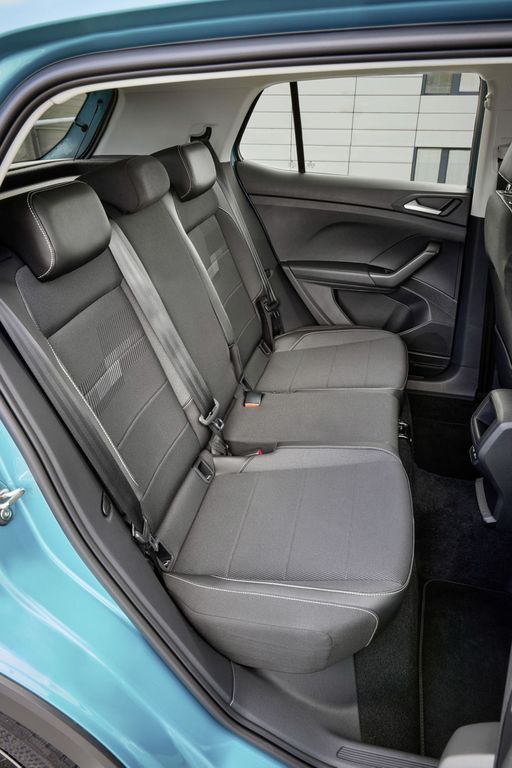
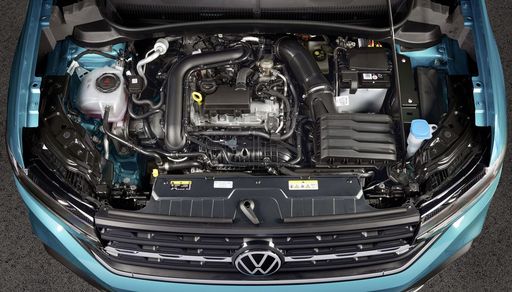
@ Opel / Stellantis Media
@ Volkswagen AG / VW Media
VS

Vauxhall Frontera vs VW T-Cross – Differences & prices compared

Both models have their strengths – but which one suits you more?
Compare performance, efficiency, price and space directly: Vauxhall Frontera or VW T-Cross?

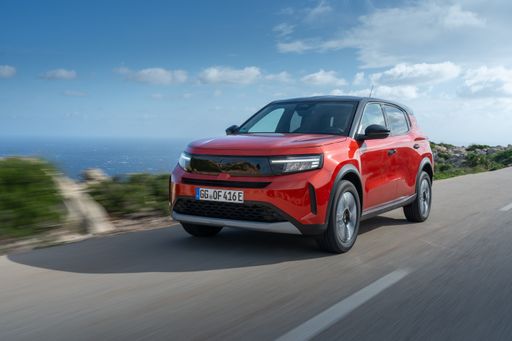
Frontera @ Opel / Stellantis Media

When it comes to choosing the perfect small SUV or off-roader, buyers often find themselves overwhelmed by the plethora of options available. Two contenders worth considering are the Opel Frontera and the VW T-Cross, both of which offer unique features and innovations to make them stand out in this competitive segment. This article delves into a detailed comparison of these two vehicles, focusing on technical aspects and innovations that set them apart.
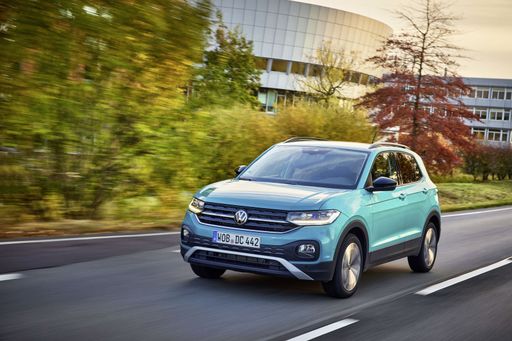
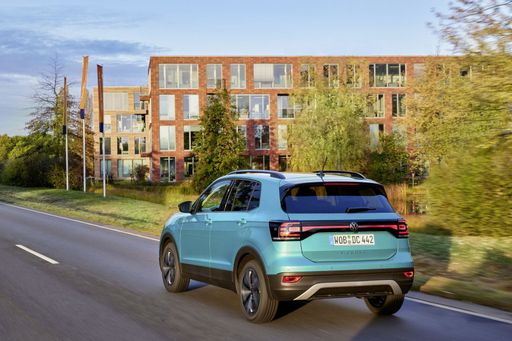
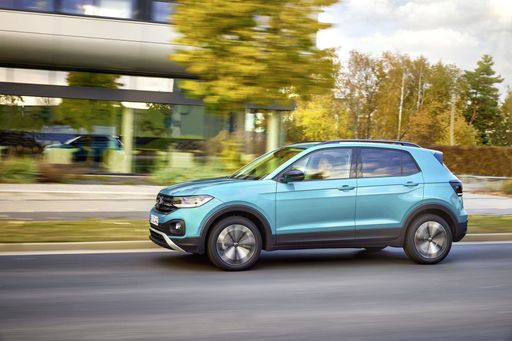
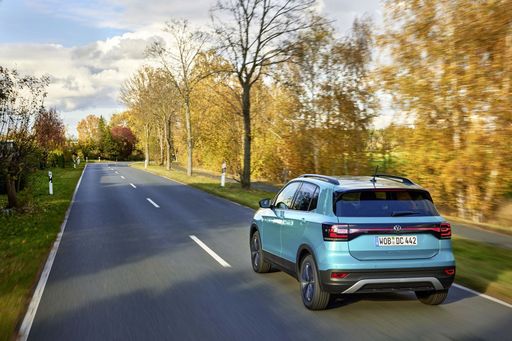
T-Cross @ Volkswagen AG / VW Media

Body Types and Dimensions

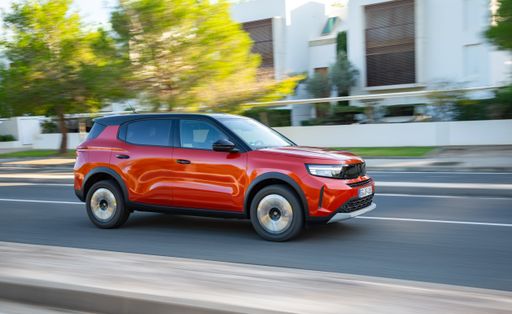
The Opel Frontera is designed as an off-roader, boasting a robust construction that caters to adventure enthusiasts. With a length of 4385 mm, a width of 1795 mm, and a height of 1635 mm, it offers ample interior space, comfortably seating up to seven passengers. Its impressive trunk capacity of 460 liters ensures that there is enough room for both passengers and cargo.

In contrast, the VW T-Cross is classified as a compact SUV, measuring 4127 mm in length, 1784 mm in width, and 1573 mm in height. Despite its slightly smaller dimensions, the T-Cross can still accommodate five passengers and features a trunk capacity of 455 liters, making it practical for everyday use.

Frontera @ Opel / Stellantis Media

Power and Performance

Under the hood, the Opel Frontera showcases a variety of engine options. It comes equipped with petrol MHEV and electric variants, with power outputs ranging from 100 HP to 136 HP. The car is versatile, offering both automatic and dual-clutch automatic transmissions, as well as a reduction gearbox for off-road enthusiasts. The Frontera can go from 0-100 km/h in as little as 9 seconds and has a top speed of 190 km/h, which is quite remarkable for an off-roader.

The T-Cross, on the other hand, is powered by petrol engines with outputs from 95 HP to 150 HP. It provides both manual and automatic transmission options, including a dual-clutch automatic option for smoother driving. The T-Cross achieves 0-100 km/h in as quickly as 8.4 seconds, with a maximum speed of 200 km/h for the more powerful variants, making it a more dynamic choice for urban driving.

T-Cross @ Volkswagen AG / VW Media

Fuel Efficiency and Environmental Impact

Fuel efficiency is a vital consideration for many buyers. The Opel Frontera impresses with a fuel consumption of 5.5 L/100km for its petrol variant, while the electric version can achieve an impressive range of 305 km with a consumption of 18.2 kWh/100km. Furthermore, its CO2 emissions range from 122 g/km to 126 g/km, placing it in a reasonable efficiency class.

The VW T-Cross slightly trails in this aspect, with fuel consumption figures ranging from 5.6 L/100km to 6.0 L/100km depending on engine selection. The CO2 emissions for the T-Cross are also slightly higher, ranging from 127 g/km to 135 g/km. However, its efficiency class remains competitive.

Frontera @ Opel / Stellantis Media

Innovations and Technology

Both models come equipped with various innovations aimed at enhancing the driving experience. The Opel Frontera features modern infotainment systems and advanced driver assistance technologies, ensuring safety and convenience on both urban and off-road adventures. The reduction gearbox allows for better terrain handling, indicating its focus on delivering thrilling off-road capabilities.

In comparison, the VW T-Cross is loaded with innovative technology, including a digital cockpit and an advanced infotainment system that integrates seamlessly with smartphones. It’s designed to cater to tech-savvy drivers who appreciate connectivity and a modern interface.

T-Cross @ Volkswagen AG / VW Media

Conclusion

Ultimately, the choice between the Opel Frontera and VW T-Cross will depend on individual preferences and lifestyle needs. The Frontera is ideal for those seeking adventure and off-road capabilities, while the T-Cross offers a more urban-friendly experience with modern technology and better acceleration. Both vehicles exhibit commendable engineering and represent solid choices in their respective categories, making them worthy contenders in the compact SUV and off-roader markets.

Here’s where it gets real: The technical differences in detail

Costs and Efficiency:

Looking at overall running costs, both models reveal some interesting differences in everyday economy.

Vauxhall Frontera has a barely noticeable advantage in terms of price – it starts at 20500 £, while the VW T-Cross costs 21100 £. That’s a price difference of around 592 £.

Fuel consumption also shows a difference: Vauxhall Frontera manages with 5.20 L and is therefore slight more efficient than the VW T-Cross with 5.40 L. The difference is about 0.20 L per 100 km.

Engine and Performance:

Power, torque and acceleration are the classic benchmarks for car enthusiasts – and here, some clear differences start to show.

When it comes to engine power, the VW T-Cross has a minimal edge – offering 150 HP compared to 145 HP. That’s roughly 5 HP more horsepower.

In acceleration from 0 to 100 km/h, the VW T-Cross is hardly perceptible quicker – completing the sprint in 8.40 s, while the Vauxhall Frontera takes 9 s. That’s about 0.60 s faster.

In terms of top speed, the VW T-Cross performs slight better – reaching 200 km/h, while the Vauxhall Frontera tops out at 194 km/h. The difference is around 6 km/h.

There’s also a difference in torque: VW T-Cross pulls barely noticeable stronger with 250 Nm compared to 230 Nm. That’s about 20 Nm difference.

Space and Everyday Use:

Beyond pure performance, interior space and usability matter most in daily life. This is where you see which car is more practical and versatile.

Seats: Vauxhall Frontera offers noticeable more seating capacity – 7 vs 5.

In curb weight, VW T-Cross is hardly perceptible lighter – 1267 kg compared to 1344 kg. The difference is around 77 kg.

In terms of boot space, the Vauxhall Frontera offers slight more room – 460 L compared to 455 L. That’s a difference of about 5 L.

In maximum load capacity, the Vauxhall Frontera performs somewhat better – up to 1600 L, which is about 319 L more than the VW T-Cross.

When it comes to payload, Vauxhall Frontera clearly perceptible takes the win – 644 kg compared to 480 kg. That’s a difference of about 164 kg.

Who comes out on top?

Overall, the Vauxhall Frontera shows itself to be edges out slightly and secures the title of DriveDuel Champion.
It convinces with the more balanced overall package and proves to be the more versatile choice for everyday use.

from about £20,500
Frontera @ Opel / Stellantis Media

Vauxhall Frontera

  • Engine Type : Electric, Petrol MHEV
  • Transmission : Automatic
  • Drive Type : Front-Wheel Drive
  • Power HP : 110 - 145 HP
  • Consumption L/100km : 5.20 L
  • Consumption kWh/100km : 15.8 - 18.2 kWh
  • Electric Range : 305 - 408 km

Vauxhall Frontera

5 (1)
rate

The Opel Frontera wears its rugged, go-anywhere intentions proudly, serving up a simple, no-nonsense package that feels as comfortable off the beaten track as it does at the supermarket. It won’t set hearts racing with glamour, but its honest practicality and rugged charm make it a smart pick for buyers who prefer substance over style.

details

VW T-Cross

4 (1)
rate

The VW T-Cross turns everyday practicality into a style statement, offering a roomy-feeling cabin, clever storage and playful design that suits town life and family duties alike. On the road it's composed and relaxed, rewarding buyers who want the raised seating and confident presence of an SUV without the weighty compromises.

details
Vauxhall Frontera
VW T-Cross
Frontera @ Opel / Stellantis Media
T-Cross @ Volkswagen AG / VW Media

Costs and Consumption

Price
20500 - 30000 £
Price
21100 - 31500 £
Consumption L/100km
5.20 L
Consumption L/100km
5.4 - 6 L
Consumption kWh/100km
15.8 - 18.2 kWh
Consumption kWh/100km
-
Electric Range
305 - 408 km
Electric Range
-
Battery Capacity
-
Battery Capacity
-
co2
0 - 119 g/km
co2
124 - 136 g/km
Fuel tank capacity
44 L
Fuel tank capacity
40 L

Dimensions and Body

Body Type
SUV
Body Type
SUV
Seats
5 - 7
Seats
5
Doors
5
Doors
5
Curb weight
1344 - 1610 kg
Curb weight
1267 - 1338 kg
Trunk capacity
460 L
Trunk capacity
455 L
Length
4385 mm
Length
4127 mm
Width
1795 mm
Width
1784 mm
Height
1635 mm
Height
1573 mm
Max trunk capacity
1600 L
Max trunk capacity
1281 L
Payload
436 - 644 kg
Payload
463 - 480 kg

Engine and Performance

Engine Type
Electric, Petrol MHEV
Engine Type
Petrol
Transmission
Automatic
Transmission
Manuel, Automatic
Transmission Detail
Reduction Gearbox, Dual-Clutch Automatic
Transmission Detail
Manual Gearbox, Dual-Clutch Automatic
Drive Type
Front-Wheel Drive
Drive Type
Front-Wheel Drive
Power HP
110 - 145 HP
Power HP
95 - 150 HP
Acceleration 0-100km/h
9 - 14.2 s
Acceleration 0-100km/h
8.4 - 11.3 s
Max Speed
143 - 194 km/h
Max Speed
180 - 200 km/h
Torque
125 - 230 Nm
Torque
175 - 250 Nm
Number of Cylinders
3
Number of Cylinders
3 - 4
Power kW
81 - 107 kW
Power kW
70 - 110 kW
Engine capacity
1199 cm3
Engine capacity
999 - 1498 cm3

General

Model Year
2024 - 2025
Model Year
2024 - 2025
CO2 Efficiency Class
A, D
CO2 Efficiency Class
D, E
Brand
Vauxhall
Brand
VW
What drive types are available for the Vauxhall Frontera?

Available configurations include Front-Wheel Drive.

The prices and data displayed are estimates based on German list prices and may vary by country. This information is not legally binding.