VS

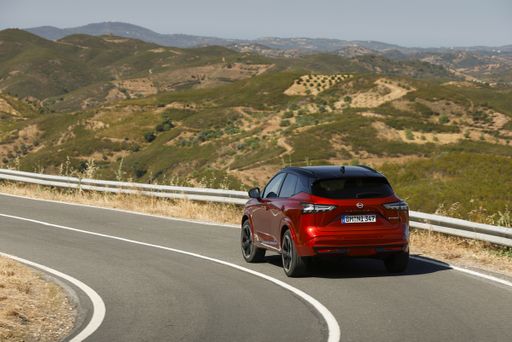
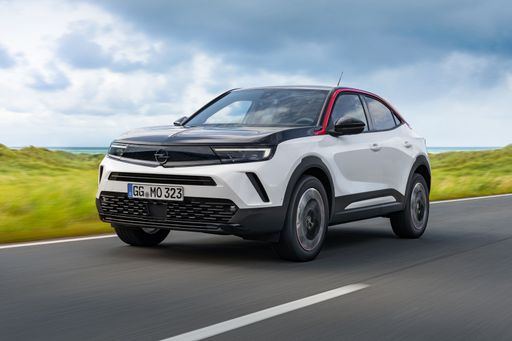
Vauxhall Mokka vs Nissan Qashqai comparison

Compare performance (281 HP vs 205 HP), boot space and price (23,000 £ vs 29,600 £ ) at a glance. Find out which car is the better choice for you – Vauxhall Mokka or Nissan Qashqai?

Vauxhall Mokka vs Nissan Qashqai: Key differences

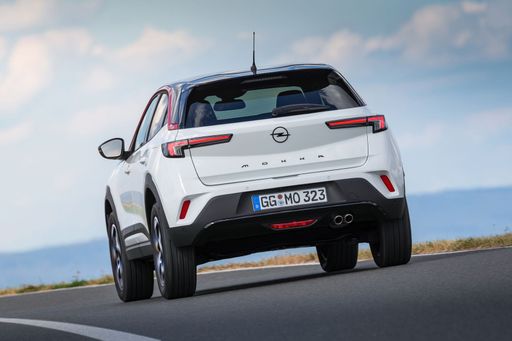
Vauxhall Mokka

4.3 (5 Reviews)
rate
  • clearly cheaper
  • noticeably more power
  • visibly quicker 0–100 km/h
  • barely lighter
details

Nissan Qashqai

4.9 (3 Reviews)
rate
  • slightly more efficient
  • noticeably more trunk space
details

All details on performance, efficiency, range and trunk space can be found in the technical comparison below – including user reviews for both models.

By Achim Sedelmaier

Mokka

Quick take: Nissan Qashqai VS Opel Mokka — which one matches your life?

Nissan Qashqai VS Opel Mokka frames a classic contrast: a relaxed, tech-forward family crossover against a compact, style-led city SUV. The Nissan Qashqai leans into a calm, EV‑like driving character and roomy usability, while the Opel Mokka trades a bit of space for sharper city manners and a fresher cockpit design. For buyers who prioritise calm cruising, family comfort and integrated Google services, the Nissan Qashqai reads as the more reassuring choice. For those who want easy parking, bold looks and a punchier feel in tight urban traffic, the Opel Mokka will appeal more directly. The differences are about everyday compromises rather than one being strictly better across the board.
Qashqai

Character and driving feel

The Nissan Qashqai is engineered to soothe: linear throttle response, muted engine intrusion and an overall placid personality that favours relaxed driving. The Opel Mokka feels lighter on its feet, easier to hustle through town and in some trims noticeably livelier when you ask for performance. If you enjoy crisp steering and a compact footprint, the Opel Mokka gives you a more engaging urban experience, whereas the Nissan Qashqai rewards low‑stress, predictable progress. Both cars aim for refinement, but the Qashqai’s suspension and powertrain bias toward serenity while the Mokka trades a touch of composure for agility. That trade‑off defines the driving choice: calm long trips with the Qashqai or cheeky city moves with the Mokka.

Mokka

Comfort and long‑distance behaviour

The Nissan Qashqai makes long days easier with comfortable front seats and a generally quiet cabin when fitted with modest wheel sizes; it’s the one you’ll pick for motorway miles. The Opel Mokka offers agreeable seating up front but its suspension can feel unsettled on rougher high‑speed roads, turning longer runs into a more physical experience. Rear‑seat comfort also separates them: the Nissan Qashqai provides roomier rear accommodation for adults, while the Opel Mokka’s rear becomes noticeably tighter on extended journeys. If endurance and low cabin noise are priorities, the Nissan Qashqai leans in; if short commutes and brisk urban runs are the norm, the Opel Mokka is acceptably comfortable and more city‑focused.

Qashqai

Practicality and everyday usability

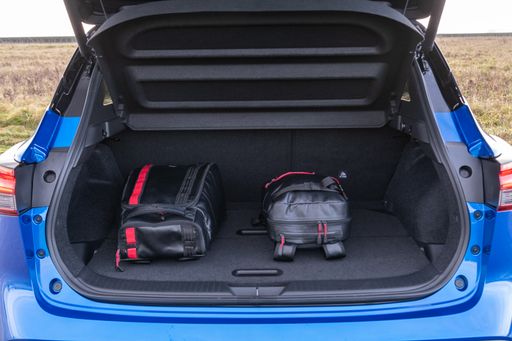
The Nissan Qashqai clearly targets family practicality with a larger, more usable boot area and a higher payload tolerance that helps when you’re hauling kit or kids’ gear. The Opel Mokka is compact and easier to park, but its smaller boot, higher load lip and fiddly tailgate action make frequent loading chores less pleasant. In the Nissan Qashqai you get wider door openings and more sensible rear access for child seats, while the Opel Mokka’s tighter rear space suits couples or small families better. Both are usable day‑to‑day, yet the Qashqai shows its strength when load capacity and flexible interior use matter most. Choose the Nissan Qashqai for cargo and family chores, or the Opel Mokka if city parking and compact convenience top your list.

Mokka

Cabin feel, technology and perceived quality

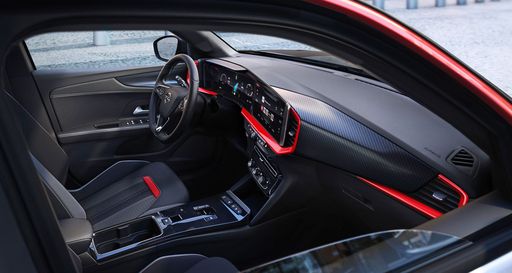
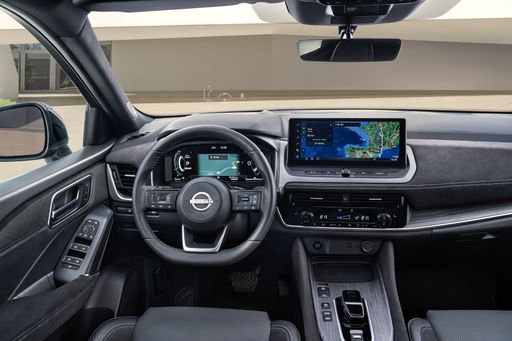
The Nissan Qashqai favours a practical, slightly mature cabin with high‑quality touch points where it counts and a strong, well‑integrated Google infotainment package plus physical climate controls for low‑stress operation. The Opel Mokka aims to impress visually with a modern “Pure Panel” look and crisp lighting tech, but some controls and the main screen can feel less immediate and occasionally laggy. Perceived quality sits differently: the Nissan Qashqai feels more solid and understated, while the Opel Mokka feels trendier and more design‑forward but a bit less substantial in materials. Both cars offer useful tech, yet the Qashqai prioritises intuitive daily use and the Mokka prioritises visual impact. That shapes expectations: a reliable, workmanlike cabin in the Nissan Qashqai versus a stylish, city‑oriented interior in the Opel Mokka.

Qashqai

Who should pick which one — buyer fit and the trade‑offs ahead

If your life revolves around family duty cycles, longer commutes and carrying luggage regularly, the Nissan Qashqai aligns with that rhythm by offering more space, quieter long‑distance behaviour and pragmatic tech. If you live in the city, value compact agility, bold styling and a more spirited on‑demand feel, the Opel Mokka is the tighter, more playful fit. Each choice brings trade‑offs: the Nissan Qashqai trades some urban nimbleness for comfort and load practicality, the Opel Mokka swaps cargo room and rear comfort for parking ease and visual flair. Read on to the technical comparison to see exactly how these character differences translate into power delivery, consumption and cargo numbers that will confirm which trade‑offs matter most for your daily use.

Here’s where it gets real: The technical differences in detail

Mokka

Costs and Efficiency:

When it comes to price and running costs, the biggest differences usually appear. This is often where you see which car fits your budget better in the long run.

Vauxhall Mokka is clearly cheaper – starting at 23,000 £ , while the Nissan Qashqai costs 29,600 £ . That’s a price difference of around 6,557 £.

Fuel consumption also shows a difference: the Nissan Qashqai uses 4.3 L/100km and is slightly more efficient than the Vauxhall Mokka with 4.9 L/100km. The difference is about 0.6 L/100km.

Qashqai

Engine and Performance:

Power, torque and acceleration say a lot about how a car feels on the road. This is where you see which model delivers more driving dynamics.

When it comes to engine power, the Vauxhall Mokka offers noticeably more power – delivering 281 HP compared to 205 HP. That’s roughly 76 HP more horsepower.

When accelerating from 0 to 100 km/h, the Vauxhall Mokka is visibly quicker – completing the sprint in 5.9 s, while the Nissan Qashqai takes 7.6 s. That’s about 1.7 s quicker.

There’s also a difference in torque: the Vauxhall Mokka delivers barely more torque with 345 Nm compared to 330 Nm. That’s about 15 Nm more.

Mokka

Space and Everyday Use:

Beyond pure performance, interior space and usability matter most in daily life. This is where you see which car is more practical and versatile.

Both vehicles offer seating for 5 people.

In terms of curb weight, Vauxhall Mokka is barely lighter – 1,294 kg compared to 1,420 kg. The difference is around 126 kg.

Looking at boot space, the Nissan Qashqai offers noticeably more boot space – 504 L compared to 350 L. That’s a difference of about 154 L.

When it comes to payload, the Nissan Qashqai carries markedly more – 516 kg compared to 400 kg. That’s a difference of about 116 kg.

Who wins the race in the data check?

The Vauxhall Mokka is clearly superior overall in the objective data comparison.
This result only shows which model scores more points on paper – not which of the two cars feels right for you.

from £23,000
Mokka

Vauxhall Mokka

  • Engine Type : Electric, Petrol, Petrol MHEV
  • Transmission : Automatic, Manuel
  • Drive Type : Front-Wheel Drive
  • Power HP : 136 - 281 HP
  • Consumption L/100km : 4.9 - 5.7 L/100km
  • Consumption kWh/100km : 15.4 - 18.5 kWh/100km
  • Electric Range : 336 - 403 km
Vauxhall Mokka
Nissan Qashqai

Costs and Consumption

View detailed analysis

Engine and Performance

View detailed analysis

Dimensions and Body

View detailed analysis

Vauxhall Mokka

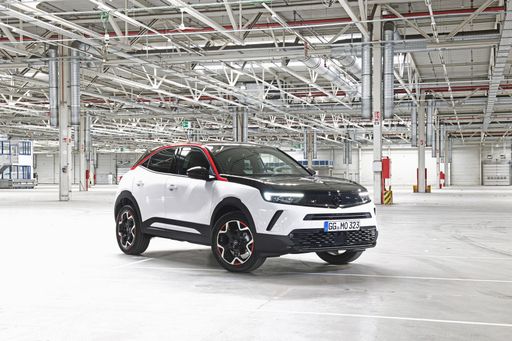
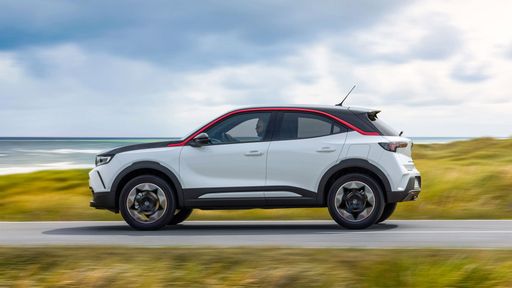
The Opel Mokka is a compact crossover that blends bold, modern styling with a practical, city-friendly footprint. It delivers a comfortable ride and a well-appointed interior with straightforward tech, making it a smart choice for urban drivers who want a stylish yet sensible small SUV.

details

Nissan Qashqai

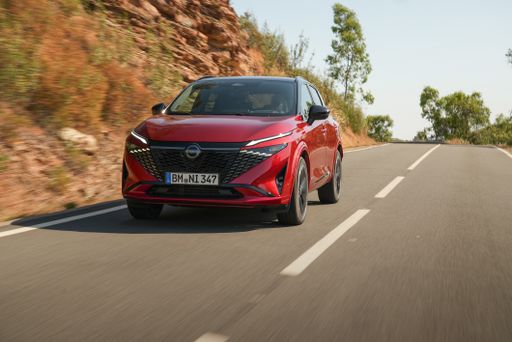
The Nissan Qashqai is a compact crossover that blends everyday practicality with a comfortable, composed driving experience and a smart, well finished interior. It feels sensible and versatile for city life and longer trips, appealing to buyers who want a reliable, low fuss family car.

details
Vauxhall Mokka
Nissan Qashqai

Costs and Consumption

Price
23,000 - 40,500 £
Price
29,600 - 39,900 £
Consumption L/100km
4.9 - 5.7 L/100km
Consumption L/100km
4.3 - 6.8 L/100km
Consumption kWh/100km
15.4 - 18.5 kWh/100km
Consumption kWh/100km
-
Electric Range
336 - 403 km
Electric Range
-
Battery Capacity
-
Battery Capacity
-
co2
0 - 129 g/km
co2
98 - 152 g/km
Fuel tank capacity
-
Fuel tank capacity
-

Dimensions and Body

Body Type
SUV
Body Type
SUV
Seats
5
Seats
5
Doors
-
Doors
-
Curb weight
1,294 - 1,672 kg
Curb weight
1,420 - 1,624 kg
Trunk capacity
310 - 350 L
Trunk capacity
479 - 504 L
Length
-
Length
-
Width
1,787 mm
Width
1,835 mm
Height
-
Height
-
Max trunk capacity
-
Max trunk capacity
-
Payload
388 - 400 kg
Payload
446 - 516 kg

Engine and Performance

Engine Type
Electric, Petrol, Petrol MHEV
Engine Type
Petrol MHEV, Full Hybrid
Transmission
Automatic, Manuel
Transmission
Manuel, Automatic
Transmission Detail
Reduction Gearbox, Manual Gearbox, Dual-Clutch Automatic
Transmission Detail
Manual Gearbox, CVT, Reduction Gearbox
Drive Type
Front-Wheel Drive
Drive Type
Front-Wheel Drive, All-Wheel Drive
Power HP
136 - 281 HP
Power HP
158 - 205 HP
Acceleration 0-100km/h
5.9 - 9 s
Acceleration 0-100km/h
7.6 - 9.9 s
Max Speed
-
Max Speed
-
Torque
230 - 345 Nm
Torque
260 - 330 Nm
Number of Cylinders
3
Number of Cylinders
3 - 4
Power kW
100 - 207 kW
Power kW
116 - 151 kW
Engine capacity
1,199 cm3
Engine capacity
1,332 - 1,498 cm3

General

Model Year
2,024 - 2,025
Model Year
2,025 - 2,026
CO2 Efficiency Class
A, D, C
CO2 Efficiency Class
E, C
Brand
Vauxhall
Brand
Nissan
DriveDuel uses data analysis and artificial intelligence to evaluate vehicle data and create content. Content is regularly reviewed and improved. The displayed prices are estimates based on German list prices, adjusted to the respective country’s VAT. Country-specific registration taxes are not included. This information is not legally binding.