VS

Peugeot 208 vs Fiat Panda comparison

Compare performance (156 HP vs 70 HP), boot space and price (21,000 £ vs 14,100 £ ) at a glance. Find out which car is the better choice for you – Peugeot 208 or Fiat Panda?

Peugeot 208 vs Fiat Panda: Key differences

Peugeot 208

4 (2 Reviews)
rate
  • clearly more power
  • a bit more efficient
  • substantially quicker 0–100 km/h
  • markedly more trunk space

Fiat Panda

4.5 (2 Reviews)
rate
  • significantly cheaper
  • a bit lighter

All details on performance, efficiency, range and trunk space can be found in the technical comparison below – including user reviews for both models.

208

A Clash of the Hatchbacks: Fiat Panda vs. Peugeot 208

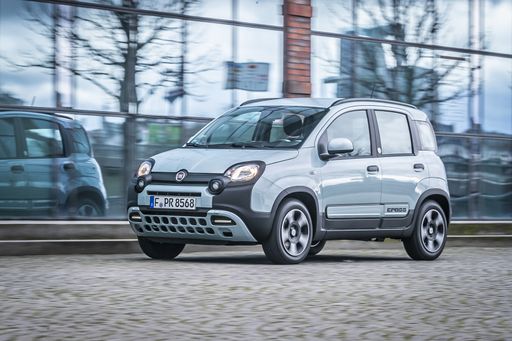
In the world of compact cars, the Fiat Panda and Peugeot 208 are two titans that consistently vie for supremacy. Each brings its own unique set of attributes to the table, catering to different needs and tastes. In this article, we'll dive into the technical details, innovations, and performance of these two formidable contenders for your driveway.

Panda

Engine and Performance

The Fiat Panda takes a more subtle approach with its 2024 model, boasting a 1.0-liter, three-cylinder petrol mild-hybrid engine. This compact engine offers a modest 70 HP (51 kW) and 92 Nm of torque, keeping the Panda nimble for urban driving. With its reliable manual gearbox, the front-wheel-drive system offers satisfactory control, albeit with a sedate acceleration of 0-100 km/h in 13.9 to 14.7 seconds. The Panda's top speed hovers around 164 km/h.

On the other side, the Peugeot 208 presents a wider range of powertrains, including petrol, mild-hybrid, and a fully electric variant. The petrol MHEV model delivers between 101 and 156 HP (74 to 115 kW) with torque up to 260 Nm. The electric variant further elevates the experience by offering up to 156 HP with substantial torque of 270 Nm, sprinting from 0-100 km/h in as little as 8.3 seconds. Depending on the choice of model, the 208 reaches speeds up to 200 km/h.

208

Fuel Efficiency and Range

The Fiat Panda offers respectable fuel consumption figures, ranging between 5 to 5.1 liters per 100 km, aligning with its purpose as an economical city car. The CO2 emissions are equally competitive, varying from 113 to 116 g/km.

Meanwhile, the Peugeot 208 demonstrates noteworthy versatility. Its petrol versions deliver fuel consumption ranging from 4.7 to 5.4 liters per 100 km. The standout electric model promises an impressive range between 363 to 410 km on a single charge, with power consumption of 14 to 16.1 kWh per 100 km and noteworthy emissions-free driving.

Panda

Design and Practicality

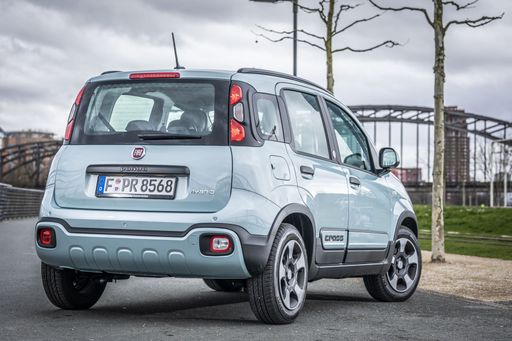
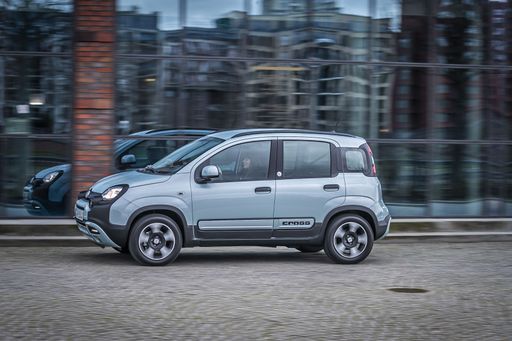
The Fiat Panda's compact size—between 3653 to 3705 mm in length—lends to its maneuverability, making it ideal for tight city spaces. A trunk capacity of 225 liters provides reasonable, albeit limited, cargo space, suitable for daily errands and small getaways.

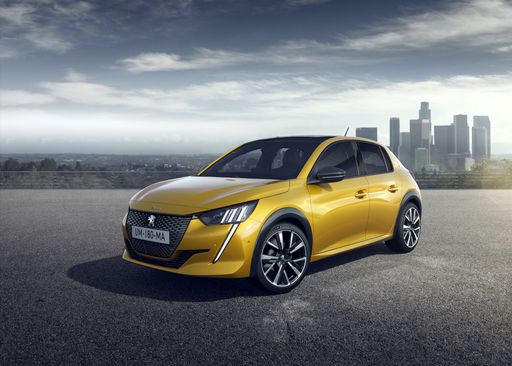
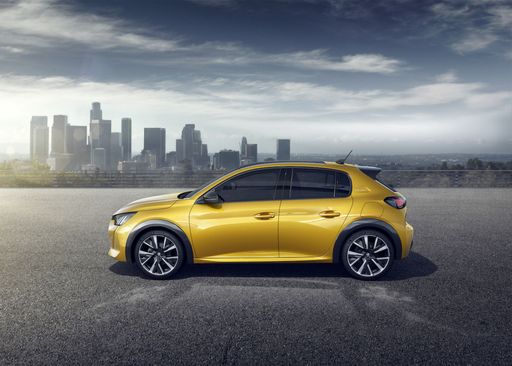
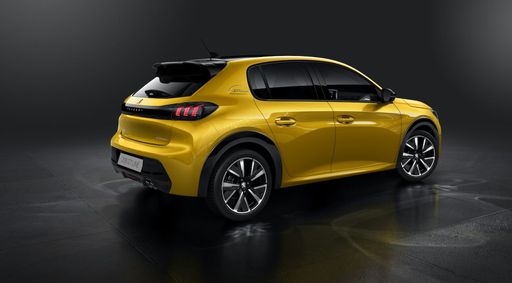
Conversely, the Peugeot 208 stands slightly larger with a length of 4055 mm. It offers more generous cargo space, holding from 265 to 309 liters, depending on the model configuration. This extra space pairs elegantly with a stylish design, appealing to those seeking both practicality and flair.

208

Comfort and Innovation

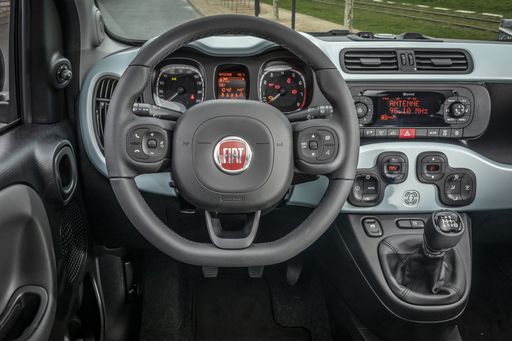
In terms of comfort, the Fiat Panda accommodates four to five passengers and offers a simple, no-frills interior focused on practical usability. It shines in functionality, with payload options up to 365 kg.

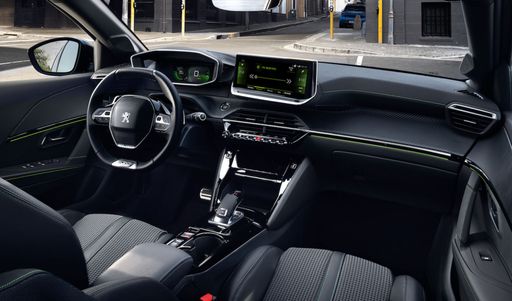
The Peugeot 208, seating five comfortably, brings a more modern approach. It offers advanced features, especially in its newer models, including high-tech infotainment systems, automatic transmissions, and premium comfort options. The 208's innovative design blends trendy styling with tech-forward elements.

Panda

Conclusion

Choosing between the Fiat Panda and Peugeot 208 largely depends on your priorities. The Panda shines in its economical simplicity and ease of city navigation, making it a viable option for budget-conscious buyers. Meanwhile, the Peugeot 208 caters to those seeking performance variety and advancement in technology, from petrol through to electrification. Whether seeking the straightforward charm of the Panda or the versatile elegance of the 208, there's no denying that both have solidified their standings in the hatchback segment with their own unique offerings.

Here’s where it gets real: The technical differences in detail

208

Costs and Efficiency:

When it comes to price and running costs, the biggest differences usually appear. This is often where you see which car fits your budget better in the long run.

Fiat Panda is significantly cheaper – starting at 14,100 £ , while the Peugeot 208 costs 21,000 £ . That’s a price difference of around 6,848 £.

Fuel consumption also shows a difference: the Peugeot 208 uses 4.5 L/100km and is a bit more efficient than the Fiat Panda with 5 L/100km. The difference is about 0.5 L/100km.

Panda

Engine and Performance:

Under the bonnet, it becomes clear which model is tuned for sportiness and which one takes the lead when you hit the accelerator.

When it comes to engine power, the Peugeot 208 offers clearly more power – delivering 156 HP compared to 70 HP. That’s roughly 86 HP more horsepower.

When accelerating from 0 to 100 km/h, the Peugeot 208 is substantially quicker – completing the sprint in 8.3 s, while the Fiat Panda takes 13.9 s. That’s about 5.6 s quicker.

Looking at top speed, the Peugeot 208 is a bit faster – reaching 200 km/h, while the Fiat Panda tops out at 164 km/h. The difference is around 36 km/h.

There’s also a difference in torque: the Peugeot 208 delivers considerably more torque with 270 Nm compared to 92 Nm. That’s about 178 Nm more.

208

Space and Everyday Use:

Beyond pure performance, interior space and usability matter most in daily life. This is where you see which car is more practical and versatile.

Seats: Peugeot 208 offers more seats – 5 vs 4.

In terms of curb weight, Fiat Panda is a bit lighter – 1,055 kg compared to 1,165 kg. The difference is around 110 kg.

Looking at boot space, the Peugeot 208 offers markedly more boot space – 352 L compared to 225 L. That’s a difference of about 127 L.

For maximum load capacity, the Peugeot 208 offers noticeably more capacity – up to 1,163 L, about 293 L more than the Fiat Panda.

When it comes to payload, the Peugeot 208 carries somewhat more – 430 kg compared to 365 kg. That’s a difference of about 65 kg.

Who wins the race in the data check?

The Peugeot 208 holds a decisive overall lead in the objective data comparison.
This result only shows which model scores more points on paper – not which of the two cars feels right for you.

from £21,000
208

Peugeot 208

  • Engine Type : Electric, Petrol MHEV, Petrol
  • Transmission : Automatic, Manuel
  • Drive Type : Front-Wheel Drive
  • Power HP : 101 - 156 HP
  • Consumption L/100km : 4.5 - 5.1 L/100km
  • Consumption kWh/100km : 14.1 - 15.4 kWh/100km
  • Electric Range : 362 - 432 km
Peugeot 208
Fiat Panda

Costs and Consumption

View detailed analysis

Engine and Performance

View detailed analysis

Dimensions and Body

View detailed analysis

Peugeot 208

The Peugeot 208 feels like a city-savvy fox: compact, stylish and surprisingly grown-up, with a cabin that punches above its weight and enough personality to make daily commutes a little less boring. It’s a smart pick for buyers who want chic practicality without the showroom bluster — easy to park, thrifty to run and oddly fun when the road tightens up.

details

Fiat Panda

The Panda is a charming, no-nonsense city companion that mixes cheerful Italian flair with genuinely useful practicality, making tight streets and daily errands feel less of a chore. Its honest simplicity, clever packaging and a dash of cheeky character make it a smart, low-stress buy for people who prefer sensible perks over showroom flash.

details
Peugeot 208
Fiat Panda

Costs and Consumption

Price
21,000 - 35,200 £
Price
14,100 £
Consumption L/100km
4.5 - 5.1 L/100km
Consumption L/100km
5 L/100km
Consumption kWh/100km
14.1 - 15.4 kWh/100km
Consumption kWh/100km
-
Electric Range
362 - 432 km
Electric Range
-
Battery Capacity
46 - 51 kWh
Battery Capacity
-
co2
0 - 116 g/km
co2
113 g/km
Fuel tank capacity
44 L
Fuel tank capacity
38 L

Dimensions and Body

Body Type
Hatchback
Body Type
Hatchback
Seats
5
Seats
4
Doors
5
Doors
5
Curb weight
1,165 - 1,530 kg
Curb weight
1,055 kg
Trunk capacity
309 - 352 L
Trunk capacity
225 L
Length
4,055 mm
Length
3,635 mm
Width
1,745 mm
Width
1,643 mm
Height
1,430 mm
Height
1,551 mm
Max trunk capacity
1,118 - 1,163 L
Max trunk capacity
870 L
Payload
380 - 430 kg
Payload
365 kg

Engine and Performance

Engine Type
Electric, Petrol MHEV, Petrol
Engine Type
Petrol MHEV
Transmission
Automatic, Manuel
Transmission
Manuel
Transmission Detail
Reduction Gearbox, Dual-Clutch Automatic, Manual Gearbox
Transmission Detail
Manual Gearbox
Drive Type
Front-Wheel Drive
Drive Type
Front-Wheel Drive
Power HP
101 - 156 HP
Power HP
70 HP
Acceleration 0-100km/h
8.3 - 10.9 s
Acceleration 0-100km/h
13.9 s
Max Speed
150 - 200 km/h
Max Speed
164 km/h
Torque
205 - 270 Nm
Torque
92 Nm
Number of Cylinders
3
Number of Cylinders
3
Power kW
74 - 115 kW
Power kW
51 kW
Engine capacity
1,199 cm3
Engine capacity
999 cm3

General

Model Year
2,023 - 2,026
Model Year
2,024
CO2 Efficiency Class
A, C, D
CO2 Efficiency Class
C
Brand
Peugeot
Brand
Fiat
DriveDuel uses data analysis and artificial intelligence to evaluate vehicle data and create content. Content is regularly reviewed and improved. The displayed prices are estimates based on German list prices, adjusted to the respective country’s VAT. Country-specific registration taxes are not included. This information is not legally binding.