VS

Peugeot 208 vs VW Taigo comparison

Compare performance (156 HP vs 150 HP), boot space and price (21,000 £ vs 19,900 £ ) at a glance. Find out which car is the better choice for you – Peugeot 208 or VW Taigo?

Peugeot 208 vs VW Taigo: Key differences

Peugeot 208

4 (2 Reviews)
rate
  • very slightly more power
  • a bit more efficient
  • barely lighter
details

VW Taigo

4.9 (3 Reviews)
rate
  • very slightly cheaper
  • very slightly quicker 0–100 km/h
details

All details on performance, efficiency, range and trunk space can be found in the technical comparison below – including user reviews for both models.

By Achim Sedelmaier

208

Compact Rivalry: Peugeot 208 vs. VW Taigo

In today's bustling automotive market, compact vehicles continue to capture the essence of urban transport, delivering efficiency without compromising on style and technology. The Peugeot 208 and the VW Taigo are front-runners in this competitive segment, each offering a unique blend of features that cater to modern drivers. Let's dive into the specifics and innovations each model brings to the table.
Taigo

Design and Dimensions

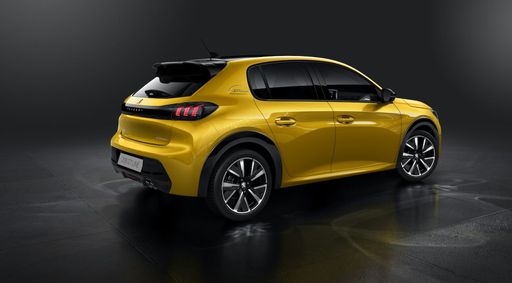
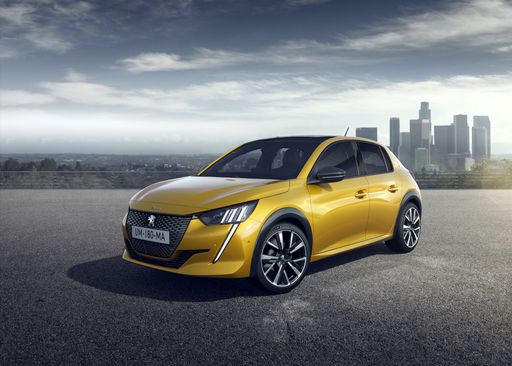
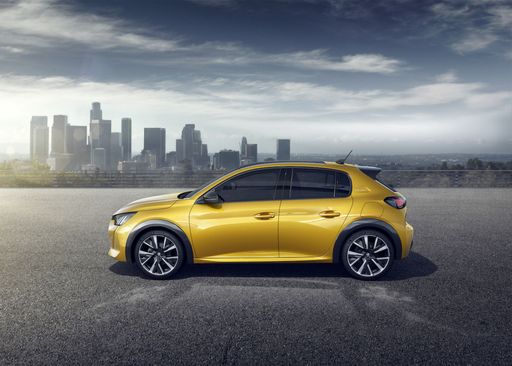
The Peugeot 208 is a stylish hatchback that embodies the brand's design philosophy with its sleek silhouette and dynamic lines. Measuring 4,055mm in length, 1,745mm in width, and 1,430mm in height, the 208 maintains a compact profile ideal for city navigation, while offering the practicality of a 5-door configuration.

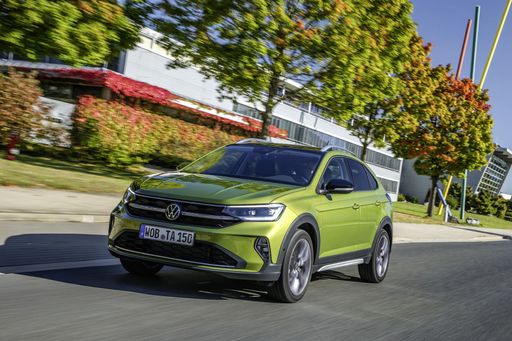
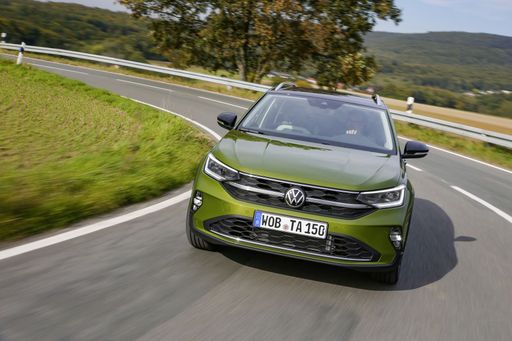
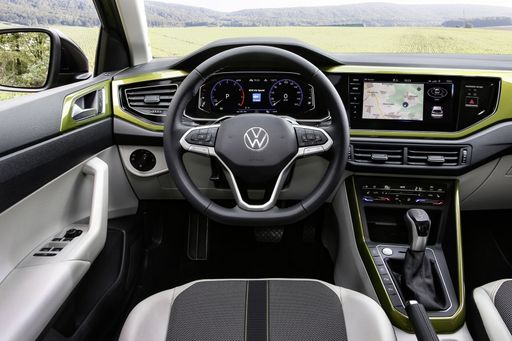
In contrast, the VW Taigo presents itself as an SUV. Despite its different body type, it competes within a similar market space. Stretching to 4,266mm in length, 1,757mm in width, and 1,518mm in height, the Taigo is slightly larger, promising a commanding road presence while still being urban-friendly.

208

Performance and Powertrains

The Peugeot 208 showcases versatility with its diverse powertrain options, including petrol, mild hybrid (MHEV), and fully electric versions. Power outputs range from 101 HP to 156 HP, catering to different driving needs. The electric variant boasts an impressive range of up to 410 km, making it a strong contender in the eco-friendly car segment.

Meanwhile, the VW Taigo sticks to traditional petrol engines, boasting power outputs between 95 HP and 150 HP. With a turbocharged 1.0-liter and a 1.5-liter engine available, the Taigo emphasizes performance and efficiency, achieving top speeds up to 212 km/h. With an average fuel consumption around 5.5L/100km, it stands out in fuel economy.

Taigo

Interior and Technology

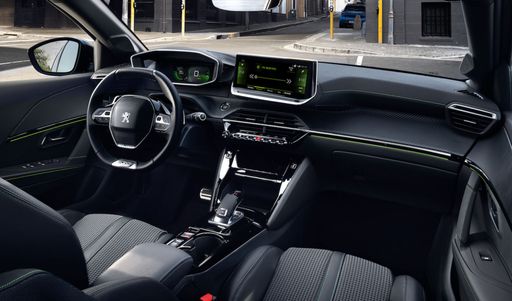
Inside the Peugeot 208, the focus is on creating an immersive experience. The cabin is modern and intuitive, featuring Peugeot's i-Cockpit with a compact steering wheel and a customizable digital instrument panel. Adding to the comfort, the 208 accommodates five passengers and provides a trunk capacity of up to 309 liters.

The VW Taigo, with its SUV classification, offers a spacious and versatile interior. It features a high-tech infotainment system, catering to tech-savvy users with capabilities like Android Auto and Apple CarPlay. With a trunk space of 440 liters, the Taigo excels in practicality, perfect for family trips or hauling extra gear.

208

Safety and Innovations

Both models excel in safety, each equipped with advanced driver-assistance systems. The Peugeot 208 includes features like lane-keeping assist, automatic emergency braking, and blind-spot monitoring, reinforcing safety on all fronts.

The VW Taigo also boasts an array of safety features, including adaptive cruise control and a proactive occupant protection system. The robust build, coupled with cutting-edge technology, ensures peace of mind on every journey.

Taigo

Conclusion

Choosing between the Peugeot 208 and the VW Taigo ultimately depends on your personal preferences and lifestyle needs. The 208 offers cutting-edge electric innovation and a dynamic drive, perfect for those engrossed in urban life. Meanwhile, the Taigo appeals to those seeking the versatility of an SUV with a sharp focus on technology and efficiency. Both stand as testaments to quality engineering, ready to meet the demands of modern drivers.

Here’s where it gets real: The technical differences in detail

208

Costs and Efficiency:

Price and efficiency are key factors when choosing a car – and this is often where the real differences emerge.

VW Taigo is very slightly cheaper – starting at 19,900 £ , while the Peugeot 208 costs 21,000 £ . That’s a price difference of around 1,062 £.

Fuel consumption also shows a difference: the Peugeot 208 uses 4.5 L/100km and is a bit more efficient than the VW Taigo with 5.3 L/100km. The difference is about 0.8 L/100km.

Taigo

Engine and Performance:

Under the bonnet, it becomes clear which model is tuned for sportiness and which one takes the lead when you hit the accelerator.

When it comes to engine power, the Peugeot 208 offers very slightly more power – delivering 156 HP compared to 150 HP. That’s roughly 6 HP more horsepower.

When accelerating from 0 to 100 km/h, the VW Taigo is very slightly quicker – completing the sprint in 8.2 s, while the Peugeot 208 takes 8.3 s. That’s about 0.1 s quicker.

There’s also a difference in torque: the Peugeot 208 delivers barely more torque with 270 Nm compared to 250 Nm. That’s about 20 Nm more.

208

Space and Everyday Use:

Beyond pure performance, interior space and usability matter most in daily life. This is where you see which car is more practical and versatile.

Both vehicles offer seating for 5 people.

In terms of curb weight, Peugeot 208 is barely lighter – 1,165 kg compared to 1,229 kg. The difference is around 64 kg.

When it comes to payload, the VW Taigo carries only slightly more – 457 kg compared to 430 kg. That’s a difference of about 27 kg.

Who wins the race in the data check?

The Peugeot 208 is decisively ahead in the objective data comparison.
This result only shows which model scores more points on paper – not which of the two cars feels right for you.

from £21,000
208

Peugeot 208

  • Engine Type : Petrol MHEV, Electric, Petrol
  • Transmission : Automatic, Manuel
  • Drive Type : Front-Wheel Drive
  • Power HP : 101 - 156 HP
  • Consumption L/100km : 4.5 - 5.1 L/100km
  • Consumption kWh/100km : 14.1 - 15.4 kWh/100km
  • Electric Range : 363 - 432 km
Peugeot 208
VW Taigo

Costs and Consumption

View detailed analysis

Engine and Performance

View detailed analysis

Dimensions and Body

View detailed analysis

Peugeot 208

The Peugeot 208 feels like a city-savvy fox: compact, stylish and surprisingly grown-up, with a cabin that punches above its weight and enough personality to make daily commutes a little less boring. It’s a smart pick for buyers who want chic practicality without the showroom bluster — easy to park, thrifty to run and oddly fun when the road tightens up.

details

VW Taigo

The VW Taigo blends a coupe-like roofline with crossover practicality, giving it a stylish presence on the road while remaining easy to live with for everyday driving. It delivers a comfortable ride, intuitive tech and smart use of space, making it a good choice if you want SUV looks without the bulk of a larger vehicle.

details
Peugeot 208
VW Taigo

Costs and Consumption

Price
21,000 - 33,200 £
Price
19,900 - 31,800 £
Consumption L/100km
4.5 - 5.1 L/100km
Consumption L/100km
5.3 - 5.8 L/100km
Consumption kWh/100km
14.1 - 15.4 kWh/100km
Consumption kWh/100km
-
Electric Range
363 - 432 km
Electric Range
-
Battery Capacity
-
Battery Capacity
-
co2
0 - 116 g/km
co2
120 - 132 g/km
Fuel tank capacity
-
Fuel tank capacity
-

Dimensions and Body

Body Type
Hatchback
Body Type
SUV
Seats
5
Seats
5
Doors
-
Doors
-
Curb weight
1,165 - 1,530 kg
Curb weight
1,229 - 1,302 kg
Trunk capacity
-
Trunk capacity
440 L
Length
-
Length
-
Width
1,745 mm
Width
1,757 mm
Height
-
Height
-
Max trunk capacity
-
Max trunk capacity
-
Payload
380 - 430 kg
Payload
448 - 457 kg

Engine and Performance

Engine Type
Petrol MHEV, Electric, Petrol
Engine Type
Petrol
Transmission
Automatic, Manuel
Transmission
Manuel, Automatic
Transmission Detail
Dual-Clutch Automatic, Reduction Gearbox, Manual Gearbox
Transmission Detail
Manual Gearbox, Dual-Clutch Automatic
Drive Type
Front-Wheel Drive
Drive Type
Front-Wheel Drive
Power HP
101 - 156 HP
Power HP
95 - 150 HP
Acceleration 0-100km/h
8.3 - 10.9 s
Acceleration 0-100km/h
8.2 - 11.1 s
Max Speed
-
Max Speed
-
Torque
205 - 270 Nm
Torque
175 - 250 Nm
Number of Cylinders
3
Number of Cylinders
3 - 4
Power kW
74 - 115 kW
Power kW
70 - 110 kW
Engine capacity
1,199 cm3
Engine capacity
999 - 1,498 cm3

General

Model Year
2,025 - 2,026
Model Year
2,024 - 2,025
CO2 Efficiency Class
C, A, D
CO2 Efficiency Class
D
Brand
Peugeot
Brand
VW
DriveDuel uses data analysis and artificial intelligence to evaluate vehicle data and create content. Content is regularly reviewed and improved. The displayed prices are estimates based on German list prices, adjusted to the respective country’s VAT. Country-specific registration taxes are not included. This information is not legally binding.