VS

Peugeot 3008 vs Ford Kuga comparison

Compare performance (325 HP vs 243 HP), boot space and price (35,100 £ vs 34,200 £ ) at a glance. Find out which car is the better choice for you – Peugeot 3008 or Ford Kuga?

Peugeot 3008 vs Ford Kuga: Key differences

Peugeot 3008

3.4 (4 Reviews)
rate
  • markedly more power
  • slightly more efficient
  • substantially more electric range
  • clearly quicker 0–100 km/h

Ford Kuga

4.3 (5 Reviews)
rate
  • very slightly cheaper
  • only slightly lighter

All details on performance, efficiency, range and trunk space can be found in the technical comparison below – including user reviews for both models.

3008

City Suitor vs Continental Companion

Ford Kuga plays the role of the practical all-rounder: confident in daily traffic, unfussy in parking lots and ready for the commuter grind without drama. The Peugeot 3008 leans more towards style and refinement, appealing to buyers who want a characterful cabin and a bit of the premium feel. Both feel at home on the road, but they do it with different personalities — one pragmatic, the other more image-conscious. Choosing between them is as much about taste as it is about needs.
Kuga

Moment of Truth Behind the Wheel

The Kuga gives a sense of athletic composure with steering that rewards precision and a setup that masks its size when you need agility. The 3008 favors composure and polish, smoothing out long miles and offering a more relaxed rhythm that suits motorway runs. Neither is harsh — one prioritises driver engagement while the other leans into serenity and refinement. Expect each to reveal its strengths once you push beyond city speeds.

3008

Living with the Cabin

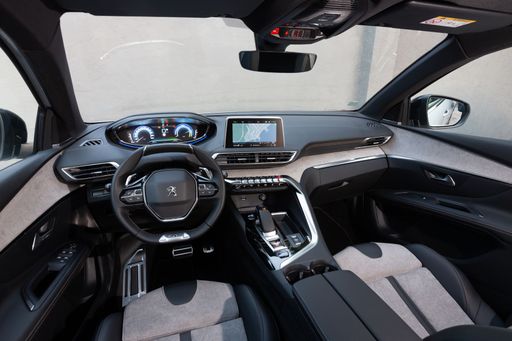
Step inside the Kuga and you find a familiar, functional layout where buttons and switches behave how you expect, making daily chores simple and intuitive. In contrast, the 3008 wraps occupants in a design-led cockpit that feels special and a touch theatrical, which will delight style-conscious owners but may divide purists. Both deliver comfy seats and sensible ergonomics, though your preference will depend on whether you value straightforward practicality or interior flair. Either way, long drives are handled with a sense of calm and control.

Kuga

Looks That Talk

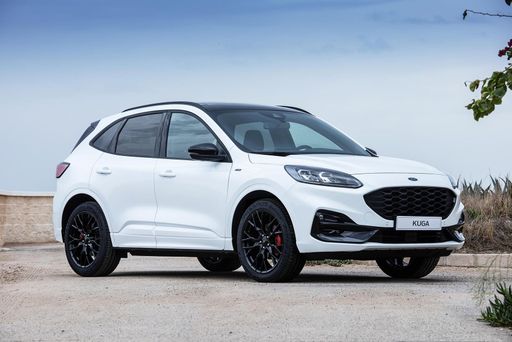
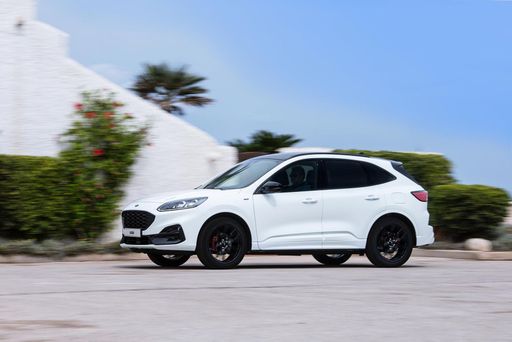
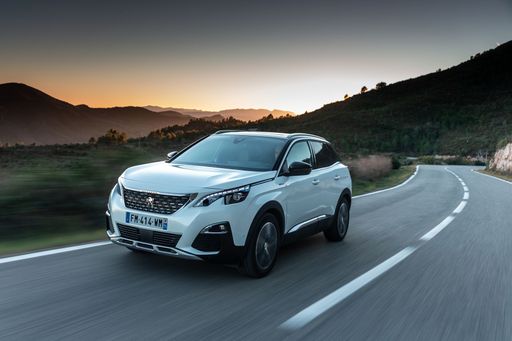
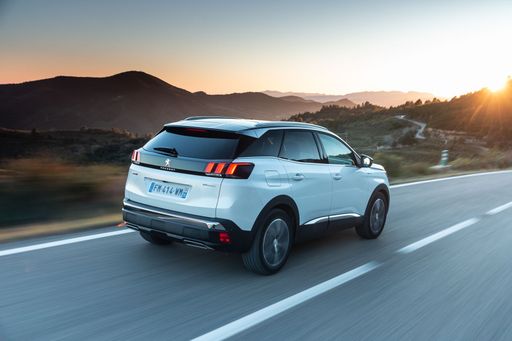
The Kuga’s exterior reads as purposeful and modern without drawing too much attention — it’s handsome in a hard-working kind of way. The 3008 broadcasts ambition, its sculpted surfaces and distinctive face giving it a more upmarket presence that turns heads in town. Design choices say a lot about who the cars are aimed at: the Ford aims for broad appeal, the Peugeot for those who want to make a statement. Both wear their styles confidently, just in different registers.

3008

Pack, Fold, Repeat

For families and weekend haulers the Kuga offers straightforward load-lugging and a layout that makes packing and daily life easy and reliable. The 3008 surprises with clever touches that make reconfiguring the interior feel a bit more considered and premium, helping it punch above its class for usability. Rear-seat comfort and access are good in both, though the way each handles cargo and flexibility echoes their wider philosophies — utility-first versus design-conscious practicality. Ultimately your choice will hinge on how you prioritise pure space against smart usability.

Kuga

Sense of Value and Everyday Costs

On the street the Kuga trades on its sensible image: trims and options that let you tailor the car to sensible needs without overreaching into excess. The 3008 asks for a little more attention to specification if you want it fully dressed, but it rewards you with a feel that edges towards upmarket. Running either car is straightforward; the real difference is in how each treats equipment, perceived quality and ownership experience. Buyers should weigh initial appeal against how the car will live with them over time.

3008

Who Should Put Which on Their Drive

Commuters and pragmatic families will find the Kuga a dependable partner, offering a comfortable daily experience with honest practicality and easy usability. Style-conscious drivers and those who favour a refined cabin and an image with flair will be drawn to the 3008’s curated interior and distinctive presence. If you spend long hours behind the wheel, consider which driving temperament suits you: engaged and direct, or calm and cultivated. Either way, both are sensible choices that cater to different priorities.

Stick Around for the Verdict

If you like practical, no-nonsense usability you’ll be leaning one way; if you prize design and a premium feel you’ll be leaning the other — and the full DriveDuel Champion reveal, with a detailed verdict and final thoughts, is just ahead, so keep reading to see how the duel finishes.

Here’s where it gets real: The technical differences in detail

3008

Costs and Efficiency:

Price and efficiency are often the first things buyers look at. Here it becomes clear which model has the long-term edge – whether at the pump, the plug, or in purchase price.

Ford Kuga is very slightly cheaper – starting at 34,200 £ , while the Peugeot 3008 costs 35,100 £ . That’s a price difference of around 900 £.

Fuel consumption also shows a difference: the Peugeot 3008 uses 2.4 L/100km and is slightly more efficient than the Ford Kuga with 2.8 L/100km. The difference is about 0.4 L/100km.

As for electric range, the Peugeot 3008 offers substantially more range – reaching up to 698 km, about 630 km more than the Ford Kuga.

Kuga

Engine and Performance:

Power, torque and acceleration say a lot about how a car feels on the road. This is where you see which model delivers more driving dynamics.

When it comes to engine power, the Peugeot 3008 offers markedly more power – delivering 325 HP compared to 243 HP. That’s roughly 82 HP more horsepower.

When accelerating from 0 to 100 km/h, the Peugeot 3008 is clearly quicker – completing the sprint in 6 s, while the Ford Kuga takes 7.3 s. That’s about 1.3 s quicker.

There’s also a difference in torque: the Peugeot 3008 delivers substantially more torque with 511 Nm compared to 240 Nm. That’s about 271 Nm more.

3008

Space and Everyday Use:

Cabin size, boot volume and payload all play a role in everyday practicality. Here, comfort and flexibility make the difference.

Both vehicles offer seating for 5 people.

In terms of curb weight, Ford Kuga is only slightly lighter – 1,526 kg compared to 1,648 kg. The difference is around 122 kg.

When it comes to payload, the Ford Kuga carries moderately more – 550 kg compared to 467 kg. That’s a difference of about 83 kg.

Who wins the race in the data check?

The Peugeot 3008 is decisively ahead in the objective data comparison.
This result only shows which model scores more points on paper – not which of the two cars feels right for you.

from £35,100
3008

Peugeot 3008

  • Engine Type : Electric, Petrol MHEV, Plugin Hybrid
  • Transmission : Automatic
  • Drive Type : Front-Wheel Drive, All-Wheel Drive
  • Power HP : 145 - 325 HP
  • Consumption L/100km : 2.4 - 5.4 L/100km
  • Consumption kWh/100km : 16.9 - 17.6 kWh/100km
  • Electric Range : 81 - 698 km
Peugeot 3008
Ford Kuga

Costs and Consumption

View detailed analysis

Engine and Performance

View detailed analysis

Dimensions and Body

View detailed analysis

Peugeot 3008

The Peugeot 3008 blends bold French styling with a surprisingly grown-up interior that makes even dull commutes feel a little bit special. Practical enough for family life yet lively to drive, it’s a clever all‑rounder that stands out from the crossover crowd without shouting for attention.

details

Ford Kuga

The Kuga is Ford’s adaptable family SUV that blends usable space with a surprisingly lively driving character, making daily commutes and weekend escapes equally enjoyable. With smart interior packaging, an easy-to-use infotainment setup and composed road manners, it’s a sensible choice for buyers who want a bit of fun without the fuss.

details
Peugeot 3008
Ford Kuga

Costs and Consumption

Price
35,100 - 52,000 £
Price
34,200 - 46,300 £
Consumption L/100km
2.4 - 5.4 L/100km
Consumption L/100km
2.8 - 6.8 L/100km
Consumption kWh/100km
16.9 - 17.6 kWh/100km
Consumption kWh/100km
-
Electric Range
81 - 698 km
Electric Range
68 km
Battery Capacity
0.4 - 96.9 kWh
Battery Capacity
-
co2
0 - 121 g/km
co2
55 - 154 g/km
Fuel tank capacity
55 L
Fuel tank capacity
-

Dimensions and Body

Body Type
SUV
Body Type
SUV
Seats
5
Seats
5
Doors
5
Doors
-
Curb weight
1,648 - 2,266 kg
Curb weight
1,526 - 1,859 kg
Trunk capacity
470 - 520 L
Trunk capacity
-
Length
4,542 mm
Length
-
Width
1,895 mm
Width
1,882 mm
Height
1,641 mm
Height
-
Max trunk capacity
1,430 - 1,480 L
Max trunk capacity
-
Payload
432 - 467 kg
Payload
541 - 550 kg

Engine and Performance

Engine Type
Electric, Petrol MHEV, Plugin Hybrid
Engine Type
Petrol, Full Hybrid, Plugin Hybrid
Transmission
Automatic
Transmission
Manuel, Automatic
Transmission Detail
Reduction Gearbox, Dual-Clutch Automatic
Transmission Detail
Manual Gearbox, CVT, Automatic Gearbox
Drive Type
Front-Wheel Drive, All-Wheel Drive
Drive Type
Front-Wheel Drive, All-Wheel Drive
Power HP
145 - 325 HP
Power HP
150 - 243 HP
Acceleration 0-100km/h
6 - 10.2 s
Acceleration 0-100km/h
7.3 - 9.9 s
Max Speed
170 - 201 km/h
Max Speed
-
Torque
230 - 511 Nm
Torque
240 Nm
Number of Cylinders
3 - 4
Number of Cylinders
3 - 4
Power kW
107 - 239 kW
Power kW
111 - 178 kW
Engine capacity
1,199 - 1,598 cm3
Engine capacity
1,496 - 2,488 cm3

General

Model Year
2,024 - 2,026
Model Year
2,025
CO2 Efficiency Class
A, D, B
CO2 Efficiency Class
E, D, B
Brand
Peugeot
Brand
Ford
DriveDuel uses data analysis and artificial intelligence to evaluate vehicle data and create content. Content is regularly reviewed and improved. The displayed prices are estimates based on German list prices, adjusted to the respective country’s VAT. Country-specific registration taxes are not included. This information is not legally binding.