VS

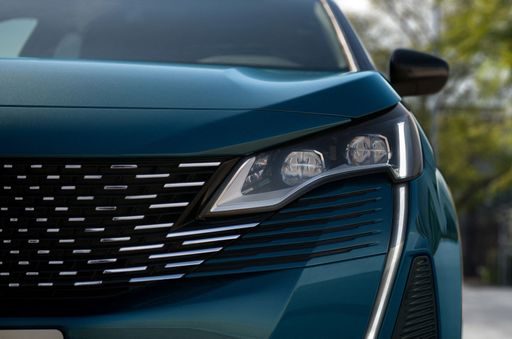
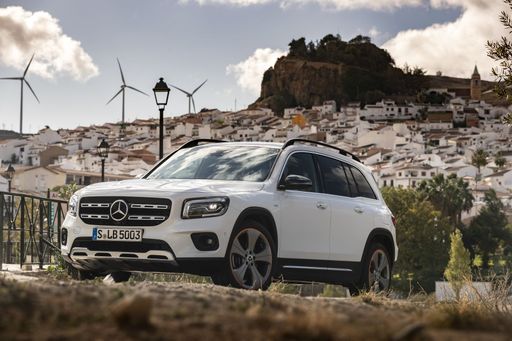
Peugeot 5008 vs Mercedes GLB comparison

Compare performance (325 HP vs 354 HP), boot space and price (38,900 £ vs 43,200 £ ) at a glance. Find out which car is the better choice for you – Peugeot 5008 or Mercedes GLB?

Peugeot 5008 vs Mercedes GLB: Key differences

Peugeot 5008

4.7 (1 Reviews)
rate
  • a bit cheaper
  • significantly more efficient
  • barely more electric range
  • barely lighter
details

Mercedes GLB

3.6 (4 Reviews)
rate
  • marginally more power
  • slightly more efficient
  • moderately quicker 0–100 km/h
  • noticeably more trunk space
details

All details on performance, efficiency, range and trunk space can be found in the technical comparison below – including user reviews for both models.

By Achim Sedelmaier

5008

Mercedes GLB VS Peugeot 5008 — compact 7‑seat SUVs compared for real buyers

The Mercedes GLB and the Peugeot 5008 sit on similar missions—carry families, luggage and tech—yet they approach that job very differently. The GLB leans into German pragmatism and tech muscle with a square, easy‑to‑read driving position and a heavy focus on rapid charging and connectivity. The Peugeot 5008 plays the comfort card: a quieter, more luxurious cabin feel and a flexible 5+2 layout that feels engineered for everyday family life. For buyers the choice isn't about which is objectively better, but which trade‑offs—tech and towing vs. cabin refinement and usability—match their routine.
GLB

Driving character and usability in town

The Mercedes GLB feels more upright and composed in urban traffic, with a direct view out and light steering that makes tight manoeuvres less stressful. The Peugeot 5008 hides its size well too, thanks to a surprisingly tight turning circle and relaxed steering, but its thicker pillars compromise rear visibility and make parking a touch more reliant on cameras. If you value a car that's effortless to place and gives you confidence from the driver’s seat, the GLB has the edge; if you prefer a forgiving, wheel‑light city cruiser that rewards calm driving, the 5008 will suit better. Both are practical in the city, but the GLB sells simplicity and visibility while the 5008 trades some sightlines for a more cushioned feel.

5008

Cabin feel, materials and infotainment

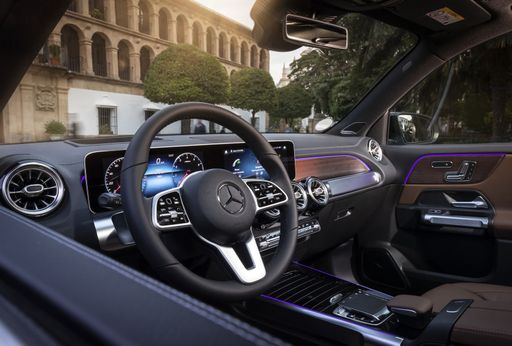
Step inside the Peugeot 5008 and the interior reads as more traditionally upscale: thoughtful surfaces, comfortable seats and a theatre‑like layout that won’t feel out of place on longer trips. The Mercedes GLB projects a high‑tech persona with its MBUX display architecture and fewer physical knobs, which can feel slick but also less tactile for some users. If you prize touch‑and‑voice tech and the latest connected features, the GLB’s cockpit will feel modern and capable; if you want clearer controls and a more comforting, premium ambience, the 5008 is the calmer, more conventional choice. In short, the GLB trades some haptic warmth for functionality, while the 5008 trades some menu simplicity for a cosier atmosphere.

GLB

Practicality: seats, load space and family use

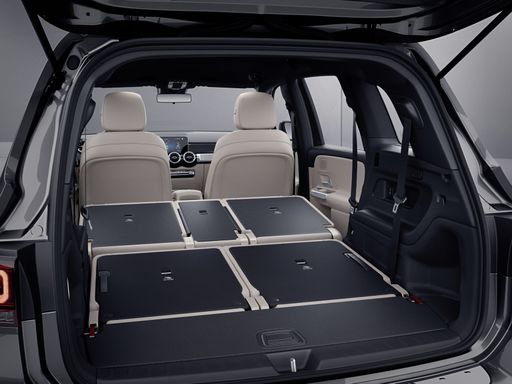
Both cars tout seven seats, but their approaches differ in practical terms: the Peugeot 5008 gives a very flexible second row and an overall interior that’s tuned for passenger comfort across long trips. The Mercedes GLB offers genuinely useful seventh‑seat options but those rear seats remain best for children or short hops, and the GLB compensates with clever extras like additional front storage in electric variants. The 5008’s load floor and second‑row flexibility make day‑to‑day loading and holiday packing easier, whereas the GLB prizes modularity and occasional towing capability for owners who need to pull a trailer. Families who regularly use seven seats and want straightforward boot access will feel at home in the 5008; those who need a mix of cargo volume, occasional 7‑seat use and towing lean toward the GLB.

5008

Long‑distance comfort, consumption and charging temperament

On the motorway both the Mercedes GLB and Peugeot 5008 behave as relaxed cruisers, but they emphasise different strengths: the GLB is exceptionally composed and quiet at speed, especially in its electric guise, and it offers very fast charging where infrastructure allows, shortening stop times. The 5008 is a serene long‑distance companion with plush seats and a calm ride, yet its electric variants show higher consumption at sustained high speeds and need more frequent or longer stops. If your life is punctuated by long runs and you value the shortest possible charging pauses, the GLB’s charging architecture and steady highway manners will appeal. If you prioritise seat comfort and a tranquil cabin over charging speed, the 5008 remains a compelling long‑distance partner.

GLB

Buyer fit: who should choose which car before we dive into the numbers

If you’re a tech‑minded family who occasionally tows, charges on long routes and wants a modular, visibly upright SUV, the Mercedes GLB is tuned to your needs and habits. If your priority is interior refinement, a roomy second row, and a calm, comfortable ride for daily school runs and long holidays, the Peugeot 5008 is the better cultural fit. Both cars have compromises—GLB in tactile material feeling and touch‑centric controls, 5008 in visibility and charging tempo—so your decision should hinge on which trade‑offs you’re willing to accept. Next up: the technical breakdown where we compare real‑world range, boot geometry, charging behaviour and power delivery to match those practical differences with the hard numbers.

Here’s where it gets real: The technical differences in detail

5008

Costs and Efficiency:

Price and efficiency are often the first things buyers look at. Here it becomes clear which model has the long-term edge – whether at the pump, the plug, or in purchase price.

Peugeot 5008 is a bit cheaper – starting at 38,900 £ , while the Mercedes GLB costs 43,200 £ . That’s a price difference of around 4,275 £.

Fuel consumption also shows a difference: the Peugeot 5008 uses 2.7 L/100km and is significantly more efficient than the Mercedes GLB with 5.7 L/100km. The difference is about 3 L/100km.

In terms of energy consumption, the Mercedes GLB is slightly more efficient: consuming 15.4 kWh/100km compared to 17.8 kWh/100km for the Peugeot 5008. That’s a difference of about 2.4 kWh/100km.

As for electric range, the Peugeot 5008 offers barely more range – reaching up to 669 km, about 38 km more than the Mercedes GLB.

GLB

Engine and Performance:

Under the bonnet, it becomes clear which model is tuned for sportiness and which one takes the lead when you hit the accelerator.

When it comes to engine power, the Mercedes GLB offers marginally more power – delivering 354 HP compared to 325 HP. That’s roughly 29 HP more horsepower.

When accelerating from 0 to 100 km/h, the Mercedes GLB is moderately quicker – completing the sprint in 5.5 s, while the Peugeot 5008 takes 6.5 s. That’s about 1 s quicker.

There’s also a difference in torque: the Mercedes GLB delivers barely more torque with 515 Nm compared to 511 Nm. That’s about 4 Nm more.

5008

Space and Everyday Use:

Beyond pure performance, interior space and usability matter most in daily life. This is where you see which car is more practical and versatile.

Seats: Peugeot 5008 offers more seats – 7 vs 5.

In terms of curb weight, Peugeot 5008 is barely lighter – 1,700 kg compared to 1,840 kg. The difference is around 140 kg.

Looking at boot space, the Mercedes GLB offers noticeably more boot space – 540 L compared to 348 L. That’s a difference of about 192 L.

When it comes to payload, the Peugeot 5008 carries clearly more – 640 kg compared to 505 kg. That’s a difference of about 135 kg.

Who wins the race in the data check?

The Peugeot 5008 is far ahead overall in the objective data comparison.
This result only shows which model scores more points on paper – not which of the two cars feels right for you.

from £38,900
5008

Peugeot 5008

  • Engine Type : Electric, Petrol MHEV, Plugin Hybrid
  • Transmission : Automatic
  • Drive Type : Front-Wheel Drive, All-Wheel Drive
  • Power HP : 145 - 325 HP
  • Consumption L/100km : 2.7 - 5.6 L/100km
  • Consumption kWh/100km : 17.8 - 18.1 kWh/100km
  • Electric Range : 78 - 669 km
Peugeot 5008
Mercedes GLB

Costs and Consumption

View detailed analysis

Engine and Performance

View detailed analysis

Dimensions and Body

View detailed analysis

Peugeot 5008

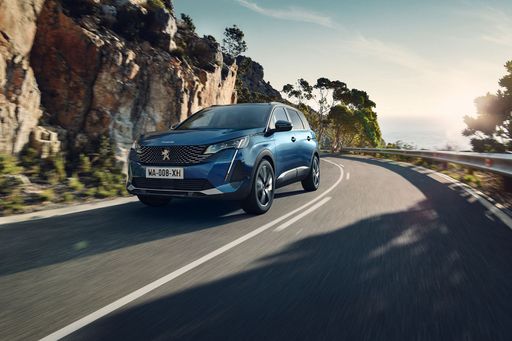
The Peugeot 5008 blends Peugeot's sharp design with the space and versatility families actually need, wrapping clever packaging and a premium-feeling cabin in a crisp, SUV-like silhouette. It drives with more poise than you'd expect from a people carrier, serves up practical touches and flexible seating for everyday chaos, and still looks good when parked outside the school gates.

details

Mercedes GLB

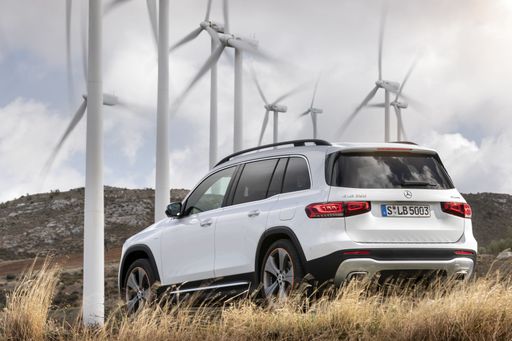
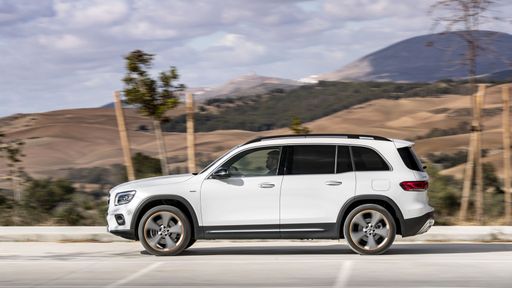
The Mercedes GLB is a practical compact SUV that mixes boxy, family-friendly space with premium German polish, making it an appealing choice for buyers who want usefulness without pretension. It drives with a confident, composed feel and somehow manages to look both rugged and refined — the grown-up SUV that still likes to have fun.

details
Peugeot 5008
Mercedes GLB

Costs and Consumption

Price
38,900 - 54,300 £
Price
43,200 - 62,400 £
Consumption L/100km
2.7 - 5.6 L/100km
Consumption L/100km
5.7 - 6.1 L/100km
Consumption kWh/100km
17.8 - 18.1 kWh/100km
Consumption kWh/100km
15.4 - 15.9 kWh/100km
Electric Range
78 - 669 km
Electric Range
431 - 631 km
Battery Capacity
-
Battery Capacity
-
co2
0 - 127 g/km
co2
0 - 138 g/km
Fuel tank capacity
-
Fuel tank capacity
-

Dimensions and Body

Body Type
SUV
Body Type
SUV
Seats
7
Seats
5
Doors
-
Doors
-
Curb weight
1,700 - 2,344 kg
Curb weight
1,840 - 2,280 kg
Trunk capacity
348 L
Trunk capacity
540 L
Length
-
Length
-
Width
1,895 mm
Width
1,861 mm
Height
-
Height
-
Max trunk capacity
-
Max trunk capacity
-
Payload
596 - 640 kg
Payload
485 - 505 kg

Engine and Performance

Engine Type
Electric, Petrol MHEV, Plugin Hybrid
Engine Type
Electric, Full Hybrid
Transmission
Automatic
Transmission
Automatic
Transmission Detail
Reduction Gearbox, Dual-Clutch Automatic
Transmission Detail
Reduction Gearbox
Drive Type
Front-Wheel Drive, All-Wheel Drive
Drive Type
Rear-Wheel Drive, All-Wheel Drive
Power HP
145 - 325 HP
Power HP
156 - 354 HP
Acceleration 0-100km/h
6.5 - 10.2 s
Acceleration 0-100km/h
5.5 - 9.7 s
Max Speed
-
Max Speed
-
Torque
230 - 511 Nm
Torque
280 - 515 Nm
Number of Cylinders
3 - 4
Number of Cylinders
4
Power kW
107 - 239 kW
Power kW
115 - 260 kW
Engine capacity
1,199 - 1,598 cm3
Engine capacity
1,499 cm3

General

Model Year
2,024 - 2,026
Model Year
2026
CO2 Efficiency Class
A, D, B
CO2 Efficiency Class
A, D, E
Brand
Peugeot
Brand
Mercedes-Benz
DriveDuel uses data analysis and artificial intelligence to evaluate vehicle data and create content. Content is regularly reviewed and improved. The displayed prices are estimates based on German list prices, adjusted to the respective country’s VAT. Country-specific registration taxes are not included. This information is not legally binding.