VS

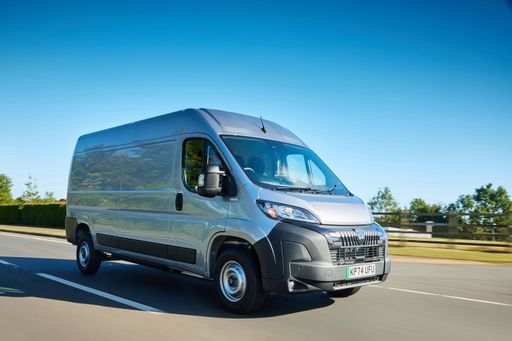
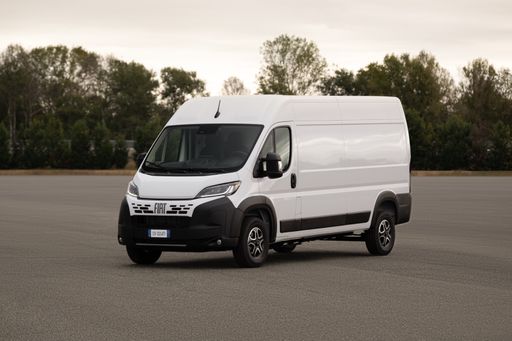
Peugeot Boxer vs Fiat Ducato comparison

Compare performance (279 HP vs 270 HP), boot space and price (35,500 £ vs 34,300 £ ) at a glance. Find out which car is the better choice for you – Peugeot Boxer or Fiat Ducato?

Peugeot Boxer vs Fiat Ducato: Key differences

Peugeot Boxer

  • very slightly more power
  • very slightly lighter

Fiat Ducato

  • marginally cheaper
  • barely more electric range
Boxer

When it comes to the world of commercial vans, the Fiat Ducato and the Peugeot Boxer stand out as two of the most popular choices among business owners and fleet managers alike. Both vehicles share a common platform, yet they offer distinct characteristics that can make one more suitable than the other depending on specific needs. In this article, we’ll delve into the technical specifications, innovative features, and performance aspects of both models to see how they stack up against each other.

Ducato

Body and Dimensions: Capacity Meets Versatility

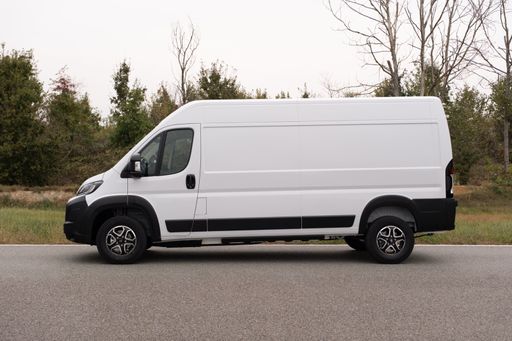
Both the Fiat Ducato and the Peugeot Boxer are primarily designed as cargo vans, offering ample space for transporting goods. The Ducato boasts various lengths ranging from 5,413 mm to 6,678 mm and offers multiple height options, making it highly customizable for different business needs. The maximum width is 2,100 mm, providing a significant amount of cargo space.

On the other hand, the Boxer measures between 4,963 mm and 6,363 mm in length, ensuring it remains compact while still spacious enough for most commercial applications. With a maximum height of 2,760 mm and a width of 2,050 mm, it competes closely with the Ducato while retaining its own unique advantages in accessibility and maneuverability.

Engine Options: Powering Your Business

The Ducato is available with several powertrains, including diesel and electric options. The diesel engines range from 120 HP to a robust 270 HP, allowing for significant versatility in performance. The Ducato has a wide torque range of 320 Nm to 450 Nm, catering to different operational demands. Its fuel consumption averages between 7.2 to 9.3 L/100km, depending on the variant.

In contrast, the Boxer also offers a selection of diesel engines, ranging from 120 HP to 165 HP, although it does not quite reach the Ducato's upper limits. The torque figures range from 260 Nm to 370 Nm, which are adequate for lighter duty cycles. The Boxer has a slightly higher fuel consumption rate, averaging around 7.9 to 8.9 L/100km.

Transmission and Drive System: Smooth Operations

Both models provide front-wheel drive and a choice of manual or automatic transmission, ensuring that drivers can select a setup they are comfortable with. The Ducato features hydraulic systems such as a manual gearbox or an automatic gearbox, capable of providing a smooth driving experience. The inclusion of a reduction gearbox allows for more precise control in challenging driving conditions.

The Boxer, while offering a manual gearbox and a reduction gearbox, lacks the diversity in automatic options seen in the Ducato. This could potentially influence buyer preferences depending on the expected driving conditions and personal preferences for driving dynamics.

Innovative Features: Technology Meets Functionality

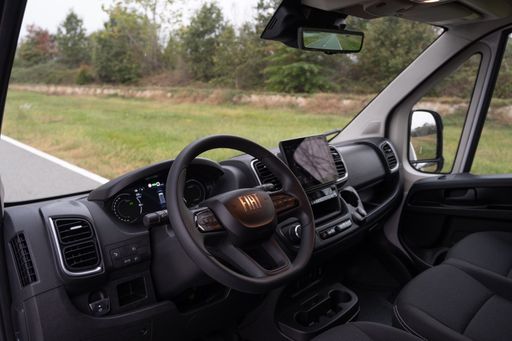
The Fiat Ducato sets itself apart by including advanced technology such as a state-of-the-art infotainment system that adapts to a variety of smartphone applications—ideal for business connectivity. Furthermore, the Ducato boasts impressive safety features including lane assist, adaptive cruise control, and blind-spot monitoring, making it one of the safest options on the market.

Meanwhile, the Peugeot Boxer includes a less extensive suite of tech offerings. However, it provides reliable features that cater to the practicalities of transportation, such as parking assistance systems and various driving aids. For businesses seeking simplicity and ease-of-use without excessive tech, the Boxer remains an appealing option.

Payload and Efficiency: The Bottom Line

Payload capacity is critical for commercial vehicles, and both models deliver. The Ducato supports a payload ranging up to 2,020 kg, while the Boxer offers generous payload figures up to 1,835 kg. Depending on the specific model and configuration chosen, either vehicle can accommodate heavy loads effectively.

In terms of CO2 emissions, the Ducato has CO2 efficiency classes ranging from E to A, with emissions reaching as low as 190 g/km in certain models. The Boxer ranges from class A to G, indicating that while both vans are relatively efficient, the Ducato might edge out in terms of environmentally friendly options.

Conclusion: Making the Right Choice

Ultimately, the choice between the Fiat Ducato and the Peugeot Boxer comes down to individual needs. The Ducato excels with its powerful engine options, advanced technology, and a broader range of possible configurations. The Boxer, however, offers a dependable and straightforward alternative that might be particularly appealing for those needing a versatile workhorse without excessive bells and whistles.

Your decision will depend largely on your business requirements—whether it’s payload capacity, engine performance, technological integration, or just basic versatility. Test-driving both options is highly recommended to determine which van feels best suited for your operational needs.

Here’s where it gets real: The technical differences in detail

Boxer

Costs and Efficiency:

Looking at overall running costs, both models reveal some interesting differences in everyday economy.

Fiat Ducato is marginally cheaper – starting at 34,300 £ , while the Peugeot Boxer costs 35,500 £ . That’s a price difference of around 1,224 £.

Both cars consume an average of 7.5 L/100km – no difference here.

As for electric range, the Fiat Ducato offers barely more range – reaching up to 430 km, about 6 km more than the Peugeot Boxer.

Ducato

Engine and Performance:

Power, torque and acceleration are the classic benchmarks for car enthusiasts – and here, some clear differences start to show.

When it comes to engine power, the Peugeot Boxer offers very slightly more power – delivering 279 HP compared to 270 HP. That’s roughly 9 HP more horsepower.

Both models offer the same torque – 450 Nm.

Space and Everyday Use:

Beyond pure performance, interior space and usability matter most in daily life. This is where you see which car is more practical and versatile.

Seats: Peugeot Boxer offers more seats – 7 vs 3.

In terms of curb weight, Peugeot Boxer is very slightly lighter – 2,075 kg compared to 2,125 kg. The difference is around 50 kg.

When it comes to payload, the Peugeot Boxer carries very slightly more – 2,080 kg compared to 2,020 kg. That’s a difference of about 60 kg.

Who wins the race in the data check?

The Peugeot Boxer is far ahead overall in the objective data comparison.
This result only shows which model scores more points on paper – not which of the two cars feels right for you.

from £35,500
Boxer

Peugeot Boxer

  • Engine Type : Diesel, Electric
  • Transmission : Manuel, Automatic
  • Drive Type : Front-Wheel Drive
  • Power HP : 120 - 279 HP
  • Consumption L/100km : 7.5 - 9 L/100km
  • Consumption kWh/100km : 26.2 kWh/100km
  • Electric Range : 424 km
Peugeot Boxer
Fiat Ducato

Costs and Consumption

View detailed analysis

Engine and Performance

View detailed analysis

Dimensions and Body

View detailed analysis

Peugeot Boxer

The Peugeot Boxer wears its workmanlike practicality with a surprising amount of style, offering an interior that’s easy to live with for tradespeople and small businesses. It’s a sensible, no-nonsense choice if you need reliable load space and low running costs, with clever details that make daily life easier and an exterior that won’t embarrass when you arrive on site.

details

Fiat Ducato

The Fiat Ducato is a no-nonsense workhorse that turns practicality into an artform, with a cavernous, flexible load area and predictable, car-like driving manners that make long days behind the wheel far less tedious. It’s equally at home with a tradesman’s kit or a camper conversion, offering sensible packaging, easy servicing and the sort of reliability that keeps surprises—and down-time—to a minimum.

details
Peugeot Boxer
Fiat Ducato

Costs and Consumption

Price
35,500 - 57,800 £
Price
34,300 - 57,800 £
Consumption L/100km
7.5 - 9 L/100km
Consumption L/100km
7.5 - 9 L/100km
Consumption kWh/100km
26.2 kWh/100km
Consumption kWh/100km
-
Electric Range
424 km
Electric Range
430 km
Battery Capacity
-
Battery Capacity
-
co2
0 - 233 g/km
co2
0 - 233 g/km
Fuel tank capacity
-
Fuel tank capacity
90 L

Dimensions and Body

Body Type
Cargo Van
Body Type
Cargo Van
Seats
3 - 7
Seats
3
Doors
-
Doors
4
Curb weight
2,075 - 2,940 kg
Curb weight
2,125 - 2,940 kg
Trunk capacity
-
Trunk capacity
-
Length
-
Length
5,413 - 6,678 mm
Width
2,050 mm
Width
2,050 - 2,100 mm
Height
-
Height
2,254 - 2,774 mm
Max trunk capacity
-
Max trunk capacity
10,000 - 17,000 L
Payload
560 - 2,080 kg
Payload
560 - 2,020 kg

Engine and Performance

Engine Type
Diesel, Electric
Engine Type
Diesel, Electric
Transmission
Manuel, Automatic
Transmission
Manuel, Automatic
Transmission Detail
Manual Gearbox, Automatic Gearbox, Reduction Gearbox
Transmission Detail
Manual Gearbox, Automatic Gearbox, Reduction Gearbox
Drive Type
Front-Wheel Drive
Drive Type
Front-Wheel Drive
Power HP
120 - 279 HP
Power HP
120 - 270 HP
Acceleration 0-100km/h
-
Acceleration 0-100km/h
-
Max Speed
-
Max Speed
90 - 165 km/h
Torque
320 - 450 Nm
Torque
320 - 450 Nm
Number of Cylinders
4
Number of Cylinders
4
Power kW
88 - 205 kW
Power kW
88 - 200 kW
Engine capacity
2,184 cm3
Engine capacity
2,184 cm3

General

Model Year
2,024 - 2,025
Model Year
2,023 - 2,025
CO2 Efficiency Class
G, A
CO2 Efficiency Class
G, A
Brand
Peugeot
Brand
Fiat
DriveDuel uses data analysis and artificial intelligence to evaluate vehicle data and create content. Content is regularly reviewed and improved. The displayed prices are estimates based on German list prices, adjusted to the respective country’s VAT. Country-specific registration taxes are not included. This information is not legally binding.