VS

Porsche Cayenne vs Jaguar F-Pace comparison

Compare performance (1,156 HP vs 575 HP), boot space and price (90,200 £ vs 56,400 £ ) at a glance. Find out which car is the better choice for you – Porsche Cayenne or Jaguar F-Pace?

Porsche Cayenne vs Jaguar F-Pace: Key differences

Porsche Cayenne

3.2 (3 Reviews)
rate
  • considerably more power
  • considerably more electric range
  • substantially quicker 0–100 km/h
  • noticeably more trunk space
details

Jaguar F-Pace

5 (1 Reviews)
rate
  • significantly cheaper
  • considerably more efficient
  • marginally lighter
details

All details on performance, efficiency, range and trunk space can be found in the technical comparison below – including user reviews for both models.

By Achim Sedelmaier

Cayenne

Performance Head-to-Head: The Jaguar F-Pace vs. the Porsche Cayenne

Two titans of luxury SUVs, the Jaguar F-Pace and Porsche Cayenne, stand tall in the crowded arena of high-performance vehicles. Each offers a distinct blend of agility, power, and sophistication, catering to individuals seeking the best of both worlds. Today, we delve into their technical prowess and innovative features to help potential buyers identify which might be the key to their automotive desires.
F-Pace

Engine Options and Performance

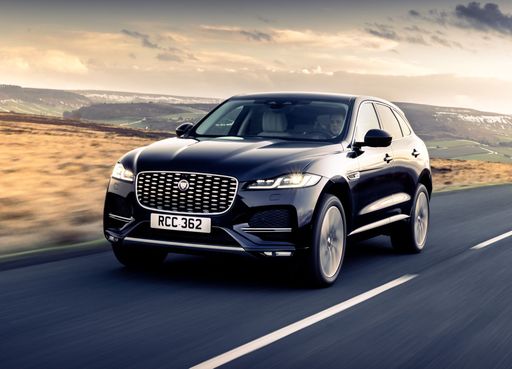
The Jaguar F-Pace presents a versatile palette of engines, ranging from Diesel MHEV to Petrol and Plugin Hybrid options, coupled with all-wheel drive. Depending on the engine, the F-Pace offers power from 163 HP to a whopping 575 HP, with the top model racing from 0 to 100 km/h in just 4 seconds. The F-Pace is no slouch regarding speed, achieving up to 286 km/h. Its superb Diesel MHEV variant ensures a commendable consumption rate of 6.7 L/100 km, a boon for automotive efficiency enthusiasts.

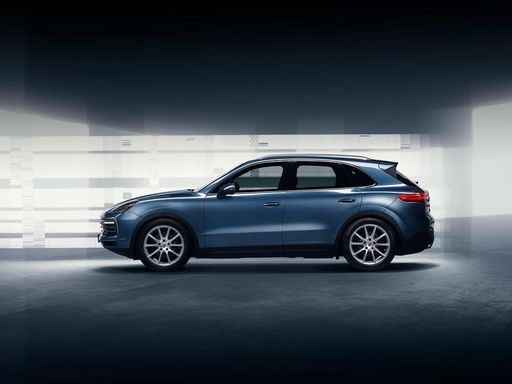
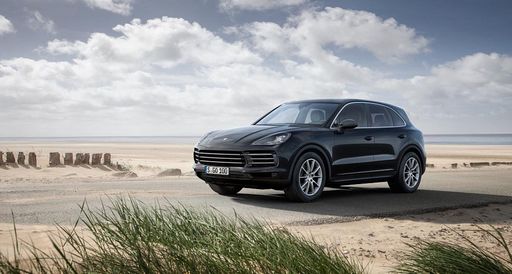
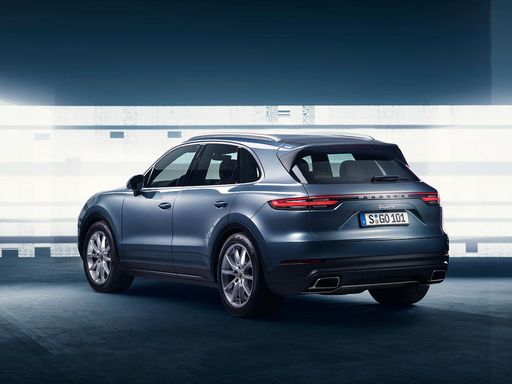
Conversely, the Porsche Cayenne boasts an impressive showcase of petrol and plugin hybrid engines, providing power from 353 HP to an exhilarating 739 HP. The fastest model sprints to 100 km/h in a mere 3.6 seconds, and with a maximum speed striking 305 km/h, it sets a high bar for performance-driven SUV enthusiasts. The Cayenne's hybrid models lead in efficiency, with consumption as low as 1.5 L/100 km, underscoring Porsche's commitment to combining power with sustainability.

Cayenne

Technological Innovations and Features

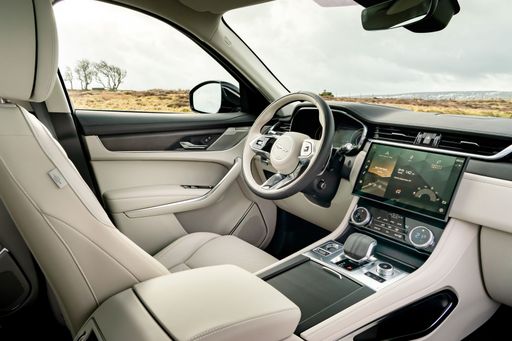
Both vehicles feature state-of-the-art technology aimed at enhancing the driving experience. The Jaguar F-Pace's cabin is a blend of luxurious design and cutting-edge technology, including the Pivi Pro infotainment system, which is renowned for its intuitive interface and connectivity options. With a battery capacity of 15.4 kWh in its hybrid versions, the F-Pace provides an all-electric range of up to 64 km.

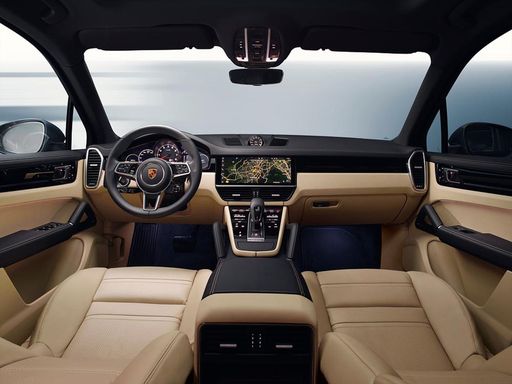
The Porsche Cayenne, meanwhile, dazzles with its expansive range of tech features, such as the Porsche Communication Management (PCM) system that offers seamless integration of driver assistance systems and infotainment. Its larger battery capacity of 21.8 kWh underscores its 78 km electric range capability, a clear indication of Porsche's pioneering advancements in hybrid technology.

F-Pace

Design and Practicality

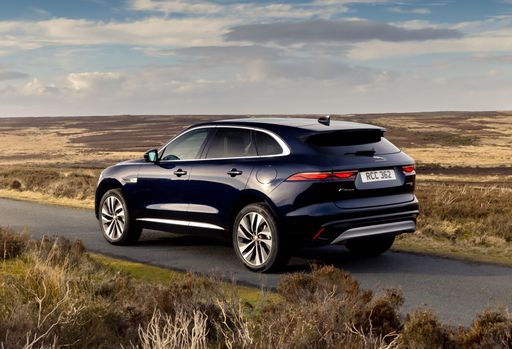
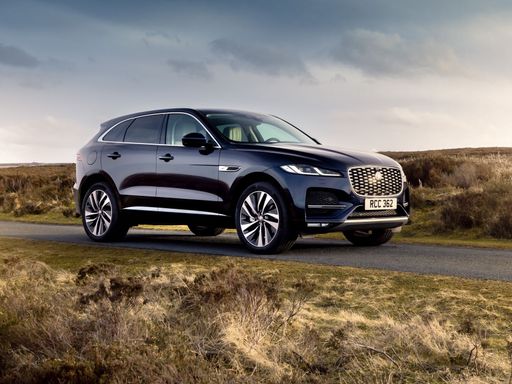
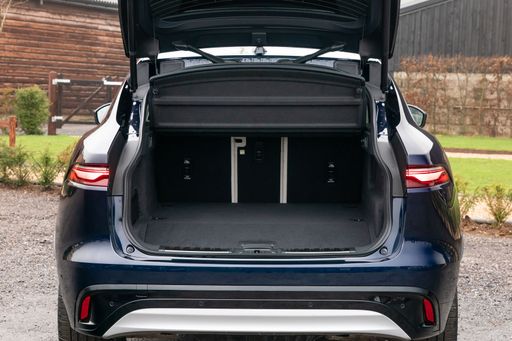
From a practical standpoint, the Jaguar F-Pace's sleek dimensions, measuring a length of 4762 mm and width of 1936 mm, are crafted not only for aesthetics but also urban maneuverability. It features a generous trunk capacity of 470 liters, making it as practical as it is stylish.

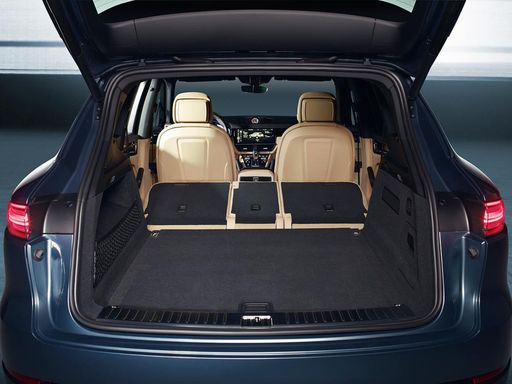
The Porsche Cayenne surpasses expectations with its ample cargo space options, offering up to 772 liters of trunk capacity in some variants. Its robust design, coupled with an unmistakable silhouette stretching 4930 mm in length, exudes confidence and practicality for those who need space without compromising on luxury.

Cayenne

The Verdict

Choosing between the Jaguar F-Pace and Porsche Cayenne is akin to choosing between elegance and thrill. The F-Pace appeals to those favoring timeless British charm that doesn't shy away from performance, while the Cayenne caters to enthusiasts who seek the perfect amalgamation of German engineering and high-octane excitement. Ultimately, both vehicles will cater to the distinct needs of different drivers, reaffirming that when it comes to luxury SUVs, the only wrong choice is a lack of decision.

Here’s where it gets real: The technical differences in detail

Cayenne

Costs and Efficiency:

Price and efficiency are often the first things buyers look at. Here it becomes clear which model has the long-term edge – whether at the pump, the plug, or in purchase price.

Jaguar F-Pace is significantly cheaper – starting at 56,400 £ , while the Porsche Cayenne costs 90,200 £ . That’s a price difference of around 33,771 £.

Fuel consumption also shows a difference: the Jaguar F-Pace uses 1.8 L/100km and is considerably more efficient than the Porsche Cayenne with 4 L/100km. The difference is about 2.2 L/100km.

As for electric range, the Porsche Cayenne offers considerably more range – reaching up to 668 km, about 604 km more than the Jaguar F-Pace.

F-Pace

Engine and Performance:

Under the bonnet, it becomes clear which model is tuned for sportiness and which one takes the lead when you hit the accelerator.

When it comes to engine power, the Porsche Cayenne offers considerably more power – delivering 1,156 HP compared to 575 HP. That’s roughly 581 HP more horsepower.

When accelerating from 0 to 100 km/h, the Porsche Cayenne is substantially quicker – completing the sprint in 2.5 s, while the Jaguar F-Pace takes 4 s. That’s about 1.5 s quicker.

There’s also a difference in torque: the Porsche Cayenne delivers significantly more torque with 1,500 Nm compared to 700 Nm. That’s about 800 Nm more.

Cayenne

Space and Everyday Use:

Whether family car or daily driver – which one offers more room, flexibility and comfort?

Both vehicles offer seating for 5 people.

In terms of curb weight, Jaguar F-Pace is marginally lighter – 1,951 kg compared to 2,130 kg. The difference is around 179 kg.

Looking at boot space, the Porsche Cayenne offers noticeably more boot space – 781 L compared to 470 L. That’s a difference of about 311 L.

When it comes to payload, the Porsche Cayenne carries a bit more – 705 kg compared to 589 kg. That’s a difference of about 116 kg.

Who wins the race in the data check?

The Porsche Cayenne is decisively ahead in the objective data comparison.
This result only shows which model scores more points on paper – not which of the two cars feels right for you.

from £90,200
Cayenne

Porsche Cayenne

  • Engine Type : Petrol, Plugin Hybrid, Electric
  • Transmission : Automatic
  • Drive Type : All-Wheel Drive
  • Power HP : 353 - 1,156 HP
  • Consumption L/100km : 4 - 11 L/100km
  • Consumption kWh/100km : 18.9 - 20.6 kWh/100km
  • Electric Range : 74 - 668 km
Porsche Cayenne
Jaguar F-Pace

Costs and Consumption

View detailed analysis

Engine and Performance

View detailed analysis

Dimensions and Body

View detailed analysis

Porsche Cayenne

Few SUVs blend athletic poise and Teutonic precision like the Porsche Cayenne, putting genuine sports‑car feeling into a roomy, everyday package. If you want a practical family hauler that still makes you grin every time you merge, the Cayenne delivers — turning errands into an excuse for a spirited drive.

details

Jaguar F-Pace

Jaguar F-Pace blends the prowling presence of a sports car with the practicality of an SUV, looking elegant while rewarding drivers with lively handling. If you crave something that feels special every time you climb in and prefer style and driving flair over blending into the parking lot, the F-Pace is a classy, slightly cheeky alternative to the usual German suspects.

details
Porsche Cayenne
Jaguar F-Pace

Costs and Consumption

Price
90,200 - 144,400 £
Price
56,400 - 100,800 £
Consumption L/100km
4 - 11 L/100km
Consumption L/100km
1.8 - 12 L/100km
Consumption kWh/100km
18.9 - 20.6 kWh/100km
Consumption kWh/100km
-
Electric Range
74 - 668 km
Electric Range
64 km
Battery Capacity
-
Battery Capacity
15.4 kWh
co2
0 - 249 g/km
co2
41 - 274 g/km
Fuel tank capacity
-
Fuel tank capacity
62 - 83 L

Dimensions and Body

Body Type
SUV
Body Type
SUV
Seats
4 - 5
Seats
5
Doors
-
Doors
5
Curb weight
2,130 - 2,725 kg
Curb weight
1,951 - 2,230 kg
Trunk capacity
434 - 781 L
Trunk capacity
354 - 470 L
Length
-
Length
4,747 - 4,762 mm
Width
1,980 - 1,983 mm
Width
1,936 mm
Height
-
Height
1,664 - 1,670 mm
Max trunk capacity
-
Max trunk capacity
1,299 - 1,428 L
Payload
525 - 705 kg
Payload
457 - 589 kg

Engine and Performance

Engine Type
Petrol, Plugin Hybrid, Electric
Engine Type
Diesel MHEV, Petrol MHEV, Plugin Hybrid, Petrol
Transmission
Automatic
Transmission
Automatic
Transmission Detail
Automatic Gearbox, Reduction Gearbox
Transmission Detail
Automatic Gearbox
Drive Type
All-Wheel Drive
Drive Type
All-Wheel Drive
Power HP
353 - 1,156 HP
Power HP
163 - 575 HP
Acceleration 0-100km/h
2.5 - 6 s
Acceleration 0-100km/h
4 - 10.1 s
Max Speed
-
Max Speed
195 - 286 km/h
Torque
500 - 1,500 Nm
Torque
380 - 700 Nm
Number of Cylinders
6
Number of Cylinders
4 - 8
Power kW
260 - 850 kW
Power kW
120 - 423 kW
Engine capacity
2,995 cm3
Engine capacity
1,997 - 5,000 cm3

General

Model Year
2,025 - 2,026
Model Year
2024
CO2 Efficiency Class
G, B, A
CO2 Efficiency Class
G, B
Brand
Porsche
Brand
Jaguar
DriveDuel uses data analysis and artificial intelligence to evaluate vehicle data and create content. Content is regularly reviewed and improved. The displayed prices are estimates based on German list prices, adjusted to the respective country’s VAT. Country-specific registration taxes are not included. This information is not legally binding.