VS

Renault Captur vs Citroen C3 Aircross comparison

Compare performance (158 HP vs 145 HP), boot space and price (21,100 £ vs 16,200 £ ) at a glance. Find out which car is the better choice for you – Renault Captur or Citroen C3 Aircross?

Renault Captur vs Citroen C3 Aircross: Key differences

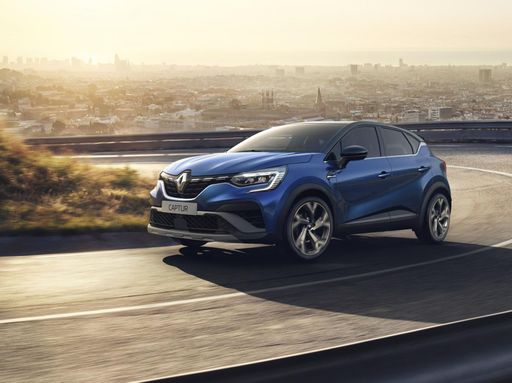
Renault Captur

4.8 (5 Reviews)
rate
  • very slightly more power
  • clearly more efficient
  • markedly quicker 0–100 km/h

Citroen C3 Aircross

4.4 (1 Reviews)
rate
  • visibly cheaper
  • barely lighter
  • only slightly more trunk space

All details on performance, efficiency, range and trunk space can be found in the technical comparison below – including user reviews for both models.

Captur

Compact SUV Showdown: Citroen C3 Aircross vs. Renault Captur

In the ever-evolving market of compact SUVs, two models stand out in 2024: the Citroen C3 Aircross and the Renault Captur. Both boast modern design and innovative features, but which one should take the top spot in your garage? Let's dive into the technical aspects and innovations that these two titans bring to the table.

C3 Aircross

Sleek Designs and Dimensions

The Citroen C3 Aircross stretches to a length of 4395 mm, while its width is measured at 1795 mm. With a height of 1660 mm, it offers a commanding presence on the road. The Captur, in contrast, is slightly more compact with a length of 4239 mm but brings nearly identical width at 1797 mm and a lower profile at 1575 mm in height. The Citroen's extra length provides a bit more trunk space, making it a practical choice for family adventures with 460 liters compared to the Captur’s 422 liters at max capacity.

Captur

Under the Hood: Power and Efficiency

The Citroen C3 Aircross offers a range of engines including a Petrol MHEV, Petrol, and Electric versions. The available power outputs range from 101 to 136 HP, with corresponding torque figures between 120 and 230 Nm. An impressive hybrid option gives you an electric range of up to 306 km, using 18.2 kWh per 100km. Fuel consumption for petrol engines starts from 5.5 L/100km, paired with CO2 emissions of 125 to 139 g/km based on your engine choice.

The Renault Captur matches the Aircross with multiple engine choices, including a Full Hybrid and LPG options. Power figures span from 91 to 158 HP, with varying torque levels reaching up to 270 Nm. The ever-efficient Full Hybrid version flaunts a consumption as low as 4.7 L/100km, and CO2 emissions align with more sustainable driving habits, starting at just 106 g/km.

C3 Aircross

Drivability and Performance

Both competitors focus on front-wheel drive dynamics. The Citroen promises a balanced, smooth ride with a top-speed capability of up to 179 km/h, depending on the variant. Its best acceleration numbers show 0 to 100 km/h in 11 seconds, thanks to its robust engine configurations.

Renault's Captur brings a slightly faster punch with its top-performing model achieving 0 to 100 km/h in just 8.5 seconds, hitting a maximum speed of 180 km/h. This rapid response is complemented by Renault’s advanced dual-clutch automatic transmission offering precise gear changes for a spirited drive experience.

Captur

Comfort and Interior Innovations

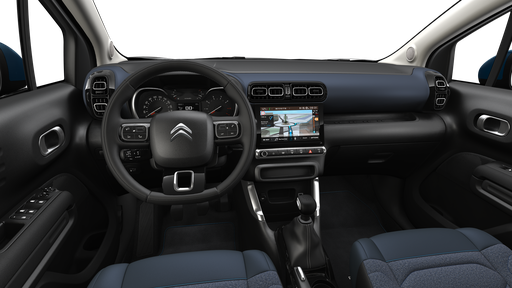
The Citroen C3 Aircross ensures passenger comfort with five seats and focuses on ergonomically structured interiors that offer a seamless blend of practicality and elegance. Its payload capacity of 652 kg allows for greater versatility in usage.

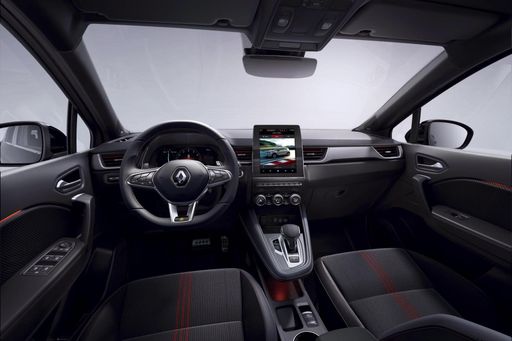
Renault has designed the Captur with a similar seating layout but embraces a more compact payload limit of around 383 kg. A notable Captur highlight is the flexibility in seating arrangement and interior customization, providing a tailored experience for those who prioritize personalized comfort.

C3 Aircross

Conclusion: A Battle of Preferences

Choosing between the Citroen C3 Aircross and Renault Captur largely depends on individual priorities. The Citroen offers impressive cargo space and a robust hybrid option for those favoring practicality and green technology. Meanwhile, the Captur caters to drivers seeking spirited performance with its faster acceleration and refined gearbox.

Both SUVs, however, deliver cutting-edge design and innovative solutions, exemplifying the future of efficient and adventurous urban SUVs. Whichever you choose, you're bound to enjoy an exciting journey ahead.

Here’s where it gets real: The technical differences in detail

Captur

Costs and Efficiency:

When it comes to price and running costs, the biggest differences usually appear. This is often where you see which car fits your budget better in the long run.

Citroen C3 Aircross is visibly cheaper – starting at 16,200 £ , while the Renault Captur costs 21,100 £ . That’s a price difference of around 4,937 £.

Fuel consumption also shows a difference: the Renault Captur uses 4.4 L/100km and is clearly more efficient than the Citroen C3 Aircross with 5.3 L/100km. The difference is about 0.9 L/100km.

C3 Aircross

Engine and Performance:

Under the bonnet, it becomes clear which model is tuned for sportiness and which one takes the lead when you hit the accelerator.

When it comes to engine power, the Renault Captur offers very slightly more power – delivering 158 HP compared to 145 HP. That’s roughly 13 HP more horsepower.

When accelerating from 0 to 100 km/h, the Renault Captur is markedly quicker – completing the sprint in 8.9 s, while the Citroen C3 Aircross takes 12.3 s. That’s about 3.4 s quicker.

Looking at top speed, the Renault Captur is markedly faster – reaching 180 km/h, while the Citroen C3 Aircross tops out at 143 km/h. The difference is around 37 km/h.

There’s also a difference in torque: the Renault Captur delivers moderately more torque with 265 Nm compared to 230 Nm. That’s about 35 Nm more.

Captur

Space and Everyday Use:

Cabin size, boot volume and payload all play a role in everyday practicality. Here, comfort and flexibility make the difference.

Both vehicles offer seating for 5 people.

In terms of curb weight, Citroen C3 Aircross is barely lighter – 1,312 kg compared to 1,323 kg. The difference is around 11 kg.

Looking at boot space, the Citroen C3 Aircross offers only slightly more boot space – 460 L compared to 422 L. That’s a difference of about 38 L.

For maximum load capacity, the Citroen C3 Aircross offers a bit more capacity – up to 1,600 L, about 237 L more than the Renault Captur.

When it comes to payload, the Citroen C3 Aircross carries very slightly more – 462 kg compared to 453 kg. That’s a difference of about 9 kg.

Who wins the race in the data check?

The Renault Captur is narrowly ahead in the objective data comparison.
This result only shows which model scores more points on paper – not which of the two cars feels right for you.

from £21,100
Captur

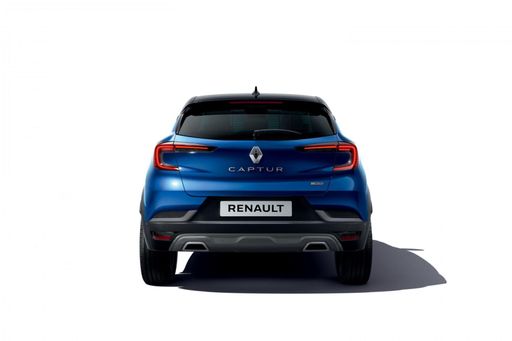
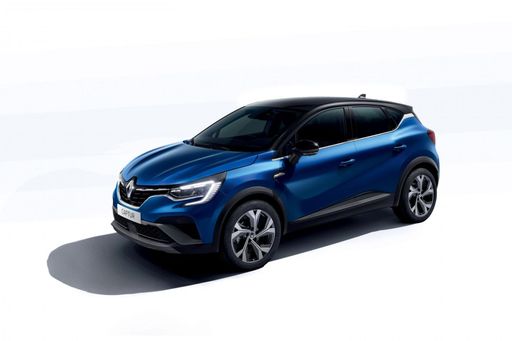
Renault Captur

  • Engine Type : Full Hybrid, Petrol, Petrol MHEV
  • Transmission : Automatic, Manuel
  • Drive Type : Front-Wheel Drive
  • Power HP : 115 - 158 HP
  • Consumption L/100km : 4.4 - 6 L/100km
Renault Captur
Citroen C3 Aircross

Costs and Consumption

View detailed analysis

Engine and Performance

View detailed analysis

Dimensions and Body

View detailed analysis

Renault Captur

The Renault Captur is a cheeky little crossover that pairs city-friendly agility with a roomy, well-thought-out cabin and enough style to turn heads at the lights. It’s a sensible choice for buyers who want practical versatility and a dash of personality on their daily drives, without taking itself too seriously.

details

Citroen C3 Aircross

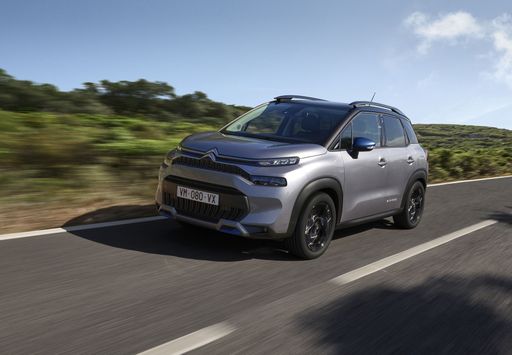
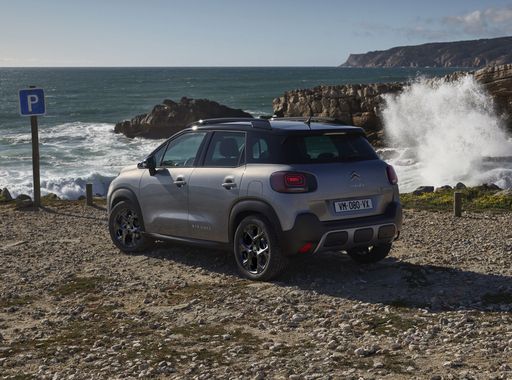
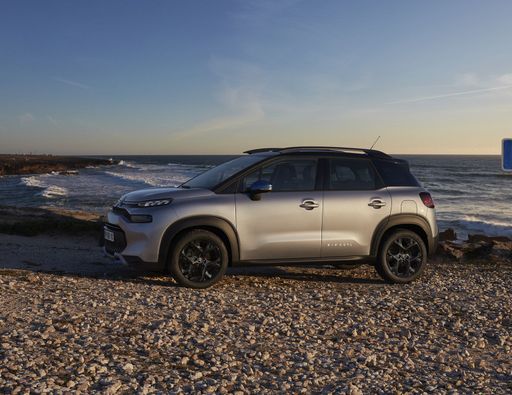
The Citroën C3 Aircross is a cheeky compact SUV that trades bland conformity for playful French character and clever practicality, ideal if you want a car with personality. It soaks up city life with a comfortable ride, inventive cabin tricks and a look that turns heads without asking for attention.

details
Renault Captur
Citroen C3 Aircross

Costs and Consumption

Price
21,100 - 28,400 £
Price
16,200 - 28,900 £
Consumption L/100km
4.4 - 6 L/100km
Consumption L/100km
5.3 - 5.9 L/100km
Consumption kWh/100km
-
Consumption kWh/100km
16.1 - 18.3 kWh/100km
Electric Range
-
Electric Range
303 - 400 km
Battery Capacity
-
Battery Capacity
-
co2
100 - 137 g/km
co2
0 - 134 g/km
Fuel tank capacity
48 L
Fuel tank capacity
-

Dimensions and Body

Body Type
SUV
Body Type
SUV
Seats
5
Seats
5
Doors
5
Doors
5
Curb weight
1,323 - 1,441 kg
Curb weight
1,312 - 1,608 kg
Trunk capacity
326 - 422 L
Trunk capacity
460 L
Length
4,239 mm
Length
4,395 mm
Width
1,797 mm
Width
1,795 mm
Height
1,575 mm
Height
1,640 mm
Max trunk capacity
1,363 L
Max trunk capacity
1,600 L
Payload
447 - 453 kg
Payload
407 - 462 kg

Engine and Performance

Engine Type
Full Hybrid, Petrol, Petrol MHEV
Engine Type
Electric, Petrol, Petrol MHEV
Transmission
Automatic, Manuel
Transmission
Automatic, Manuel
Transmission Detail
Automatic Gearbox, Manual Gearbox, Dual-Clutch Automatic
Transmission Detail
Reduction Gearbox, Manual Gearbox, Dual-Clutch Automatic
Drive Type
Front-Wheel Drive
Drive Type
Front-Wheel Drive
Power HP
115 - 158 HP
Power HP
101 - 145 HP
Acceleration 0-100km/h
8.9 - 12.3 s
Acceleration 0-100km/h
12.3 - 13 s
Max Speed
180 km/h
Max Speed
143 km/h
Torque
160 - 265 Nm
Torque
125 - 230 Nm
Number of Cylinders
3 - 4
Number of Cylinders
3
Power kW
84 - 116 kW
Power kW
74 - 107 kW
Engine capacity
1,199 - 1,789 cm3
Engine capacity
1,199 cm3

General

Model Year
2,025
Model Year
2,024 - 2,026
CO2 Efficiency Class
C, D, E
CO2 Efficiency Class
A, D
Brand
Renault
Brand
Citroen
DriveDuel uses data analysis and artificial intelligence to evaluate vehicle data and create content. Content is regularly reviewed and improved. The displayed prices are estimates based on German list prices, adjusted to the respective country’s VAT. Country-specific registration taxes are not included. This information is not legally binding.