VS

Renault Espace vs Nissan X-Trail comparison

Compare performance (200 HP vs 213 HP), boot space and price (37,500 £ vs 34,200 £ ) at a glance. Find out which car is the better choice for you – Renault Espace or Nissan X-Trail?

Renault Espace vs Nissan X-Trail: Key differences

Renault Espace

4.1 (3 Reviews)
rate
  • slightly more efficient
  • slightly more trunk space
details

Nissan X-Trail

4.6 (5 Reviews)
rate
  • barely cheaper
  • marginally more power
  • visibly quicker 0–100 km/h
  • marginally lighter
details

All details on performance, efficiency, range and trunk space can be found in the technical comparison below – including user reviews for both models.

By Achim Sedelmaier

Espace

The SUV segment has gained immense popularity in recent years, with more drivers gravitating towards vehicles that offer versatility, comfort, and advanced technology. In this article, we put two compelling contenders head-to-head: the Nissan X-Trail and the Renault Espace. Both models promise a mix of innovation and performance, but who comes out on top? Let’s dive into the details.
X-Trail

Design and Dimensions

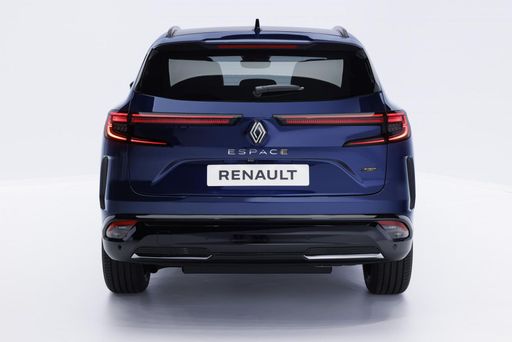
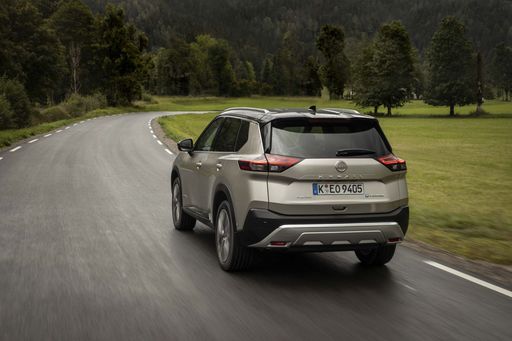
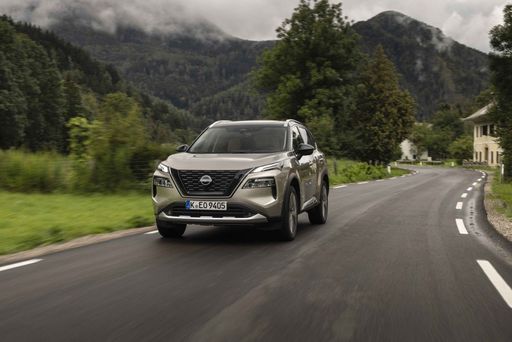
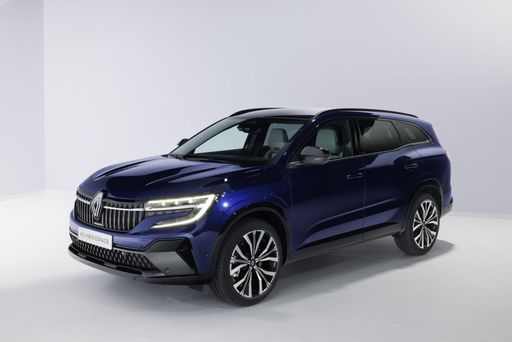
When it comes to size, the Nissan X-Trail and Renault Espace are closely matched. The X-Trail measures at 4680 mm in length, 1840 mm in width, and 1720 mm in height, offering a robust presence on the road. In comparison, the Espace is slightly larger, featuring a length of 4722 mm, a width of 1843 mm, and a height of 1645 mm. Both vehicles come with five-door configurations, providing easy access to both front and rear seating areas.

Espace

Powertrains and Performance

The Nissan X-Trail boasts a range of power options, including petrol MHEV and full hybrid variants, delivering power outputs of 163 HP, 204 HP, and 213 HP. This offers impressive acceleration, with some versions achieving 0-100 km/h in as little as 7 seconds. Notably, it also provides a choice between front-wheel and all-wheel drive.

On the other hand, the Renault Espace is equipped solely with a full hybrid engine that produces 200 HP. This SUV accelerates from 0 to 100 km/h in 8.8 seconds and comes with a front-wheel drive configuration. While both models offer automatic transmissions, the X-Trail utilizes a CVT with a reduction gearbox, while the Espace features a traditional automatic gearbox.

X-Trail

Fuel Efficiency and Emissions

When discussing fuel consumption, the Renault Espace clearly has the edge, with a remarkable rating of just 4.7 L/100 km compared to the X-Trail's 5.7 to 6.9 L/100 km depending on the variant. This efficiency contributes to lower CO2 emissions, with the Espace releasing only 107 g/km, while the X-Trail ranges from 131 to 161 g/km. Thus, for eco-conscious drivers, the Espace stands out as a more sustainable option.

Espace

Interior Space and Comfort

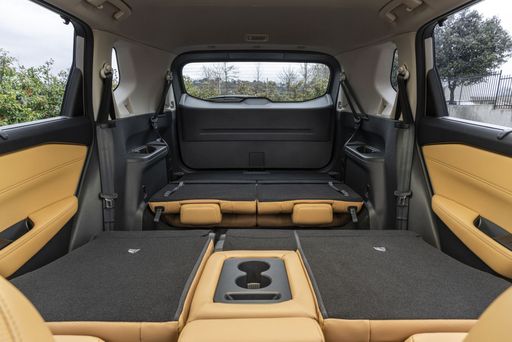
Inside both SUVs, passengers can expect comfort and practicality. The X-Trail is known for its spaciousness, comfortably seating up to seven passengers with a trunk capacity of 575 L when all seats are in use, expanding to 585 L with all seats down. In comparison, the Renault Espace offers similar flexibility, with seating for up to seven and trunk space varying from 159 L to 581 L, depending on the configuration.

X-Trail

Technological Innovations

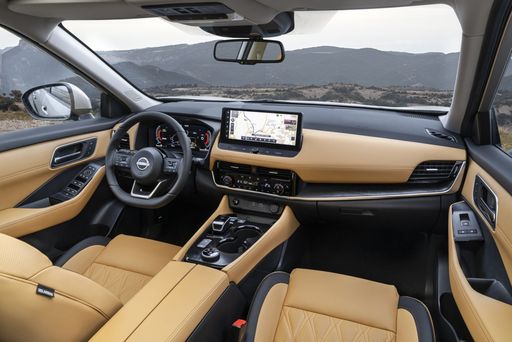
As expected from modern SUVs, both models come equipped with a plethora of advanced technology features. The Nissan X-Trail offers cutting-edge driver assistance systems, including ProPILOT, which enhances driving comfort and safety during long journeys. It also features a sophisticated infotainment system that ensures connectivity with smartphones via Apple CarPlay and Android Auto.

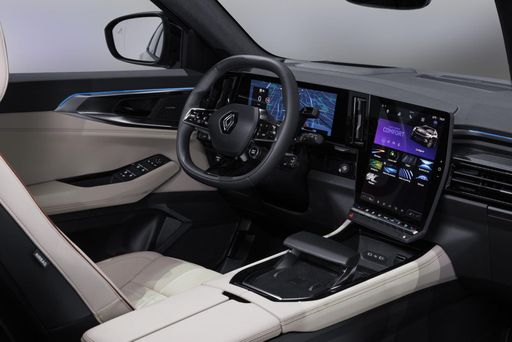
Meanwhile, the Renault Espace impresses with its extensive tech offerings, including a digital cockpit and a large touchscreen interface that provides access to various vehicle settings and infotainment options. Both models also emphasize safety, providing a suite of active and passive safety features aimed at maximizing passenger security.

Espace

Final Thoughts

In conclusion, choosing between the Nissan X-Trail and the Renault Espace ultimately depends on the individual buyer's needs and preferences. The X-Trail offers versatility in powertrains and a sporty performance edge, while the Espace shines in efficiency and low emissions. Both vehicles boast comfort, ample space, and technological innovations that cater to the contemporary SUV driver. Whether your preference leans towards practicality or performance, both models are deserving of consideration in the competitive SUV market.

Here’s where it gets real: The technical differences in detail

Espace

Costs and Efficiency:

Looking at overall running costs, both models reveal some interesting differences in everyday economy.

Nissan X-Trail is barely cheaper – starting at 34,200 £ , while the Renault Espace costs 37,500 £ . That’s a price difference of around 3,385 £.

Fuel consumption also shows a difference: the Renault Espace uses 4.9 L/100km and is slightly more efficient than the Nissan X-Trail with 5.7 L/100km. The difference is about 0.8 L/100km.

X-Trail

Engine and Performance:

Power, torque and acceleration are the classic benchmarks for car enthusiasts – and here, some clear differences start to show.

When it comes to engine power, the Nissan X-Trail offers marginally more power – delivering 213 HP compared to 200 HP. That’s roughly 13 HP more horsepower.

When accelerating from 0 to 100 km/h, the Nissan X-Trail is visibly quicker – completing the sprint in 7 s, while the Renault Espace takes 8.8 s. That’s about 1.8 s quicker.

Espace

Space and Everyday Use:

Beyond pure performance, interior space and usability matter most in daily life. This is where you see which car is more practical and versatile.

Both vehicles offer seating for 7 people.

In terms of curb weight, Nissan X-Trail is marginally lighter – 1,668 kg compared to 1,673 kg. The difference is around 5 kg.

Looking at boot space, the Renault Espace offers slightly more boot space – 692 L compared to 585 L. That’s a difference of about 107 L.

When it comes to payload, the Renault Espace carries only slightly more – 581 kg compared to 574 kg. That’s a difference of about 7 kg.

Who wins the race in the data check?

The Nissan X-Trail has only a minor advantage in the objective data comparison.
This result only shows which model scores more points on paper – not which of the two cars feels right for you.

from £34,200
X-Trail

Nissan X-Trail

  • Engine Type : Petrol MHEV, Full Hybrid
  • Transmission : Automatic
  • Drive Type : Front-Wheel Drive, All-Wheel Drive
  • Power HP : 163 - 213 HP
  • Consumption L/100km : 5.7 - 6.9 L/100km
Renault Espace
Nissan X-Trail

Costs and Consumption

View detailed analysis

Engine and Performance

View detailed analysis

Dimensions and Body

View detailed analysis

Renault Espace

The Renault Espace is the sort of roomy, clever family cruiser that makes long journeys feel effortless, its interior prioritising comfort and practical thinking without drifting into blandness. It won't pretend to be a sports car, but its composed ride, smart packaging and a whisper of French flair make it a sensible and subtly stylish choice for buyers who value space and versatility.

details

Nissan X-Trail

The Nissan X-Trail is a roomy, no-nonsense family SUV that mixes sensible practicality with a quietly modern look, making it an easy choice for busy lives and weekend escapes. It drives with calm confidence, delivers a comfortable ride and sensible tech, and won’t demand drama while doing the everyday heavy lifting.

details
Renault Espace
Nissan X-Trail

Costs and Consumption

Price
37,500 - 41,400 £
Price
34,200 - 50,500 £
Consumption L/100km
4.9 L/100km
Consumption L/100km
5.7 - 6.9 L/100km
Consumption kWh/100km
-
Consumption kWh/100km
-
Electric Range
-
Electric Range
-
Battery Capacity
-
Battery Capacity
-
co2
110 g/km
co2
131 - 161 g/km
Fuel tank capacity
55 L
Fuel tank capacity
-

Dimensions and Body

Body Type
SUV
Body Type
SUV
Seats
5 - 7
Seats
5 - 7
Doors
5
Doors
-
Curb weight
1,673 - 1,783 kg
Curb weight
1,668 - 1,961 kg
Trunk capacity
212 - 692 L
Trunk capacity
177 - 585 L
Length
4,746 mm
Length
-
Width
1,830 mm
Width
1,840 mm
Height
1,645 mm
Height
-
Max trunk capacity
2,054 - 2,224 L
Max trunk capacity
-
Payload
404 - 581 kg
Payload
432 - 574 kg

Engine and Performance

Engine Type
Full Hybrid
Engine Type
Petrol MHEV, Full Hybrid
Transmission
Automatic
Transmission
Automatic
Transmission Detail
Automatic Gearbox
Transmission Detail
CVT, Reduction Gearbox
Drive Type
Front-Wheel Drive
Drive Type
Front-Wheel Drive, All-Wheel Drive
Power HP
200 HP
Power HP
163 - 213 HP
Acceleration 0-100km/h
8.8 s
Acceleration 0-100km/h
7 - 9.6 s
Max Speed
174 km/h
Max Speed
-
Torque
-
Torque
300 - 525 Nm
Number of Cylinders
3
Number of Cylinders
3
Power kW
147 kW
Power kW
120 - 157 kW
Engine capacity
1,199 cm3
Engine capacity
1,497 cm3

General

Model Year
2025
Model Year
2025
CO2 Efficiency Class
C
CO2 Efficiency Class
F, D, E
Brand
Renault
Brand
Nissan
DriveDuel uses data analysis and artificial intelligence to evaluate vehicle data and create content. Content is regularly reviewed and improved. The displayed prices are estimates based on German list prices, adjusted to the respective country’s VAT. Country-specific registration taxes are not included. This information is not legally binding.