VS

Renault R5 vs Dacia Spring comparison

Compare performance (540 HP vs 100 HP), boot space and price (23,900 £ vs 14,500 £ ) at a glance. Find out which car is the better choice for you – Renault R5 or Dacia Spring?

Renault R5 vs Dacia Spring: Key differences

Renault R5

5 (1 Reviews)
rate
  • clearly more power
  • substantially more electric range
  • clearly quicker 0–100 km/h
  • marginally more trunk space

Dacia Spring

4.8 (3 Reviews)
rate
  • clearly cheaper
  • moderately more efficient
  • visibly lighter

All details on performance, efficiency, range and trunk space can be found in the technical comparison below – including user reviews for both models.

R5

Pitting the Dacia Spring Against the Renault R5: Which Electric Marvel Reigns Supreme?

In the burgeoning world of electric vehicles, two models stand out as prime examples of how manufacturers are redefining efficiency and affordability: the Dacia Spring and the Renault R5. Each car offers a unique take on electric mobility, making the decision between the two as stimulating as the vehicles themselves. Today, we delve deep into the specs, innovations, and distinctive features of each contender.
Spring

Design and Body Composition

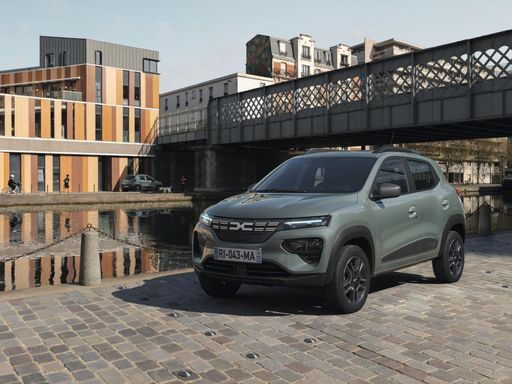
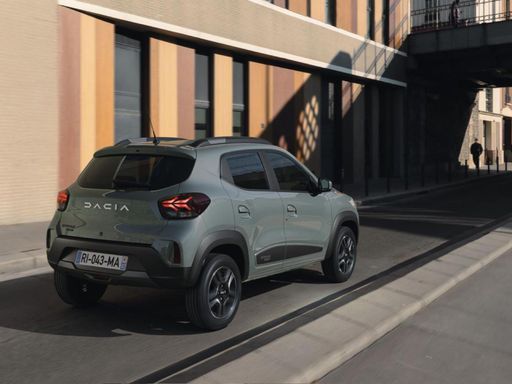
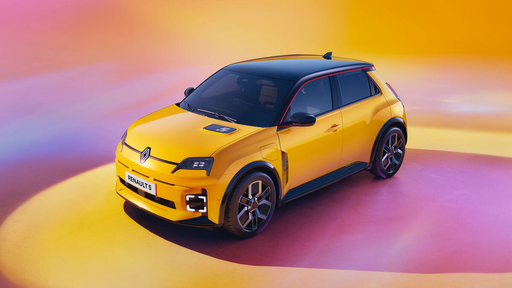
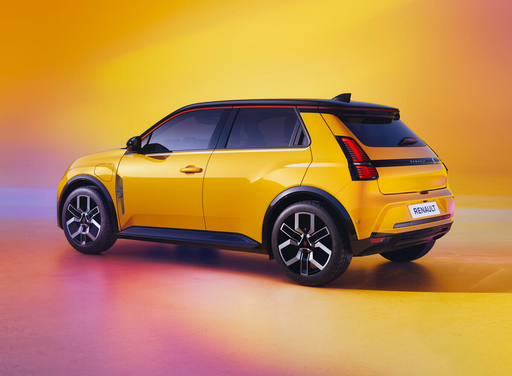
The Dacia Spring is an embodiment of SUV compactness, offering a robust frame in a relatively small package. With its length spanning 3701 mm, width 1583 mm, and height 1519 mm, the Spring stands tall as a quintessential urban SUV. Meanwhile, the Renault R5, measuring 3922 mm in length, 1744 mm in width, and 1498 mm in height, presents itself as a hatchback brimming with elegance and style. This slight enlargement in dimensions translates to more interior freedom and cargo space.

R5

Power and Performance

When it comes to raw power, the Renault R5 takes the lead with its 150 HP engine option, leaving its counterpart’s 65 HP maximum in the dust. This advantage is further highlighted by the R5's swift acceleration capabilities, sprinting from 0 to 100 km/h in a spirited 8 to 9 seconds, compared to the Spring's more leisurely 13.7 to 19.1 seconds. Both models employ a front-wheel drive setup and utilize an automatic reduction gearbox, ensuring smooth transitions and efficient power delivery.

Spring

Battery and Range Efficiency

The Dacia Spring, armed with a 26.8 kWh battery, offers a commendable electric range between 225 to 228 km, sipping energy at an average rate of 13.2 to 14.1 kWh/100km. Conversely, the Renault R5 packs a hefty 40 kWh battery, propelling it to impressive ranges of 300 to 405 km with a slightly higher consumption of 14.8 kWh/100km. Though both are zero-emission vehicles with CO2 ratings of 0 g/km, the R5's range capabilities significantly outstrip the Spring's, a testament to Renault's focus on long-distance eco-friendly driving.

R5

Comfort and Capacity

Desiring space and comfort, potential buyers will notice that the Dacia Spring prioritizes efficiency for four passengers with a trunk offering 308 liters of capacity. Its curb weight hovers around 1030 to 1050 kg, allowing for a nimble city drive. In contrast, the Renault R5, weighing between 1447 to 1524 kg, accommodates five passengers and boasts a trunk capacity of 326 liters, offering a more spacious journey for road trips and daily commutes alike.

Spring

Innovative Features

One cannot overlook the innovations inherent in both models. Both the Dacia Spring and Renault R5 are equipped with state-of-the-art technology aimed at enhancing the driving experience while reducing environmental impact. With futuristic designs, each vehicle also offers varied convenience features that ensure practical and enjoyable daily use.

Conclusion

In the battle between the Dacia Spring and Renault R5, both cars offer remarkable value and illustrate the impressive strides being made in electric vehicle technology. While the Spring excels as a highly economical choice for urban environments, the R5 stands as a powerhouse for those prioritizing performance and range. Ultimately, whether you opt for the straightforward efficiency of the Dacia Spring or the more robust and expansive Renault R5, both vehicles represent a positive step toward sustainable driving and a promising future for electric mobility.

Here’s where it gets real: The technical differences in detail

R5

Costs and Efficiency:

Price and efficiency are key factors when choosing a car – and this is often where the real differences emerge.

Dacia Spring is clearly cheaper – starting at 14,500 £ , while the Renault R5 costs 23,900 £ . That’s a price difference of around 9,429 £.

In terms of energy consumption, the Dacia Spring is moderately more efficient: consuming 12.4 kWh/100km compared to 14.8 kWh/100km for the Renault R5. That’s a difference of about 2.4 kWh/100km.

As for electric range, the Renault R5 offers substantially more range – reaching up to 405 km, about 180 km more than the Dacia Spring.

Spring

Engine and Performance:

Power, torque and acceleration are the classic benchmarks for car enthusiasts – and here, some clear differences start to show.

When it comes to engine power, the Renault R5 offers clearly more power – delivering 540 HP compared to 100 HP. That’s roughly 440 HP more horsepower.

When accelerating from 0 to 100 km/h, the Renault R5 is clearly quicker – completing the sprint in 3.5 s, while the Dacia Spring takes 9.6 s. That’s about 6.1 s quicker.

There’s also a difference in torque: the Renault R5 delivers substantially more torque with 4,800 Nm compared to 137 Nm. That’s about 4,663 Nm more.

R5

Space and Everyday Use:

Beyond pure performance, interior space and usability matter most in daily life. This is where you see which car is more practical and versatile.

Seats: Renault R5 offers more seats – 5 vs 4.

In terms of curb weight, Dacia Spring is visibly lighter – 1,070 kg compared to 1,447 kg. The difference is around 377 kg.

Looking at boot space, the Renault R5 offers marginally more boot space – 326 L compared to 308 L. That’s a difference of about 18 L.

When it comes to payload, the Renault R5 carries clearly more – 418 kg compared to 274 kg. That’s a difference of about 144 kg.

Who wins the race in the data check?

The Renault R5 is far ahead overall in the objective data comparison.
This result only shows which model scores more points on paper – not which of the two cars feels right for you.

from £23,900
R5

Renault R5

  • Engine Type : Electric
  • Transmission : Automatic
  • Drive Type : Front-Wheel Drive, Rear-Wheel Drive
  • Power HP : 122 - 540 HP
  • Consumption kWh/100km : 14.8 - 15.2 kWh/100km
  • Electric Range : 307 - 405 km
Renault R5
Dacia Spring

Costs and Consumption

View detailed analysis

Engine and Performance

View detailed analysis

Dimensions and Body

View detailed analysis

Renault R5

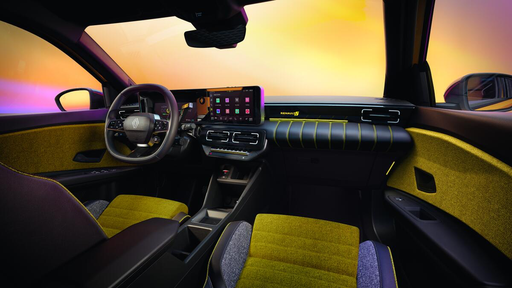
The Renault 5 is a cheeky city car that marries retro charm with modern flair, its playful looks promising smiles before you even start the engine. Practical enough for daily life yet lively enough to make short trips feel like mini adventures, it’s an irresistible choice for buyers who prefer personality to bland practicality.

details

Dacia Spring

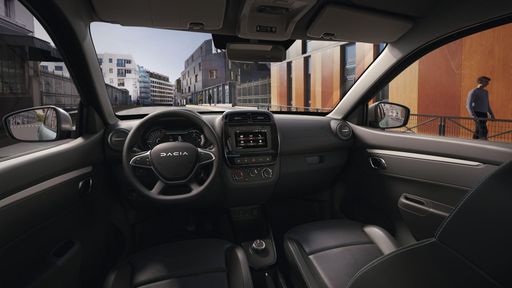
The Dacia Spring is an unpretentious city electric that strips EV ownership down to the essentials, offering clean, fuss-free transport for daily urban life. It won't impress luxury-seekers, but its cheerful practicality and rock-bottom running costs make it a clever, no-nonsense choice for anyone who wants electric mobility without the drama.

details
Renault R5
Dacia Spring

Costs and Consumption

Price
23,900 - 137,100 £
Price
14,500 - 16,900 £
Consumption L/100km
-
Consumption L/100km
-
Consumption kWh/100km
14.8 - 15.2 kWh/100km
Consumption kWh/100km
12.4 - 12.7 kWh/100km
Electric Range
307 - 405 km
Electric Range
221 - 225 km
Battery Capacity
40 - 52 kWh
Battery Capacity
-
co2
0 g/km
co2
0 g/km
Fuel tank capacity
-
Fuel tank capacity
-

Dimensions and Body

Body Type
Hatchback
Body Type
SUV
Seats
2 - 5
Seats
4
Doors
3 - 5
Doors
-
Curb weight
1,447 - 1,524 kg
Curb weight
1,070 kg
Trunk capacity
326 L
Trunk capacity
308 L
Length
3,922 - 4,080 mm
Length
-
Width
1,744 - 2,030 mm
Width
1,583 mm
Height
1,380 - 1,498 mm
Height
-
Max trunk capacity
1,106 L
Max trunk capacity
-
Payload
396 - 418 kg
Payload
274 kg

Engine and Performance

Engine Type
Electric
Engine Type
Electric
Transmission
Automatic
Transmission
Automatic
Transmission Detail
Reduction Gearbox
Transmission Detail
Reduction Gearbox
Drive Type
Front-Wheel Drive, Rear-Wheel Drive
Drive Type
Front-Wheel Drive
Power HP
122 - 540 HP
Power HP
70 - 100 HP
Acceleration 0-100km/h
3.5 - 9 s
Acceleration 0-100km/h
9.6 - 12.3 s
Max Speed
150 - 270 km/h
Max Speed
-
Torque
225 - 4,800 Nm
Torque
137 Nm
Number of Cylinders
-
Number of Cylinders
-
Power kW
90 - 397 kW
Power kW
52 - 75 kW
Engine capacity
-
Engine capacity
-

General

Model Year
2,025 - 2,027
Model Year
2,025
CO2 Efficiency Class
A
CO2 Efficiency Class
A
Brand
Renault
Brand
Dacia
DriveDuel uses data analysis and artificial intelligence to evaluate vehicle data and create content. Content is regularly reviewed and improved. The displayed prices are estimates based on German list prices, adjusted to the respective country’s VAT. Country-specific registration taxes are not included. This information is not legally binding.