VS

Renault R5 vs Ford Puma comparison

Compare performance (150 HP vs 168 HP), boot space and price (24,000 £ vs 23,900 £ ) at a glance. Find out which car is the better choice for you – Renault R5 or Ford Puma?

Renault R5 vs Ford Puma: Key differences

Renault R5

4.4 (2 Reviews)
rate
details

Ford Puma

3 (11 Reviews)
rate
  • marginally cheaper
  • a bit more power
  • somewhat more efficient
  • barely more electric range
  • only slightly quicker 0–100 km/h
  • very slightly lighter
  • clearly more trunk space
details

All details on performance, efficiency, range and trunk space can be found in the technical comparison below – including user reviews for both models.

By Achim Sedelmaier

R5

City Swagger vs Retro Chic

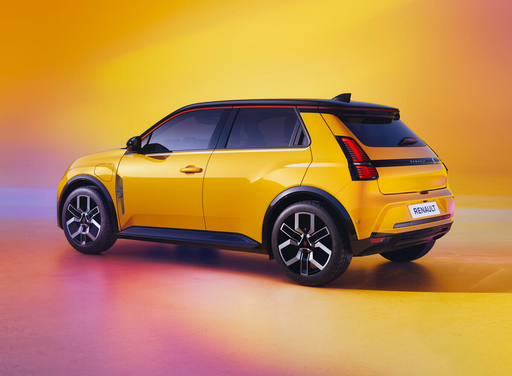
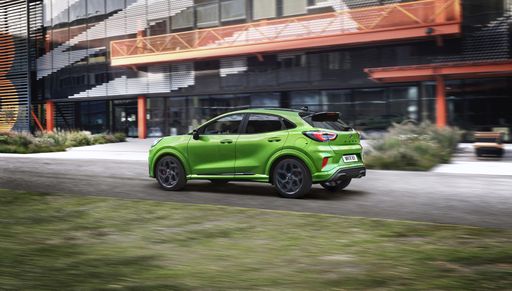
The compact crossover attitude of the Ford Puma reads like a modern city companion — poised, practical and a touch sporty — while the Renault R5 arrives with a wink to classic motoring and a design that doubles as a conversation starter. In short, one leans into familiar SUV cues and everyday usefulness, the other trades convention for personality and retro-futurist charm. Both will turn heads for different reasons, and choosing between them often comes down to whether you want understated utility or characterful identity.
Puma

What It Feels Like Behind the Wheel

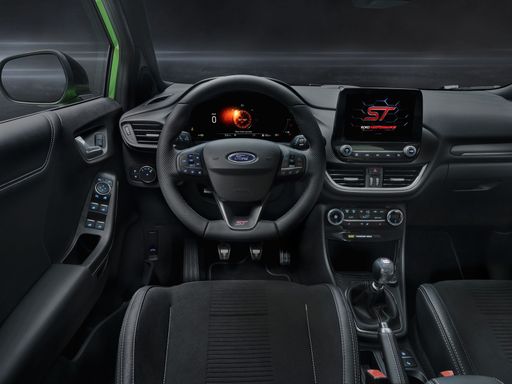
The driving experience of the Ford Puma is set up to reassure: composed body control, predictable steering and a planted feel that suits busy streets and sweeping suburban roads alike. The Renault R5, by contrast, is punchy and eager, delivering a more animated and theatrical response that rewards enthusiastic inputs. If you prefer a calm, confidence-inspiring commute you’ll appreciate the Puma’s manners; if you like theatre and immediacy when you prod the throttle, the R5 brings more theatrics to the table.

R5

Comfort and Everyday Life

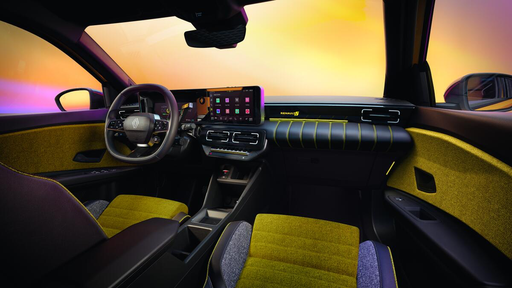
On the comfort front the Ford Puma feels like the practical choice for daily chores and family routines, with a forgiving ride and a layout that makes loading and living with the car straightforward. The Renault R5 takes a cosier approach, with cabin styling that feels boutique and clever packaging that suits urban dwellers, though it can be a little tighter for taller passengers in the back. Both manage to balance comfort with their distinct characters, so your priorities — cargo versus charm, space versus style — will tip the scales.

Puma

Controls, Screens and Everyday Usability

The Ford Puma favours familiar ergonomics and quick-to-use controls that reduce fuss on a hectic weekday, while the Renault R5 embraces a more modern, sometimes playful digital layout that rewards exploration and looks cutting-edge on the pavement. Practical touches and user-friendliness lean slightly toward the Puma’s pragmatic setup, but if you enjoy clever interfaces and a characterful infotainment experience the R5 will keep you entertained. Both cars are useable day-to-day, it’s just a question of whether you prefer straightforward or stylish interactions.

R5

Style, Presence and Personality

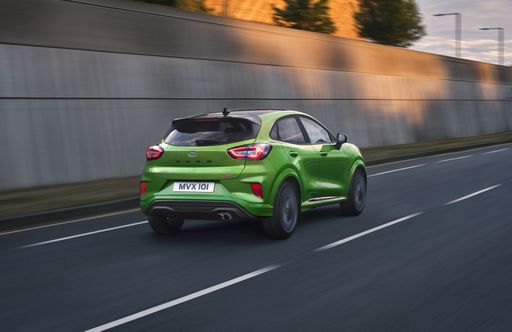
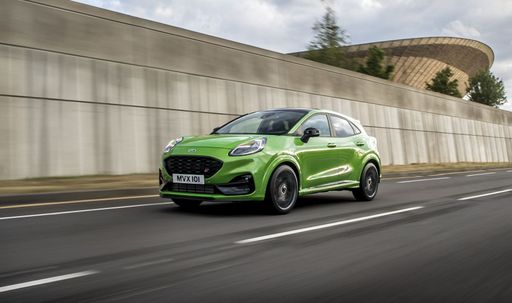
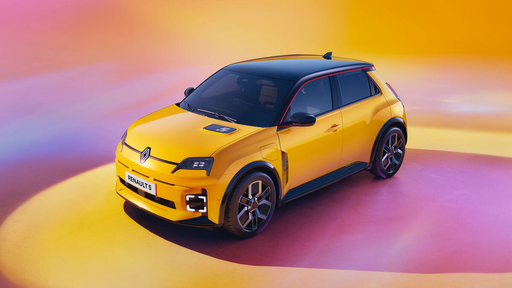
The Ford Puma projects contemporary SUV attitude — muscular lines and a purposeful stance that say “I’m ready for life’s errands” — whereas the Renault R5 trades that anonymity for personality, a look that’s deliberately nostalgic yet modern. Your choice here signals more than a design preference: it’s a statement about whether you blend in with practical polish or stand out with retro flair. Either way, both have strong visual identities that will attract very different kinds of compliments at the traffic lights.

Puma

Who Should Drive Each One?

City commuters and buyers who prize everyday practicality, easy loading and unflappable manners will find a natural home with the Ford Puma, which leans into familiar versatility and comfort. Style-conscious drivers, early adopters and those who want a distinctive, characterful urban machine would be more at ease with the Renault R5, which rewards those who enjoy making an entrance and living with something a bit different. Consider how you spend most of your miles: steady, flexible usefulness or personality-packed urban driving will point you in the right direction.

Stick Around for the Final Verdict

Both cars bring clear personalities and sensible strengths to the showroom floor, leaving the choice to your lifestyle and taste rather than a single clear advantage — and that’s precisely why this matchup is so interesting. Read on to see the full DriveDuel assessment and find out which contender takes the crown in our detailed comparison — the DriveDuel Champion will be revealed afterwards.

Here’s where it gets real: The technical differences in detail

R5

Costs and Efficiency:

Price and efficiency are often the first things buyers look at. Here it becomes clear which model has the long-term edge – whether at the pump, the plug, or in purchase price.

Ford Puma is marginally cheaper – starting at 23,900 £ , while the Renault R5 costs 24,000 £ . That’s a price difference of around 86 £.

In terms of energy consumption, the Ford Puma is somewhat more efficient: consuming 13 kWh/100km compared to 14.8 kWh/100km for the Renault R5. That’s a difference of about 1.8 kWh/100km.

As for electric range, the Ford Puma offers barely more range – reaching up to 417 km, about 12 km more than the Renault R5.

Puma

Engine and Performance:

Power, torque and acceleration are the classic benchmarks for car enthusiasts – and here, some clear differences start to show.

When it comes to engine power, the Ford Puma offers a bit more power – delivering 168 HP compared to 150 HP. That’s roughly 18 HP more horsepower.

When accelerating from 0 to 100 km/h, the Ford Puma is only slightly quicker – completing the sprint in 7.4 s, while the Renault R5 takes 8 s. That’s about 0.6 s quicker.

There’s also a difference in torque: the Ford Puma delivers slightly more torque with 290 Nm compared to 245 Nm. That’s about 45 Nm more.

R5

Space and Everyday Use:

Whether family car or daily driver – which one offers more room, flexibility and comfort?

Both vehicles offer seating for 5 people.

In terms of curb weight, Ford Puma is very slightly lighter – 1,316 kg compared to 1,447 kg. The difference is around 131 kg.

Looking at boot space, the Ford Puma offers clearly more boot space – 523 L compared to 326 L. That’s a difference of about 197 L.

When it comes to payload, the Ford Puma carries a bit more – 469 kg compared to 418 kg. That’s a difference of about 51 kg.

Who wins the race in the data check?

The Ford Puma is decisively ahead in the objective data comparison.
This result only shows which model scores more points on paper – not which of the two cars feels right for you.

from £23,900
Puma

Ford Puma

  • Engine Type Petrol MHEV, Electric
  • Transmission Manuel, Automatic
  • Drive Type Front-Wheel Drive
  • Power HP 125 - 168 HP
  • Consumption L/100km 5.4 - 5.9 L/100km
  • Consumption kWh/100km 13 - 13.9 kWh/100km
  • Electric Range 404 - 417 km
Renault R5
Ford Puma

Costs and Consumption

View detailed analysis

Engine and Performance

View detailed analysis

Dimensions and Body

View detailed analysis

Renault R5

The Renault 5 blends classic styling cues with contemporary design, giving it a playful and characterful presence on the road. It’s a city-focused hatchback that feels nimble and cleverly packaged, ideal for drivers who want personality and practicality.

details

Ford Puma

The Ford Puma blends sporty styling with practical everyday usability, making it a smart choice for drivers who want flair without sacrificing versatility. Its engaging driving character and clever interior packaging give it a more dynamic and useful feel than many rivals.

details
Renault R5
Ford Puma

Costs and Consumption

Price
24,000 - 27,000 £
Price
23,900 - 36,300 £
Consumption L/100km
-
Consumption L/100km
5.4 - 5.9 L/100km
Consumption kWh/100km
14.8 - 15.2 kWh/100km
Consumption kWh/100km
13 - 13.9 kWh/100km
Electric Range
307 - 405 km
Electric Range
404 - 417 km
Battery Capacity
-
Battery Capacity
-
co2
0 g/km
co2
0 - 135 g/km
Fuel tank capacity
-
Fuel tank capacity
-

Dimensions and Body

Body Type
Hatchback
Body Type
SUV
Seats
5
Seats
5
Doors
-
Doors
-
Curb weight
1,447 - 1,524 kg
Curb weight
1,316 - 1,563 kg
Trunk capacity
326 L
Trunk capacity
456 - 523 L
Length
-
Length
-
Width
1,744 mm
Width
1,805 mm
Height
-
Height
-
Max trunk capacity
-
Max trunk capacity
-
Payload
396 - 418 kg
Payload
367 - 469 kg

Engine and Performance

Engine Type
Electric
Engine Type
Petrol MHEV, Electric
Transmission
Automatic
Transmission
Manuel, Automatic
Transmission Detail
Reduction Gearbox
Transmission Detail
Manual Gearbox, Dual-Clutch Automatic, Reduction Gearbox
Drive Type
Front-Wheel Drive
Drive Type
Front-Wheel Drive
Power HP
122 - 150 HP
Power HP
125 - 168 HP
Acceleration 0-100km/h
8 - 9 s
Acceleration 0-100km/h
7.4 - 9.8 s
Max Speed
-
Max Speed
-
Torque
225 - 245 Nm
Torque
170 - 290 Nm
Number of Cylinders
-
Number of Cylinders
3
Power kW
90 - 110 kW
Power kW
92 - 124 kW
Engine capacity
-
Engine capacity
999 cm3

General

Model Year
2025
Model Year
2,025 - 2,026
CO2 Efficiency Class
A
CO2 Efficiency Class
D, A
Brand
Renault
Brand
Ford
DriveDuel uses data analysis and artificial intelligence to evaluate vehicle data and create content. Content is regularly reviewed and improved. The displayed prices are estimates based on German list prices, adjusted to the respective country’s VAT. Country-specific registration taxes are not included. This information is not legally binding.