VS

Renault Rafale vs BMW X3 comparison

Compare performance (300 HP vs 398 HP), boot space and price (37,700 £ vs 51,300 £ ) at a glance. Find out which car is the better choice for you – Renault Rafale or BMW X3?

Renault Rafale vs BMW X3: Key differences

Renault Rafale

4.9 (7 Reviews)
rate
  • clearly cheaper
  • noticeably more efficient
  • barely more electric range
  • moderately lighter
  • barely more trunk space

BMW X3

4.6 (1 Reviews)
rate
  • markedly more power
  • visibly quicker 0–100 km/h

All details on performance, efficiency, range and trunk space can be found in the technical comparison below – including user reviews for both models.

By Achim Sedelmaier

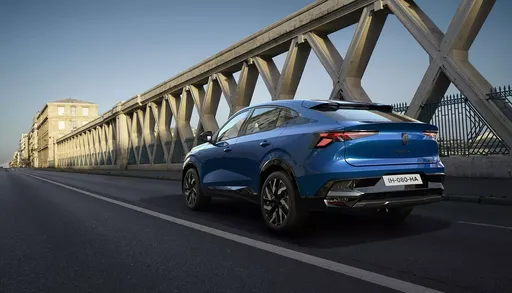
Rafale

Dynamic Duo: BMW X3 vs. Renault Rafale

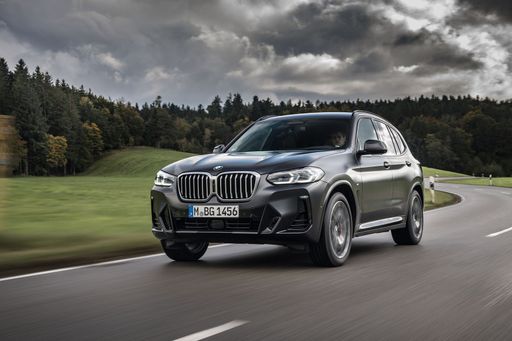
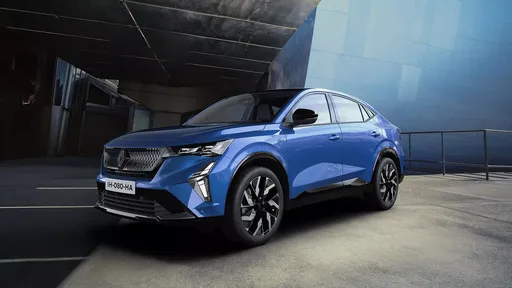
The automotive world is witness to a captivating clash of titans with the BMW X3 and the newly introduced Renault Rafale. Both SUVs epitomize style, performance, and innovation, yet they cater to different palettes in the car enthusiast community. Let's take a deep dive into their specifications, technology, and what sets them apart.
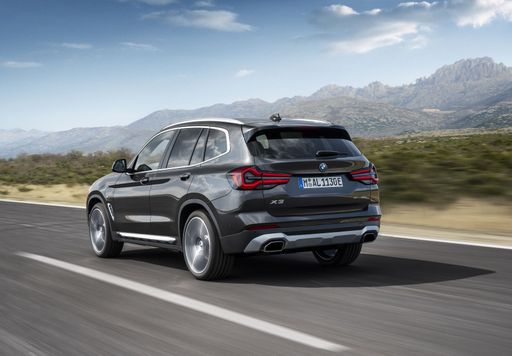
X3

Power and Performance

Under the hood, the BMW X3 offers a wide range of engine options, including diesel and petrol mild hybrids, a plug-in hybrid, and pure petrol engines. With power output ranging from 184 HP to a high-performance 510 HP, the X3 provides versatility to match different driving moods. Acceleration varies from 3.8 seconds to 8.4 seconds for the 0-100 km/h sprint, indicative of its broad spectrum of performance capabilities.

The Renault Rafale, however, captures attention with its hybrid core, offering a cohesive blend of power and efficiency. With two prominent engine options, delivering 200 HP and 300 HP, clocking 8.9 seconds and 6.4 seconds respectively from 0 to 100 km/h, it promises an impressive driving experience with a nod towards eco-friendliness.

Rafale

Efficiency and Environmental Impact

For environmentally conscious drivers, the Rafale's full hybrid and plug-in hybrid variants offer remarkable fuel efficiencies of 4.7 L/100 km and 0.6 L/100 km, alongside commendable CO2 emissions ratings of 106 g/km and 14 g/km, respectively. The electric range of 97 km further ensures reduced carbon footprints for the daily commuter.

The BMW X3, with its versatile engine lineup, incorporates sustainability with an electric range up to 90 km for its plug-in hybrid variant, boasting a consumption rate as low as 2.1 L/100 km. It presents a revised CO2 efficiency across engine variations, appealing to the eco-conscious consumer.

X3

Exterior and Dimensions

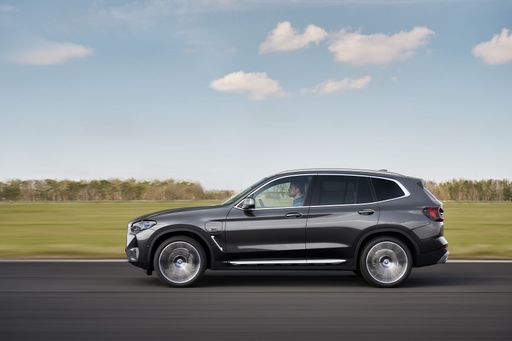
Both SUVs conform to sleek, modern design philosophies that highlight their brand identities. The X3 spans a length of up to 4755 mm, a width of 1920 mm, and a height reaching 1669 mm, combining robust German engineering with elegance and utility.

Meanwhile, the Rafale dresses in sleeker dimensions at 4710 mm in length, 1886 mm in width, and a height of 1613 mm, conveying a dynamic presence while optimizing space efficiency for heightened urban maneuverability.

Rafale

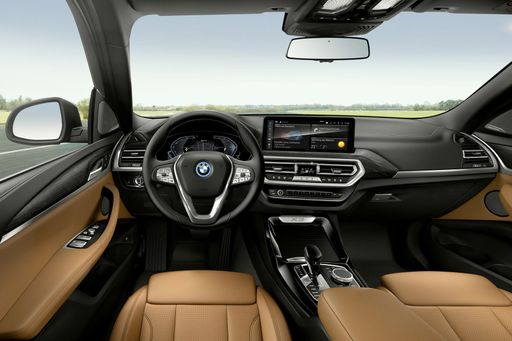
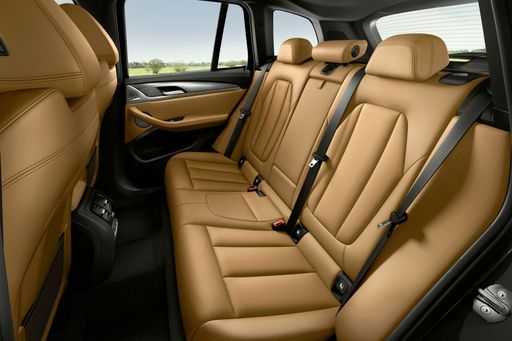
Interior and Practicality

Inside, the Renault Rafale takes a practical lead with a trunk capacity stretching to 627 L, while the X3 offers between 450 L and 570 L, dependent on the model type. Both provide comfortable seating for five, blending luxury with functionality, yet Renault edges slightly ahead in cargo versatility.

X3

Technological Innovations and Features

Both vehicles are fitted with cutting-edge technology. The BMW X3 integrates advanced infotainment systems and driver assistance innovations, staying true to its tagline of "The Ultimate Driving Machine." Its all-wheel-drive capability also enhances its rugged appeal for those seeking adventure beyond the asphalt.

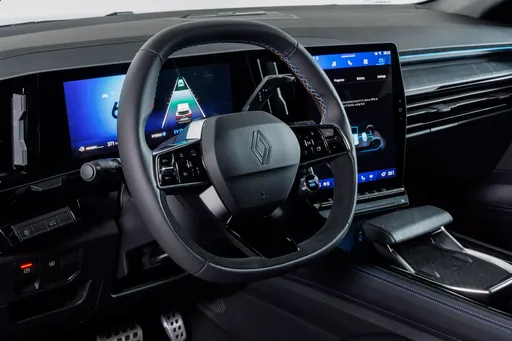
Renault's commitment to technology in the Rafale is evident with its seamless automatic transmission and energy recuperation technology, capitalizing significantly on fuel economy and driving smoothness, crafting an ideal balance for the eco-enthusiast.

Conclusion: Choosing Your Champion

The decision between the BMW X3 and Renault Rafale comes down to personal preference and driving priorities. The X3 offers more powertrain diversity and a premium performance edge, while the Rafale firmly stands with its hybrid efficiency and cargo practicality. Potential buyers must weigh their desire for performance against their need for environmental mindfulness. In the end, both SUVs offer compelling packages that set the bar high in the modern automotive landscape.

Here’s where it gets real: The technical differences in detail

Rafale

Costs and Efficiency:

Price and efficiency are key factors when choosing a car – and this is often where the real differences emerge.

Renault Rafale is clearly cheaper – starting at 37,700 £ , while the BMW X3 costs 51,300 £ . That’s a price difference of around 13,543 £.

Fuel consumption also shows a difference: the Renault Rafale uses 2 L/100km and is noticeably more efficient than the BMW X3 with 2.8 L/100km. The difference is about 0.8 L/100km.

As for electric range, the Renault Rafale offers barely more range – reaching up to 97 km, about 9 km more than the BMW X3.

X3

Engine and Performance:

Power, torque and acceleration are the classic benchmarks for car enthusiasts – and here, some clear differences start to show.

When it comes to engine power, the BMW X3 offers markedly more power – delivering 398 HP compared to 300 HP. That’s roughly 98 HP more horsepower.

When accelerating from 0 to 100 km/h, the BMW X3 is visibly quicker – completing the sprint in 4.6 s, while the Renault Rafale takes 6.4 s. That’s about 1.8 s quicker.

Rafale

Space and Everyday Use:

Beyond pure performance, interior space and usability matter most in daily life. This is where you see which car is more practical and versatile.

Both vehicles offer seating for 5 people.

In terms of curb weight, Renault Rafale is moderately lighter – 1,734 kg compared to 1,930 kg. The difference is around 196 kg.

Looking at boot space, the Renault Rafale offers barely more boot space – 627 L compared to 570 L. That’s a difference of about 57 L.

When it comes to payload, the BMW X3 carries visibly more – 570 kg compared to 444 kg. That’s a difference of about 126 kg.

Who wins the race in the data check?

The BMW X3 stands well ahead of its rival in the objective data comparison.
This result only shows which model scores more points on paper – not which of the two cars feels right for you.

from £51,300
X3

BMW X3

  • Engine Type : Petrol MHEV, Diesel MHEV, Plugin Hybrid
  • Transmission : Automatic
  • Drive Type : All-Wheel Drive
  • Power HP : 197 - 398 HP
  • Consumption L/100km : 2.8 - 7.7 L/100km
  • Electric Range : 88 km
Renault Rafale
BMW X3

Costs and Consumption

View detailed analysis

Engine and Performance

View detailed analysis

Dimensions and Body

View detailed analysis

Renault Rafale

The Renault Rafale dresses bold coupé-inspired lines around a practical crossover body, turning heads without trying too hard. Inside it serves up a comfortable, well-equipped cabin and engaging driving manners, making it a clever choice for buyers who want a bit of panache with their daily commute.

details

BMW X3

The BMW X3 mixes Bavarian poise with everyday practicality, delivering a composed ride and a cabin that feels both premium and lived-in. It’s the sort of SUV that lets you enjoy sporty handling without sacrificing family-friendly space, so you get fun and sense in one neat package.

details
Renault Rafale
BMW X3

Costs and Consumption

Price
37,700 - 49,700 £
Price
51,300 - 72,400 £
Consumption L/100km
2 - 5 L/100km
Consumption L/100km
2.8 - 7.7 L/100km
Consumption kWh/100km
-
Consumption kWh/100km
-
Electric Range
97 km
Electric Range
88 km
Battery Capacity
-
Battery Capacity
-
co2
43 - 109 g/km
co2
64 - 175 g/km
Fuel tank capacity
-
Fuel tank capacity
60 - 65 L

Dimensions and Body

Body Type
SUV
Body Type
SUV
Seats
5
Seats
5
Doors
-
Doors
5
Curb weight
1,734 - 2,025 kg
Curb weight
1,930 - 2,140 kg
Trunk capacity
539 - 627 L
Trunk capacity
460 - 570 L
Length
-
Length
4,755 mm
Width
1,886 mm
Width
1,920 mm
Height
-
Height
1,660 mm
Max trunk capacity
-
Max trunk capacity
1,700 L
Payload
415 - 444 kg
Payload
570 kg

Engine and Performance

Engine Type
Full Hybrid, Plugin Hybrid
Engine Type
Petrol MHEV, Diesel MHEV, Plugin Hybrid
Transmission
Automatic
Transmission
Automatic
Transmission Detail
Automatic Gearbox
Transmission Detail
Automatic Gearbox
Drive Type
Front-Wheel Drive, All-Wheel Drive
Drive Type
All-Wheel Drive
Power HP
200 - 300 HP
Power HP
197 - 398 HP
Acceleration 0-100km/h
6.4 - 8.9 s
Acceleration 0-100km/h
4.6 - 7.8 s
Max Speed
-
Max Speed
215 - 250 km/h
Torque
-
Torque
330 - 670 Nm
Number of Cylinders
3
Number of Cylinders
4 - 6
Power kW
147 - 221 kW
Power kW
145 - 293 kW
Engine capacity
1,199 cm3
Engine capacity
1,995 - 2,998 cm3

General

Model Year
2,025
Model Year
2,024 - 2,025
CO2 Efficiency Class
C, B
CO2 Efficiency Class
F, E, B
Brand
Renault
Brand
BMW
DriveDuel uses data analysis and artificial intelligence to evaluate vehicle data and create content. Content is regularly reviewed and improved. The displayed prices are estimates based on German list prices, adjusted to the respective country’s VAT. Country-specific registration taxes are not included. This information is not legally binding.