VS

Renault Scénic vs Hyundai IONIQ 5 comparison

Compare performance (218 HP vs 650 HP), boot space and price (34,600 £ vs 38,500 £ ) at a glance. Find out which car is the better choice for you – Renault Scénic or Hyundai IONIQ 5?

Renault Scénic vs Hyundai IONIQ 5: Key differences

Renault Scénic

5 (1 Reviews)
rate
  • a bit cheaper
  • marginally more electric range
  • only slightly lighter
  • very slightly more trunk space

Hyundai IONIQ 5

5 (2 Reviews)
rate
  • considerably more power
  • barely more efficient
  • clearly quicker 0–100 km/h

All details on performance, efficiency, range and trunk space can be found in the technical comparison below – including user reviews for both models.

Scénic

Hyundai IONIQ 5 vs Renault Scénic: A Comprehensive Comparison

In the increasingly competitive electric vehicle market, the Hyundai IONIQ 5 and the Renault Scénic emerge as front-runners, each offering unique features to attract buyers. As both brands push the envelope in innovation, consumers face the challenge of choosing between these two remarkable contenders. This article delves into the technical specifications and innovations that define each vehicle, helping you make an informed decision.
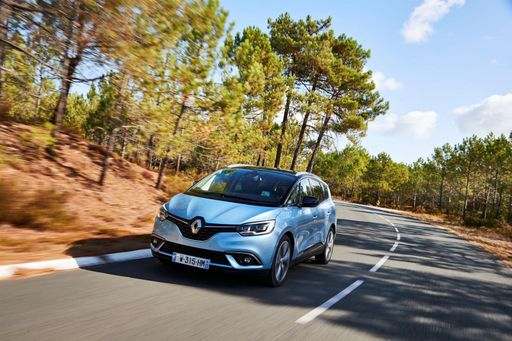
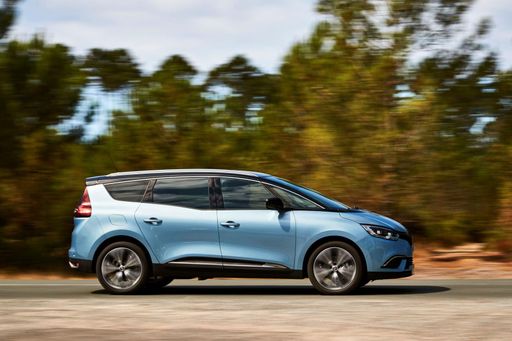
IONIQ 5

Power and Performance

The Hyundai IONIQ 5 boasts an impressive power range, offering options of 170 HP up to a roaring 609 HP in its top performance variant. The IONIQ 5 is available in both rear-wheel drive and all-wheel drive configurations, providing versatility depending on user preference and driving conditions. In terms of acceleration, the car can sprint from 0 to 100 km/h in as fast as 3.5 seconds for the high-end version. This performance is backed by a robust torque delivery of up to 740 Nm, ensuring a thrilling driving experience.

On the other hand, the Renault Scénic, with its power options peaking at 220 HP, remains competitive but slightly lags behind in horsepower. With its single front-wheel drive layout, the Scénic offers a more traditional driving feel. The Scénic achieves 0 to 100 km/h in a respectable 7.9 seconds, which is commendable for a family SUV but still a step behind the IONIQ 5's ultimate performance.

Scénic

Battery and Range

Charging ahead in the battery department, the IONIQ 5 features a choice between 63 kWh and 84 kWh battery capacities. This allows the vehicle to achieve an impressive electric range of up to 570 km, making it suitable for long journeys without frequent recharging. The IONIQ 5's consumption rates vary between 15.6 kWh/100 km and 21.2 kWh/100 km, depending on the variant, offering an economical alternative in the electrified segment.

The Renault Scénic, while still offering robust performance, has a slightly lower range, with figures reaching up to 598 km on a full charge from its larger battery. Its consumption rates range from 16.7 kWh/100 km to 17.6 kWh/100 km. These numbers indicate efficiency but show room for improvement compared to its Hyundai counterpart. However, the Scénic’s battery performance matches the needs of consumers looking for a practical family SUV.

IONIQ 5

Interior Space and Comfort

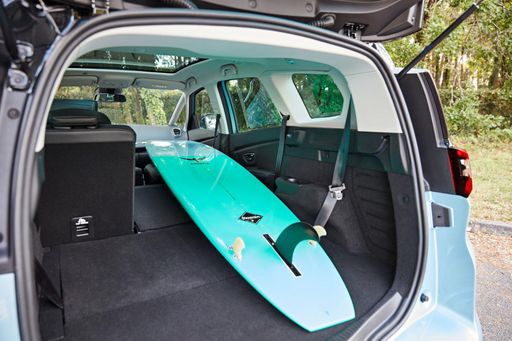
Both vehicles provide ample interior space for five passengers, yet their dimensions and trunk capacity differ. The IONIQ 5 measures 4655 mm in length with a trunk capacity of 520 liters, while the Scénic, measuring 4470 mm in length, offers slightly more trunk space at 545 liters. Comfort is paramount in the family-oriented segment, and the Scénic's superior trunk space may cater to families needing to carry extra luggage or cargo.

Scénic

Technological Innovations

Hyundai has outfitted the IONIQ 5 with cutting-edge technology, including advanced driver-assistance systems and an intuitive infotainment interface. The vehicle features over-the-air updates, allowing it to evolve continuously post-purchase. The IONIQ 5 also incorporates various safety features such as adaptive cruise control and lane-keeping assist, making it a frontrunner in the tech-savvy market.

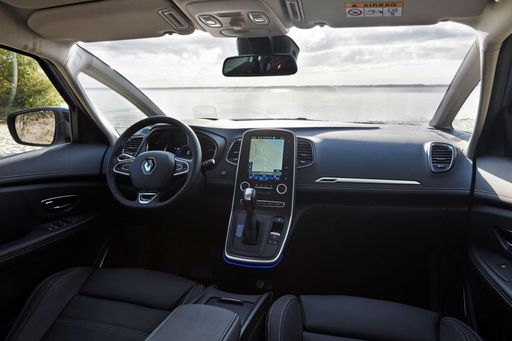
The Renault Scénic, while also equipped with modern technology, offers a slightly different focus. It emphasizes comfort and practicality, with an easy-to-use infotainment system. Safety features are robust as well, but the emphasis is more on usability rather than performance metrics. Both vehicles excel in their respective areas, but the IONIQ 5 takes the lead regarding sheer technological advancements.

IONIQ 5

Conclusion: Choosing Your Ideal EV

In the battle between the Hyundai IONIQ 5 and the Renault Scénic, each offers distinct advantages that cater to different consumer preferences. The IONIQ 5 stands out for its performance, cutting-edge technology, and impressive range, making it an ideal choice for those who value speed and innovation. Conversely, the Scénic, with its spacious interior and family-friendly design, appeals to those prioritizing practicality and comfort.

Ultimately, your choice will hinge on what aspects matter most to you. Whether you prioritize performance, space, or technology, both vehicles represent the shift towards an electrified future in the automotive industry.

Here’s where it gets real: The technical differences in detail

Scénic

Costs and Efficiency:

Price and efficiency are often the first things buyers look at. Here it becomes clear which model has the long-term edge – whether at the pump, the plug, or in purchase price.

Renault Scénic is a bit cheaper – starting at 34,600 £ , while the Hyundai IONIQ 5 costs 38,500 £ . That’s a price difference of around 3,857 £.

In terms of energy consumption, the Hyundai IONIQ 5 is barely more efficient: consuming 15.6 kWh/100km compared to 16.6 kWh/100km for the Renault Scénic. That’s a difference of about 1 kWh/100km.

As for electric range, the Renault Scénic offers marginally more range – reaching up to 598 km, about 28 km more than the Hyundai IONIQ 5.

IONIQ 5

Engine and Performance:

Under the bonnet, it becomes clear which model is tuned for sportiness and which one takes the lead when you hit the accelerator.

When it comes to engine power, the Hyundai IONIQ 5 offers considerably more power – delivering 650 HP compared to 218 HP. That’s roughly 432 HP more horsepower.

When accelerating from 0 to 100 km/h, the Hyundai IONIQ 5 is clearly quicker – completing the sprint in 3.5 s, while the Renault Scénic takes 7.9 s. That’s about 4.4 s quicker.

Looking at top speed, the Hyundai IONIQ 5 is markedly faster – reaching 260 km/h, while the Renault Scénic tops out at 170 km/h. The difference is around 90 km/h.

There’s also a difference in torque: the Hyundai IONIQ 5 delivers considerably more torque with 770 Nm compared to 300 Nm. That’s about 470 Nm more.

Scénic

Space and Everyday Use:

Whether family car or daily driver – which one offers more room, flexibility and comfort?

Both vehicles offer seating for 5 people.

In terms of curb weight, Renault Scénic is only slightly lighter – 1,822 kg compared to 1,955 kg. The difference is around 133 kg.

Looking at boot space, the Renault Scénic offers very slightly more boot space – 545 L compared to 520 L. That’s a difference of about 25 L.

For maximum load capacity, the Renault Scénic offers very slightly more capacity – up to 1,670 L, about 90 L more than the Hyundai IONIQ 5.

When it comes to payload, the Hyundai IONIQ 5 carries marginally more – 530 kg compared to 518 kg. That’s a difference of about 12 kg.

Who wins the race in the data check?

The Hyundai IONIQ 5 stands well ahead of its rival in the objective data comparison.
This result only shows which model scores more points on paper – not which of the two cars feels right for you.

from £38,500
IONIQ 5

Hyundai IONIQ 5

  • Engine Type : Electric
  • Transmission : Automatic
  • Drive Type : Rear-Wheel Drive, All-Wheel Drive
  • Power HP : 170 - 650 HP
  • Consumption kWh/100km : 15.6 - 21.2 kWh/100km
  • Electric Range : 440 - 570 km
Renault Scénic
Hyundai IONIQ 5

Costs and Consumption

View detailed analysis

Engine and Performance

View detailed analysis

Dimensions and Body

View detailed analysis

Renault Scénic

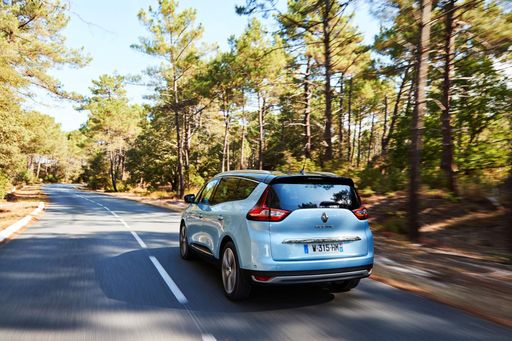
The Renault Scénic is a quietly clever family MPV that balances everyday practicality with unexpected flair, offering a roomy, flexible cabin that makes school runs and weekend escapes less of a chore. It won't dazzle like a sports car, but its composed ride, sensible tech and thoughtful storage solutions make it a superbly pragmatic choice for buyers who prefer substance with a wink.

details

Hyundai IONIQ 5

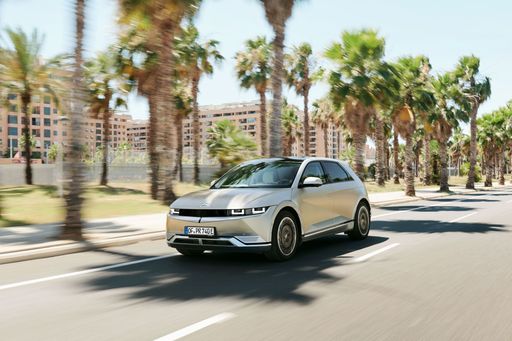
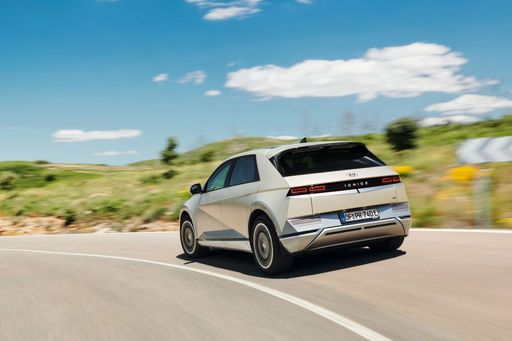
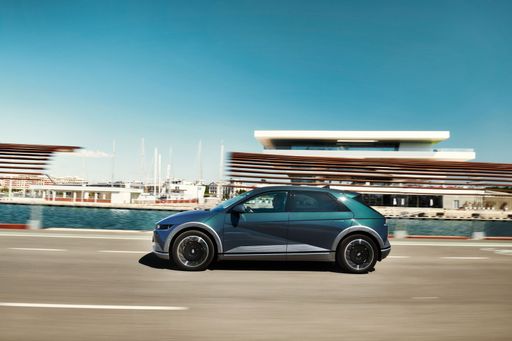
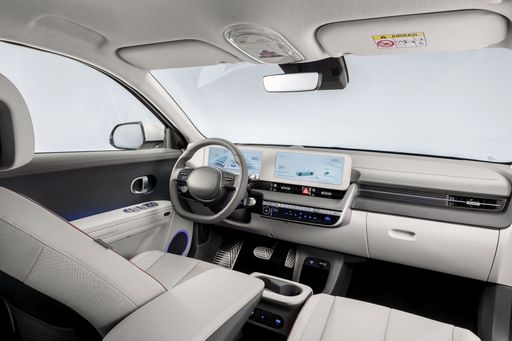
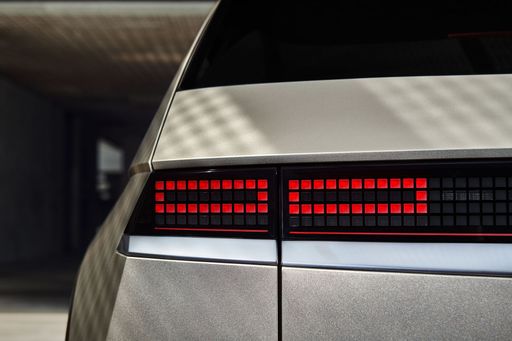
The Hyundai IONIQ 5 looks like a spaceship that moved into suburbia, pairing bold retro‑futuristic styling with a roomy, cleverly laid-out cabin that makes long trips surprisingly comfortable. Its electric character delivers instant, silky acceleration and low running costs, making it a smart, slightly cheeky pick for buyers who want tech, practicality and personality without the drama.

details
Renault Scénic
Hyundai IONIQ 5

Costs and Consumption

Price
34,600 - 44,000 £
Price
38,500 - 64,200 £
Consumption L/100km
-
Consumption L/100km
-
Consumption kWh/100km
16.6 - 17.5 kWh/100km
Consumption kWh/100km
15.6 - 21.2 kWh/100km
Electric Range
420 - 598 km
Electric Range
440 - 570 km
Battery Capacity
-
Battery Capacity
63 - 84 kWh
co2
0 g/km
co2
0 g/km
Fuel tank capacity
-
Fuel tank capacity
-

Dimensions and Body

Body Type
SUV
Body Type
SUV
Seats
5
Seats
5
Doors
5
Doors
5
Curb weight
1,822 - 1,927 kg
Curb weight
1,955 - 2,275 kg
Trunk capacity
545 L
Trunk capacity
480 - 520 L
Length
4,470 mm
Length
4,655 - 4,715 mm
Width
1,864 mm
Width
1,890 - 1,940 mm
Height
1,571 mm
Height
1,585 - 1,605 mm
Max trunk capacity
1,670 L
Max trunk capacity
1,540 - 1,580 L
Payload
514 - 518 kg
Payload
385 - 530 kg

Engine and Performance

Engine Type
Electric
Engine Type
Electric
Transmission
Automatic
Transmission
Automatic
Transmission Detail
Reduction Gearbox
Transmission Detail
Reduction Gearbox
Drive Type
Front-Wheel Drive
Drive Type
Rear-Wheel Drive, All-Wheel Drive
Power HP
170 - 218 HP
Power HP
170 - 650 HP
Acceleration 0-100km/h
7.9 - 8.6 s
Acceleration 0-100km/h
3.5 - 8.5 s
Max Speed
150 - 170 km/h
Max Speed
185 - 260 km/h
Torque
280 - 300 Nm
Torque
350 - 770 Nm
Number of Cylinders
-
Number of Cylinders
-
Power kW
125 - 160 kW
Power kW
125 - 478 kW
Engine capacity
-
Engine capacity
-

General

Model Year
2,025
Model Year
2,024 - 2,025
CO2 Efficiency Class
A
CO2 Efficiency Class
A
Brand
Renault
Brand
Hyundai
DriveDuel uses data analysis and artificial intelligence to evaluate vehicle data and create content. Content is regularly reviewed and improved. The displayed prices are estimates based on German list prices, adjusted to the respective country’s VAT. Country-specific registration taxes are not included. This information is not legally binding.