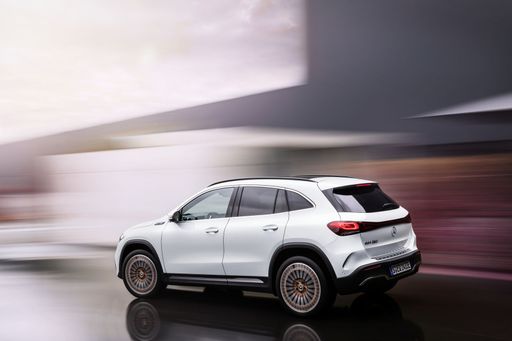
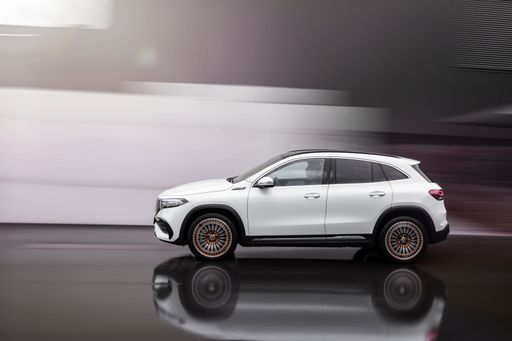
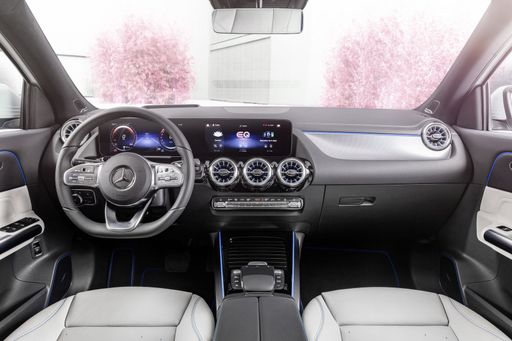
VS

Renault Scénic vs Mercedes EQA comparison

Compare performance (218 HP vs 292 HP), boot space and price (34,600 £ vs 44,200 £ ) at a glance. Find out which car is the better choice for you – Renault Scénic or Mercedes EQA?

Renault Scénic vs Mercedes EQA: Key differences

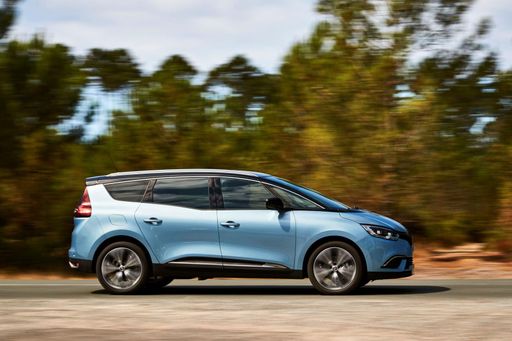
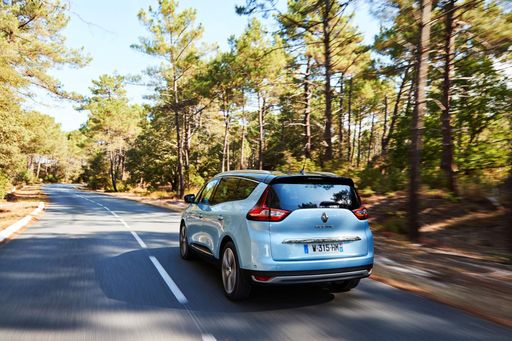
Renault Scénic

5 (1 Reviews)
rate
  • clearly cheaper
  • barely more electric range
  • slightly lighter
  • noticeably more trunk space

Mercedes EQA

5 (1 Reviews)
rate
  • noticeably more power
  • a bit more efficient
  • visibly quicker 0–100 km/h
Scénic

Introduction

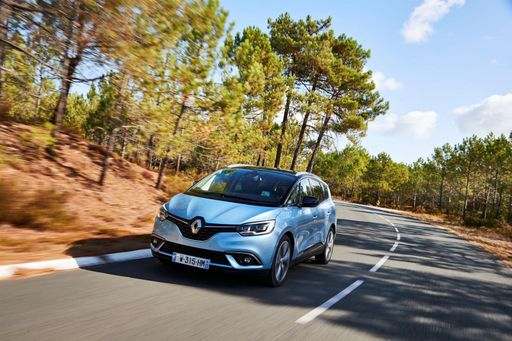
In the world of electric vehicles, the battle between the Mercedes EQA and Renault Scénic is heating up. Both cars feature modern designs and cutting-edge technology, but they cater to different segments of the auto market. Here, we compare the EQA and Scénic across various technical aspects and innovations to help you decide which one suits your needs better.
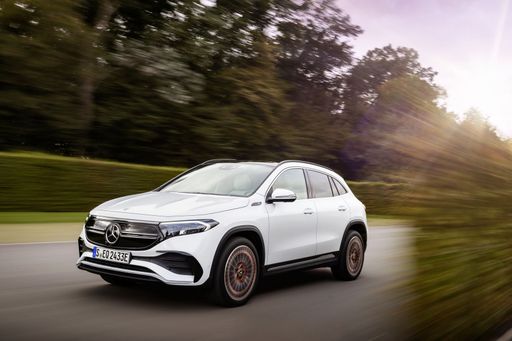
EQA

Powertrain and Performance

The Mercedes EQA comes with several power options, ranging from 190 HP up to an impressive 292 HP. It boasts advanced front-wheel and all-wheel drive configurations, ensuring better handling in various driving conditions. The acceleration from 0 to 100 km/h varies between 6 to 8.6 seconds depending on the model, showcasing the EQA's sporty character.

On the other hand, the Renault Scénic offers power outputs of 170 HP to 220 HP, limited to front-wheel drive. The Scénic's acceleration ranges from 7.9 seconds to 8.6 seconds, making it slightly less performance-oriented compared to the EQA. Both cars utilize a reduction gearbox for seamless power delivery, enhancing the driving experience.

Scénic

Electric Range and Efficiency

One of the crucial factors in choosing an electric vehicle is its range. The EQA excels here, providing an electric range between 458 km and 561 km, depending on model and battery configuration. The energy consumption ranges from 14.4 to 16.9 kWh/100km, making it an efficient choice for long journeys.

Conversely, the Renault Scénic offers an electric range from 420 km to a remarkable 598 km, though its energy consumption is slightly higher at 16.7 to 17.6 kWh/100km. While both vehicles have impressive ranges, the EQA holds a slight edge in terms of efficiency.

EQA

Interior Space and Comfort

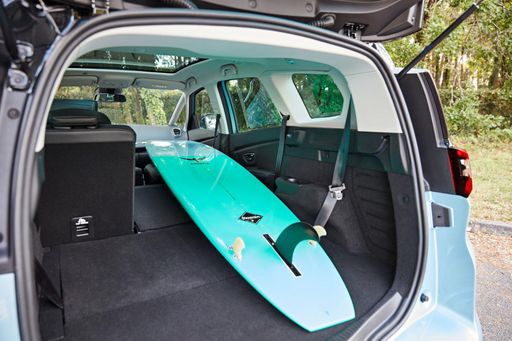
When it comes to interior space, the Renault Scénic takes the lead with a trunk capacity of 545 L, significantly more than the EQA's 340 L. Both cars offer ample seating for five passengers, but the additional cargo space in the Scénic might appeal to families or those needing extra room for luggage.

The dimensions also favor the Scénic, measuring 4470 mm in length and 1864 mm in width, offering a bit more room in the cabin area. The EQA, while still spacious at 4463 mm length and 1834 mm width, aims for a sportier aesthetic which may be slightly more cramped when compared side by side.

Scénic

Innovations and Technology

Both vehicles showcase significant innovations aimed at enhancing user experience. The Mercedes EQA combines luxury and practicality, featuring advanced infotainment systems and driver-assistance technology, such as lane-keeping assistance and adaptive cruise control. The MBUX system offers a user-friendly interface, which is anything but dull.

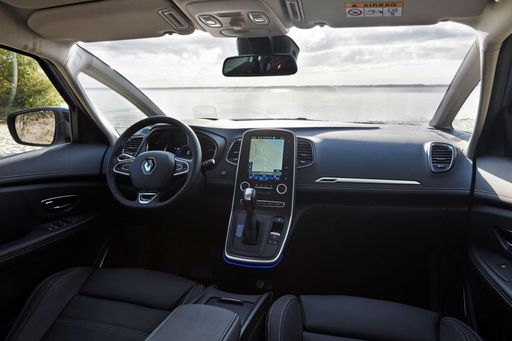
The Renault Scénic, on the other hand, focuses on functionality and a family-friendly atmosphere. It offers an innovative Multisense system allowing drivers to customize their driving experience. The infotainment system is intuitive as well, while the inclusion of safety features such as emergency braking and traffic sign recognition boosts its competency as a family vehicle.

EQA

Driving Experience

When comparing the driving experience, the EQA with its sporty handling and quick acceleration caters well to those who desire performance and responsiveness. It brings a refined and dynamic driving style especially favorable for urban environments and highways alike.

The Scénic provides a more relaxed driving experience, with a focus on comfort and practicality. Its suspension system absorbs road imperfections effectively, making it a pleasant option for longer trips with the family. While it lacks the performance edge of the EQA, it excels in providing a smooth ride.

Scénic

Conclusion

The choice between the Mercedes EQA and Renault Scénic ultimately depends on your preferences and needs. If you are looking for a dynamic driving experience coupled with luxury and advanced technology, the EQA is an excellent choice. Alternatively, if you require more cargo space and family-oriented features, the Scénic may be the better option. Whichever vehicle you choose, both represent the growing trend towards electric mobility, making them worthy contenders in the evolving automotive landscape.

Here’s where it gets real: The technical differences in detail

Scénic

Costs and Efficiency:

Price and efficiency are key factors when choosing a car – and this is often where the real differences emerge.

Renault Scénic is clearly cheaper – starting at 34,600 £ , while the Mercedes EQA costs 44,200 £ . That’s a price difference of around 9,609 £.

In terms of energy consumption, the Mercedes EQA is a bit more efficient: consuming 14.4 kWh/100km compared to 16.6 kWh/100km for the Renault Scénic. That’s a difference of about 2.2 kWh/100km.

As for electric range, the Renault Scénic offers barely more range – reaching up to 598 km, about 37 km more than the Mercedes EQA.

EQA

Engine and Performance:

Under the bonnet, it becomes clear which model is tuned for sportiness and which one takes the lead when you hit the accelerator.

When it comes to engine power, the Mercedes EQA offers noticeably more power – delivering 292 HP compared to 218 HP. That’s roughly 74 HP more horsepower.

When accelerating from 0 to 100 km/h, the Mercedes EQA is visibly quicker – completing the sprint in 6 s, while the Renault Scénic takes 7.9 s. That’s about 1.9 s quicker.

Looking at top speed, the Renault Scénic is marginally faster – reaching 170 km/h, while the Mercedes EQA tops out at 160 km/h. The difference is around 10 km/h.

There’s also a difference in torque: the Mercedes EQA delivers clearly more torque with 520 Nm compared to 300 Nm. That’s about 220 Nm more.

Scénic

Space and Everyday Use:

Beyond pure performance, interior space and usability matter most in daily life. This is where you see which car is more practical and versatile.

Both vehicles offer seating for 5 people.

In terms of curb weight, Renault Scénic is slightly lighter – 1,822 kg compared to 2,045 kg. The difference is around 223 kg.

Looking at boot space, the Renault Scénic offers noticeably more boot space – 545 L compared to 340 L. That’s a difference of about 205 L.

For maximum load capacity, the Renault Scénic offers clearly more capacity – up to 1,670 L, about 350 L more than the Mercedes EQA.

When it comes to payload, the Renault Scénic carries a bit more – 518 kg compared to 425 kg. That’s a difference of about 93 kg.

Who wins the race in the data check?

The Mercedes EQA is barely ahead in the objective data comparison.
This result only shows which model scores more points on paper – not which of the two cars feels right for you.

from £44,200
EQA

Mercedes EQA

  • Engine Type : Electric
  • Transmission : Automatic
  • Drive Type : Front-Wheel Drive, All-Wheel Drive
  • Power HP : 190 - 292 HP
  • Consumption kWh/100km : 14.4 - 16.9 kWh/100km
  • Electric Range : 476 - 561 km
Renault Scénic
Mercedes EQA

Costs and Consumption

View detailed analysis

Engine and Performance

View detailed analysis

Dimensions and Body

View detailed analysis

Renault Scénic

The Renault Scénic is a quietly clever family MPV that balances everyday practicality with unexpected flair, offering a roomy, flexible cabin that makes school runs and weekend escapes less of a chore. It won't dazzle like a sports car, but its composed ride, sensible tech and thoughtful storage solutions make it a superbly pragmatic choice for buyers who prefer substance with a wink.

details

Mercedes EQA

The Mercedes EQA slips into the electric crossover ranks with the brand’s familiar luxury polish, offering a quiet, fuss-free drive that feels perfectly at home in the city or on a country escape. Inside it’s neatly finished and tech-forward, projecting grown-up refinement even if it plays things a bit safe for anyone chasing outright excitement.

details
Renault Scénic
Mercedes EQA

Costs and Consumption

Price
34,600 - 44,000 £
Price
44,200 - 57,400 £
Consumption L/100km
-
Consumption L/100km
-
Consumption kWh/100km
16.6 - 17.5 kWh/100km
Consumption kWh/100km
14.4 - 16.9 kWh/100km
Electric Range
420 - 598 km
Electric Range
476 - 561 km
Battery Capacity
-
Battery Capacity
70.5 kWh
co2
0 g/km
co2
0 g/km
Fuel tank capacity
-
Fuel tank capacity
-

Dimensions and Body

Body Type
SUV
Body Type
SUV
Seats
5
Seats
5
Doors
5
Doors
5
Curb weight
1,822 - 1,927 kg
Curb weight
2,045 - 2,115 kg
Trunk capacity
545 L
Trunk capacity
340 L
Length
4,470 mm
Length
4,463 mm
Width
1,864 mm
Width
1,834 mm
Height
1,571 mm
Height
1,608 - 1,613 mm
Max trunk capacity
1,670 L
Max trunk capacity
1,320 L
Payload
514 - 518 kg
Payload
425 kg

Engine and Performance

Engine Type
Electric
Engine Type
Electric
Transmission
Automatic
Transmission
Automatic
Transmission Detail
Reduction Gearbox
Transmission Detail
Reduction Gearbox
Drive Type
Front-Wheel Drive
Drive Type
Front-Wheel Drive, All-Wheel Drive
Power HP
170 - 218 HP
Power HP
190 - 292 HP
Acceleration 0-100km/h
7.9 - 8.6 s
Acceleration 0-100km/h
6 - 8.6 s
Max Speed
150 - 170 km/h
Max Speed
160 km/h
Torque
280 - 300 Nm
Torque
385 - 520 Nm
Number of Cylinders
-
Number of Cylinders
-
Power kW
125 - 160 kW
Power kW
140 - 215 kW
Engine capacity
-
Engine capacity
-

General

Model Year
2,025
Model Year
2,024 - 2,025
CO2 Efficiency Class
A
CO2 Efficiency Class
A
Brand
Renault
Brand
Mercedes-Benz
DriveDuel uses data analysis and artificial intelligence to evaluate vehicle data and create content. Content is regularly reviewed and improved. The displayed prices are estimates based on German list prices, adjusted to the respective country’s VAT. Country-specific registration taxes are not included. This information is not legally binding.