VS

Renault Scénic vs Vauxhall Grandland comparison

Compare performance (218 HP vs 325 HP), boot space and price (34,600 £ vs 35,600 £ ) at a glance. Find out which car is the better choice for you – Renault Scénic or Vauxhall Grandland?

Renault Scénic vs Vauxhall Grandland: Key differences

Renault Scénic

4.6 (4 Reviews)
rate
  • only slightly cheaper
  • barely more efficient
details

Vauxhall Grandland

4.7 (2 Reviews)
rate
  • clearly more power
  • a bit more electric range
  • noticeably quicker 0–100 km/h
  • marginally lighter
  • marginally more trunk space
details

All details on performance, efficiency, range and trunk space can be found in the technical comparison below – including user reviews for both models.

By Achim Sedelmaier

Scénic

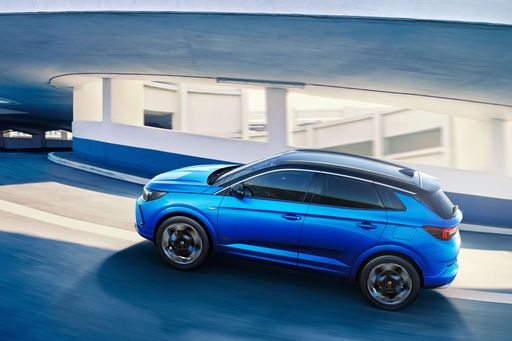
The automotive market is shifting rapidly towards electrification, with players like Opel and Renault leading the way. In this article, we will compare the Opel Grandland and the Renault Scénic, two popular SUVs that offer both family-friendly features and modern powertrains. Whether you prioritize performance, practicality, or cutting-edge technology, we’ll break down what each vehicle has to offer.
Grandland

Design and Dimensions

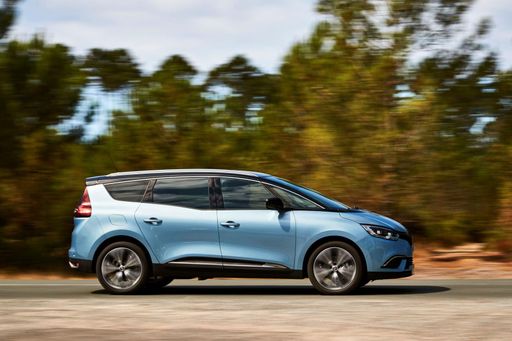
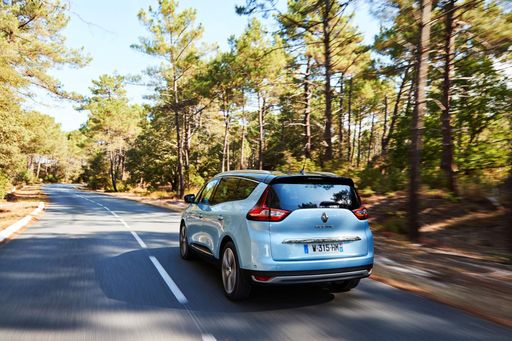
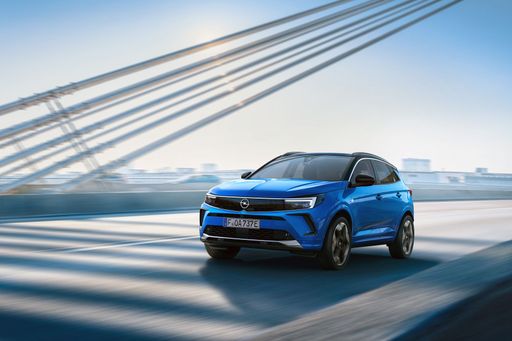
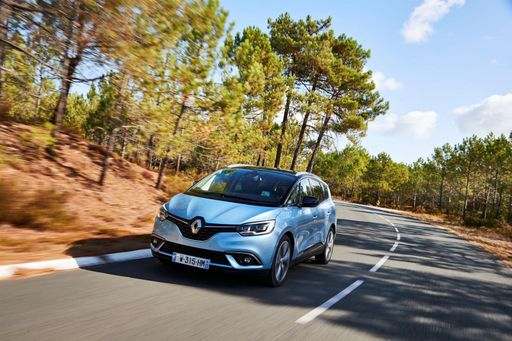
First impressions matter, and both the Opel Grandland and Renault Scénic have distinctive aesthetics. The Opel Grandland boasts a robust SUV design with dimensions of 4650 mm in length, 1934 mm in width, and 1665 mm in height, making it a commanding presence on the road. In contrast, the Renault Scénic is slightly smaller at 4470 mm long, 1864 mm wide, and 1571 mm high, providing a sportier yet compact feel.

Scénic

Powertrains and Performance

When it comes to powertrains, the Opel Grandland offers a versatile engine lineup, including petrol MHEV, plug-in hybrid, and fully electric options. With power outputs ranging from 136 HP to 213 HP, drivers can choose between different performance levels. The Grandland's hybrid variants provide an electric range of up to 585 km and boast fuel consumption as low as 0.8 L/100 km for the plug-in model.

The Renault Scénic takes a more focused approach with its all-electric powertrains, offering up to 220 HP. While its electric range reaches a maximum of 598 km, the consumption is slightly higher than the Grandland, at around 17.6 kWh/100 km. The Scénic's focus on electric power results in agile acceleration, with its quickest variant reaching 0-100 km/h in just 7.9 seconds.

Grandland

Interior and Cargo Space

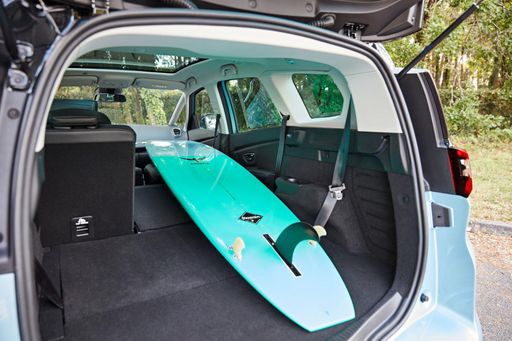
Both vehicles provide comfortable seating for up to five passengers, but the Opel Grandland edges out slightly in terms of cargo capacity. With a trunk space of 550 L, it accommodates family trips and grocery runs seamlessly. The Renault Scénic, while still spacious with 545 L, offers smart storage solutions and an interior designed with family needs in mind.

Scénic

Technological Innovations

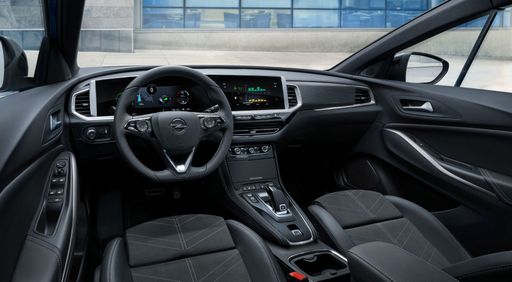
The technological landscape of both SUVs is impressive. The Opel Grandland is equipped with an advanced infotainment system, offering smartphone integration, navigation, and a range of connectivity features that ensure a modern driving experience. Additionally, it comes with multiple driving modes designed for efficiency and performance.

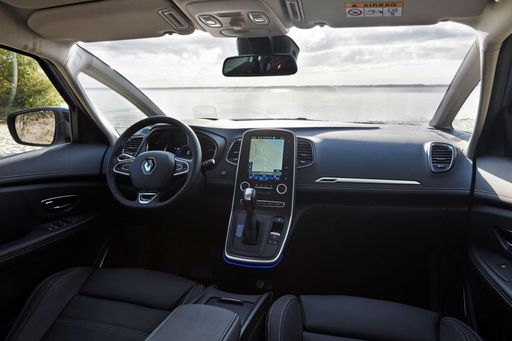
On the other hand, the Renault Scénic is ideal for tech-savvy families with its comprehensive safety features and innovative driver assistance systems. The Scénic incorporates a host of smart technologies, including a large touchscreen display, voice recognition, and autonomous driving capabilities in certain situations.

Grandland

Safety Standards

Both vehicles are designed with family safety as a priority. The Opel Grandland receives respectable ratings for crash safety and includes various advanced safety features, making it a reliable option for families. The Renault Scénic also garners high safety ratings, equipped with safety nets and collision avoidance technology that enhance its appeal as a family-oriented vehicle.

Scénic

Conclusion: Which One to Choose?

Choosing between the Opel Grandland and the Renault Scénic ultimately boils down to your personal preferences and driving needs. The Grandland excels in versatility with its range of powertrains and cargo space, making it suitable for varied lifestyles and applications. Meanwhile, the Scénic shines with its all-electric lineup, sporty handling, and advanced technological features.

In a rapidly evolving automotive landscape, both models reflect the commitment of their manufacturers to innovation and sustainability, making them standout choices in the SUV segment. As the trend towards electrification continues, either vehicle would be a commendable choice for eco-conscious consumers seeking stylish yet functional transportation.

Here’s where it gets real: The technical differences in detail

Scénic

Costs and Efficiency:

Price and efficiency are often the first things buyers look at. Here it becomes clear which model has the long-term edge – whether at the pump, the plug, or in purchase price.

Renault Scénic is only slightly cheaper – starting at 34,600 £ , while the Vauxhall Grandland costs 35,600 £ . That’s a price difference of around 986 £.

In terms of energy consumption, the Renault Scénic is barely more efficient: consuming 16.6 kWh/100km compared to 17.8 kWh/100km for the Vauxhall Grandland. That’s a difference of about 1.2 kWh/100km.

As for electric range, the Vauxhall Grandland offers a bit more range – reaching up to 694 km, about 96 km more than the Renault Scénic.

Grandland

Engine and Performance:

Power, torque and acceleration say a lot about how a car feels on the road. This is where you see which model delivers more driving dynamics.

When it comes to engine power, the Vauxhall Grandland offers clearly more power – delivering 325 HP compared to 218 HP. That’s roughly 107 HP more horsepower.

When accelerating from 0 to 100 km/h, the Vauxhall Grandland is noticeably quicker – completing the sprint in 6.1 s, while the Renault Scénic takes 7.9 s. That’s about 1.8 s quicker.

There’s also a difference in torque: the Vauxhall Grandland delivers clearly more torque with 509 Nm compared to 300 Nm. That’s about 209 Nm more.

Scénic

Space and Everyday Use:

Beyond pure performance, interior space and usability matter most in daily life. This is where you see which car is more practical and versatile.

Both vehicles offer seating for 5 people.

In terms of curb weight, Vauxhall Grandland is marginally lighter – 1,675 kg compared to 1,822 kg. The difference is around 147 kg.

Looking at boot space, the Vauxhall Grandland offers marginally more boot space – 550 L compared to 545 L. That’s a difference of about 5 L.

When it comes to payload, the Renault Scénic carries very slightly more – 518 kg compared to 495 kg. That’s a difference of about 23 kg.

Who wins the race in the data check?

The Vauxhall Grandland is decisively ahead in the objective data comparison.
This result only shows which model scores more points on paper – not which of the two cars feels right for you.

from £35,600
Grandland

Vauxhall Grandland

  • Engine Type Electric, Plugin Hybrid, Petrol MHEV
  • Transmission Automatic
  • Drive Type Front-Wheel Drive, All-Wheel Drive
  • Power HP 145 - 325 HP
  • Consumption L/100km 2.6 - 5.6 L/100km
  • Consumption kWh/100km 17.8 - 18.6 kWh/100km
  • Electric Range 82 - 694 km
Renault Scénic
Vauxhall Grandland

Costs and Consumption

View detailed analysis

Engine and Performance

View detailed analysis

Dimensions and Body

View detailed analysis

Renault Scénic

The Renault Scenic is a practical and comfortable family car that prioritises interior flexibility and everyday usability. With a composed ride and clever storage solutions, it suits buyers who want a versatile, easy-to-live-with vehicle for family duties and daily driving.

details

Vauxhall Grandland

The Opel Grandland feels like a sensible, well-rounded SUV — neat styling, a spacious cabin and a composed ride that turns daily driving into a quietly pleasant experience. It’s a smart choice for buyers who want modern tech, good economy and a dash of German practicality without shouting for attention.

details
Renault Scénic
Vauxhall Grandland

Costs and Consumption

Price
34,600 - 44,000 £
Price
35,600 - 51,400 £
Consumption L/100km
-
Consumption L/100km
2.6 - 5.6 L/100km
Consumption kWh/100km
16.6 - 17.5 kWh/100km
Consumption kWh/100km
17.8 - 18.6 kWh/100km
Electric Range
420 - 598 km
Electric Range
82 - 694 km
Battery Capacity
-
Battery Capacity
-
co2
0 g/km
co2
0 - 126 g/km
Fuel tank capacity
-
Fuel tank capacity
-

Dimensions and Body

Body Type
SUV
Body Type
SUV
Seats
5
Seats
5
Doors
5
Doors
-
Curb weight
1,822 - 1,927 kg
Curb weight
1,675 - 2,325 kg
Trunk capacity
545 L
Trunk capacity
485 - 550 L
Length
4,470 mm
Length
-
Width
1,864 mm
Width
1,905 mm
Height
1,571 mm
Height
-
Max trunk capacity
1,670 L
Max trunk capacity
-
Payload
514 - 518 kg
Payload
425 - 495 kg

Engine and Performance

Engine Type
Electric
Engine Type
Electric, Plugin Hybrid, Petrol MHEV
Transmission
Automatic
Transmission
Automatic
Transmission Detail
Reduction Gearbox
Transmission Detail
Reduction Gearbox, Dual-Clutch Automatic
Drive Type
Front-Wheel Drive
Drive Type
Front-Wheel Drive, All-Wheel Drive
Power HP
170 - 218 HP
Power HP
145 - 325 HP
Acceleration 0-100km/h
7.9 - 8.6 s
Acceleration 0-100km/h
6.1 - 10.2 s
Max Speed
150 - 170 km/h
Max Speed
-
Torque
280 - 300 Nm
Torque
230 - 509 Nm
Number of Cylinders
-
Number of Cylinders
3 - 4
Power kW
125 - 160 kW
Power kW
107 - 239 kW
Engine capacity
-
Engine capacity
1,199 - 1,598 cm3

General

Model Year
2025
Model Year
2,024 - 2,025
CO2 Efficiency Class
A
CO2 Efficiency Class
A, B, D
Brand
Renault
Brand
Vauxhall
DriveDuel uses data analysis and artificial intelligence to evaluate vehicle data and create content. Content is regularly reviewed and improved. The displayed prices are estimates based on German list prices, adjusted to the respective country’s VAT. Country-specific registration taxes are not included. This information is not legally binding.