VS

Renault Twingo vs Dacia Spring comparison

Compare performance (82 HP vs 100 HP), boot space and price (17,100 £ vs 14,500 £ ) at a glance. Find out which car is the better choice for you – Renault Twingo or Dacia Spring?

Renault Twingo vs Dacia Spring: Key differences

Renault Twingo

4.1 (1 Reviews)
rate
  • moderately more electric range
details

Dacia Spring

4.7 (4 Reviews)
rate
  • a bit cheaper
  • slightly more power
  • barely more efficient
  • noticeably quicker 0–100 km/h
  • a bit lighter
  • barely more trunk space
details

All details on performance, efficiency, range and trunk space can be found in the technical comparison below – including user reviews for both models.

By Achim Sedelmaier

Twingo

Quick take: Dacia Spring VS Renault Twingo — what this match-up is about

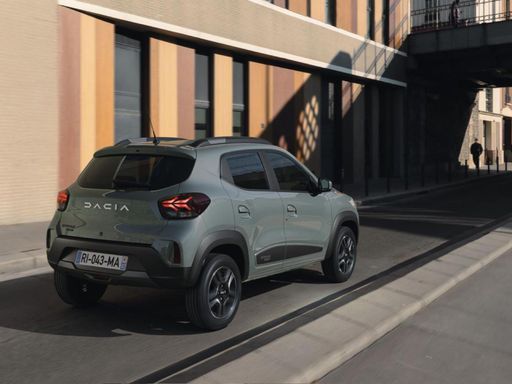
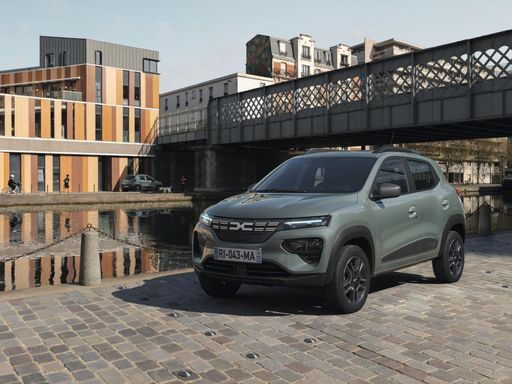
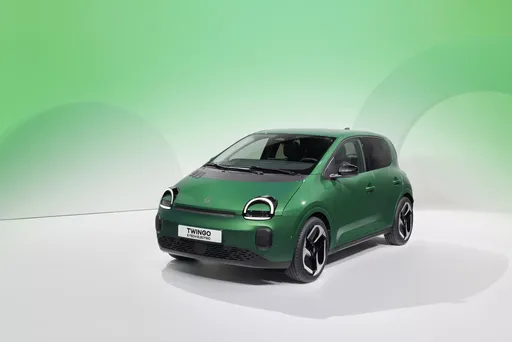
Dacia Spring VS Renault Twingo pits a radical budget electric against a cheeky, highly maneuverable city specialist, and the trade-offs are exactly what matter for real buyers. The Dacia Spring is about the lowest-cost, most efficient entry into electric motoring with a brutally simple cabin and sensible everyday boot space. The Renault Twingo brings five doors, an even tighter turning ability and a bit more everyday versatility for odd jobs and tight parking. Where the Spring prioritises low running costs and a no-frills approach, the Twingo prioritises urban agility and a slightly more finished feel. Read on to see which compromises make more sense for your life and driving patterns.
Spring

Character and driving: relaxed efficiency versus playful city agility

Dacia Spring feels engineered to conserve energy and keep city journeys cheap and predictable — its steering and power delivery are tuned for smooth urban shuttling rather than excitement. Renault Twingo, by contrast, rewards tight-city work: the tiny turning circle and nimble manners make it genuinely easier to park, turn and thread through narrow streets. On faster roads both cars reveal their limits: the Spring becomes more nervous and louder as speed rises, while the Twingo can feel unsettled over bumps and is similarly vocal, so neither is ideal for long motorway runs. If you want calm, cost‑focused commuting choose the Spring; if you prioritise fun, zero‑stress city manoeuvres choose the Twingo.

Comfort and cabin feel: spartan practicality against slightly more polish

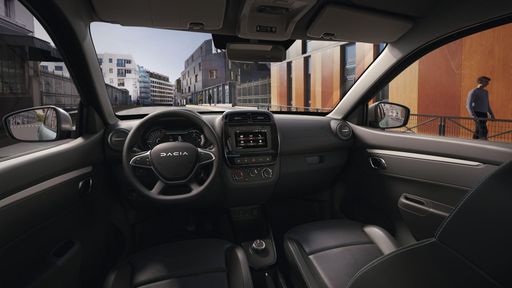
The interior of the Dacia Spring is honest and spartan — hard plastics, basic controls and few frills — which keeps the price down and the layout uncluttered for everyday use. The Renault Twingo presents a touch more personality and better visibility, plus five doors that make getting passengers and child seats in and out less faff. Both cars have simple seats that are fine for short hops but start to show their limits on longer drives, so expect fatigue on extended trips in either. If tactile materials and a quieter cabin matter, the Twingo feels a step up; if minimalism and straightforward ergonomics appeal, the Spring’s simplicity is an asset.

Practicality and usability: surprising utility vs flexible packaging

Despite its humble presentation, the Dacia Spring offers a boot that punches above its size for shopping and daily loads, though the loading sill and single-piece rear bench can be awkward. The Renault Twingo’s packaging plays a different card: a small boot but five‑door access and a fold‑flat passenger seat to carry long items without folding the back seats — very useful for urban DIY or occasional bulky loads. Rear-seat space is tight in both; the Spring’s back seat is particularly snug and best for short trips or children, while the Twingo makes entry and exit easier thanks to its doors. Charging and day-to-day economy favour the Spring in stop‑start city work, but the Twingo’s flexible layout gives it practical advantages for varied errands.

City life vs longer trips: dedicated town cars with similar limits at speed

In town both the Dacia Spring and the Renault Twingo are natural choices: the Spring’s low running costs and straightforward controls suit daily commuting with home charging, and the Twingo’s razor‑sharp turning and visibility make parking and tight manoeuvres effortless. When journeys extend beyond the city, compromises appear — the Spring becomes loud and a bit strained at sustained higher speeds, while the Twingo also gets noisy and unsettled, and neither is designed as a fatigue‑free motorway cruiser. For regular short hops, the Spring wins on economy; for mixed urban errands that include awkward parking or odd-shaped loads, the Twingo’s packaging wins. Both ask you to accept that long motorway drives are a compromise rather than a strength.

Who should choose which: clear buyer fits and the next step

If your priority is the lowest possible purchase and running cost for short urban commutes, the Dacia Spring’s frank value and efficiency make it the better fit — think second car, short daily routes and easy home charging. If you need the nimbleness of the smallest turning circle, five‑door convenience and a livelier city driving experience, the Renault Twingo is the more natural match — ideal for tight parking, carrying long items occasionally, and drivers who value manoeuvrability. Both cars trade refinement and long‑distance comfort for excellent city credentials, so your choice is largely about packaging and priorities rather than headline performance. The technical comparison that follows will make those trade-offs concrete in charging, range and performance so you can match spec to the lifestyle described here.

Here’s where it gets real: The technical differences in detail

Twingo

Costs and Efficiency:

When it comes to price and running costs, the biggest differences usually appear. This is often where you see which car fits your budget better in the long run.

Dacia Spring is a bit cheaper – starting at 14,500 £ , while the Renault Twingo costs 17,100 £ . That’s a price difference of around 2,572 £.

In terms of energy consumption, the Dacia Spring is barely more efficient: consuming 12.4 kWh/100km compared to 13.1 kWh/100km for the Renault Twingo. That’s a difference of about 0.7 kWh/100km.

As for electric range, the Renault Twingo offers moderately more range – reaching up to 262 km, about 37 km more than the Dacia Spring.

Spring

Engine and Performance:

Under the bonnet, it becomes clear which model is tuned for sportiness and which one takes the lead when you hit the accelerator.

When it comes to engine power, the Dacia Spring offers slightly more power – delivering 100 HP compared to 82 HP. That’s roughly 18 HP more horsepower.

When accelerating from 0 to 100 km/h, the Dacia Spring is noticeably quicker – completing the sprint in 9.6 s, while the Renault Twingo takes 12.1 s. That’s about 2.5 s quicker.

There’s also a difference in torque: the Renault Twingo delivers noticeably more torque with 175 Nm compared to 137 Nm. That’s about 38 Nm more.

Space and Everyday Use:

Beyond pure performance, interior space and usability matter most in daily life. This is where you see which car is more practical and versatile.

Both vehicles offer seating for 4 people.

In terms of curb weight, Dacia Spring is a bit lighter – 1,070 kg compared to 1,275 kg. The difference is around 205 kg.

Looking at boot space, the Dacia Spring offers barely more boot space – 308 L compared to 305 L. That’s a difference of about 3 L.

When it comes to payload, the Renault Twingo carries somewhat more – 320 kg compared to 274 kg. That’s a difference of about 46 kg.

Who wins the race in the data check?

The Dacia Spring leads convincingly in the objective data comparison.
This result only shows which model scores more points on paper – not which of the two cars feels right for you.

from £14,500
Spring

Dacia Spring

  • Engine Type : Electric
  • Transmission : Automatic
  • Drive Type : Front-Wheel Drive
  • Power HP : 70 - 100 HP
  • Consumption kWh/100km : 12.4 - 12.7 kWh/100km
  • Electric Range : 221 - 225 km
Renault Twingo
Dacia Spring

Costs and Consumption

View detailed analysis

Engine and Performance

View detailed analysis

Dimensions and Body

View detailed analysis

Renault Twingo

The Renault Twingo is a cheeky city car that turns tight streets and impossible parking spaces into an urban playground with its agile handling and compact footprint. It’s perfect for zipping around town thanks to clever interior packaging and a playful character, though buyers chasing long-distance comfort or huge luggage space should consider other options.

details

Dacia Spring

The Dacia Spring is an unpretentious city electric that strips EV ownership down to the essentials, offering clean, fuss-free transport for daily urban life. It won't impress luxury-seekers, but its cheerful practicality and rock-bottom running costs make it a clever, no-nonsense choice for anyone who wants electric mobility without the drama.

details
Renault Twingo
Dacia Spring

Costs and Consumption

Price
17,100 - 18,500 £
Price
14,500 - 16,900 £
Consumption L/100km
-
Consumption L/100km
-
Consumption kWh/100km
13.1 kWh/100km
Consumption kWh/100km
12.4 - 12.7 kWh/100km
Electric Range
260 - 262 km
Electric Range
221 - 225 km
Battery Capacity
-
Battery Capacity
-
co2
0 g/km
co2
0 g/km
Fuel tank capacity
-
Fuel tank capacity
-

Dimensions and Body

Body Type
Hatchback
Body Type
SUV
Seats
4
Seats
4
Doors
-
Doors
-
Curb weight
1,275 - 1,294 kg
Curb weight
1,070 kg
Trunk capacity
305 L
Trunk capacity
308 L
Length
-
Length
-
Width
1,720 mm
Width
1,583 mm
Height
-
Height
-
Max trunk capacity
-
Max trunk capacity
-
Payload
301 - 320 kg
Payload
274 kg

Engine and Performance

Engine Type
Electric
Engine Type
Electric
Transmission
Automatic
Transmission
Automatic
Transmission Detail
Reduction Gearbox
Transmission Detail
Reduction Gearbox
Drive Type
Front-Wheel Drive
Drive Type
Front-Wheel Drive
Power HP
82 HP
Power HP
70 - 100 HP
Acceleration 0-100km/h
12.1 s
Acceleration 0-100km/h
9.6 - 12.3 s
Max Speed
-
Max Speed
-
Torque
175 Nm
Torque
137 Nm
Number of Cylinders
-
Number of Cylinders
-
Power kW
60 kW
Power kW
52 - 75 kW
Engine capacity
-
Engine capacity
-

General

Model Year
2026
Model Year
2025
CO2 Efficiency Class
A
CO2 Efficiency Class
A
Brand
Renault
Brand
Dacia
DriveDuel uses data analysis and artificial intelligence to evaluate vehicle data and create content. Content is regularly reviewed and improved. The displayed prices are estimates based on German list prices, adjusted to the respective country’s VAT. Country-specific registration taxes are not included. This information is not legally binding.