VS

Renault Twingo vs Fiat Panda comparison

Compare performance (82 HP vs 70 HP), boot space and price (17,100 £ vs 14,100 £ ) at a glance. Find out which car is the better choice for you – Renault Twingo or Fiat Panda?

Renault Twingo vs Fiat Panda: Key differences

Renault Twingo

4.1 (1 Reviews)
rate
  • slightly more power
  • moderately quicker 0–100 km/h
  • clearly more trunk space
details

Fiat Panda

4.5 (3 Reviews)
rate
  • visibly cheaper
  • noticeably lighter
details

All details on performance, efficiency, range and trunk space can be found in the technical comparison below – including user reviews for both models.

By Achim Sedelmaier

Twingo

Quick take: Fiat Panda VS Renault Twingo — which city car fits your life?

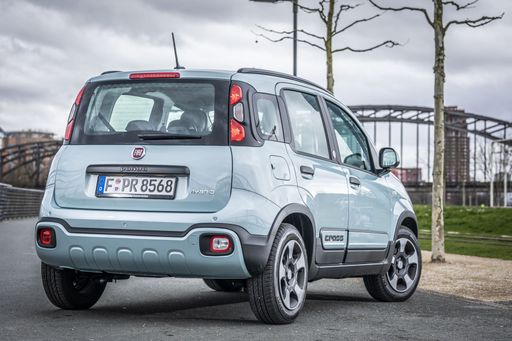
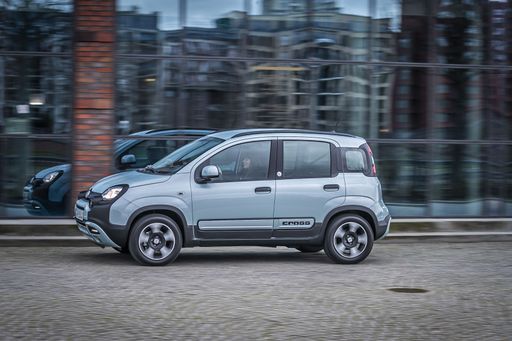
Fiat Panda VS Renault Twingo is the matchup between two very different ideas of small‑car practicality: the Fiat Panda is a pragmatic, bread‑and‑butter city workhorse, while the Renault Twingo is a cheeky, manoeuvre‑first urban specialist. The Fiat Panda feels reassuringly simple and economical in everyday driving, whereas the Renault Twingo prizes the smallest turning circle and playful packaging. Buyers who prioritise a low purchase price, straightforward controls and tall, boxy visibility will lean to the Fiat Panda. Those who want the tightest parking performance, five‑door access and a more agile city character will find the Renault Twingo more to their taste.
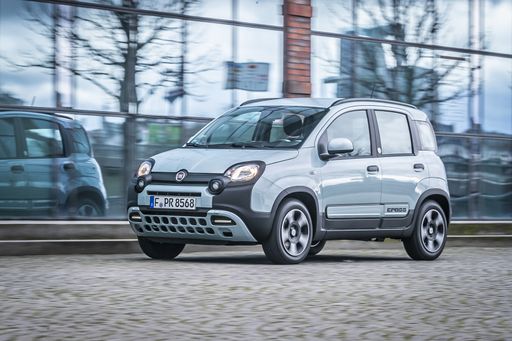
Panda

Character and driving: steady pragmatism versus cheeky agility

The Fiat Panda drives like a sensible city car that puts fuel economy and ease of use above thrills, so the Panda rewards relaxed city cruising and light-footed commuting. The Renault Twingo, by contrast, feels livelier around town — it turns on a tighter dime and communicates a sprightlier temperament that makes parking and short trips effortless. On the open road the Fiat Panda can feel strained and vocal when pushed, while the Renault Twingo becomes fidgety and noisy at higher speeds, so neither is ideal for sustained motorway work. The trade‑off is clear: choose the Panda if you value efficiency and simplicity, pick the Twingo if urban agility and door‑by‑door manoeuvrability matter most.

Comfort and long‑distance behavior: neither is a motorway champion

For longer runs the Fiat Panda leans toward durability over refinement, but its small engine and firmer ride make motorway miles tiring and noisy in short order. The Renault Twingo’s short wheelbase and rear‑engine layout make it nimble, yet that same packaging amplifies bumps and wind noise when speeds climb, so high‑speed comfort is compromised. Seat comfort and suspension tuning favour short hops and city errands in both cars rather than cross‑country cruising, with the Panda feeling a touch more planted but harsher and the Twingo feeling livelier but less composed. If your driving is a mix of city and occasional motorways, the Panda gives a slightly more subdued long‑distance impression; if most miles are urban, the Twingo’s city comfort will be more relevant.

City usability and practicality: visibility and simplicity versus clever packaging

In tight urban settings the Fiat Panda wins on visibility and straightforward ergonomics — the Panda’s upright shape and big windows make judging corners and parking easier for everyday drivers. The Renault Twingo counters with genuinely tiny turning circles, five doors and a foldable passenger seat that add clever flexibility for loading long items and threading through narrow streets. Boot space and load height are both compromises in this segment: the Panda’s luggage bay is more conventional but has a higher lip, while the Twingo’s rear‑engine layout yields a smaller, higher trunk that trades volume for the rear‑drive character. The practical choice is clear by use case: the Panda for simple, predictable everyday chores and the Twingo for tight‑spot manoeuvres and maximum urban agility.

Cabin feel and perceived quality: functional simplicity versus playful but modest finishes

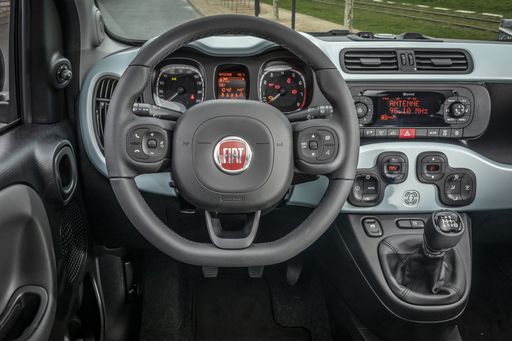
The Fiat Panda’s interior sticks to durable, hardwearing plastics and a button‑forward layout that keeps distraction low and maintenance worries down, so the Panda feels honest rather than luxurious. The Renault Twingo dresses its cabin with more playful touches and slightly fresher styling, but materials and switchgear remain modest and occasionally quirky in operation — the Twingo feels more characterful than premium. Infotainment on the Fiat Panda is pared back and easy to use, while the Renault Twingo varies by version and can feel either dated or improved depending on trim, making the Panda the safer bet for buyers wanting uncomplicated tech. If you want clean, function‑first ergonomics choose the Panda; if you want personality and small clever details choose the Twingo.

Buyer fit: who should look closer at the Fiat Panda and who at the Renault Twingo?

If budget, low running costs and a no‑nonsense, easy‑to‑park companion are priority, the Fiat Panda maps closely to that buyer: it’s ideal as a first car, a tight‑city daily or a frugal second vehicle. If your life revolves around tight parking, five‑door practicality and the sensation of driving the most manoeuvrable car on the block, the Renault Twingo is the more natural fit — especially for short urban trips and clever inner‑city loading. Families planning regular long highway stints or buyers seeking a premium cabin will find compromises in either model, but the trade‑offs differ: Panda trades refinement for price and predictability, Twingo trades accommodation for agility and character. With those practical contrasts in mind, the detailed technical comparison that follows will make the performance, safety and equipment gaps easier to translate into a final choice.

Here’s where it gets real: The technical differences in detail

Twingo

Costs and Efficiency:

Looking at overall running costs, both models reveal some interesting differences in everyday economy.

Fiat Panda is visibly cheaper – starting at 14,100 £ , while the Renault Twingo costs 17,100 £ . That’s a price difference of around 2,923 £.

Panda

Engine and Performance:

Under the bonnet, it becomes clear which model is tuned for sportiness and which one takes the lead when you hit the accelerator.

When it comes to engine power, the Renault Twingo offers slightly more power – delivering 82 HP compared to 70 HP. That’s roughly 12 HP more horsepower.

When accelerating from 0 to 100 km/h, the Renault Twingo is moderately quicker – completing the sprint in 12.1 s, while the Fiat Panda takes 13.9 s. That’s about 1.8 s quicker.

There’s also a difference in torque: the Renault Twingo delivers clearly more torque with 175 Nm compared to 92 Nm. That’s about 83 Nm more.

Space and Everyday Use:

Beyond pure performance, interior space and usability matter most in daily life. This is where you see which car is more practical and versatile.

Both vehicles offer seating for 4 people.

In terms of curb weight, Fiat Panda is noticeably lighter – 1,055 kg compared to 1,275 kg. The difference is around 220 kg.

Looking at boot space, the Renault Twingo offers clearly more boot space – 305 L compared to 225 L. That’s a difference of about 80 L.

When it comes to payload, the Fiat Panda carries moderately more – 365 kg compared to 320 kg. That’s a difference of about 45 kg.

Who wins the race in the data check?

The Renault Twingo stands well ahead of its rival in the objective data comparison.
This result only shows which model scores more points on paper – not which of the two cars feels right for you.

from £17,100
Twingo

Renault Twingo

  • Engine Type : Electric
  • Transmission : Automatic
  • Drive Type : Front-Wheel Drive
  • Power HP : 82 HP
  • Consumption kWh/100km : 13.1 kWh/100km
  • Electric Range : 260 - 262 km
Renault Twingo
Fiat Panda

Costs and Consumption

View detailed analysis

Engine and Performance

View detailed analysis

Dimensions and Body

View detailed analysis

Renault Twingo

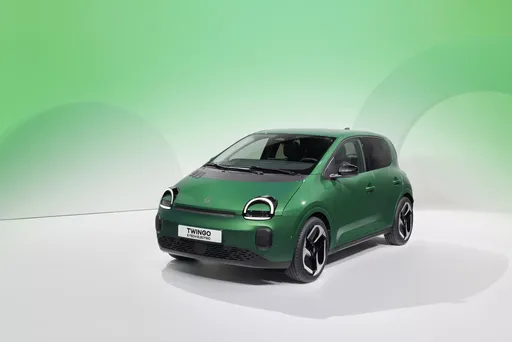
The Renault Twingo is a cheeky city car that turns tight streets and impossible parking spaces into an urban playground with its agile handling and compact footprint. It’s perfect for zipping around town thanks to clever interior packaging and a playful character, though buyers chasing long-distance comfort or huge luggage space should consider other options.

details

Fiat Panda

The Panda is a charming, no-nonsense city companion that mixes cheerful Italian flair with genuinely useful practicality, making tight streets and daily errands feel less of a chore. Its honest simplicity, clever packaging and a dash of cheeky character make it a smart, low-stress buy for people who prefer sensible perks over showroom flash.

details
Renault Twingo
Fiat Panda

Costs and Consumption

Price
17,100 - 18,500 £
Price
14,100 £
Consumption L/100km
-
Consumption L/100km
5 L/100km
Consumption kWh/100km
13.1 kWh/100km
Consumption kWh/100km
-
Electric Range
260 - 262 km
Electric Range
-
Battery Capacity
-
Battery Capacity
-
co2
0 g/km
co2
113 g/km
Fuel tank capacity
-
Fuel tank capacity
38 L

Dimensions and Body

Body Type
Hatchback
Body Type
Hatchback
Seats
4
Seats
4
Doors
-
Doors
5
Curb weight
1,275 - 1,294 kg
Curb weight
1,055 kg
Trunk capacity
305 L
Trunk capacity
225 L
Length
-
Length
3,635 mm
Width
1,720 mm
Width
1,643 mm
Height
-
Height
1,551 mm
Max trunk capacity
-
Max trunk capacity
870 L
Payload
301 - 320 kg
Payload
365 kg

Engine and Performance

Engine Type
Electric
Engine Type
Petrol MHEV
Transmission
Automatic
Transmission
Manuel
Transmission Detail
Reduction Gearbox
Transmission Detail
Manual Gearbox
Drive Type
Front-Wheel Drive
Drive Type
Front-Wheel Drive
Power HP
82 HP
Power HP
70 HP
Acceleration 0-100km/h
12.1 s
Acceleration 0-100km/h
13.9 s
Max Speed
-
Max Speed
164 km/h
Torque
175 Nm
Torque
92 Nm
Number of Cylinders
-
Number of Cylinders
3
Power kW
60 kW
Power kW
51 kW
Engine capacity
-
Engine capacity
999 cm3

General

Model Year
2026
Model Year
2024
CO2 Efficiency Class
A
CO2 Efficiency Class
C
Brand
Renault
Brand
Fiat
DriveDuel uses data analysis and artificial intelligence to evaluate vehicle data and create content. Content is regularly reviewed and improved. The displayed prices are estimates based on German list prices, adjusted to the respective country’s VAT. Country-specific registration taxes are not included. This information is not legally binding.