VS

SEAT Arona vs Renault Captur comparison

Compare performance (150 HP vs 158 HP), boot space and price (20,700 £ vs 21,100 £ ) at a glance. Find out which car is the better choice for you – SEAT Arona or Renault Captur?

SEAT Arona vs Renault Captur: Key differences

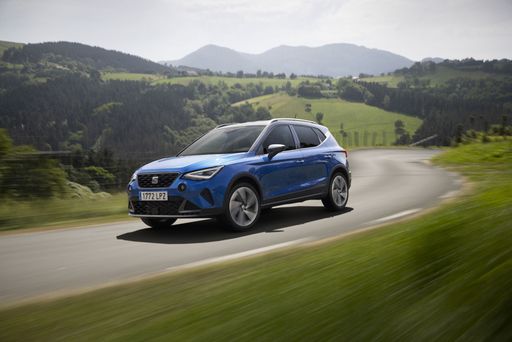
SEAT Arona

4.9 (2 Reviews)
rate
  • very slightly cheaper
  • barely quicker 0–100 km/h
  • somewhat lighter

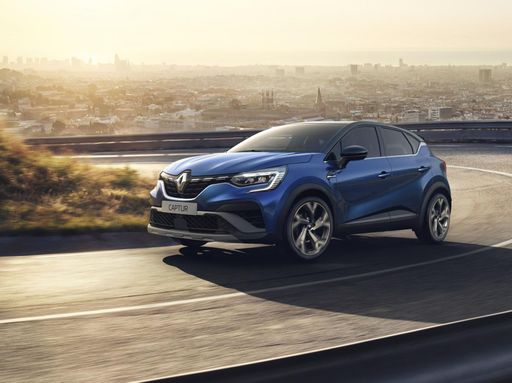
Renault Captur

4.8 (5 Reviews)
rate
  • barely more power
  • visibly more efficient
  • barely more trunk space

All details on performance, efficiency, range and trunk space can be found in the technical comparison below – including user reviews for both models.

Arona

Renault Captur vs SEAT Arona: A Comprehensive Comparison

In the competitive world of compact SUVs, the Renault Captur and SEAT Arona stand out as popular choices among consumers. Each vehicle offers a unique blend of style, performance, and practicality. This article delves deep into their key technical specifications and innovative features, helping buyers make an informed decision.

Captur

Dimensions and Interior Space

The Renault Captur measures 4239 mm in length, 1797 mm in width, and 1575 mm in height, providing a spacious interior suitable for five passengers. With a trunk capacity of 326 liters, it comfortably accommodates everyday needs.

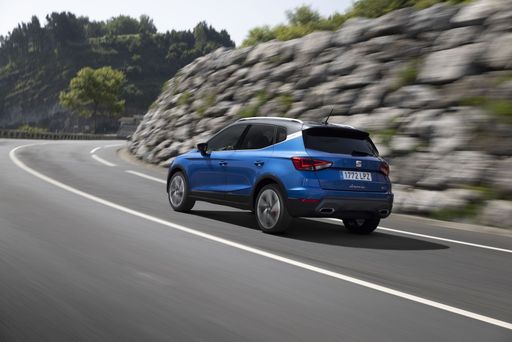
In comparison, the SEAT Arona offers slightly smaller dimensions at 4153 mm long, 1780 mm wide, and 1537 mm tall. It compensates with a larger trunk capacity of 400 liters, making it ideal for those needing extra cargo space. Despite its compact size, the Arona still provides ample room for five passengers.

Arona

Engine Variants and Performance

The Renault Captur boasts a diverse range of engine options, including a full hybrid, petrol MHEV, LPG, and standard petrol engines, with power outputs ranging from 91 HP to 158 HP. Its full hybrid variant offers impressive fuel consumption figures as low as 4.7 L/100 km, making it an economical choice for city driving.

In contrast, the SEAT Arona is equipped primarily with petrol engines, delivering power outputs between 95 HP and 150 HP. It has competitive fuel consumption ranging from 5.4 to 5.6 L/100 km, ensuring efficient performance without sacrificing fun on the road.

Captur

Transmission Options and Drive Type

Both the Captur and Arona feature front-wheel drive configurations. The Captur offers flexibility with both automatic and manual transmission options, including an advanced dual-clutch system. On the other hand, the Arona also provides both manual and automatic transmissions, ensuring a smooth driving experience regardless of the driver's preference.

Arona

Acceleration and Top Speed

When it comes to acceleration, the Renault Captur's performance varies based on the chosen engine, with a best-in-class acceleration time of just 8.5 seconds from 0 to 100 km/h. Its top speed reaches up to 180 km/h, depending on the engine variant.

The SEAT Arona, although slightly behind in terms of acceleration, still boasts respectable figures. It can go from 0 to 100 km/h in as little as 8.4 seconds, with a maximum speed of up to 210 km/h. The Arona's performance-oriented variants deliver a spirited drive, making it appealing to enthusiasts.

Captur

Safety and Technology Innovations

Both vehicles are equipped with advanced safety features and technology. The Renault Captur includes a suite of driver assistance systems such as Lane Keeping Assist, Traffic Sign Recognition, and Automatic Emergency Braking, enhancing safety for all occupants.

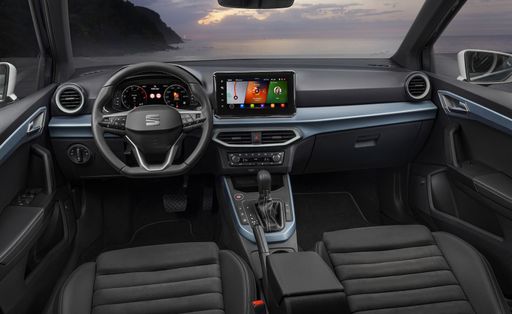
The SEAT Arona also prioritizes safety with features like Adaptive Cruise Control, Blind Spot Monitoring, and Rear Cross Traffic Alert. Notably, SEAT's Virtual Cockpit offers a customizable display that provides drivers with real-time information, adding a touch of modernity to the dashboard.

Arona

Conclusion: Which is the Better Choice?

Ultimately, both the Renault Captur and SEAT Arona have their strengths, catering to different types of drivers. The Captur shines with its engine variety and hybrid technology, making it an excellent option for those looking for efficiency and versatility. Meanwhile, the Arona impresses with its sporty performance, ample trunk space, and innovative technology.

Choosing the right model will depend on individual preferences and driving needs. Whether one prefers the eco-friendliness of the Captur or the energetic drive of the Arona, both vehicles negotiate the tight urban landscape with style.

Here’s where it gets real: The technical differences in detail

Arona

Costs and Efficiency:

Price and efficiency are often the first things buyers look at. Here it becomes clear which model has the long-term edge – whether at the pump, the plug, or in purchase price.

SEAT Arona is very slightly cheaper – starting at 20,700 £ , while the Renault Captur costs 21,100 £ . That’s a price difference of around 428 £.

Fuel consumption also shows a difference: the Renault Captur uses 4.4 L/100km and is visibly more efficient than the SEAT Arona with 5.3 L/100km. The difference is about 0.9 L/100km.

Captur

Engine and Performance:

Power, torque and acceleration say a lot about how a car feels on the road. This is where you see which model delivers more driving dynamics.

When it comes to engine power, the Renault Captur offers barely more power – delivering 158 HP compared to 150 HP. That’s roughly 8 HP more horsepower.

When accelerating from 0 to 100 km/h, the SEAT Arona is barely quicker – completing the sprint in 8.3 s, while the Renault Captur takes 8.9 s. That’s about 0.6 s quicker.

There’s also a difference in torque: the Renault Captur delivers marginally more torque with 265 Nm compared to 250 Nm. That’s about 15 Nm more.

Arona

Space and Everyday Use:

Cabin size, boot volume and payload all play a role in everyday practicality. Here, comfort and flexibility make the difference.

Both vehicles offer seating for 5 people.

In terms of curb weight, SEAT Arona is somewhat lighter – 1,188 kg compared to 1,323 kg. The difference is around 135 kg.

Looking at boot space, the Renault Captur offers barely more boot space – 422 L compared to 400 L. That’s a difference of about 22 L.

When it comes to payload, the SEAT Arona carries slightly more – 522 kg compared to 453 kg. That’s a difference of about 69 kg.

Who wins the race in the data check?

The Renault Captur comes out clearly ahead in the objective data comparison.
This result only shows which model scores more points on paper – not which of the two cars feels right for you.

from £21,100
Captur

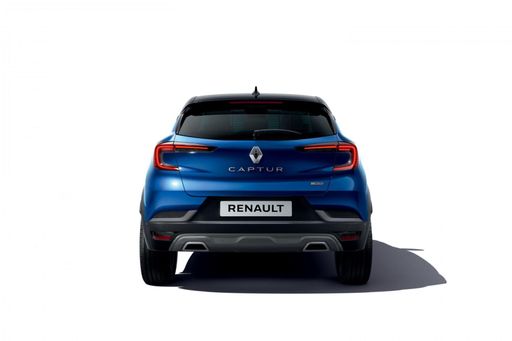
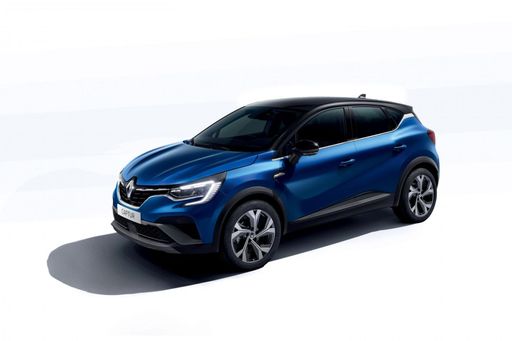
Renault Captur

  • Engine Type : Full Hybrid, Petrol, Petrol MHEV
  • Transmission : Automatic, Manuel
  • Drive Type : Front-Wheel Drive
  • Power HP : 115 - 158 HP
  • Consumption L/100km : 4.4 - 6 L/100km
SEAT Arona
Renault Captur

Costs and Consumption

View detailed analysis

Engine and Performance

View detailed analysis

Dimensions and Body

View detailed analysis

SEAT Arona

The SEAT Arona is a cheeky urban crossover that mixes sharp styling with sensible practicality, making it an appealing choice for buyers who want personality without fuss. It’s zippy in traffic, comfortable enough for daily driving, and brings enough character to make routine journeys feel a little more fun.

details

Renault Captur

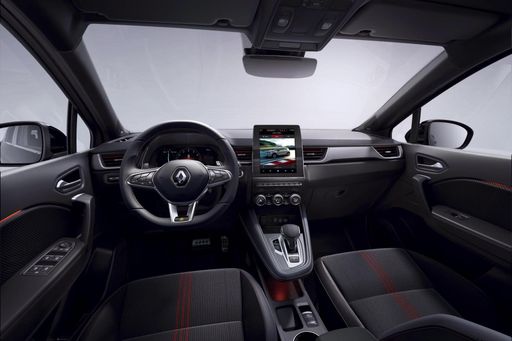
The Renault Captur is a cheeky little crossover that pairs city-friendly agility with a roomy, well-thought-out cabin and enough style to turn heads at the lights. It’s a sensible choice for buyers who want practical versatility and a dash of personality on their daily drives, without taking itself too seriously.

details
SEAT Arona
Renault Captur

Costs and Consumption

Price
20,700 - 30,500 £
Price
21,100 - 28,400 £
Consumption L/100km
5.3 - 5.8 L/100km
Consumption L/100km
4.4 - 6 L/100km
Consumption kWh/100km
-
Consumption kWh/100km
-
Electric Range
-
Electric Range
-
Battery Capacity
-
Battery Capacity
-
co2
120 - 132 g/km
co2
100 - 137 g/km
Fuel tank capacity
-
Fuel tank capacity
48 L

Dimensions and Body

Body Type
SUV
Body Type
SUV
Seats
5
Seats
5
Doors
-
Doors
5
Curb weight
1,188 - 1,268 kg
Curb weight
1,323 - 1,441 kg
Trunk capacity
400 L
Trunk capacity
326 - 422 L
Length
-
Length
4,239 mm
Width
1,780 mm
Width
1,797 mm
Height
-
Height
1,575 mm
Max trunk capacity
-
Max trunk capacity
1,363 L
Payload
502 - 522 kg
Payload
447 - 453 kg

Engine and Performance

Engine Type
Petrol
Engine Type
Full Hybrid, Petrol, Petrol MHEV
Transmission
Manuel, Automatic
Transmission
Automatic, Manuel
Transmission Detail
Manual Gearbox, Dual-Clutch Automatic
Transmission Detail
Automatic Gearbox, Manual Gearbox, Dual-Clutch Automatic
Drive Type
Front-Wheel Drive
Drive Type
Front-Wheel Drive
Power HP
95 - 150 HP
Power HP
115 - 158 HP
Acceleration 0-100km/h
8.3 - 11.1 s
Acceleration 0-100km/h
8.9 - 12.3 s
Max Speed
-
Max Speed
180 km/h
Torque
175 - 250 Nm
Torque
160 - 265 Nm
Number of Cylinders
3 - 4
Number of Cylinders
3 - 4
Power kW
70 - 110 kW
Power kW
84 - 116 kW
Engine capacity
999 - 1,498 cm3
Engine capacity
1,199 - 1,789 cm3

General

Model Year
2,025
Model Year
2,025
CO2 Efficiency Class
D
CO2 Efficiency Class
C, D, E
Brand
SEAT
Brand
Renault
DriveDuel uses data analysis and artificial intelligence to evaluate vehicle data and create content. Content is regularly reviewed and improved. The displayed prices are estimates based on German list prices, adjusted to the respective country’s VAT. Country-specific registration taxes are not included. This information is not legally binding.