VS

SEAT Leon vs SEAT Arona comparison

Compare performance (272 HP vs 150 HP), boot space and price (24,500 £ vs 20,700 £ ) at a glance. Find out which car is the better choice for you – SEAT Leon or SEAT Arona?

SEAT Leon vs SEAT Arona: Key differences

SEAT Leon

4.4 (2 Reviews)
rate
  • significantly more power
  • clearly more efficient
  • barely quicker 0–100 km/h

SEAT Arona

4.9 (2 Reviews)
rate
  • slightly cheaper
  • slightly lighter
  • barely more trunk space

All details on performance, efficiency, range and trunk space can be found in the technical comparison below – including user reviews for both models.

Leon

SEAT Arona VS SEAT Leon — crossover vs hatchback showdown

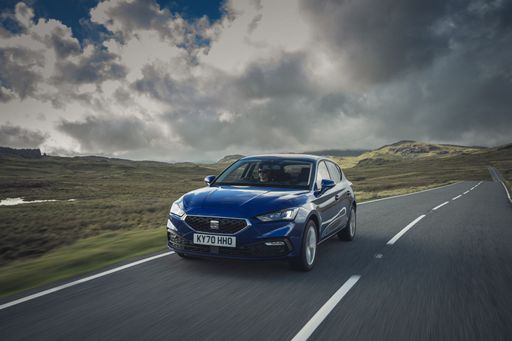
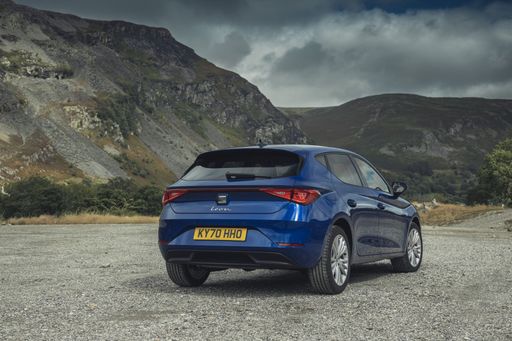
SEAT Arona and SEAT Leon go head-to-head in a contest that’s as much about attitude as it is about practicality, pitting a compact crossover against a sharper hatchback. This comparison is for buyers who want to know how a raised city-friendly compact stacks up against a more driver-focused family hatch. We’ll talk real-world feel, everyday usability and who each car actually suits, rather than burying you in figures. If you’re deciding between the compact SUV vibe of the Arona and the sleeker hatchback presence of the Leon, read on — the differences are clearer on the road than on paper.
Arona

Vibe and positioning: cheerful city compact vs grown-up hatch

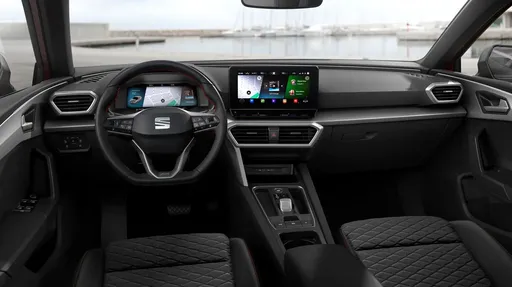
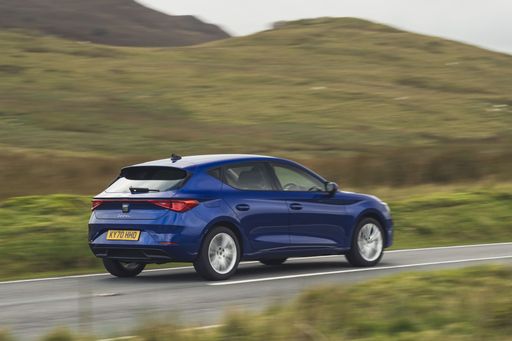
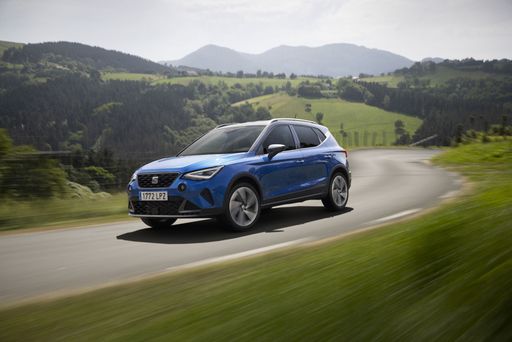
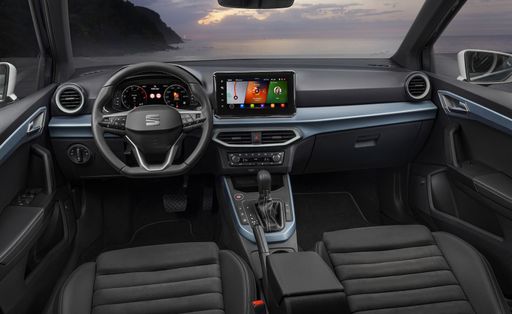
The SEAT Arona wears its cheerful, upright stance like an invitation to the city — perched seating, playful trims and a personality that leans casual and approachable. The SEAT Leon answers with a more mature, composed demeanour: tighter lines, a more planted stance and an interior that tries harder to feel premium. In practice the Arona feels light-footed and forgiving around town while the Leon rewards intent drivers with composure and a firmer, more connected feel. Material choices and the overall finish also tilt toward the Leon when you want a slightly more grown-up cabin atmosphere.

Leon

Everyday life: where each car earns its keep

For weaving through tight streets, running errands and squeezing into city spaces, the SEAT Arona is the pragmatic pick — the higher driving position and nimble character make urban commutes less stressful. The SEAT Leon shines on longer runs and motorway miles, giving a calmer cruise and a sense of composure that helps on extended journeys. Families who need flexibility will find reasons to like both, but the Leon’s planted nature feels better for sustained trips while the Arona’s accessibility pays dividends for short hops and school runs. In other words, one favours urban agility, the other long-distance calm.

Arona

Why you’d pick one to match your image

Choose the SEAT Arona if you want a car that says “practical with personality” — it’s an easy sell when you want a compact that still looks lively and modern. Opt for the SEAT Leon if you prefer a subtler, more accomplished image: it reads as slightly more premium and sporty, the kind of car that signals competence rather than whimsy. Your decision will often be emotional — whether you value a raised, sociable stance or a tauter, more assured presence. Neither choice is shy; they just speak to different kinds of drivers.

Leon

Who should seriously consider the Arona

If you’re the buyer who prizes everyday practicality and a friendly footprint, the SEAT Arona will likely sit at the top of your shortlist, appealing to the pragmatic city driver and the style-conscious urbanite at the same time. It’s a confident choice for first-time owners, commuters who want fuss-free parking, and anyone who likes a car with character without demanding outright performance. You won’t get the same hushed long-distance refinement as the SEAT Leon, but you will get something easier to live with day to day. That makes it a strong contender for value-minded buyers who still want a bit of personality.

Arona

Who might gravitate to the Leon — and why the Arona still matters

The SEAT Leon will attract drivers who prioritise comfort on longer trips and a more tech-forward, mature feel in the cabin, making it a favourite for commuters who cover miles and buyers who want a touch more gravitas. If you’re after sharper handling and a cabin that leans toward premium cues, the Leon is the obvious emotional fit, while the SEAT Arona remains appealing as the easier, more playful alternative for town life. This isn’t about a single winner; it’s about which personality fits your daily life better — and if you want the hard differences, scroll down to the technical breakdown to see where they separate on paper.

Here’s where it gets real: The technical differences in detail

Leon

Costs and Efficiency:

Looking at overall running costs, both models reveal some interesting differences in everyday economy.

SEAT Arona is slightly cheaper – starting at 20,700 £ , while the SEAT Leon costs 24,500 £ . That’s a price difference of around 3,754 £.

Fuel consumption also shows a difference: the SEAT Leon uses 1.2 L/100km and is clearly more efficient than the SEAT Arona with 5.3 L/100km. The difference is about 4.1 L/100km.

Arona

Engine and Performance:

Under the bonnet, it becomes clear which model is tuned for sportiness and which one takes the lead when you hit the accelerator.

When it comes to engine power, the SEAT Leon offers significantly more power – delivering 272 HP compared to 150 HP. That’s roughly 122 HP more horsepower.

When accelerating from 0 to 100 km/h, the SEAT Leon is barely quicker – completing the sprint in 7.7 s, while the SEAT Arona takes 8.3 s. That’s about 0.6 s quicker.

There’s also a difference in torque: the SEAT Leon delivers clearly more torque with 360 Nm compared to 250 Nm. That’s about 110 Nm more.

Leon

Space and Everyday Use:

Cabin size, boot volume and payload all play a role in everyday practicality. Here, comfort and flexibility make the difference.

Both vehicles offer seating for 5 people.

In terms of curb weight, SEAT Arona is slightly lighter – 1,188 kg compared to 1,344 kg. The difference is around 156 kg.

Looking at boot space, the SEAT Arona offers barely more boot space – 400 L compared to 380 L. That’s a difference of about 20 L.

When it comes to payload, the SEAT Arona carries only slightly more – 522 kg compared to 521 kg. That’s a difference of about 1 kg.

Who wins the race in the data check?

The SEAT Leon stands well ahead of its rival in the objective data comparison.
This result only shows which model scores more points on paper – not which of the two cars feels right for you.

from £24,500
Leon

SEAT Leon

  • Engine Type : Petrol, Petrol MHEV, Plugin Hybrid, Diesel
  • Transmission : Manuel, Automatic
  • Drive Type : Front-Wheel Drive
  • Power HP : 116 - 272 HP
  • Consumption L/100km : 1.2 - 5.5 L/100km
  • Electric Range : 133 km
SEAT Leon
SEAT Arona

Costs and Consumption

View detailed analysis

Engine and Performance

View detailed analysis

Dimensions and Body

View detailed analysis

SEAT Leon

SEAT Leon pairs sharp, modern styling with a cabin that's sensible and slightly sporty, making it an appealing choice for buyers who want flair without fuss. It drives with eager composure and offers a neat balance of comfort and agility, so you get everyday usability with a wink of fun.

details

SEAT Arona

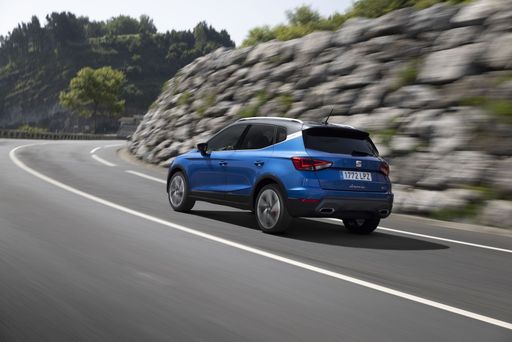
The SEAT Arona is a cheeky urban crossover that mixes sharp styling with sensible practicality, making it an appealing choice for buyers who want personality without fuss. It’s zippy in traffic, comfortable enough for daily driving, and brings enough character to make routine journeys feel a little more fun.

details
SEAT Leon
SEAT Arona

Costs and Consumption

Price
24,500 - 36,400 £
Price
20,700 - 30,500 £
Consumption L/100km
1.2 - 5.5 L/100km
Consumption L/100km
5.3 - 5.8 L/100km
Consumption kWh/100km
-
Consumption kWh/100km
-
Electric Range
133 km
Electric Range
-
Battery Capacity
19.7 kWh
Battery Capacity
-
co2
27 - 126 g/km
co2
120 - 132 g/km
Fuel tank capacity
40 - 45 L
Fuel tank capacity
-

Dimensions and Body

Body Type
Hatchback
Body Type
SUV
Seats
5
Seats
5
Doors
5
Doors
-
Curb weight
1,344 - 1,657 kg
Curb weight
1,188 - 1,268 kg
Trunk capacity
270 - 380 L
Trunk capacity
400 L
Length
4,368 mm
Length
-
Width
1,799 mm
Width
1,780 mm
Height
1,442 - 1,460 mm
Height
-
Max trunk capacity
1,187 - 1,301 L
Max trunk capacity
-
Payload
473 - 521 kg
Payload
502 - 522 kg

Engine and Performance

Engine Type
Petrol, Petrol MHEV, Plugin Hybrid, Diesel
Engine Type
Petrol
Transmission
Manuel, Automatic
Transmission
Manuel, Automatic
Transmission Detail
Manual Gearbox, Dual-Clutch Automatic
Transmission Detail
Manual Gearbox, Dual-Clutch Automatic
Drive Type
Front-Wheel Drive
Drive Type
Front-Wheel Drive
Power HP
116 - 272 HP
Power HP
95 - 150 HP
Acceleration 0-100km/h
7.7 - 10.5 s
Acceleration 0-100km/h
8.3 - 11.1 s
Max Speed
197 - 220 km/h
Max Speed
-
Torque
220 - 360 Nm
Torque
175 - 250 Nm
Number of Cylinders
4
Number of Cylinders
3 - 4
Power kW
85 - 200 kW
Power kW
70 - 110 kW
Engine capacity
1,498 - 1,968 cm3
Engine capacity
999 - 1,498 cm3

General

Model Year
2,024 - 2,026
Model Year
2,025
CO2 Efficiency Class
D, B
CO2 Efficiency Class
D
Brand
SEAT
Brand
SEAT
DriveDuel uses data analysis and artificial intelligence to evaluate vehicle data and create content. Content is regularly reviewed and improved. The displayed prices are estimates based on German list prices, adjusted to the respective country’s VAT. Country-specific registration taxes are not included. This information is not legally binding.