@ SEAT S.A. / SEAT Media Center
@ Volkswagen AG / VW Media
VS

SEAT Leon vs VW Taigo – Which one offers the better deal?

Two cars, one duel: SEAT Leon meets VW Taigo.
Which one wins in performance, efficiency and value for money? Find out now!

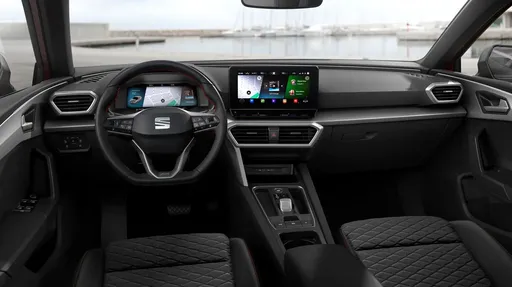
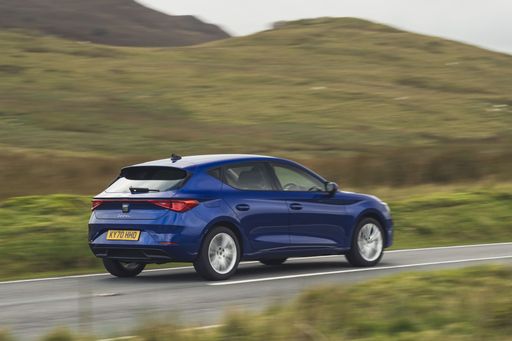
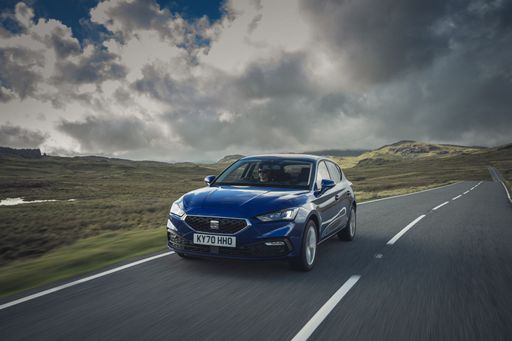
Leon @ SEAT S.A. / SEAT Media Center

A Clash of Two Titans: SEAT León vs. VW Taigo

In the ever-evolving world of compact cars and SUVs, the 2024 iterations of the SEAT León and VW Taigo are drawing considerable attention. While both models belong to the Volkswagen Group, they cater to different preferences and driving styles. This comparison will explore their technical specifications, innovations, and overall appeal to help potential buyers make an informed decision.
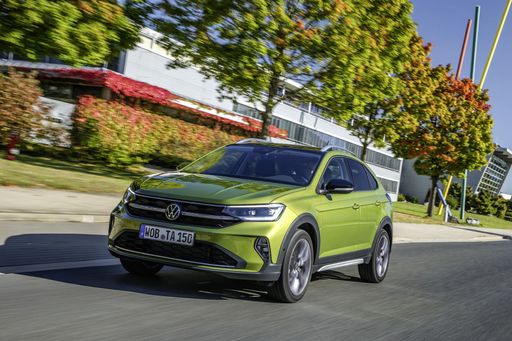
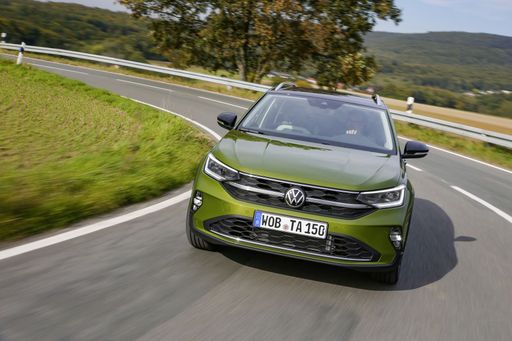
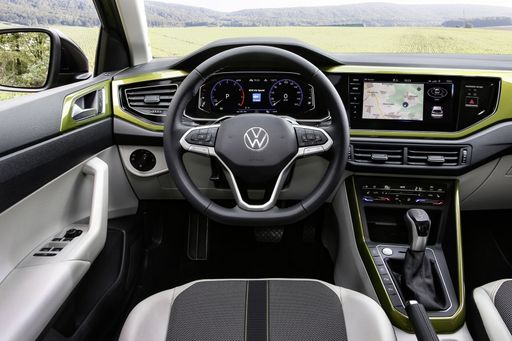
Taigo @ Volkswagen AG / VW Media

Design and Dimensions

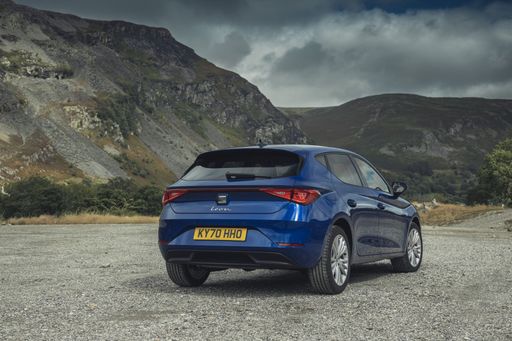
The SEAT León presents itself as a stylish hatchback, with dimensions measuring 4368 mm in length, 1799 mm in width, and a height ranging from 1456 mm to 1460 mm depending on the variant. On the other hand, the VW Taigo embraces the SUV styling, standing at a taller height of 1518 mm, with a length of 4266 mm and a width of 1757 mm. Both vehicles accommodate five passengers comfortably, but the Taigo offers a more versatile trunk capacity of 440 liters compared to the León’s 380 liters.

Leon @ SEAT S.A. / SEAT Media Center

Engine Options and Performance

When it comes to powertrains, the León offers a broader range of options with petrol, diesel, and plug-in hybrid variants. Power outputs range from 110 to a robust 272 HP, allowing it to accelerate from 0-100 km/h in as little as 7.7 seconds, depending on the engine configuration. Meanwhile, the Taigo's engine options are limited to petrol engines, producing between 95 to 150 HP, resulting in a 0-100 km/h time ranging from 8.2 to 11.1 seconds.

In terms of driving experience, both vehicles feature front-wheel drive and offer manuals and dual-clutch automatic transmissions. However, the León’s diverse lineup allows for more tailored performance, whether in terms of fuel economy or driving dynamics.

Taigo @ Volkswagen AG / VW Media

Fuel Efficiency and Environmental Considerations

Fuel efficiency is a vital factor for many car buyers. The SEAT León showcases impressive consumption figures, ranging from 4.5 to 5.7 L/100 km across its various engines. Additionally, its plug-in hybrid variant can achieve an electric range of up to 133 km, with a battery capacity of 19.7 kWh. In contrast, the Taigo’s petrol engines maintain a commendable fuel economy of 5.4 to 5.8 L/100 km, but lack a hybrid option, potentially leaving environmentally conscious consumers at a crossroads.

Leon @ SEAT S.A. / SEAT Media Center

Driving Dynamics and Technology

Both vehicles promise engaging driving experiences, but the León tends to lean towards a sportier character, especially in its higher-output models. With better torque figures and responsive engines, it's ideal for those who enjoy spirited driving. The Taigo, with its SUV heritage, provides a more comfortable ride with higher seating and a greater sense of visibility, catering to families or urban drivers who prefer a more relaxed driving style.

Technologically, both models come equipped with advanced driver-assistance features, including adaptive cruise control, lane-keeping assist, and parking sensors. The León is celebrated for its infotainment system, which is typically more engaging compared to the Taigo’s more conservative approach.

Taigo @ Volkswagen AG / VW Media

Which One Is Right for You?

Choosing between the SEAT León and VW Taigo ultimately boils down to your personal preferences and lifestyle. If you’re seeking a sporty, versatile hatchback with a range of powertrains, the León stands out as the clear choice. However, if practicality, a higher seating position, and SUV styling are paramount, the Taigo might be more in line with your needs.

Both vehicles reflect the high-quality engineering and design synonymous with the Volkswagen family, but they cater to distinct markets. Therefore, it's essential to test drive both models to truly gauge which aligns with your expectations of performance and comfort.

Here’s where it gets real: The technical differences in detail

Leon @ SEAT S.A. / SEAT Media Center

Costs and Efficiency:

Price and efficiency are often the first things buyers look at. Here it becomes clear which model has the long-term edge – whether at the pump, the plug, or in purchase price.

VW Taigo has a distinct advantage in terms of price – it starts at 19600 £, while the SEAT Leon costs 24500 £. That’s a price difference of around 4830 £.

Fuel consumption also shows a difference: SEAT Leon manages with 1.20 L and is therefore decisively more efficient than the VW Taigo with 5.30 L. The difference is about 4.10 L per 100 km.

Taigo @ Volkswagen AG / VW Media

Engine and Performance:

Power, torque and acceleration say a lot about how a car feels on the road. This is where you see which model delivers more driving dynamics.

When it comes to engine power, the SEAT Leon has a significantly edge – offering 272 HP compared to 150 HP. That’s roughly 122 HP more horsepower.

In acceleration from 0 to 100 km/h, the SEAT Leon is slight quicker – completing the sprint in 7.70 s, while the VW Taigo takes 8.20 s. That’s about 0.50 s faster.

In terms of top speed, the SEAT Leon performs slight better – reaching 220 km/h, while the VW Taigo tops out at 212 km/h. The difference is around 8 km/h.

There’s also a difference in torque: SEAT Leon pulls evident stronger with 360 Nm compared to 250 Nm. That’s about 110 Nm difference.

Space and Everyday Use:

Cabin size, boot volume and payload all play a role in everyday practicality. Here, comfort and flexibility make the difference.

Both vehicles offer seating for 5 people.

In curb weight, VW Taigo is barely noticeable lighter – 1229 kg compared to 1344 kg. The difference is around 115 kg.

In terms of boot space, the VW Taigo offers a bit more room – 440 L compared to 380 L. That’s a difference of about 60 L.

In maximum load capacity, the SEAT Leon performs barely noticeable better – up to 1301 L, which is about 79 L more than the VW Taigo.

When it comes to payload, SEAT Leon slightly takes the win – 521 kg compared to 457 kg. That’s a difference of about 64 kg.

Who comes out on top?

Overall, the SEAT Leon shows itself to be wins the duel decisively and secures the title of DriveDuel Champion.
It convinces with the more balanced overall package and proves to be the more versatile choice for everyday use.

from about £24,500
Leon @ SEAT S.A. / SEAT Media Center

SEAT Leon

  • Engine Type : Petrol, Petrol MHEV, Diesel, Plugin Hybrid
  • Transmission : Manuel, Automatic
  • Drive Type : Front-Wheel Drive
  • Power HP : 116 - 272 HP
  • Consumption L/100km : 1.2 - 5.5 L
  • Electric Range : 133 km

SEAT Leon

SEAT Leon pairs sharp, modern styling with a cabin that's sensible and slightly sporty, making it an appealing choice for buyers who want flair without fuss. It drives with eager composure and offers a neat balance of comfort and agility, so you get everyday usability with a wink of fun.

details

VW Taigo

5 (1)
rate

The VW Taigo brings coupe-like flair to the compact crossover scene with sharp styling and an interior that punches above its price, feeling smarter than you’d expect. It’s an easygoing daily companion that balances comfort and practicality with a playful wink, perfect for city drivers who want something livelier than a regular hatchback.

details
SEAT Leon
VW Taigo
Leon @ SEAT S.A. / SEAT Media Center
Taigo @ Volkswagen AG / VW Media

Costs and Consumption

Price
24500 - 36400 £
Price
19600 - 31300 £
Consumption L/100km
1.2 - 5.5 L
Consumption L/100km
5.3 - 5.8 L
Consumption kWh/100km
-
Consumption kWh/100km
-
Electric Range
133 km
Electric Range
-
Battery Capacity
19.70 kWh
Battery Capacity
-
co2
27 - 126 g/km
co2
120 - 132 g/km
Fuel tank capacity
40 - 45 L
Fuel tank capacity
40 L

Dimensions and Body

Body Type
Hatchback
Body Type
SUV
Seats
5
Seats
5
Doors
5
Doors
5
Curb weight
1344 - 1657 kg
Curb weight
1229 - 1302 kg
Trunk capacity
270 - 380 L
Trunk capacity
440 L
Length
4368 mm
Length
4266 mm
Width
1799 mm
Width
1757 mm
Height
1442 - 1460 mm
Height
1518 mm
Max trunk capacity
1187 - 1301 L
Max trunk capacity
1222 L
Payload
473 - 521 kg
Payload
448 - 457 kg

Engine and Performance

Engine Type
Petrol, Petrol MHEV, Diesel, Plugin Hybrid
Engine Type
Petrol
Transmission
Manuel, Automatic
Transmission
Manuel, Automatic
Transmission Detail
Manual Gearbox, Dual-Clutch Automatic
Transmission Detail
Manual Gearbox, Dual-Clutch Automatic
Drive Type
Front-Wheel Drive
Drive Type
Front-Wheel Drive
Power HP
116 - 272 HP
Power HP
95 - 150 HP
Acceleration 0-100km/h
7.7 - 10.5 s
Acceleration 0-100km/h
8.2 - 11.1 s
Max Speed
197 - 220 km/h
Max Speed
184 - 212 km/h
Torque
220 - 360 Nm
Torque
175 - 250 Nm
Number of Cylinders
4
Number of Cylinders
3 - 4
Power kW
85 - 200 kW
Power kW
70 - 110 kW
Engine capacity
1498 - 1968 cm3
Engine capacity
999 - 1498 cm3

General

Model Year
2024 - 2025
Model Year
2024 - 2025
CO2 Efficiency Class
D, B
CO2 Efficiency Class
D
Brand
SEAT
Brand
VW
What drive types are available for the SEAT Leon?

The SEAT Leon is available as Front-Wheel Drive.

The prices and data displayed are estimates based on German list prices and may vary by country. This information is not legally binding.