VS

Skoda Fabia vs Mitsubishi Space Star comparison

Compare performance (177 HP vs 71 HP), boot space and price (17,300 £ vs 11,600 £ ) at a glance. Find out which car is the better choice for you – Skoda Fabia or Mitsubishi Space Star?

Skoda Fabia vs Mitsubishi Space Star: Key differences

Skoda Fabia

5 (1 Reviews)
rate
  • considerably more power
  • significantly quicker 0–100 km/h
  • markedly more trunk space

Mitsubishi Space Star

  • significantly cheaper
  • visibly lighter
Fabia

Mitsubishi Space Star vs Skoda Fabia: A Comprehensive Comparison

Choosing a new car is a daunting task, especially when faced with the options like the Mitsubishi Space Star and the Skoda Fabia. Both models hail from reliable brands and serve as popular choices in the compact hatchback segment. However, they cater to distinct preferences, needs, and budgets. In this comparison, we delve into the technical specifications and innovations of these models, focusing on their strengths and what sets them apart.
Space Star

Performance and Power

The Mitsubishi Space Star is powered by a 1.2-liter, 3-cylinder petrol engine delivering 71 horsepower and 102 Nm of torque. Its front-wheel drive and modest output make it a practical option for urban commutes and daily drives. The Space Star offers both manual and automatic (CVT) transmissions, allowing drivers to choose based on their preference. Its acceleration from 0-100 km/h takes between 14.1 and 15.8 seconds, with a top speed peaking at 167 km/h.

In contrast, the Skoda Fabia offers a broader range of engine choices. Starting with a 1.0-liter 3-cylinder to a more potent 1.5-liter 4-cylinder, producing anywhere from 80 to 150 horsepower. The Fabia also provides both manual and dual-clutch automatic transmissions. Notably, its fastest variant accelerates from 0-100 km/h in a brisk 8 seconds, reaching speeds up to 225 km/h. This makes the Fabia an appealing choice for those who crave performance alongside practicality.

Fabia

Fuel Efficiency and Emissions

Fuel consumption is a critical factor for many buyers. The Mitsubishi Space Star boasts a consumption range of 4.9 to 5.5 L/100km, making it a fuel-efficient option for daily driving. Carbon emissions range between 112 and 125 g/km, placing it in efficiency classes C and D.

On the other hand, the Skoda Fabia encounters slightly higher consumption figures, ranging from 5 to 5.5 L/100km. Its CO2 emissions span from 112 to 124 g/km with efficiency classes also scored at C and D. While both vehicles deliver competitive efficiency, the choice might depend on the desired power output.

Space Star

Design and Dimensions

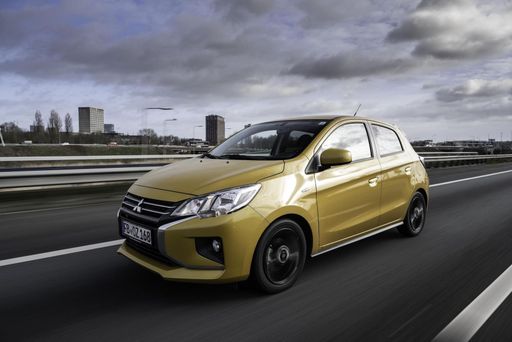
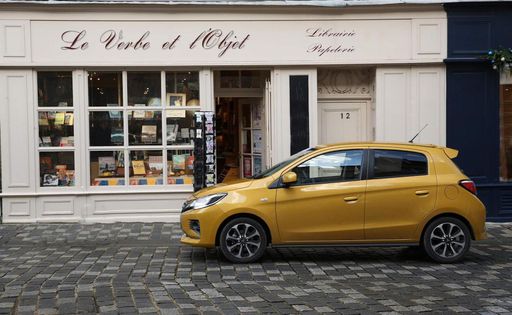
The Mitsubishi Space Star displays compact dimensions, with a length of 3845 mm, width of 1665 mm, and a height of 1505 mm. This compactness is advantageous for urban maneuverability and parking. Its trunk capacity ranges between 209 and 235 liters, providing adequate space for everyday needs.

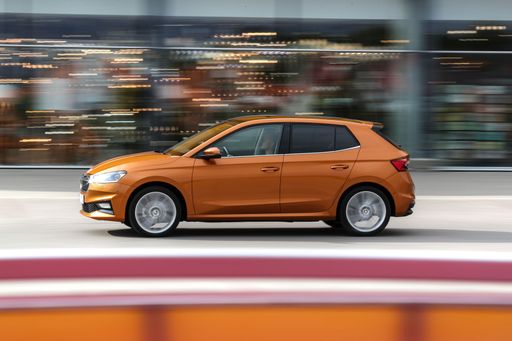
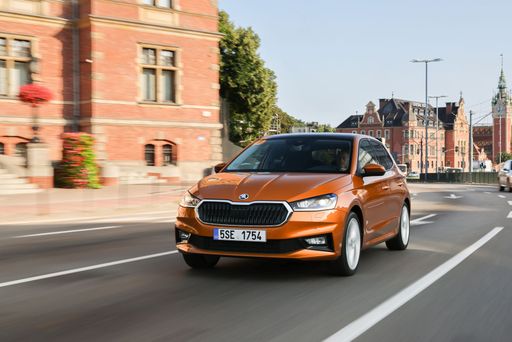
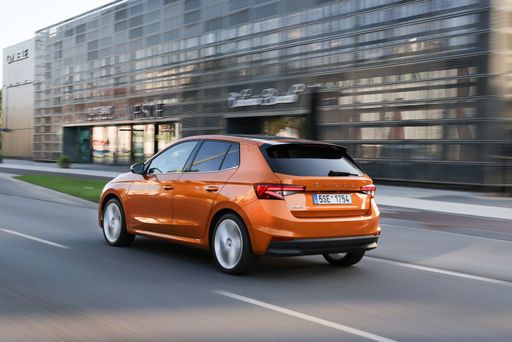
In contrast, the Skoda Fabia is more expansive with a length of 4108 mm and a width of 1780 mm. The height varies slightly between variants, offering a practical yet modern aesthetic. The Fabia's larger size accommodates a more generous trunk space of 380 liters, appealing to families and those needing additional storage.

Fabia

Innovations and Features

While the Mitsubishi Space Star prioritizes simplicity and affordability, it doesn't shy away from offering a comfortable ride with essential features. Its lightweight design contributes to its efficiency and eases handling, making it an attractive option for budget-conscious buyers.

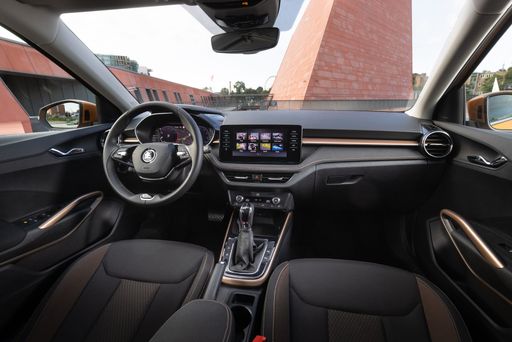
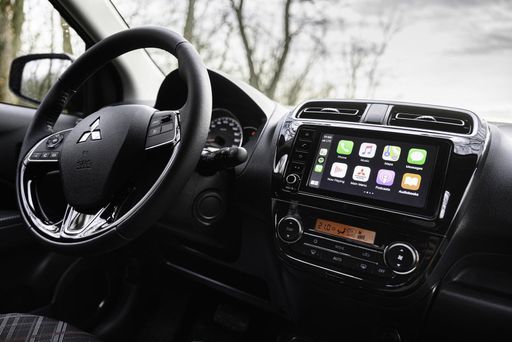
The Skoda Fabia steps up with advanced technology and sophisticated features, including modern infotainment systems and driver-assist technologies. It appeals to those who seek a bit more luxury and convenience in their hatchback choice. Overall, the Fabia represents a balanced blend of performance, practicality, and dynamic design.

Space Star

Conclusion

Both the Mitsubishi Space Star and the Skoda Fabia excel in their respective areas, offering distinct advantages to different types of drivers. The Space Star is ideal for those who value efficiency and simplicity, while the Fabia attracts those looking for performance, space, and cutting-edge technology. Ultimately, the choice between these two comes down to personal preference and priorities on the road.

Here’s where it gets real: The technical differences in detail

Fabia

Costs and Efficiency:

Price and efficiency are key factors when choosing a car – and this is often where the real differences emerge.

Mitsubishi Space Star is significantly cheaper – starting at 11,600 £ , while the Skoda Fabia costs 17,300 £ . That’s a price difference of around 5,657 £.

Both cars consume an average of 4.9 L/100km – no difference here.

Space Star

Engine and Performance:

Under the bonnet, it becomes clear which model is tuned for sportiness and which one takes the lead when you hit the accelerator.

When it comes to engine power, the Skoda Fabia offers considerably more power – delivering 177 HP compared to 71 HP. That’s roughly 106 HP more horsepower.

When accelerating from 0 to 100 km/h, the Skoda Fabia is significantly quicker – completing the sprint in 7.4 s, while the Mitsubishi Space Star takes 14.1 s. That’s about 6.7 s quicker.

Looking at top speed, the Skoda Fabia is clearly faster – reaching 228 km/h, while the Mitsubishi Space Star tops out at 167 km/h. The difference is around 61 km/h.

There’s also a difference in torque: the Skoda Fabia delivers considerably more torque with 250 Nm compared to 102 Nm. That’s about 148 Nm more.

Fabia

Space and Everyday Use:

Cabin size, boot volume and payload all play a role in everyday practicality. Here, comfort and flexibility make the difference.

Both vehicles offer seating for 5 people.

In terms of curb weight, Mitsubishi Space Star is visibly lighter – 940 kg compared to 1,143 kg. The difference is around 203 kg.

Looking at boot space, the Skoda Fabia offers markedly more boot space – 380 L compared to 235 L. That’s a difference of about 145 L.

For maximum load capacity, the Skoda Fabia offers markedly more capacity – up to 1,190 L, about 278 L more than the Mitsubishi Space Star.

When it comes to payload, the Skoda Fabia carries very slightly more – 437 kg compared to 400 kg. That’s a difference of about 37 kg.

Who wins the race in the data check?

The Skoda Fabia holds a decisive overall lead in the objective data comparison.
This result only shows which model scores more points on paper – not which of the two cars feels right for you.

from £17,300
Fabia

Skoda Fabia

  • Engine Type : Petrol
  • Transmission : Manuel, Automatic
  • Drive Type : Front-Wheel Drive
  • Power HP : 80 - 177 HP
  • Consumption L/100km : 4.9 - 5.6 L/100km
Skoda Fabia
Mitsubishi Space Star

Costs and Consumption

View detailed analysis

Engine and Performance

View detailed analysis

Dimensions and Body

View detailed analysis

Skoda Fabia

The Skoda Fabia is a clever, no-nonsense small car that turns everyday chores into a breeze thanks to smart packaging and a surprisingly roomy cabin. It won’t set your pulses racing, but it’s a consistently sensible choice — reliable, easy to live with and blessed with a few neat tricks that make city life less faff.

details

Mitsubishi Space Star

The Mitsubishi Space Star is a tidy, no-nonsense city car that squeezes surprising interior space into a compact, easy-to-park package. It's not a thrill-seeker's toy, but for buyers after low running costs, fuss-free reliability and sensible day-to-day practicality, it's a clever and cheerful choice that keeps your wallet and nerves happy.

details
Skoda Fabia
Mitsubishi Space Star

Costs and Consumption

Price
17,300 - 30,500 £
Price
11,600 - 18,700 £
Consumption L/100km
4.9 - 5.6 L/100km
Consumption L/100km
4.9 - 5.5 L/100km
Consumption kWh/100km
-
Consumption kWh/100km
-
Electric Range
-
Electric Range
-
Battery Capacity
-
Battery Capacity
-
co2
112 - 126 g/km
co2
112 - 125 g/km
Fuel tank capacity
40 L
Fuel tank capacity
35 L

Dimensions and Body

Body Type
Hatchback
Body Type
Hatchback
Seats
5
Seats
5
Doors
5
Doors
5
Curb weight
1,143 - 1,278 kg
Curb weight
940 - 1,011 kg
Trunk capacity
380 L
Trunk capacity
209 - 235 L
Length
4,108 - 4,137 mm
Length
3,845 mm
Width
1,780 mm
Width
1,665 mm
Height
1,458 - 1,459 mm
Height
1,505 mm
Max trunk capacity
1,190 L
Max trunk capacity
881 - 912 L
Payload
402 - 437 kg
Payload
359 - 400 kg

Engine and Performance

Engine Type
Petrol
Engine Type
Petrol
Transmission
Manuel, Automatic
Transmission
Manuel, Automatic
Transmission Detail
Manual Gearbox, Dual-Clutch Automatic
Transmission Detail
Manual Gearbox, CVT
Drive Type
Front-Wheel Drive
Drive Type
Front-Wheel Drive
Power HP
80 - 177 HP
Power HP
71 HP
Acceleration 0-100km/h
7.4 - 15.7 s
Acceleration 0-100km/h
14.1 - 15.8 s
Max Speed
175 - 228 km/h
Max Speed
163 - 167 km/h
Torque
93 - 250 Nm
Torque
102 Nm
Number of Cylinders
3 - 4
Number of Cylinders
3
Power kW
59 - 130 kW
Power kW
52 kW
Engine capacity
999 - 1,498 cm3
Engine capacity
1,193 cm3

General

Model Year
2,025
Model Year
2,020 - 2,022
CO2 Efficiency Class
D, C
CO2 Efficiency Class
C, D
Brand
Skoda
Brand
Mitsubishi
DriveDuel uses data analysis and artificial intelligence to evaluate vehicle data and create content. Content is regularly reviewed and improved. The displayed prices are estimates based on German list prices, adjusted to the respective country’s VAT. Country-specific registration taxes are not included. This information is not legally binding.