VS

Skoda Fabia vs Toyota Yaris comparison

Compare performance (177 HP vs 280 HP), boot space and price (17,300 £ vs 21,900 £ ) at a glance. Find out which car is the better choice for you – Skoda Fabia or Toyota Yaris?

Skoda Fabia vs Toyota Yaris: Key differences

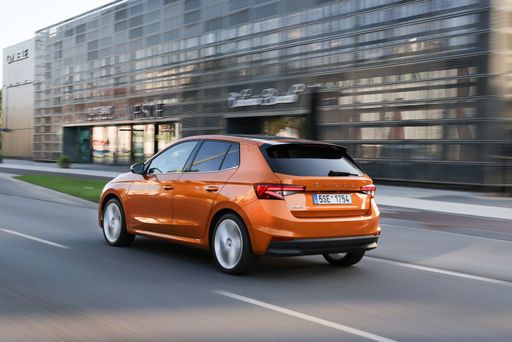
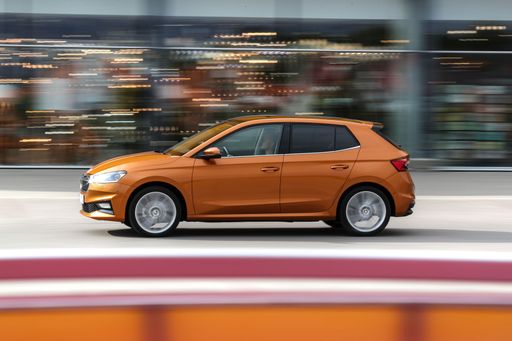
Skoda Fabia

4.9 (2 Reviews)
rate
  • clearly cheaper
  • noticeably more trunk space
details

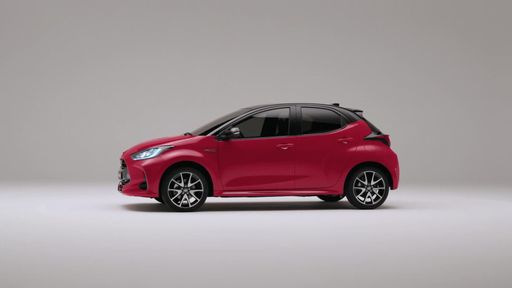
Toyota Yaris

4 (6 Reviews)
rate
  • visibly more power
  • visibly more efficient
  • markedly quicker 0–100 km/h
  • very slightly lighter
details

All details on performance, efficiency, range and trunk space can be found in the technical comparison below – including user reviews for both models.

By Achim Sedelmaier

Fabia

Skoda Fabia VS Toyota Yaris: which small car suits your life?

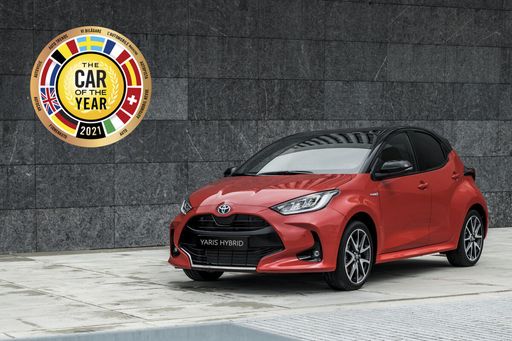
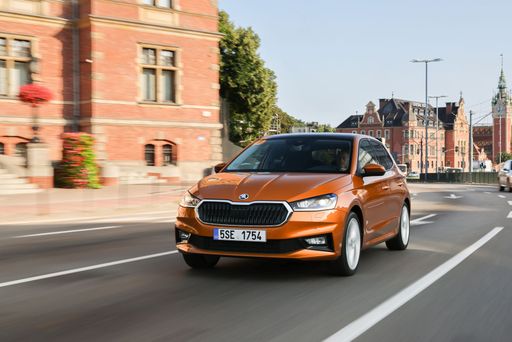
The Skoda Fabia VS Toyota Yaris battle is really a choice between space-and-comfort practicality and urban-focused efficiency. The Skoda Fabia leans toward roomy, sensible packaging — it feels like a compact car that grew up and learned to fit real life. The Toyota Yaris answers with hybrid drivetrains, urban ease and a modern infotainment push that lowers running costs in day-to-day use. Read on to see how those different strengths play out for families, commuters and city drivers.
Yaris

Cabin feel and perceived quality

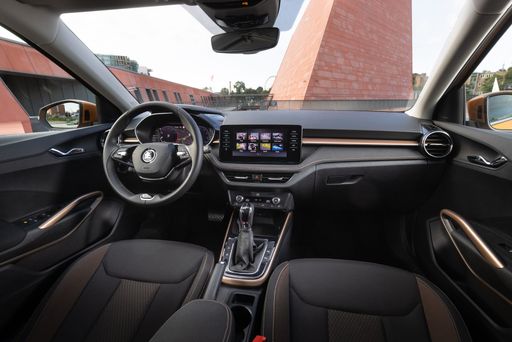
Inside, the Skoda Fabia aims for an adult-friendly cockpit with straightforward controls and a calm, roomy ambience that makes longer trips less tiring. The Toyota Yaris has a fresher layout and a snappier screen after its update, but the cabin feels more compact and uses harder plastics in secondary touchpoints. Fabia’s physical knobs and generous rear head- and legroom create a sense of solidity and comfort; Yaris trades some of that for a tighter, more efficiency-focused interior where everything is optimized for short trips. If you value space and a relaxed environment, the Fabia feels more grown-up; if you want tidy, modern tech in a compact shell, the Yaris will satisfy.

Fabia

Practicality and everyday usability

Practicality is where the Skoda Fabia stretches its lead: its boot and rear-seat space are noticeably more usable for strollers, luggage and longer journeys with adults aboard. The Toyota Yaris’s boot is higher and more constrained, and the rear doors and seat layout make it a tighter fit for larger occupants or frequent family duties. Both are five-seaters on paper, but in daily use the Fabia is the easier multi‑person car while the Yaris is better when you prioritise parking and tight urban storage. Choosing between them is a choice between mature space utility (Fabia) and city-sized footprint at the expense of cargo flexibility (Yaris).

Yaris

Driving character: city agility vs motorway calm

The Toyota Yaris is tailor-made for town life — the hybrid system lets it glide quietly on short trips and reduces fuel bills in stop‑start traffic while making parking and low‑speed manoeuvres effortless. The Skoda Fabia prefers longer stints: its suspension soaks up motorway miles and its relaxed character makes cruising less wearing. In town the Fabia’s dual‑clutch gearbox can feel fidgety in heavy traffic, whereas the Yaris’s e‑CVT is smooth but can feel emotionally distant and noisy under hard acceleration. Put simply, pick the Yaris if most of your miles are urban and economy matters; pick the Fabia if you want a calmer, more comfortable companion for longer runs.

Fabia

Technology, safety and day-to-day interfaces

Toyota has pushed the Yaris toward a more modern tech experience with a quicker touchscreen and generous driver assistance as standard, which makes daily driving less stressful from the moment you set off. The Skoda Fabia counters with ergonomics that favour physical controls and straightforward menus, which some buyers prefer for tactile, distraction‑free operation. Both cars score well for active safety, but the Yaris bundles more advanced aids in lower trim levels, while the Fabia delivers clever, user-friendly details and better cabin practicality. If you prize up-to-date safety tech and a responsive screen, the Yaris nudges ahead; if you prefer tactile simplicity and useful storage, the Fabia wins on usability.

Who should choose which — buyer fit and trade-offs

If your daily life is city-centred, fuel bills and ease of parking are priorities, and you mostly carry one or two people, the Toyota Yaris fits neatly: lowest running effort, modern tech and reassuring safety aids. If you regularly carry passengers, luggage or do longer motorway miles, the Skoda Fabia is the more sensible all‑rounder with noticeably better space and a more comfortable long‑distance demeanour. Both are conservative, safe small cars, but the trade is clear — Fabia gives you room and comfort, Yaris gives you economy and urban finesse — and the technical comparison that follows will make the performance, consumption and size differences that underpin those everyday contrasts explicit.

Here’s where it gets real: The technical differences in detail

Fabia

Costs and Efficiency:

Price and efficiency are often the first things buyers look at. Here it becomes clear which model has the long-term edge – whether at the pump, the plug, or in purchase price.

Skoda Fabia is clearly cheaper – starting at 17,300 £ , while the Toyota Yaris costs 21,900 £ . That’s a price difference of around 4,552 £.

Fuel consumption also shows a difference: the Toyota Yaris uses 3.8 L/100km and is visibly more efficient than the Skoda Fabia with 4.9 L/100km. The difference is about 1.1 L/100km.

Yaris

Engine and Performance:

Power, torque and acceleration say a lot about how a car feels on the road. This is where you see which model delivers more driving dynamics.

When it comes to engine power, the Toyota Yaris offers visibly more power – delivering 280 HP compared to 177 HP. That’s roughly 103 HP more horsepower.

When accelerating from 0 to 100 km/h, the Toyota Yaris is markedly quicker – completing the sprint in 5.5 s, while the Skoda Fabia takes 7.4 s. That’s about 1.9 s quicker.

There’s also a difference in torque: the Toyota Yaris delivers clearly more torque with 390 Nm compared to 250 Nm. That’s about 140 Nm more.

Fabia

Space and Everyday Use:

Cabin size, boot volume and payload all play a role in everyday practicality. Here, comfort and flexibility make the difference.

Both vehicles offer seating for 5 people.

In terms of curb weight, Toyota Yaris is very slightly lighter – 1,090 kg compared to 1,143 kg. The difference is around 53 kg.

Looking at boot space, the Skoda Fabia offers noticeably more boot space – 380 L compared to 286 L. That’s a difference of about 94 L.

When it comes to payload, the Toyota Yaris carries somewhat more – 525 kg compared to 437 kg. That’s a difference of about 88 kg.

Who wins the race in the data check?

The Toyota Yaris holds a decisive overall lead in the objective data comparison.
This result only shows which model scores more points on paper – not which of the two cars feels right for you.

from £21,900
Yaris

Toyota Yaris

  • Engine Type Full Hybrid, Petrol
  • Transmission Automatic, Manuel
  • Drive Type Front-Wheel Drive, All-Wheel Drive
  • Power HP 116 - 280 HP
  • Consumption L/100km 3.8 - 8.7 L/100km
Skoda Fabia
Toyota Yaris

Costs and Consumption

View detailed analysis

Engine and Performance

View detailed analysis

Dimensions and Body

View detailed analysis

Skoda Fabia

The Skoda Fabia is a clever, no-nonsense small car that turns everyday chores into a breeze thanks to smart packaging and a surprisingly roomy cabin. It won’t set your pulses racing, but it’s a consistently sensible choice — reliable, easy to live with and blessed with a few neat tricks that make city life less faff.

details

Toyota Yaris

The Yaris is a compact hatchback that blends everyday practicality with Toyota’s long-standing reputation for reliability, making it easy to live with in city traffic. Its nimble handling and sensible interior make the Yaris a smart choice for drivers who want straightforward, fuss-free transport.

details
Skoda Fabia
Toyota Yaris

Costs and Consumption

Price
17,300 - 30,500 £
Price
21,900 - 40,800 £
Consumption L/100km
4.9 - 5.6 L/100km
Consumption L/100km
3.8 - 8.7 L/100km
Consumption kWh/100km
-
Consumption kWh/100km
-
Electric Range
-
Electric Range
-
Battery Capacity
-
Battery Capacity
-
co2
112 - 126 g/km
co2
87 - 197 g/km
Fuel tank capacity
-
Fuel tank capacity
-

Dimensions and Body

Body Type
Hatchback
Body Type
Hatchback
Seats
5
Seats
4 - 5
Doors
-
Doors
-
Curb weight
1,143 - 1,278 kg
Curb weight
1,090 - 1,356 kg
Trunk capacity
380 L
Trunk capacity
141 - 286 L
Length
-
Length
-
Width
1,780 mm
Width
1,745 - 1,805 mm
Height
-
Height
-
Max trunk capacity
-
Max trunk capacity
-
Payload
402 - 437 kg
Payload
289 - 525 kg

Engine and Performance

Engine Type
Petrol
Engine Type
Full Hybrid, Petrol
Transmission
Manuel, Automatic
Transmission
Automatic, Manuel
Transmission Detail
Manual Gearbox, Dual-Clutch Automatic
Transmission Detail
CVT, Manual Gearbox
Drive Type
Front-Wheel Drive
Drive Type
Front-Wheel Drive, All-Wheel Drive
Power HP
80 - 177 HP
Power HP
116 - 280 HP
Acceleration 0-100km/h
7.4 - 15.7 s
Acceleration 0-100km/h
5.5 - 9.7 s
Max Speed
-
Max Speed
-
Torque
93 - 250 Nm
Torque
390 Nm
Number of Cylinders
3 - 4
Number of Cylinders
3
Power kW
59 - 130 kW
Power kW
85 - 206 kW
Engine capacity
999 - 1,498 cm3
Engine capacity
1,490 - 1,618 cm3

General

Model Year
2025
Model Year
2026
CO2 Efficiency Class
D, C
CO2 Efficiency Class
B, G
Brand
Skoda
Brand
Toyota
DriveDuel uses data analysis and artificial intelligence to evaluate vehicle data and create content. Content is regularly reviewed and improved. The displayed prices are estimates based on German list prices, adjusted to the respective country’s VAT. Country-specific registration taxes are not included. This information is not legally binding.