
 Deutschland
 France
 Nederland
 Great Britain
 Sverige
 Danmark
 Suomi
Suomi Italia
 Polska
 España
VS
Skoda Superb Combi vs Genesis GV80 comparison
Compare performance (265 HP vs 304 HP), boot space and price (35200 £ vs 59400 £ ) at a glance. Find out which car is the better choice for you – Skoda Superb Combi or Genesis GV80?
Superb Combi
Costs and Efficiency:
When it comes to price and running costs, the biggest differences usually appear. This is often where you see which car fits your budget better in the long run.
Skoda Superb Combi has a significantly advantage in terms of price – it starts at 35200 £ , while the Genesis GV80 costs 59400 £ . That’s a price difference of around 24154 £.
Fuel consumption also shows a difference: Skoda Superb Combi manages with 1.20 L and is therefore convincingly more efficient than the Genesis GV80 with 8.80 L. The difference is about 7.60 L per 100 km.
GV80
Engine and Performance:
Under the bonnet, it becomes clear which model is tuned for sportiness and which one takes the lead when you hit the accelerator.
When it comes to engine power, the Genesis GV80 has a to a small extent edge – offering 304 HP compared to 265 HP. That’s roughly 39 HP more horsepower.
In acceleration from 0 to 100 km/h, the Skoda Superb Combi is clearly perceptible quicker – completing the sprint in 5.70 s, while the Genesis GV80 takes 6.90 s. That’s about 1.20 s faster.
In terms of top speed, the Skoda Superb Combi performs slight better – reaching 250 km/h, while the Genesis GV80 tops out at 237 km/h. The difference is around 13 km/h.
There’s also a difference in torque: Genesis GV80 pulls distinct stronger with 588 Nm compared to 400 Nm. That’s about 188 Nm difference.
Superb Combi
Space and Everyday Use:
Beyond pure performance, interior space and usability matter most in daily life. This is where you see which car is more practical and versatile.
Seats: Genesis GV80 offers distinct more seating capacity – 7 vs 5.
In curb weight, Skoda Superb Combi is clearly perceptible lighter – 1575 kg compared to 2155 kg. The difference is around 580 kg.
In terms of boot space, the Genesis GV80 offers minimal more room – 735 L compared to 690 L. That’s a difference of about 45 L.
In maximum load capacity, the Genesis GV80 performs somewhat better – up to 2152 L, which is about 232 L more than the Skoda Superb Combi.
When it comes to payload, Genesis GV80 a bit takes the win – 690 kg compared to 584 kg. That’s a difference of about 106 kg.
Who wins the race in the data check?
The Skoda Superb Combi is clearly superior overall in the objective data comparison.
This result only shows which model scores more points on paper – not which of the two cars feels right for you.
Skoda Superb Combi
Genesis GV80
Costs and Consumption
View detailed analysis
View detailed analysis
Engine and Performance
View detailed analysis
View detailed analysis
Dimensions and Body
View detailed analysis
View detailed analysis
from about £35,200
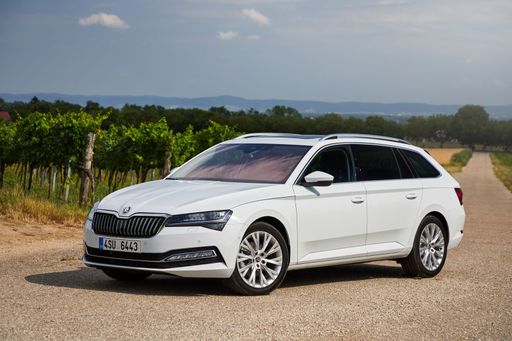
Skoda Superb Combi
Skoda Superb Combi
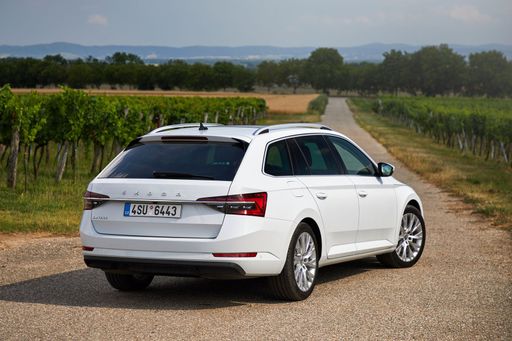
The Skoda Superb Combi is the practical hero of the estate world, offering cavernous space and a calm, refined ride that makes family life feel effortless. Its clever features, understated design and no-nonsense value make it a smart pick for buyers who want Germanic engineering without the badge premium — and it even manages to stay surprisingly stylish while doing all the heavy lifting.
details
Genesis GV80
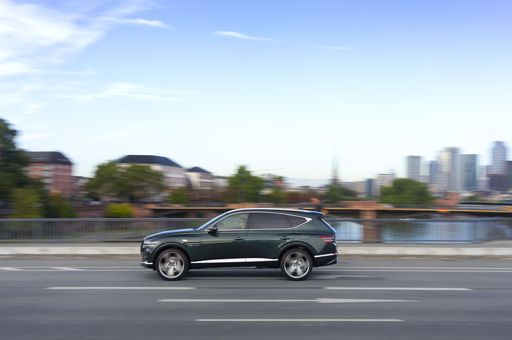
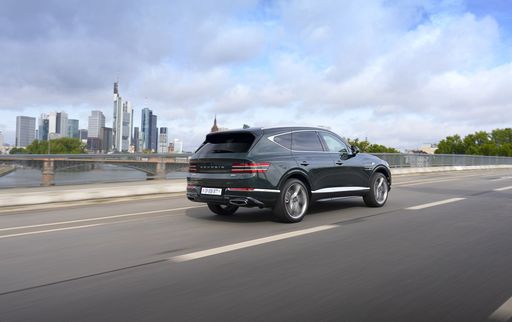
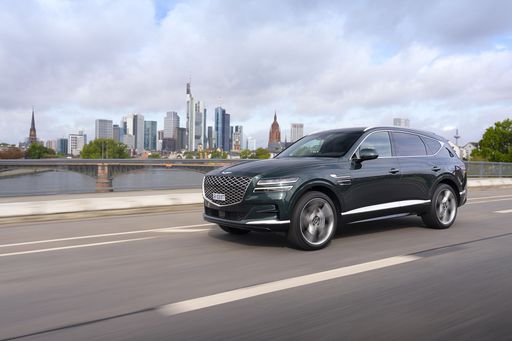
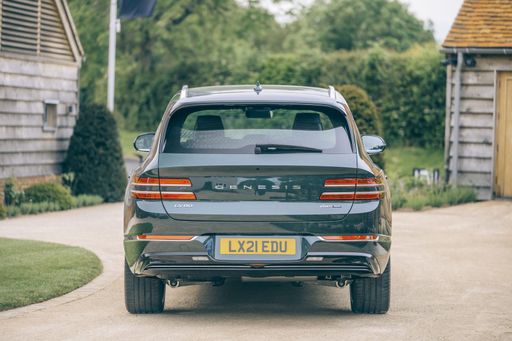
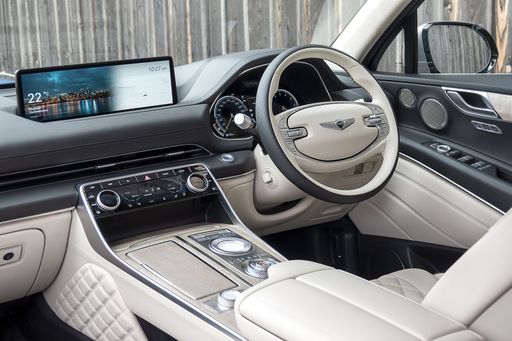
The Genesis GV80 feels like a boutique hotel on wheels, with striking looks and an interior that wraps you in plush materials and thoughtful details. It pairs a serenely composed ride with clever tech, making it the kind of luxury SUV that lets you enjoy the good life without shouting about the badge.
details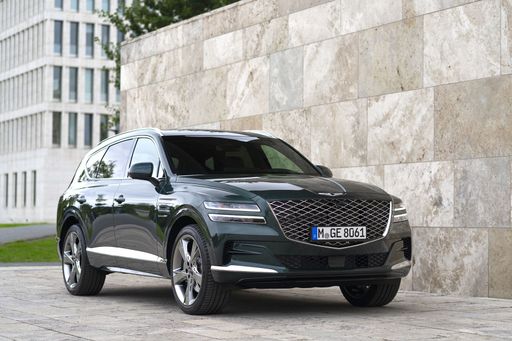
Skoda Superb Combi
Genesis GV80
Costs and Consumption |
|
|---|---|
|
Price
35200 - 51000 £
|
Price
59400 - 75600 £
|
|
Consumption L/100km
1.2 - 7.8 L
|
Consumption L/100km
8.8 - 10.8 L
|
|
Consumption kWh/100km
-
|
Consumption kWh/100km
-
|
|
Electric Range
128 - 137 km
|
Electric Range
-
|
|
Battery Capacity
-
|
Battery Capacity
-
|
|
co2
28 - 178 g/km
|
co2
231 - 241 g/km
|
|
Fuel tank capacity
66 L
|
Fuel tank capacity
80 L
|
Dimensions and Body |
|
|---|---|
|
Body Type
Estate
|
Body Type
SUV
|
|
Seats
5
|
Seats
5 - 7
|
|
Doors
5
|
Doors
5
|
|
Curb weight
1575 - 1853 kg
|
Curb weight
2155 - 2325 kg
|
|
Trunk capacity
510 - 690 L
|
Trunk capacity
727 - 735 L
|
|
Length
4902 mm
|
Length
4945 mm
|
|
Width
1849 mm
|
Width
1975 mm
|
|
Height
1482 mm
|
Height
1715 mm
|
|
Max trunk capacity
1920 L
|
Max trunk capacity
2144 - 2152 L
|
|
Payload
497 - 584 kg
|
Payload
660 - 690 kg
|
Engine and Performance |
|
|---|---|
|
Engine Type
Petrol, Petrol MHEV, Diesel, Plugin Hybrid
|
Engine Type
Petrol, Diesel
|
|
Transmission
Automatic
|
Transmission
Automatic
|
|
Transmission Detail
Dual-Clutch Automatic
|
Transmission Detail
Automatic Gearbox
|
|
Drive Type
Front-Wheel Drive, All-Wheel Drive
|
Drive Type
All-Wheel Drive
|
|
Power HP
150 - 265 HP
|
Power HP
272 - 304 HP
|
|
Acceleration 0-100km/h
5.7 - 9.3 s
|
Acceleration 0-100km/h
6.90 s
|
|
Max Speed
222 - 250 km/h
|
Max Speed
230 - 237 km/h
|
|
Torque
250 - 400 Nm
|
Torque
422 - 588 Nm
|
|
Number of Cylinders
4
|
Number of Cylinders
4 - 6
|
|
Power kW
110 - 195 kW
|
Power kW
200 - 224 kW
|
|
Engine capacity
1498 - 1984 cm3
|
Engine capacity
2497 - 2996 cm3
|
General |
|
|---|---|
|
Model Year
2024 - 2025
|
Model Year
2021 - 2022
|
|
CO2 Efficiency Class
E, F, D, G, B
|
CO2 Efficiency Class
G
|
|
Brand
Skoda
|
Brand
Genesis
|
Is the Skoda Superb Combi offered with different drivetrains?
The Skoda Superb Combi is available as Front-Wheel Drive or All-Wheel Drive.
The prices shown are estimates based on German list prices, adjusted for local VAT. Local registration taxes (e.g. NoVA, BPM or CO2 malus) are not included. This information is not legally binding.