VS

Suzuki Across vs Honda CR-V comparison

Compare performance (306 HP vs 184 HP), boot space and price (49,900 £ vs 42,800 £ ) at a glance. Find out which car is the better choice for you – Suzuki Across or Honda CR-V?

Suzuki Across vs Honda CR-V: Key differences

Suzuki Across

5 (1 Reviews)
rate
  • markedly more power
  • significantly more efficient
  • substantially quicker 0–100 km/h
details

Honda CR-V

4.8 (2 Reviews)
rate
  • moderately cheaper
  • marginally more electric range
  • somewhat lighter
  • visibly more trunk space
details

All details on performance, efficiency, range and trunk space can be found in the technical comparison below – including user reviews for both models.

By Achim Sedelmaier

Across

The Ultimate Comparison: Honda CR-V vs Suzuki Across

In the ever-evolving automotive market, the SUV segment remains highly competitive with manufacturers pushing the boundaries on technology and efficiency. Among the standout contenders for 2024, the Honda CR-V and Suzuki Across offer innovative takes on hybrid technology. Let's dive into the technical aspects and innovations of these models to help you decide which might suit your needs better.
CR-V

Power and Performance

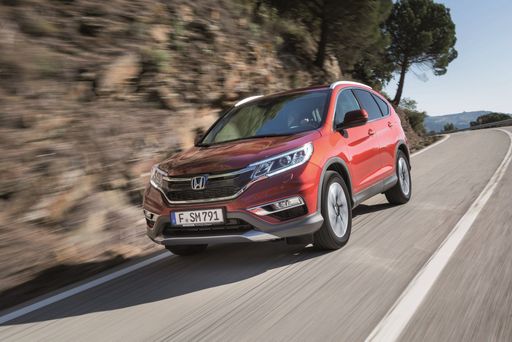
Both the Honda CR-V and Suzuki Across pack impressive hybrid systems, but they cater to slightly different tastes. The Honda CR-V is available with both a full hybrid and a plug-in hybrid configuration. It delivers a maximum power of 184 HP (135 kW) and can accelerate from 0-100 km/h in approximately 9 seconds. The CR-V’s drive options include all-wheel drive and front-wheel drive, making it adaptable for various driving conditions. It boasts a respectable top speed range between 187 km/h and 195 km/h.

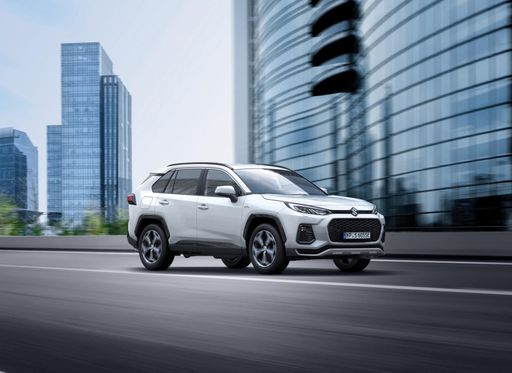
On the other hand, the Suzuki Across stands out with its more powerful plug-in hybrid system, delivering a robust 306 HP (225 kW). It propels from 0-100 km/h in just 6 seconds, catering to those looking for an SUV with rapid acceleration. The Across is only available with all-wheel drive and has a lower top speed of 180 km/h, focusing more on efficiency and power delivery.

Across

Efficiency and Sustainability

Fuel efficiency and environmental impact are critical considerations for today's buyers. The Honda CR-V offers hybrid configurations with different consumption rates—ranging from 0.8 to 6.7 L/100 km—catering to both efficiency-focused and performance-oriented customers. It provides up to a 79 km electric-only range. CO2 emissions vary between 18 to 152 g/km, making some variants very eco-friendly.

Suzuki's Across leans heavily into sustainability, boasting a super-efficient 1 L/100 km fuel consumption backed by a 75 km electric range on pure battery power. Its CO2 emissions are remarkably low at 22 g/km, scoring a 'B' in CO2 efficiency class, paralleling the most eco-friendly variants of the CR-V.

CR-V

Design and Practicality

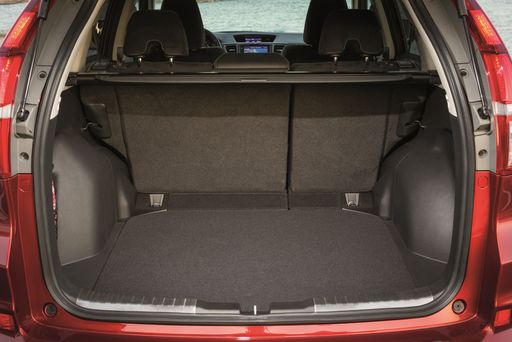
Design and utility are defining characteristics for family-oriented SUVs. The Honda CR-V offers a larger trunk capacity ranging from 579 to 617 liters, providing ample cargo space for long family trips or daily errands. Meanwhile, the CR-V has a slightly longer body at 4706 mm, enhancing interior space without compromising maneuverability, thanks to its all-wheel and front-wheel options.

Suzuki's Across, although slightly smaller at 4635 mm in length, offers a decent trunk capacity of 490 liters. Its compact size may appeal to those prioritizing easy urban navigation without sacrificing too much interior room.

Technology and Features

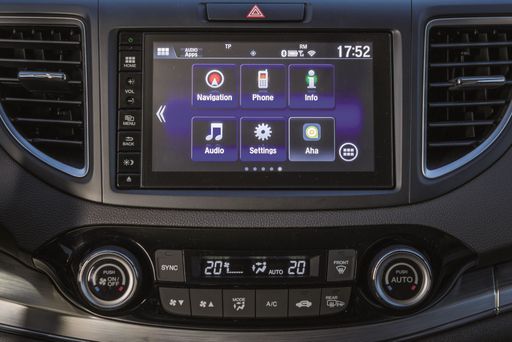
Both models come equipped with a suite of technology and conveniences to enhance the driving experience. The Honda CR-V and Suzuki Across each feature a CVT automatic transmission, ensuring seamless power delivery and fuel efficiency. In addition, the vehicles come with advanced safety and infotainment systems typical of 2024 models, focusing on connectivity, driver aids, and passenger comfort.

Conclusion

The decision between the Honda CR-V and the Suzuki Across ultimately depends on your specific needs and preferences. The CR-V offers versatility with its multiple powertrain options and adaptability for different terrains, making it an excellent choice for those craving flexibility. On the flip side, the Suzuki Across caters to performance enthusiasts desiring a potent, eco-friendly plug-in hybrid. In the end, both SUVs represent the pinnacle of modern hybrid automotive engineering, promising an exciting driving experience into the future.

Here’s where it gets real: The technical differences in detail

Across

Costs and Efficiency:

When it comes to price and running costs, the biggest differences usually appear. This is often where you see which car fits your budget better in the long run.

Honda CR-V is moderately cheaper – starting at 42,800 £ , while the Suzuki Across costs 49,900 £ . That’s a price difference of around 7,106 £.

Fuel consumption also shows a difference: the Suzuki Across uses 1 L/100km and is significantly more efficient than the Honda CR-V with 2.6 L/100km. The difference is about 1.6 L/100km.

As for electric range, the Honda CR-V offers marginally more range – reaching up to 78 km, about 3 km more than the Suzuki Across.

CR-V

Engine and Performance:

Under the bonnet, it becomes clear which model is tuned for sportiness and which one takes the lead when you hit the accelerator.

When it comes to engine power, the Suzuki Across offers markedly more power – delivering 306 HP compared to 184 HP. That’s roughly 122 HP more horsepower.

When accelerating from 0 to 100 km/h, the Suzuki Across is substantially quicker – completing the sprint in 6 s, while the Honda CR-V takes 9 s. That’s about 3 s quicker.

Across

Space and Everyday Use:

Cabin size, boot volume and payload all play a role in everyday practicality. Here, comfort and flexibility make the difference.

Both vehicles offer seating for 5 people.

In terms of curb weight, Honda CR-V is somewhat lighter – 1,821 kg compared to 2,075 kg. The difference is around 254 kg.

Looking at boot space, the Honda CR-V offers visibly more boot space – 617 L compared to 490 L. That’s a difference of about 127 L.

When it comes to payload, the Honda CR-V carries very slightly more – 475 kg compared to 435 kg. That’s a difference of about 40 kg.

Who wins the race in the data check?

The Suzuki Across is far ahead overall in the objective data comparison.
This result only shows which model scores more points on paper – not which of the two cars feels right for you.

£49,877
Across

Suzuki Across

  • Engine Type : Plugin Hybrid
  • Transmission : Automatic
  • Drive Type : All-Wheel Drive
  • Power HP : 306 HP
  • Consumption L/100km : 1 L/100km
  • Electric Range : 75 km
Suzuki Across
Honda CR-V

Costs and Consumption

View detailed analysis

Engine and Performance

View detailed analysis

Dimensions and Body

View detailed analysis

Suzuki Across

The Suzuki Across is Suzuki's take on a roomy, efficient plug-in SUV handed down from its Toyota cousin, marrying sensible practicality with a polished, grown-up driving character. It won't thrill those chasing sporty drama, but for buyers who value measured refinement, low running costs and lots of usable space, it's an unexpectedly accomplished and subtly premium package.

details

Honda CR-V

The Honda CR-V blends sensible practicality with a polished feel, offering roomy interiors and a confident ride that keeps commutes and weekend escapes equally comfortable. Its unshowy styling and reliable reputation make it a smart, low‑drama choice for buyers who want versatility without fuss — the kind of car that quietly makes everyday life a little easier.

details
Suzuki Across
Honda CR-V

Costs and Consumption

Price
49,900 £
Price
42,800 - 52,100 £
Consumption L/100km
1 L/100km
Consumption L/100km
2.6 - 6.7 L/100km
Consumption kWh/100km
-
Consumption kWh/100km
-
Electric Range
75 km
Electric Range
78 km
Battery Capacity
-
Battery Capacity
-
co2
22 g/km
co2
59 - 152 g/km
Fuel tank capacity
55 L
Fuel tank capacity
-

Dimensions and Body

Body Type
SUV
Body Type
SUV
Seats
5
Seats
5
Doors
5
Doors
-
Curb weight
2,075 kg
Curb weight
1,821 - 1,988 kg
Trunk capacity
490 L
Trunk capacity
579 - 617 L
Length
4,635 mm
Length
-
Width
1,855 mm
Width
1,866 mm
Height
1,690 mm
Height
-
Max trunk capacity
1,604 L
Max trunk capacity
-
Payload
435 kg
Payload
439 - 475 kg

Engine and Performance

Engine Type
Plugin Hybrid
Engine Type
Full Hybrid, Plugin Hybrid
Transmission
Automatic
Transmission
Automatic
Transmission Detail
CVT
Transmission Detail
CVT
Drive Type
All-Wheel Drive
Drive Type
Front-Wheel Drive, All-Wheel Drive
Power HP
306 HP
Power HP
184 HP
Acceleration 0-100km/h
6 s
Acceleration 0-100km/h
9 - 9.5 s
Max Speed
180 km/h
Max Speed
-
Torque
-
Torque
335 Nm
Number of Cylinders
4
Number of Cylinders
4
Power kW
225 kW
Power kW
135 kW
Engine capacity
2,487 cm3
Engine capacity
1,993 cm3

General

Model Year
2024
Model Year
2025
CO2 Efficiency Class
B
CO2 Efficiency Class
D, E, B
Brand
Suzuki
Brand
Honda
DriveDuel uses data analysis and artificial intelligence to evaluate vehicle data and create content. Content is regularly reviewed and improved. The displayed prices are estimates based on German list prices, adjusted to the respective country’s VAT. Country-specific registration taxes are not included. This information is not legally binding.