VS

Suzuki Swift vs Honda Jazz comparison

Compare performance (82 HP vs 122 HP), boot space and price (17,100 £ vs 23,100 £ ) at a glance. Find out which car is the better choice for you – Suzuki Swift or Honda Jazz?

Suzuki Swift vs Honda Jazz: Key differences

Suzuki Swift

4.5 (3 Reviews)
rate
  • visibly cheaper
  • very slightly more efficient
  • clearly lighter
details

Honda Jazz

4.8 (3 Reviews)
rate
  • visibly more power
details

All details on performance, efficiency, range and trunk space can be found in the technical comparison below – including user reviews for both models.

By Achim Sedelmaier

Swift

Honda Jazz vs. Suzuki Swift: The Hatchback Showdown

In the bustling world of compact hatchbacks, two notable contenders surface: the Honda Jazz and the Suzuki Swift. Both models promise a blend of practicality, efficiency, and fun behind the wheel, but how do they truly compare? We delve into the technical aspects, innovations, and unique attributes of these vehicles to help you make an informed choice.
Jazz

Engine and Performance

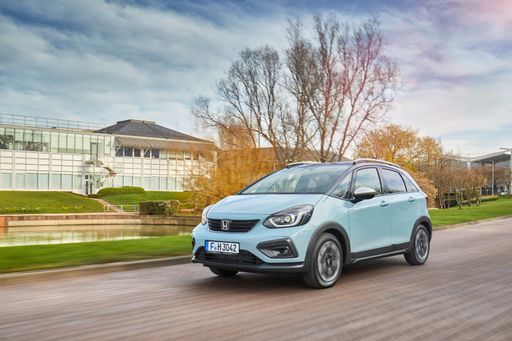
The Honda Jazz is powered by a full hybrid engine, showcasing an impressive 122 horsepower generated from a 1498 cm3, 4-cylinder arrangement. With an automatic CVT transmission, the Jazz accelerates from 0 to 100 km/h in approximately 9.4 to 9.7 seconds across its variants. It exhibits a remarkable torque of 253 Nm, giving it the necessary punch for both city commuting and highway cruising.

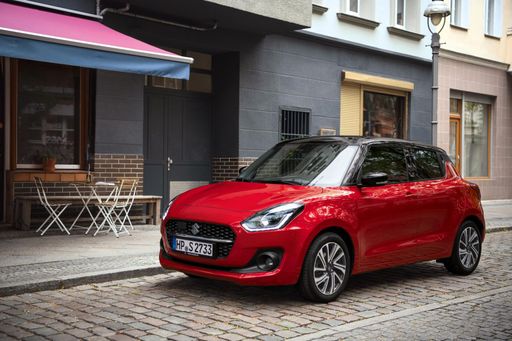
On the other hand, the Suzuki Swift boasts a petrol mild-hybrid engine that churns out 82 horsepower from a smaller 1197 cm3, 3-cylinder configuration. Swift's powertrain offers both manual and automatic CVT transmission options, with a slightly more leisurely acceleration of 0 to 100 km/h, ranging from 10.5 to 11 seconds. Its torque is considerably less at 112 Nm, making it less responsive on-demand compared to the Jazz.

Swift

Fuel Efficiency and Emissions

One of the standout features of the Honda Jazz is its remarkable fuel efficiency, with figures ranging from 4.5 to 4.8 L/100 km. This is a significant edge, particularly valuable for drivers keen on minimizing fuel expenses. The CO2 emissions for the Jazz hover around 102 to 108 g/km, positioning it favorably in the eco-conscious category.

The Suzuki Swift also presents respectable fuel efficiency, ranging from 4.4 to 4.9 L/100 km. CO2 emissions fall between 98 to 110 g/km, which is commendable but slightly less efficient than the Jazz. Both cars achieve the same CO2 efficiency class, allowing them to attract environmentally aware buyers.

Jazz

Dimensions and Practicality

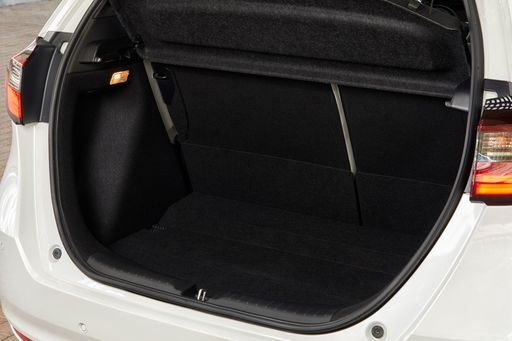
In terms of dimensions, the Honda Jazz measures 4089 mm in length and stands at a height of 1526 mm, providing ample interior space. The versatile trunk offers a capacity of 304 liters, accommodating various luggage requirements. Its curb weight varies from 1302 to 1320 kg, optimal for a compact hatchback.

The Suzuki Swift, while smaller at 3860 mm in length and a maximum height of 1510 mm, remains practical with its 265-liter trunk space. The lightweight design, with curb weights ranging from 1069 to 1145 kg, contributes to its nimble handling but reduces overall cargo capacity compared to the Jazz.

Swift

Technology and Innovations

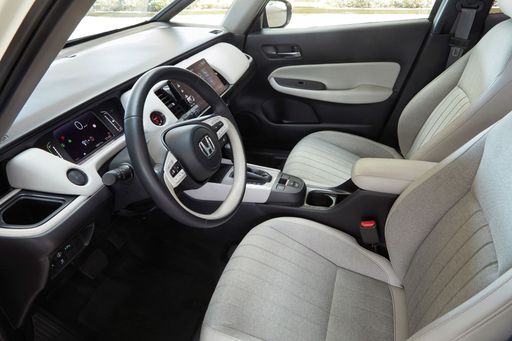
Honda is known for integrating advanced technology, and the Jazz is no exception. It features the latest infotainment systems, offering seamless connectivity, touchscreen interfaces, and safety features designed to keep both drivers and passengers secure. Advanced driver assistance systems are available to enhance the overall driving experience.

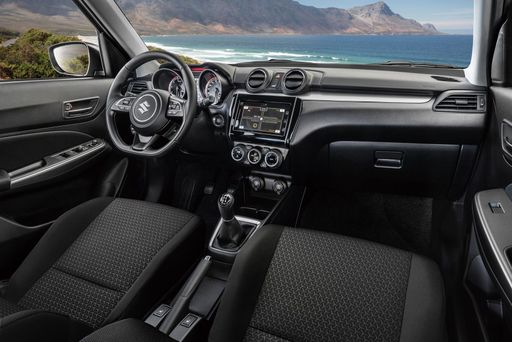
The Suzuki Swift, though inherently less tech-laden, still provides essential features like Bluetooth connectivity and smartphone integration. It focuses more on driving enjoyment, with an ergonomic design that makes for a spirited driving experience around city streets and winding roads.

Jazz

Conclusion: Which One Reigns Supreme?

When it comes down to it, the choice between the Honda Jazz and the Suzuki Swift may rely heavily on your personal preferences. If you value hybrid efficiency, practicality, and advanced technology, the Jazz emerges as the natural choice. Conversely, if you seek a lightweight, responsive hatchback that excels in city driving with a punchy design, the Swift has its advantages.

Ultimately, both the Honda Jazz and Suzuki Swift continue to prove why hatchbacks remain a popular choice for urban drivers, each bringing their unique strengths to the market.

Here’s where it gets real: The technical differences in detail

Swift

Costs and Efficiency:

Price and efficiency are often the first things buyers look at. Here it becomes clear which model has the long-term edge – whether at the pump, the plug, or in purchase price.

Suzuki Swift is visibly cheaper – starting at 17,100 £ , while the Honda Jazz costs 23,100 £ . That’s a price difference of around 5,958 £.

Fuel consumption also shows a difference: the Suzuki Swift uses 4.4 L/100km and is very slightly more efficient than the Honda Jazz with 4.5 L/100km. The difference is about 0.1 L/100km.

Jazz

Engine and Performance:

Under the bonnet, it becomes clear which model is tuned for sportiness and which one takes the lead when you hit the accelerator.

When it comes to engine power, the Honda Jazz offers visibly more power – delivering 122 HP compared to 82 HP. That’s roughly 40 HP more horsepower.

There’s also a difference in torque: the Honda Jazz delivers significantly more torque with 253 Nm compared to 112 Nm. That’s about 141 Nm more.

Swift

Space and Everyday Use:

Cabin size, boot volume and payload all play a role in everyday practicality. Here, comfort and flexibility make the difference.

Both vehicles offer seating for 5 people.

In terms of curb weight, Suzuki Swift is clearly lighter – 1,069 kg compared to 1,302 kg. The difference is around 233 kg.

When it comes to payload, the Honda Jazz carries clearly more – 388 kg compared to 296 kg. That’s a difference of about 92 kg.

Who wins the race in the data check?

The Honda Jazz stands well ahead of its rival in the objective data comparison.
This result only shows which model scores more points on paper – not which of the two cars feels right for you.

from £23,100
Jazz

Honda Jazz

  • Engine Type : Full Hybrid
  • Transmission : Automatic
  • Drive Type : Front-Wheel Drive
  • Power HP : 122 HP
  • Consumption L/100km : 4.5 - 4.8 L/100km
Suzuki Swift
Honda Jazz

Costs and Consumption

View detailed analysis

Engine and Performance

View detailed analysis

Dimensions and Body

View detailed analysis

Suzuki Swift

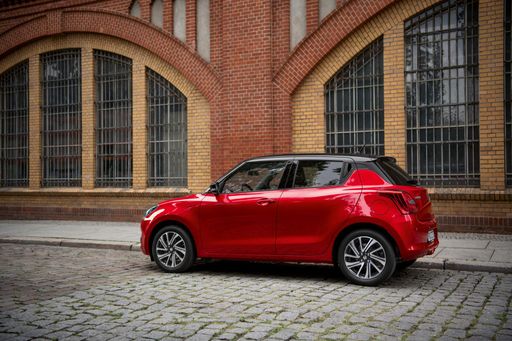
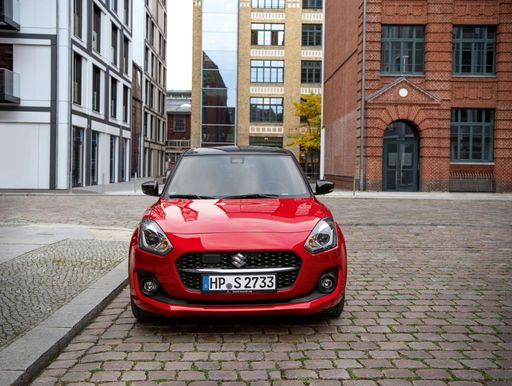
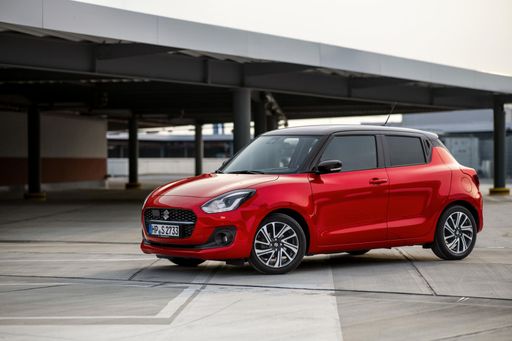
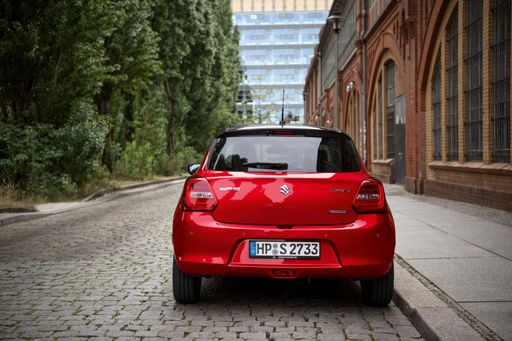
The Suzuki Swift is a cheeky little hatch that turns city streets into its playground with lively handling and a grin-inducing drive. Practical enough for daily chores, thrifty to run and kinder on your wallet than many rivals, it's a sensible pick for buyers who want fun without drama.

details

Honda Jazz

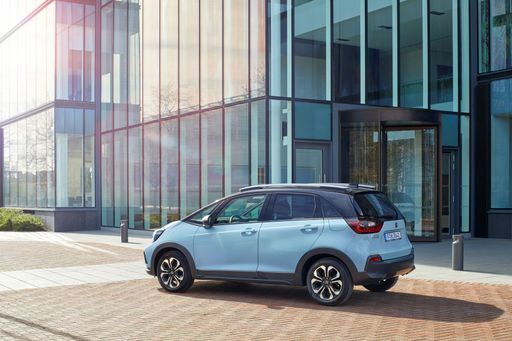
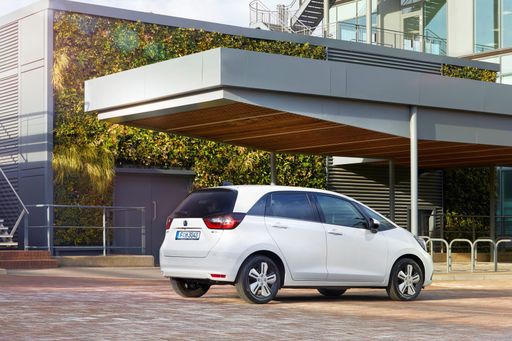
The Honda Jazz is a supremely practical small hatch that hides clever packaging and more usable space than it lets on, with friendly styling and an unfussy charm. It’s economical to run, easy to park and perfect for buyers who want reliable, versatile daily motoring without the hassle.

details
Suzuki Swift
Honda Jazz

Costs and Consumption

Price
17,100 - 21,200 £
Price
23,100 - 26,700 £
Consumption L/100km
4.4 - 4.9 L/100km
Consumption L/100km
4.5 - 4.8 L/100km
Consumption kWh/100km
-
Consumption kWh/100km
-
Electric Range
-
Electric Range
-
Battery Capacity
-
Battery Capacity
-
co2
98 - 110 g/km
co2
102 - 108 g/km
Fuel tank capacity
-
Fuel tank capacity
-

Dimensions and Body

Body Type
Hatchback
Body Type
Hatchback
Seats
5
Seats
5
Doors
-
Doors
-
Curb weight
1,069 - 1,145 kg
Curb weight
1,302 - 1,321 kg
Trunk capacity
-
Trunk capacity
304 L
Length
-
Length
-
Width
1,735 mm
Width
-
Height
-
Height
-
Max trunk capacity
-
Max trunk capacity
-
Payload
282 - 296 kg
Payload
369 - 388 kg

Engine and Performance

Engine Type
Petrol MHEV
Engine Type
Full Hybrid
Transmission
Manuel, Automatic
Transmission
Automatic
Transmission Detail
Manual Gearbox, CVT
Transmission Detail
CVT
Drive Type
Front-Wheel Drive, All-Wheel Drive
Drive Type
Front-Wheel Drive
Power HP
82 HP
Power HP
122 HP
Acceleration 0-100km/h
-
Acceleration 0-100km/h
9.4 - 9.7 s
Max Speed
-
Max Speed
-
Torque
112 Nm
Torque
253 Nm
Number of Cylinders
3
Number of Cylinders
4
Power kW
61 kW
Power kW
90 kW
Engine capacity
1,197 cm3
Engine capacity
1,498 cm3

General

Model Year
2025
Model Year
2025
CO2 Efficiency Class
C
CO2 Efficiency Class
C
Brand
Suzuki
Brand
Honda
DriveDuel uses data analysis and artificial intelligence to evaluate vehicle data and create content. Content is regularly reviewed and improved. The displayed prices are estimates based on German list prices, adjusted to the respective country’s VAT. Country-specific registration taxes are not included. This information is not legally binding.