VS

Suzuki Swift vs VW Polo comparison

Compare performance (82 HP vs 207 HP), boot space and price (17,100 £ vs 17,300 £ ) at a glance. Find out which car is the better choice for you – Suzuki Swift or VW Polo?

Suzuki Swift vs VW Polo: Key differences

Suzuki Swift

4.2 (4 Reviews)
rate
  • marginally cheaper
  • moderately more efficient
  • only slightly lighter
details

VW Polo

4.1 (3 Reviews)
rate
  • significantly more power
details

All details on performance, efficiency, range and trunk space can be found in the technical comparison below – including user reviews for both models.

By Achim Sedelmaier

Swift

Compact Contenders: Suzuki Swift vs. VW Polo

The compact hatchback segment boasts a variety of contenders, with the Suzuki Swift and VW Polo leading the charge. Both cars offer a mix of style, efficiency, and performance, making them unique options for urban driving and beyond. Let's dive into their technical specs and innovations to see how these two popular models stack up against each other.
Polo

Power and Performance

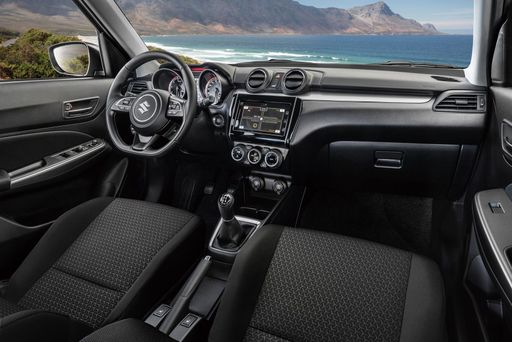
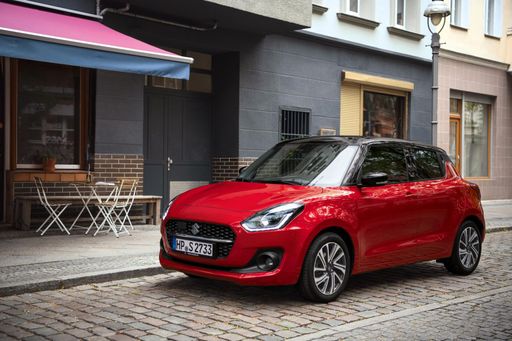
The 2024 Suzuki Swift is equipped with a mild hybrid petrol engine, generating 82 HP and a maximum torque of 112 Nm from its 1.2-liter three-cylinder engine. With both manual and CVT transmission options available, it promises a nimble and spirited drive. Front-wheel and all-wheel drive options add versatility for different driving conditions.

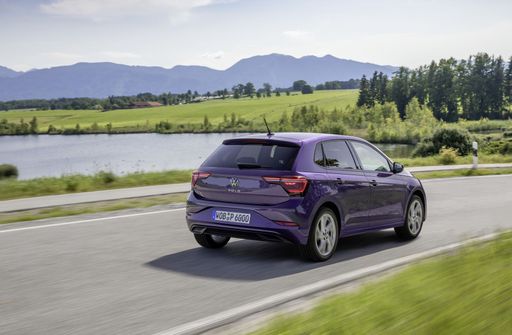
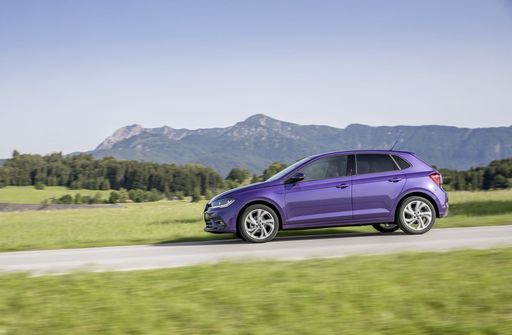
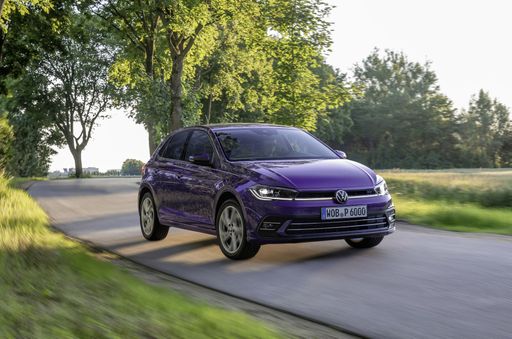
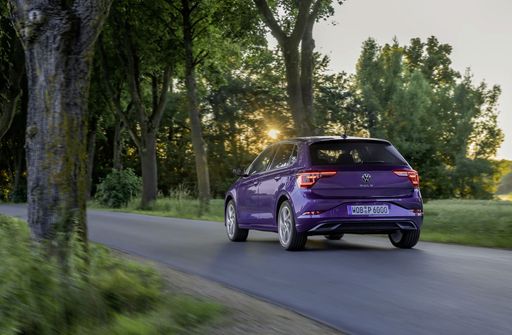
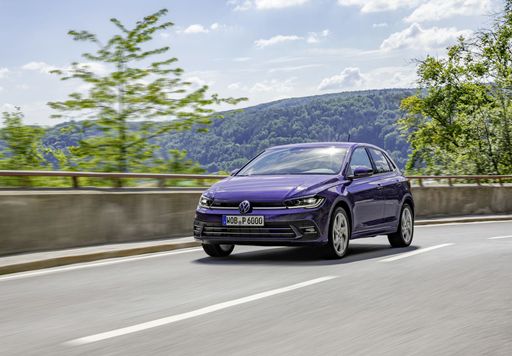
In contrast, the VW Polo ranges from 80 HP to a sporty 207 HP, offering a broader spectrum for performance enthusiasts. Its engine variations include both three and four-cylinder configurations, with a quick-shifting dual-clutch automatic available for a more dynamic driving experience. The Polo's top-of-the-line model rockets from 0-100 km/h in just 6.5 seconds, showcasing its performance prowess.

Swift

Fuel Efficiency and Environmental Impact

The Swift boasts an impressive fuel consumption between 4.4 and 4.9 L/100km, translating to commendable efficiency for city commuters. The mild hybrid system aids in achieving a low CO2 emission range of 98-106 g/km, earning it a CO2 efficiency class rating of 'C'.

The Polo, though slightly less efficient, offers a range of 5.2 to 6.5 L/100km. It takes a hit in CO2 emissions with figures from 118 to 149 g/km, resulting in a 'D' or 'E' efficiency class. Nevertheless, the broader power range of the Polo caters to varied preferences, especially for those seeking more performance.

Polo

Interior Space and Comfort

Both hatchbacks comfortably seat five passengers and offer practical everyday usability. The Swift's trunk offers 265 liters of cargo space, suitable for daily errands. Its dimensions (3860 mm in length, 1735 mm in width, and up to 1510 mm in height) allow nimble maneuvering in tight urban environments.

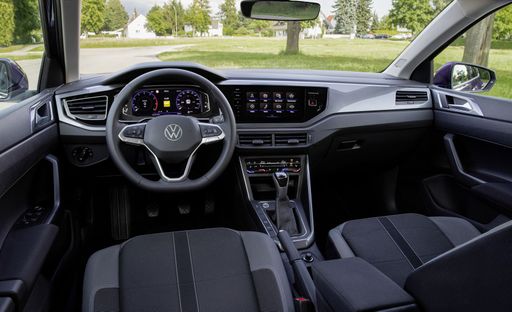
The Polo provides a slightly more generous trunk capacity of 351 liters, and its larger body dimensions (4074 mm in length and 1751 mm in width) contribute to a more spacious cabin feel. While both cars are designed with a focus on comfort, the Polo's additional bells and whistles can appeal to those desiring a bit more luxury in their drives.

Swift

Innovations and Features

Suzuki's Swift has embraced hybrid technology to offer an eco-friendly option, with its mild hybrid system enhancing efficiency without compromising on performance. It provides a balanced drive suitable for a variety of conditions, from city commutes to country drives.

VW's Polo stands out with its advanced transmission offerings, particularly the dual-clutch automatic gearbox, which is rare in this vehicle segment. Additionally, it includes a broad selection of engine options, allowing buyers to tailor their purchase to their specific needs—whether it's city efficiency or performance excitement.

Polo

Conclusion

Choosing between the Suzuki Swift and VW Polo depends greatly on what a driver values more. For those prioritizing efficiency and simplicity, the Swift with its hybrid tech and compact form is an enticing pick. Meanwhile, the Polo appeals to those looking for a bit more power and space, alongside the prestige of the VW badge.

In assessing both these charismatic hatchbacks, it remains clear that while they embody different characteristics, they each hold their own in the vibrant tapestry of compact cars, delivering appeal to a broad audience of drivers.

Here’s where it gets real: The technical differences in detail

Swift

Costs and Efficiency:

When it comes to price and running costs, the biggest differences usually appear. This is often where you see which car fits your budget better in the long run.

Suzuki Swift is marginally cheaper – starting at 17,100 £ , while the VW Polo costs 17,300 £ . That’s a price difference of around 116 £.

Fuel consumption also shows a difference: the Suzuki Swift uses 4.4 L/100km and is moderately more efficient than the VW Polo with 5.1 L/100km. The difference is about 0.7 L/100km.

Polo

Engine and Performance:

Power, torque and acceleration are the classic benchmarks for car enthusiasts – and here, some clear differences start to show.

When it comes to engine power, the VW Polo offers significantly more power – delivering 207 HP compared to 82 HP. That’s roughly 125 HP more horsepower.

There’s also a difference in torque: the VW Polo delivers clearly more torque with 320 Nm compared to 112 Nm. That’s about 208 Nm more.

Swift

Space and Everyday Use:

Cabin size, boot volume and payload all play a role in everyday practicality. Here, comfort and flexibility make the difference.

Both vehicles offer seating for 5 people.

In terms of curb weight, Suzuki Swift is only slightly lighter – 1,069 kg compared to 1,143 kg. The difference is around 74 kg.

When it comes to payload, the VW Polo carries markedly more – 457 kg compared to 296 kg. That’s a difference of about 161 kg.

Who wins the race in the data check?

The VW Polo is decisively ahead in the objective data comparison.
This result only shows which model scores more points on paper – not which of the two cars feels right for you.

from £17,300
Polo

VW Polo

  • Engine Type Petrol
  • Transmission Manuel, Automatic
  • Drive Type Front-Wheel Drive
  • Power HP 80 - 207 HP
  • Consumption L/100km 5.1 - 6.5 L/100km
Suzuki Swift
VW Polo

Costs and Consumption

View detailed analysis

Engine and Performance

View detailed analysis

Dimensions and Body

View detailed analysis

Suzuki Swift

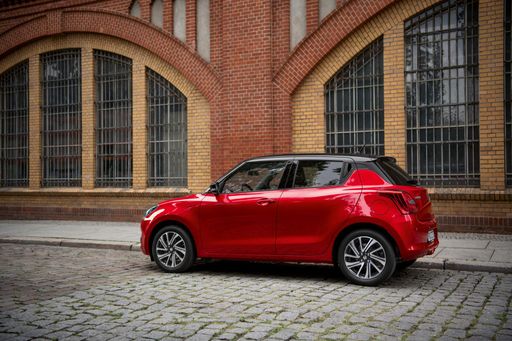
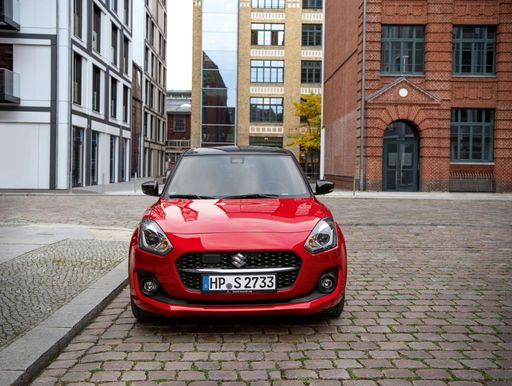
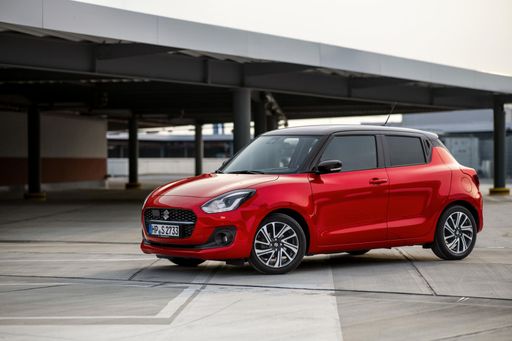
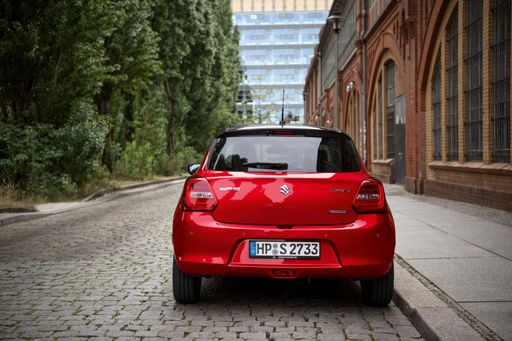
The Suzuki Swift is a cheeky little hatch that turns city streets into its playground with lively handling and a grin-inducing drive. Practical enough for daily chores, thrifty to run and kinder on your wallet than many rivals, it's a sensible pick for buyers who want fun without drama.

details

VW Polo

The Polo is a well-built, comfortable hatchback that blends a refined cabin and composed manners into a compact package. It's easy to live with day to day, offering sensible space, tidy controls and reassuring quality that make it a practical choice for city or longer trips.

details
Suzuki Swift
VW Polo

Costs and Consumption

Price
17,100 - 21,200 £
Price
17,300 - 30,800 £
Consumption L/100km
4.4 - 4.9 L/100km
Consumption L/100km
5.1 - 6.5 L/100km
Consumption kWh/100km
-
Consumption kWh/100km
-
Electric Range
-
Electric Range
-
Battery Capacity
-
Battery Capacity
-
co2
98 - 110 g/km
co2
116 - 148 g/km
Fuel tank capacity
-
Fuel tank capacity
-

Dimensions and Body

Body Type
Hatchback
Body Type
Hatchback
Seats
5
Seats
5
Doors
-
Doors
-
Curb weight
1,069 - 1,145 kg
Curb weight
1,143 - 1,378 kg
Trunk capacity
-
Trunk capacity
351 L
Length
-
Length
-
Width
1,735 mm
Width
1,751 mm
Height
-
Height
-
Max trunk capacity
-
Max trunk capacity
-
Payload
282 - 296 kg
Payload
432 - 457 kg

Engine and Performance

Engine Type
Petrol MHEV
Engine Type
Petrol
Transmission
Manuel, Automatic
Transmission
Manuel, Automatic
Transmission Detail
Manual Gearbox, CVT
Transmission Detail
Manual Gearbox, Dual-Clutch Automatic
Drive Type
Front-Wheel Drive, All-Wheel Drive
Drive Type
Front-Wheel Drive
Power HP
82 HP
Power HP
80 - 207 HP
Acceleration 0-100km/h
-
Acceleration 0-100km/h
6.5 - 15.6 s
Max Speed
-
Max Speed
-
Torque
112 Nm
Torque
93 - 320 Nm
Number of Cylinders
3
Number of Cylinders
3 - 4
Power kW
61 kW
Power kW
59 - 152 kW
Engine capacity
1,197 cm3
Engine capacity
999 - 1,984 cm3

General

Model Year
2025
Model Year
2,024 - 2,025
CO2 Efficiency Class
C
CO2 Efficiency Class
D, E
Brand
Suzuki
Brand
VW
DriveDuel uses data analysis and artificial intelligence to evaluate vehicle data and create content. Content is regularly reviewed and improved. The displayed prices are estimates based on German list prices, adjusted to the respective country’s VAT. Country-specific registration taxes are not included. This information is not legally binding.