VS

Suzuki Vitara vs Hyundai Tucson comparison

Compare performance (184 HP vs 288 HP), boot space and price (23,600 £ vs 20,900 £ ) at a glance. Find out which car is the better choice for you – Suzuki Vitara or Hyundai Tucson?

Suzuki Vitara vs Hyundai Tucson: Key differences

Suzuki Vitara

4.5 (3 Reviews)
rate
  • considerably more electric range
  • very slightly quicker 0–100 km/h
  • clearly lighter

Hyundai Tucson

4.6 (4 Reviews)
rate
  • somewhat cheaper
  • noticeably more power
  • considerably more efficient
  • clearly more trunk space

All details on performance, efficiency, range and trunk space can be found in the technical comparison below – including user reviews for both models.

Vitara

A Clash of SUVs: Hyundai Tucson vs Suzuki Vitara

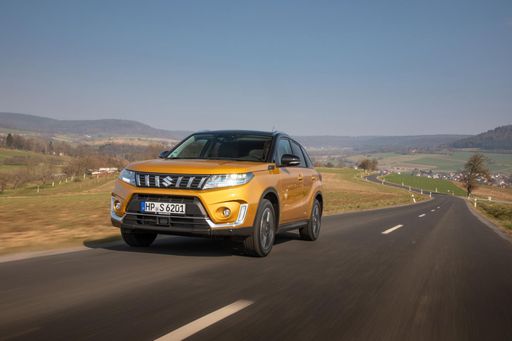
In the world of compact SUVs, few match-ups excite like that of the Hyundai Tucson and the Suzuki Vitara. Both hailing from Asia, these vehicles epitomize the perfect blend of practicality, strength, and technology. In this review, we delve into the technical aspects and innovations of both models, showcasing what sets them apart and where they stand toe-to-toe.
Tucson

Power and Performance

The 2024 Hyundai Tucson offers a range of engine types, including Diesel MHEV, Petrol MHEV, Full Hybrid, and Plugin Hybrid options. With horsepower ranging from 136 HP to a powerful 252 HP, the Tucson caters to a variety of preferences. Notably, the 0-100 km/h acceleration times span from 11.4 seconds down to a brisk 7.9 seconds based on the variant, with maximum speeds reaching up to 194 km/h. This ensures a versatile set of choices for any enthusiast or family.

Turning to the Vitara, Suzuki equips it with petrol MHEV and Full Hybrid engines. The horsepower is less potent compared to the Tucson, ranging between 116 HP and 129 HP. The acceleration scores between 9.5 and 12.7 seconds from 0-100 km/h, with a top speed reaching 190 km/h. While perhaps not as exhilarating as the Tucson in terms of raw power, the Vitara focuses on efficient and reliable performance.

Vitara

Fuel Efficiency and Environmental Impact

Efficiency is paramount in today’s automotive world. The Hyundai Tucson's varied powertrains showcase fuel consumption ranging from 5.1 L/100km in efficient variants to 6.8 L/100km in more power-focused models. The Plugin Hybrid variant boasts an electric range of up to 70 km, emphasizing its commitment to green technology with CO2 emissions as low as 22 g/km.

Meanwhile, the Suzuki Vitara holds its own in the efficiency department. With petrol MHEV and Full Hybrid options, it achieves consumption figures between 5 L/100km and 5.6 L/100km. CO2 emissions are also commendable, starting from 114 g/km, highlighting Suzuki's dedication towards a smaller carbon footprint.

Tucson

Interior Space and Practicality

Hyundai Tucson impresses with its substantial trunk capacity, varying from 546 liters to an impressive 620 liters. This, combined with the spacious interior for five occupants, makes it a practical choice for families and adventurers alike. Its dimensions of 4510-4520 mm in length and 1865 mm in width provide a commanding road presence.

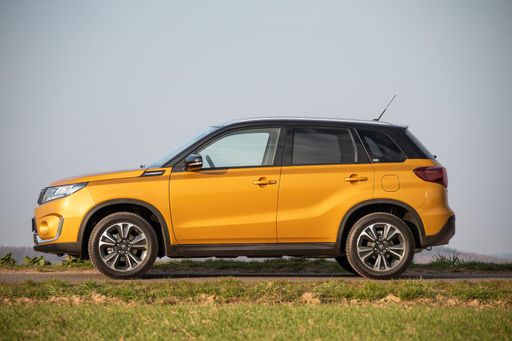
Not to be sidelined, the Vitara offers a relatively compact yet functional use of space. With trunk capacities ranging from 289 liters to 375 liters, it is suitable for urban environments and weekend getaways. At 4185 mm in length and 1775 mm in width, its smaller footprint remains advantageous for city driving and parking.

Vitara

Innovation and Technology

The Hyundai Tucson's array of drivetrain options, including All-Wheel and Front-Wheel Drive, alongside advanced dual-clutch and automatic gearbox technologies, place it at the forefront of innovation. The MHEV and full hybrid systems reflect a dedication to future-driven engineering.

On the other hand, the Vitara offers a straightforward and user-friendly driving experience. With both manual and automated manual transmissions and All-Wheel and Front-Wheel Drive options, it caters to various consumer needs while maintaining a focus on clever engineering and lower weight for enhanced fuel economy.

Tucson

Conclusion

Both the Hyundai Tucson and Suzuki Vitara shine in their respective rights, bringing unique qualities to the SUV sector. The Tucson stands out for its diversity in powertrains and advanced technology, making it ideal for those seeking performance and modern engineering. Conversely, the Vitara's strengths lie in its compact efficiency and practical city-friendly design, appealing to practical drivers focused on simplicity and economy. The choice ultimately depends on individual preferences, but both serve as excellent examples of what modern SUVs have to offer.

Here’s where it gets real: The technical differences in detail

Vitara

Costs and Efficiency:

When it comes to price and running costs, the biggest differences usually appear. This is often where you see which car fits your budget better in the long run.

Hyundai Tucson is somewhat cheaper – starting at 20,900 £ , while the Suzuki Vitara costs 23,600 £ . That’s a price difference of around 2,674 £.

Fuel consumption also shows a difference: the Hyundai Tucson uses 2.7 L/100km and is considerably more efficient than the Suzuki Vitara with 5 L/100km. The difference is about 2.3 L/100km.

As for electric range, the Suzuki Vitara offers considerably more range – reaching up to 426 km, about 356 km more than the Hyundai Tucson.

Tucson

Engine and Performance:

Under the bonnet, it becomes clear which model is tuned for sportiness and which one takes the lead when you hit the accelerator.

When it comes to engine power, the Hyundai Tucson offers noticeably more power – delivering 288 HP compared to 184 HP. That’s roughly 104 HP more horsepower.

When accelerating from 0 to 100 km/h, the Suzuki Vitara is very slightly quicker – completing the sprint in 7.4 s, while the Hyundai Tucson takes 7.5 s. That’s about 0.1 s quicker.

Looking at top speed, the Hyundai Tucson is only slightly faster – reaching 204 km/h, while the Suzuki Vitara tops out at 190 km/h. The difference is around 14 km/h.

There’s also a difference in torque: the Hyundai Tucson delivers somewhat more torque with 379 Nm compared to 307 Nm. That’s about 72 Nm more.

Vitara

Space and Everyday Use:

Cabin size, boot volume and payload all play a role in everyday practicality. Here, comfort and flexibility make the difference.

Both vehicles offer seating for 5 people.

In terms of curb weight, Suzuki Vitara is clearly lighter – 1,255 kg compared to 1,542 kg. The difference is around 287 kg.

Looking at boot space, the Hyundai Tucson offers clearly more boot space – 620 L compared to 375 L. That’s a difference of about 245 L.

For maximum load capacity, the Hyundai Tucson offers noticeably more capacity – up to 1,799 L, about 679 L more than the Suzuki Vitara.

When it comes to payload, the Hyundai Tucson carries noticeably more – 545 kg compared to 425 kg. That’s a difference of about 120 kg.

Who wins the race in the data check?

The Hyundai Tucson is far ahead overall in the objective data comparison.
This result only shows which model scores more points on paper – not which of the two cars feels right for you.

from £20,900
Tucson

Hyundai Tucson

  • Engine Type : Petrol, Full Hybrid, Plugin Hybrid, Diesel MHEV
  • Transmission : Manuel, Automatic
  • Drive Type : Front-Wheel Drive, All-Wheel Drive
  • Power HP : 136 - 288 HP
  • Consumption L/100km : 2.7 - 7.6 L/100km
  • Electric Range : 63 - 70 km
Suzuki Vitara
Hyundai Tucson

Costs and Consumption

View detailed analysis

Engine and Performance

View detailed analysis

Dimensions and Body

View detailed analysis

Suzuki Vitara

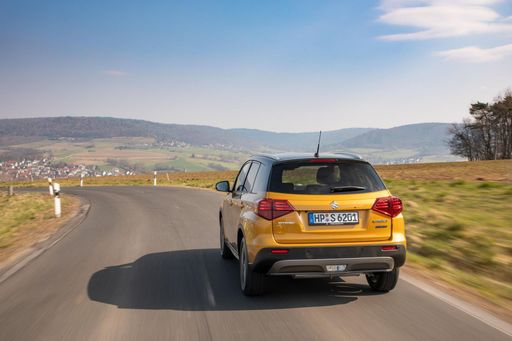
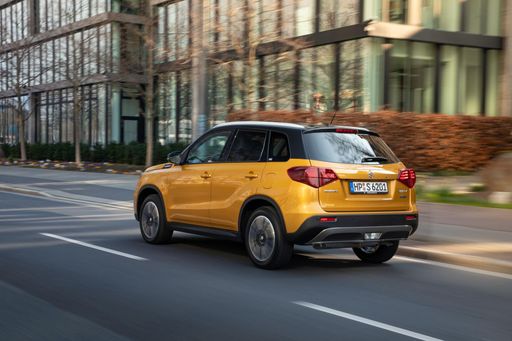
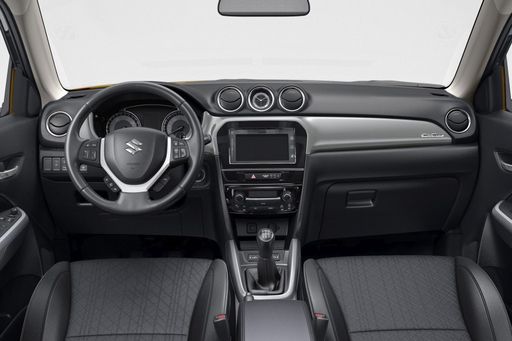
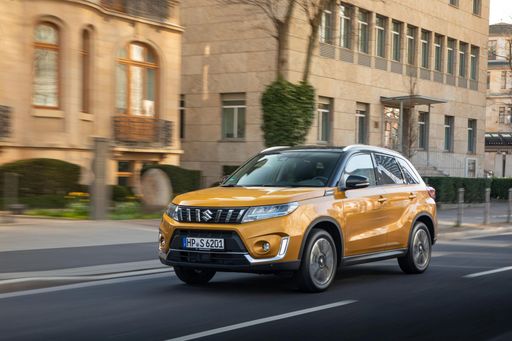
The Vitara is a city-smart SUV with a cheeky streak of off-road promise, perfect for drivers who want practicality without pretense. It’s honest, easy to live with and surprisingly likeable, a sensible companion for everyday adventures and weekend escapes.

details

Hyundai Tucson

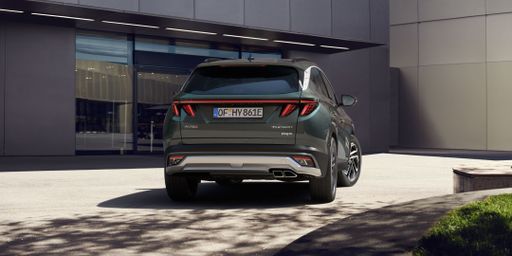
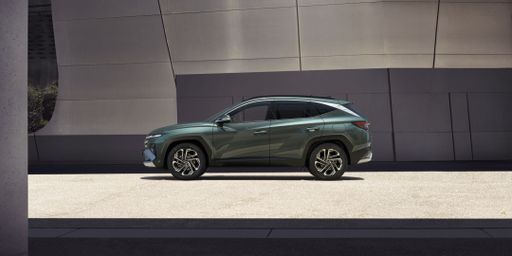
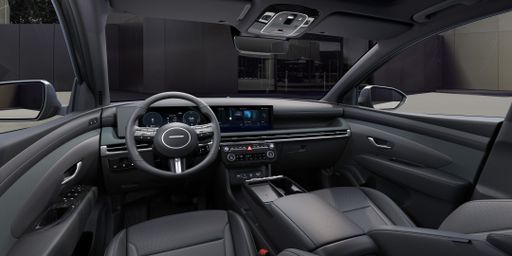
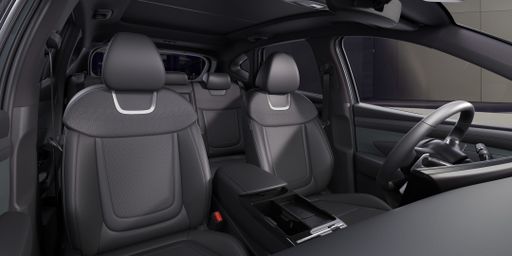
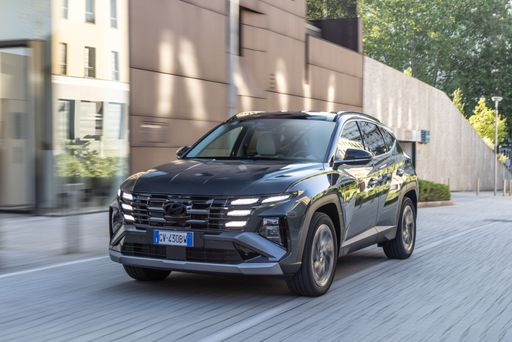
Hyundai Tucson marries bold, sculpted looks with a clever, roomy cabin that feels smarter than its price tag suggests. It's composed on the road, easy to live with day-to-day, and a sensible choice for buyers who want SUV style without the showroom theatrics.

details
Suzuki Vitara
Hyundai Tucson

Costs and Consumption

Price
23,600 - 36,800 £
Price
20,900 - 47,900 £
Consumption L/100km
5 - 5.9 L/100km
Consumption L/100km
2.7 - 7.6 L/100km
Consumption kWh/100km
14.9 - 16.6 kWh/100km
Consumption kWh/100km
-
Electric Range
344 - 426 km
Electric Range
63 - 70 km
Battery Capacity
-
Battery Capacity
-
co2
0 - 138 g/km
co2
62 - 172 g/km
Fuel tank capacity
47 L
Fuel tank capacity
52 - 54 L

Dimensions and Body

Body Type
SUV
Body Type
SUV
Seats
5
Seats
5
Doors
5
Doors
5
Curb weight
1,255 - 1,935 kg
Curb weight
1,542 - 1,893 kg
Trunk capacity
289 - 375 L
Trunk capacity
546 - 620 L
Length
4,185 mm
Length
4,525 - 4,535 mm
Width
1,775 - 1,800 mm
Width
1,865 mm
Height
1,595 mm
Height
1,650 mm
Max trunk capacity
1,046 - 1,120 L
Max trunk capacity
1,795 - 1,799 L
Payload
375 - 425 kg
Payload
518 - 545 kg

Engine and Performance

Engine Type
Petrol MHEV, Full Hybrid, Electric
Engine Type
Petrol, Full Hybrid, Plugin Hybrid, Diesel MHEV
Transmission
Manuel, Automatic
Transmission
Manuel, Automatic
Transmission Detail
Manual Gearbox, Automated Manual, Automatic Gearbox
Transmission Detail
Manual Gearbox, Dual-Clutch Automatic, Automatic Gearbox
Drive Type
Front-Wheel Drive, All-Wheel Drive
Drive Type
Front-Wheel Drive, All-Wheel Drive
Power HP
110 - 184 HP
Power HP
136 - 288 HP
Acceleration 0-100km/h
7.4 - 12.7 s
Acceleration 0-100km/h
7.5 - 11.6 s
Max Speed
180 - 190 km/h
Max Speed
196 - 204 km/h
Torque
193 - 307 Nm
Torque
250 - 379 Nm
Number of Cylinders
4
Number of Cylinders
4
Power kW
81 - 135 kW
Power kW
100 - 212 kW
Engine capacity
1,373 - 1,462 cm3
Engine capacity
1,598 cm3

General

Model Year
2,024 - 2,026
Model Year
2,025
CO2 Efficiency Class
D, C, E, A
CO2 Efficiency Class
F, D, E, B
Brand
Suzuki
Brand
Hyundai
DriveDuel uses data analysis and artificial intelligence to evaluate vehicle data and create content. Content is regularly reviewed and improved. The displayed prices are estimates based on German list prices, adjusted to the respective country’s VAT. Country-specific registration taxes are not included. This information is not legally binding.