VS

Tesla Model Y vs VW Tayron comparison

Compare performance (460 HP vs 272 HP), boot space and price (34,300 £ vs 39,600 £ ) at a glance. Find out which car is the better choice for you – Tesla Model Y or VW Tayron?

Tesla Model Y vs VW Tayron: Key differences

Tesla Model Y

4.5 (4 Reviews)
rate
  • slightly cheaper
  • clearly more power
  • substantially more electric range
  • clearly quicker 0–100 km/h

VW Tayron

4.8 (2 Reviews)
rate
  • a bit lighter
  • marginally more trunk space

All details on performance, efficiency, range and trunk space can be found in the technical comparison below – including user reviews for both models.

By Achim Sedelmaier

Model Y

Tesla Model Y vs VW Tayron: A Clash of the SUV Titans

In the modern SUV landscape, innovation and performance are key factors that potential buyers consider. This comparison between the Tesla Model Y and the VW Tayron reveals the distinct approaches these brands take. Through a detailed look at their technical specifications and innovations, let's explore how each of these vehicles caters to the contemporary SUV enthusiast.

Tayron

Powertrain and Performance

The Tesla Model Y showcases an impressive electric lineup with options like the Rear-Wheel Drive and All-Wheel Drive configurations, offering between 299 to 534 horsepower. Using a reduction gearbox, it achieves swift acceleration, reaching 0-100 km/h in as little as 3.7 seconds. Its power also translates to efficiency, with electric consumption ranging from 14.9 to 17.3 kWh/100km. Being an electric vehicle, the Model Y naturally boasts a CO2 output of 0 g/km, aligning with shifting environmental priorities.

In contrast, the VW Tayron offers a variety of engine choices, primarily petrol with MHEV, Plugin Hybrid, and Diesel options. It generally provides slightly less power than the Model Y, with outputs up to 272 horsepower. Its fuel-efficient plugin hybrid variant consumes only 0.4 L/100km of petrol. Although it has a higher CO2 output (9 to 172 g/km), this range illustrates a mix of traditional and modern efficiencies in internal combustion engines.


Model Y

Range and Efficiency

The Tesla Model Y’s range capabilities outpace the Tayron, with variants reaching up to 600 km on a single charge. This makes it appealing for long-distance drivers with easy access to charging infrastructure. The battery capacity varies from 62 to 79 kWh, contributing to its extended range.

The Tayron plugin hybrid slightly narrows the gap with an impressive electric range of up to 126 km when charged, thanks to its 19.7 kWh battery capacity. However, its petrol models can only offer typical ranges expected of combustion engines.

Tayron

Interior Space and Comfort

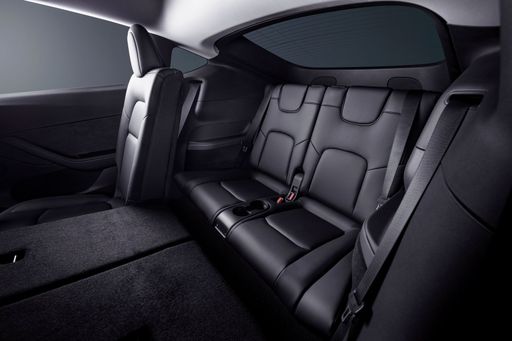
With a focus on space and utility, the Tesla Model Y accommodates up to 7 passengers, though it typically seats 5. It has a trunk capacity of up to 854 liters, allowing for more cargo room, crucial for families or frequent travelers. Technologically, being designed by Tesla, it doesn't skimp on innovative features, with cutting-edge autopilot functionalities paving the way for autonomous drive-ready experiences.

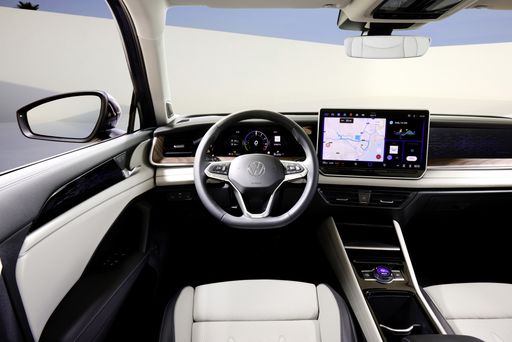
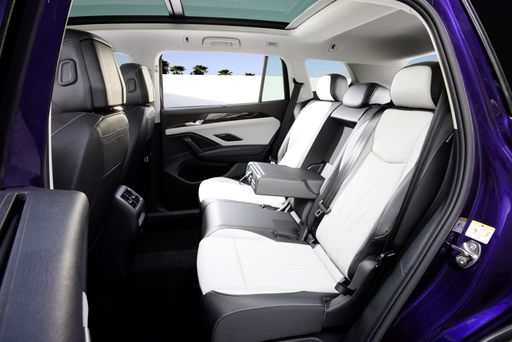
Meanwhile, the VW Tayron emphasizes traditional luxury and comfort while seating 5 passengers comfortably. It provides a slightly larger trunk space at 885 liters, making it a practical option for even the busiest families. VW’s focus is on cohesive interior finishes and technology integration with their suite of infotainment systems.

Model Y

Conclusion: Choosing the Right SUV for You

The choice between the Tesla Model Y and the VW Tayron heavily depends on the buyer's priorities and lifestyle needs. If zero emissions, groundbreaking technology, and a preference for electric vehicles lead your preferences, the Model Y stands out as an obvious contender. However, if a balance of engine versatility, traditional luxury, and payload capacity rank high on your list, the Tayron might just be your ideal SUV.

Both vehicles excel in distinct areas, and as the automotive landscape continues to evolve, it will be intriguing to watch how these models adapt and continue to impress enthusiasts worldwide.

Here’s where it gets real: The technical differences in detail

Model Y

Costs and Efficiency:

Price and efficiency are key factors when choosing a car – and this is often where the real differences emerge.

Tesla Model Y is slightly cheaper – starting at 34,300 £ , while the VW Tayron costs 39,600 £ . That’s a price difference of around 5,335 £.

As for electric range, the Tesla Model Y offers substantially more range – reaching up to 657 km, about 534 km more than the VW Tayron.

Tayron

Engine and Performance:

Power, torque and acceleration are the classic benchmarks for car enthusiasts – and here, some clear differences start to show.

When it comes to engine power, the Tesla Model Y offers clearly more power – delivering 460 HP compared to 272 HP. That’s roughly 188 HP more horsepower.

When accelerating from 0 to 100 km/h, the Tesla Model Y is clearly quicker – completing the sprint in 3.5 s, while the VW Tayron takes 6.1 s. That’s about 2.6 s quicker.

Looking at top speed, the VW Tayron is very slightly faster – reaching 221 km/h, while the Tesla Model Y tops out at 201 km/h. The difference is around 20 km/h.

There’s also a difference in torque: the Tesla Model Y delivers noticeably more torque with 660 Nm compared to 400 Nm. That’s about 260 Nm more.

Model Y

Space and Everyday Use:

Beyond pure performance, interior space and usability matter most in daily life. This is where you see which car is more practical and versatile.

Seats: Tesla Model Y offers more seats – 7 vs 5.

In terms of curb weight, VW Tayron is a bit lighter – 1,682 kg compared to 1,953 kg. The difference is around 271 kg.

Looking at boot space, the VW Tayron offers marginally more boot space – 885 L compared to 822 L. That’s a difference of about 63 L.

For maximum load capacity, the Tesla Model Y offers marginally more capacity – up to 2,138 L, about 48 L more than the VW Tayron.

When it comes to payload, the VW Tayron carries somewhat more – 566 kg compared to 472 kg. That’s a difference of about 94 kg.

Who wins the race in the data check?

The Tesla Model Y is clearly superior overall in the objective data comparison.
This result only shows which model scores more points on paper – not which of the two cars feels right for you.

from £34,300
Model Y

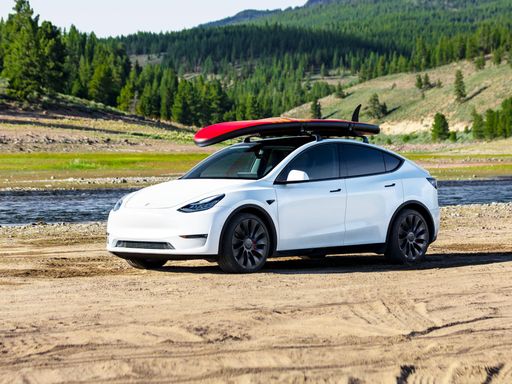
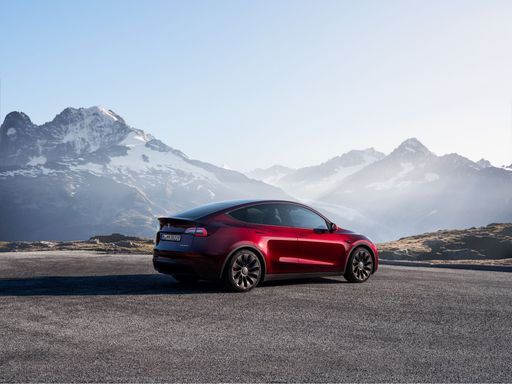
Tesla Model Y

  • Engine Type : Electric
  • Transmission : Automatic
  • Drive Type : All-Wheel Drive, Rear-Wheel Drive
  • Power HP : 299 - 460 HP
  • Consumption kWh/100km : 12.7 - 16.2 kWh/100km
  • Electric Range : 534 - 657 km
Tesla Model Y
VW Tayron

Costs and Consumption

View detailed analysis

Engine and Performance

View detailed analysis

Dimensions and Body

View detailed analysis

Tesla Model Y

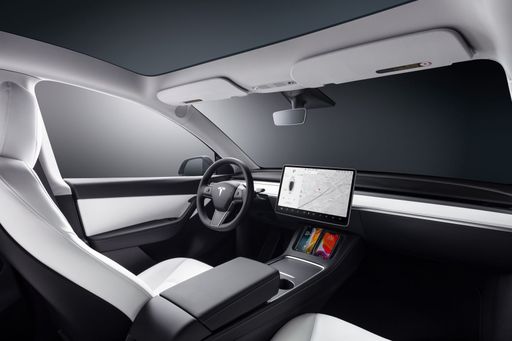
The Tesla Model Y blends SUV practicality with sports-car poke, wrapping a roomy, minimalist cabin and handy hatch into a slick, aerodynamic package that feels more Silicon Valley gadget than garage ornament. It’s an ideal pick for buyers who want effortless electric driving, regular software improvements and access to Tesla’s convenient charging network, though style-conscious shoppers should know it’s more about tech and efficiency than classic luxury.

details

VW Tayron

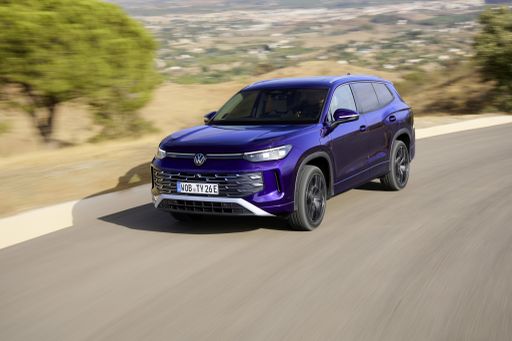
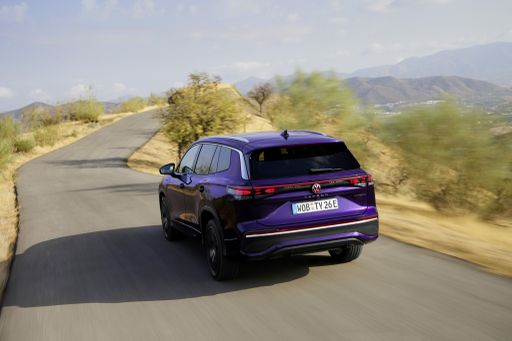
The VW Tayron is Volkswagen's roomy, no-nonsense SUV that pairs clean, familiar styling with a practical cabin built for families and everyday use. It rides comfortably, packs sensible tech and creature comforts, and feels like the sensible sweater of SUVs for buyers who prefer steady value over headline-grabbing drama.

details
Tesla Model Y
VW Tayron

Costs and Consumption

Price
34,300 - 53,100 £
Price
39,600 - 56,000 £
Consumption L/100km
-
Consumption L/100km
1.5 - 8.5 L/100km
Consumption kWh/100km
12.7 - 16.2 kWh/100km
Consumption kWh/100km
-
Electric Range
534 - 657 km
Electric Range
116 - 123 km
Battery Capacity
64.5 - 83 kWh
Battery Capacity
19.7 kWh
co2
0 g/km
co2
33 - 192 g/km
Fuel tank capacity
-
Fuel tank capacity
45 - 58 L

Dimensions and Body

Body Type
SUV
Body Type
SUV
Seats
5 - 7
Seats
5
Doors
5
Doors
5
Curb weight
1,953 - 2,108 kg
Curb weight
1,682 - 1,948 kg
Trunk capacity
822 L
Trunk capacity
705 - 885 L
Length
4,790 - 4,797 mm
Length
4,792 mm
Width
1,920 - 1,921 mm
Width
1,853 - 1,866 mm
Height
1,621 - 1,624 mm
Height
1,666 - 1,668 mm
Max trunk capacity
2,118 - 2,138 L
Max trunk capacity
1,915 - 2,090 L
Payload
435 - 472 kg
Payload
489 - 566 kg

Engine and Performance

Engine Type
Electric
Engine Type
Petrol MHEV, Diesel, Petrol, Plugin Hybrid
Transmission
Automatic
Transmission
Automatic
Transmission Detail
Reduction Gearbox
Transmission Detail
Dual-Clutch Automatic
Drive Type
All-Wheel Drive, Rear-Wheel Drive
Drive Type
Front-Wheel Drive, All-Wheel Drive
Power HP
299 - 460 HP
Power HP
150 - 272 HP
Acceleration 0-100km/h
3.5 - 7.2 s
Acceleration 0-100km/h
6.1 - 9.7 s
Max Speed
201 km/h
Max Speed
204 - 221 km/h
Torque
420 - 660 Nm
Torque
250 - 400 Nm
Number of Cylinders
-
Number of Cylinders
4
Power kW
220 - 338 kW
Power kW
110 - 200 kW
Engine capacity
-
Engine capacity
1,498 - 1,984 cm3

General

Model Year
2,025 - 2,026
Model Year
2,025 - 2,026
CO2 Efficiency Class
A
CO2 Efficiency Class
E, F, G, B
Brand
Tesla
Brand
VW
DriveDuel uses data analysis and artificial intelligence to evaluate vehicle data and create content. Content is regularly reviewed and improved. The displayed prices are estimates based on German list prices, adjusted to the respective country’s VAT. Country-specific registration taxes are not included. This information is not legally binding.