VS

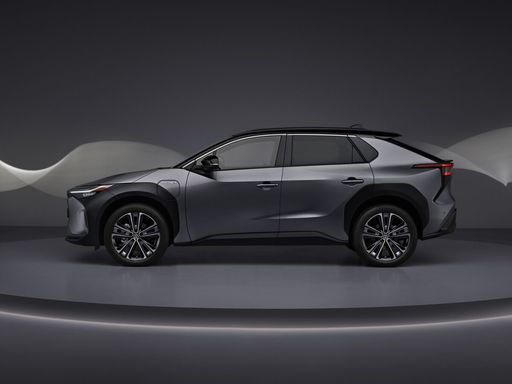
Toyota bZ4X vs Hyundai Kona comparison

Compare performance (380 HP vs 204 HP), boot space and price (36,800 £ vs 23,600 £ ) at a glance. Find out which car is the better choice for you – Toyota bZ4X or Hyundai Kona?

Toyota bZ4X vs Hyundai Kona: Key differences

Toyota bZ4X

4.5 (11 Reviews)
rate
  • considerably more power
  • marginally more efficient
  • a bit more electric range
  • considerably quicker 0–100 km/h
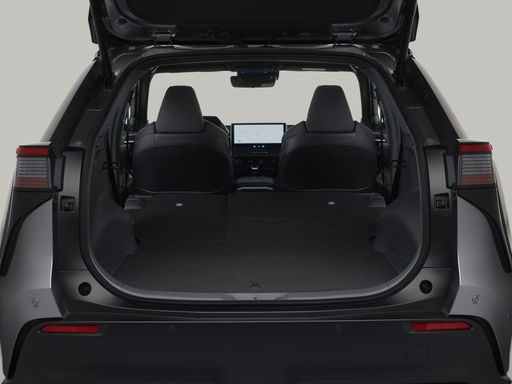
  • markedly more trunk space
details

Hyundai Kona

4.6 (10 Reviews)
rate
  • clearly cheaper
  • noticeably lighter
details

All details on performance, efficiency, range and trunk space can be found in the technical comparison below – including user reviews for both models.

By Achim Sedelmaier

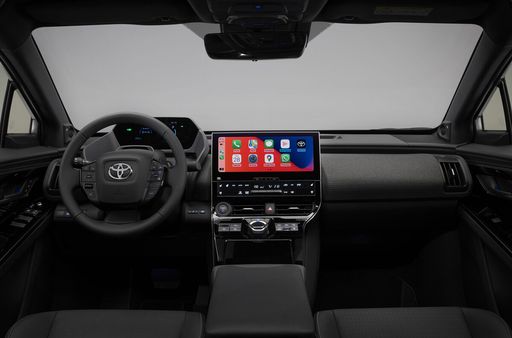
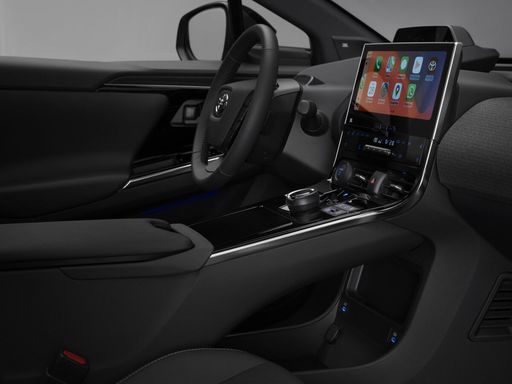
bZ4X

Face-Off: Hyundai Kona vs. Toyota bZ4X

The compact SUV market has seen an infusion of innovation with the introduction of the 2024 Hyundai Kona and the 2024/2025 Toyota bZ4X. Both vehicles promise a modern take on the driving experience, catering to both traditionalists and tech-savvy drivers. Let’s take a closer look at how these two contenders stack up against each other.
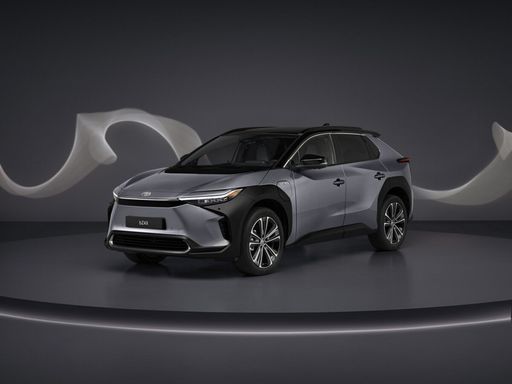
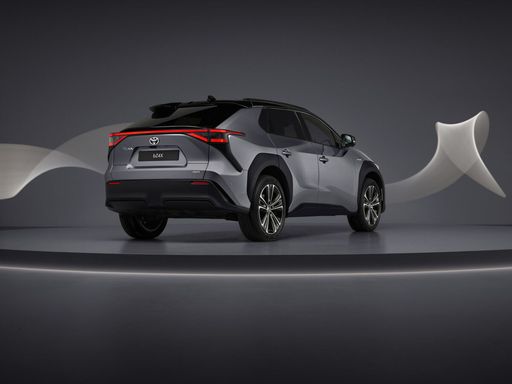
Kona

Engine and Performance

The Hyundai Kona offers a versatile engine lineup that includes petrol, full hybrid, and all-electric options, showcasing its commitment to flexibility. The petrol variant kicks off with a modest 100 HP and goes up to a more enthusiastic 170 HP. Electric options further raise the bar, providing up to 218 HP, which is complemented by a torque of 255 Nm. On the other hand, the Toyota bZ4X, focusing solely on electric powertrains, delivers robust performance with options at 204 HP and 218 HP, backed by torque figures ranging from 265 Nm to 336 Nm.

Acceleration is another area of interest. The Kona manages a sprint from 0-100km/h in as little as 7.8 seconds for its quickest variant, while the bZ4X achieves a slightly quicker time of 6.9 seconds. These figures show both vehicles to be adequately capable for urban settings and highway cruising.

bZ4X

Fuel Efficiency and Range

Efficiency plays a critical role, particularly for electric models. The Hyundai Kona’s electric variants offer consumption rates of 14.6 to 16.8 kWh/100km and boast a range between 377 km and 514 km, thanks to battery capacities of up to 65.4 kWh. Meanwhile, Toyota's bZ4X slightly edges out the Kona with consumption rates from 14.4 to 16.2 kWh/100km and an impressive range of up to 513 km on a full charge.

Kona

Dimensions and Capacity

While both vehicles offer a five-door layout with seating for five, their sizes differ slightly. The Hyundai Kona’s compact dimensions (length of 4350 mm to 4385 mm and width of 1825 mm) make it ideal for urban maneuverability. In contrast, the Toyota bZ4X, being larger with a length of 4690 mm and a width of 1860 mm, provides more interior space, which is particularly beneficial for family use and longer trips.

Trunk space is another differential; the Kona offers a trunk capacity of 466 liters, slightly more than the bZ4X's 452 liters, making it a better choice for carrying luggage or other bulky items.

bZ4X

Environmental Impact

Both vehicles excel in minimizing carbon footprint. The electric models of both the Hyundai Kona and the Toyota bZ4X carry a CO2 efficiency class of A, emitting 0 g/km CO2, which aligns with stringent new environmental standards. This focus on sustainability highlights the automakers' commitment to creating greener transportation solutions.

Kona

In Conclusion

Choosing between the Hyundai Kona and Toyota bZ4X largely depends on the buyer’s priorities. The Kona is ideal for those who value versatility and the option of hybrid technology, while the bZ4X is suited for those committed to all-electric driving with ample space and slightly swifter acceleration. These SUVs showcase the latest in automotive innovation, delivering compelling choices for the modern driver looking to the future.

Here’s where it gets real: The technical differences in detail

bZ4X

Costs and Efficiency:

Looking at overall running costs, both models reveal some interesting differences in everyday economy.

Hyundai Kona is clearly cheaper – starting at 23,600 £ , while the Toyota bZ4X costs 36,800 £ . That’s a price difference of around 13,277 £.

In terms of energy consumption, the Toyota bZ4X is marginally more efficient: consuming 13.5 kWh/100km compared to 14.6 kWh/100km for the Hyundai Kona. That’s a difference of about 1.1 kWh/100km.

As for electric range, the Toyota bZ4X offers a bit more range – reaching up to 591 km, about 81 km more than the Hyundai Kona.

Kona

Engine and Performance:

Power, torque and acceleration say a lot about how a car feels on the road. This is where you see which model delivers more driving dynamics.

When it comes to engine power, the Toyota bZ4X offers considerably more power – delivering 380 HP compared to 204 HP. That’s roughly 176 HP more horsepower.

When accelerating from 0 to 100 km/h, the Toyota bZ4X is considerably quicker – completing the sprint in 4.4 s, while the Hyundai Kona takes 8.1 s. That’s about 3.7 s quicker.

There’s also a difference in torque: the Toyota bZ4X delivers visibly more torque with 338 Nm compared to 265 Nm. That’s about 73 Nm more.

bZ4X

Space and Everyday Use:

Cabin size, boot volume and payload all play a role in everyday practicality. Here, comfort and flexibility make the difference.

Both vehicles offer seating for 5 people.

In terms of curb weight, Hyundai Kona is noticeably lighter – 1,370 kg compared to 1,900 kg. The difference is around 530 kg.

Looking at boot space, the Toyota bZ4X offers markedly more boot space – 669 L compared to 466 L. That’s a difference of about 203 L.

When it comes to payload, the Toyota bZ4X carries slightly more – 565 kg compared to 490 kg. That’s a difference of about 75 kg.

Who wins the race in the data check?

The Toyota bZ4X is far ahead overall in the objective data comparison.
This result only shows which model scores more points on paper – not which of the two cars feels right for you.

from £36,800
bZ4X

Toyota bZ4X

  • Engine Type Electric
  • Transmission Automatic
  • Drive Type Front-Wheel Drive, All-Wheel Drive
  • Power HP 167 - 380 HP
  • Consumption kWh/100km 13.5 - 16.6 kWh/100km
  • Electric Range 444 - 591 km
Toyota bZ4X
Hyundai Kona

Costs and Consumption

View detailed analysis

Engine and Performance

View detailed analysis

Dimensions and Body

View detailed analysis

Toyota bZ4X

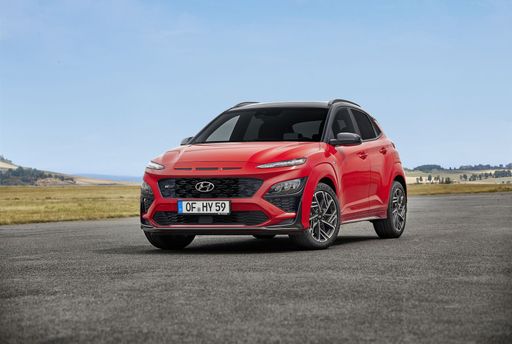
The Toyota bZ4X is an electric crossover that focuses on a calm ride, practical interior and predictable handling for everyday driving. It suits buyers who want an easygoing, reliable EV with Toyota's familiar build quality and a clean, simple design.

details

Hyundai Kona

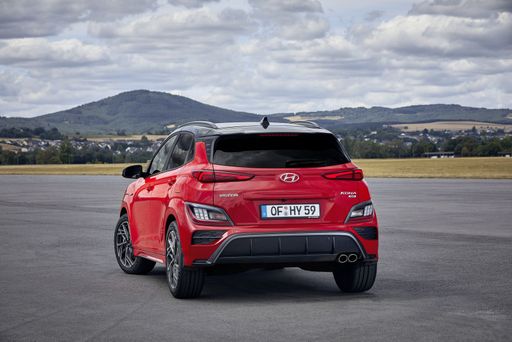
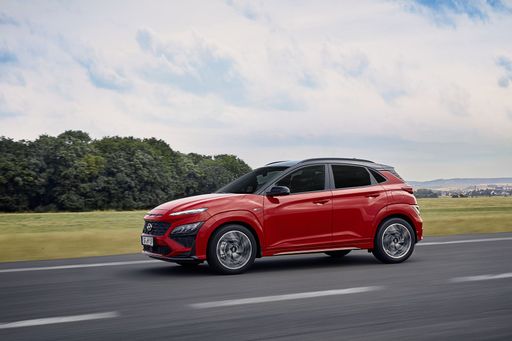
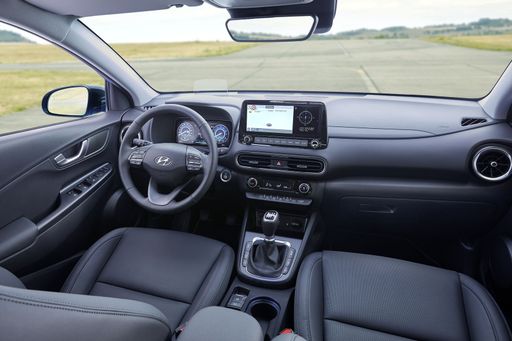
The Hyundai Kona is a compact crossover that pairs bold styling with practical everyday usability, offering a comfortable cabin and intuitive tech for modern drivers. Available in both conventional and electrified versions, Kona brings lively handling and strong value for buyers who want crossover versatility and standout character.

details
Toyota bZ4X
Hyundai Kona

Costs and Consumption

Price
36,800 - 51,000 £
Price
23,600 - 41,900 £
Consumption L/100km
-
Consumption L/100km
4.6 - 7 L/100km
Consumption kWh/100km
13.5 - 16.6 kWh/100km
Consumption kWh/100km
14.6 - 16.1 kWh/100km
Electric Range
444 - 591 km
Electric Range
380 - 510 km
Battery Capacity
-
Battery Capacity
-
co2
0 g/km
co2
0 - 163 g/km
Fuel tank capacity
-
Fuel tank capacity
-

Dimensions and Body

Body Type
SUV
Body Type
SUV
Seats
5
Seats
5
Doors
-
Doors
-
Curb weight
1,900 - 2,180 kg
Curb weight
1,370 - 1,773 kg
Trunk capacity
452 - 669 L
Trunk capacity
466 L
Length
-
Length
-
Width
1,860 mm
Width
1,825 mm
Height
-
Height
-
Max trunk capacity
-
Max trunk capacity
-
Payload
375 - 565 kg
Payload
420 - 490 kg

Engine and Performance

Engine Type
Electric
Engine Type
Petrol, Full Hybrid, Electric
Transmission
Automatic
Transmission
Manuel, Automatic
Transmission Detail
Reduction Gearbox
Transmission Detail
Manual Gearbox, Dual-Clutch Automatic, Reduction Gearbox
Drive Type
Front-Wheel Drive, All-Wheel Drive
Drive Type
Front-Wheel Drive, All-Wheel Drive
Power HP
167 - 380 HP
Power HP
115 - 204 HP
Acceleration 0-100km/h
4.4 - 8.6 s
Acceleration 0-100km/h
8.1 - 11.9 s
Max Speed
-
Max Speed
-
Torque
268 - 338 Nm
Torque
200 - 265 Nm
Number of Cylinders
-
Number of Cylinders
3 - 4
Power kW
123 - 280 kW
Power kW
85 - 150 kW
Engine capacity
-
Engine capacity
998 - 1,598 cm3

General

Model Year
2,025 - 2,026
Model Year
2025
CO2 Efficiency Class
A
CO2 Efficiency Class
D, C, E, F, A
Brand
Toyota
Brand
Hyundai
DriveDuel uses data analysis and artificial intelligence to evaluate vehicle data and create content. Content is regularly reviewed and improved. The displayed prices are estimates based on German list prices, adjusted to the respective country’s VAT. Country-specific registration taxes are not included. This information is not legally binding.