VS

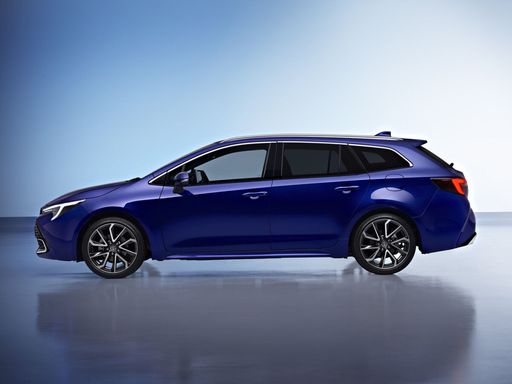
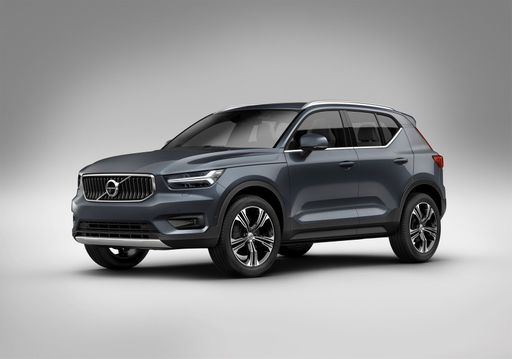
Toyota Corolla Touring Sports vs Volvo XC40 comparison

Compare performance (178 HP vs 197 HP), boot space and price (29,600 £ vs 41,900 £ ) at a glance. Find out which car is the better choice for you – Toyota Corolla Touring Sports or Volvo XC40?

Toyota Corolla Touring Sports vs Volvo XC40: Key differences

Toyota Corolla Touring Sports

4.4 (2 Reviews)
rate
  • considerably cheaper
  • substantially more efficient
  • barely quicker 0–100 km/h
  • somewhat lighter
details

Volvo XC40

5 (6 Reviews)
rate
  • very slightly more power
details

All details on performance, efficiency, range and trunk space can be found in the technical comparison below – including user reviews for both models.

By Achim Sedelmaier

Corolla Touring Sports

A Clash of Versatility: Toyota Corolla Touring Sports vs. Volvo XC40

In the ever-evolving automotive landscape, the choice between hatchbacks and SUVs has led to intriguing design variations. The Toyota Corolla Touring Sports and the Volvo XC40 represent two remarkable vehicles tailored to different preferences, yet both are exceptional in their own right. This comparison dives deep into the technical aspects and innovative features that set these cars apart while highlighting their strengths.
XC40

Design and Dimensions

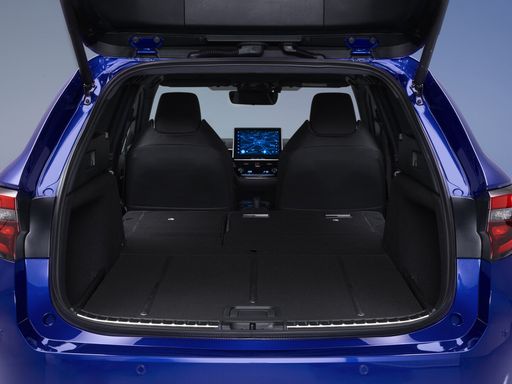
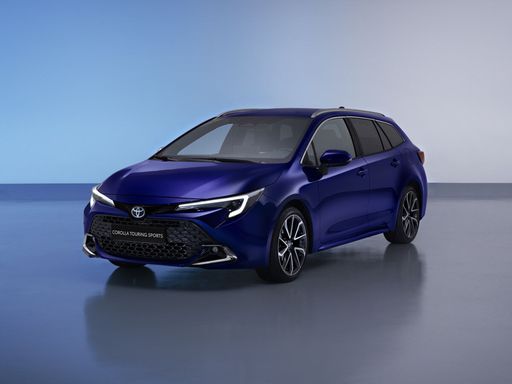
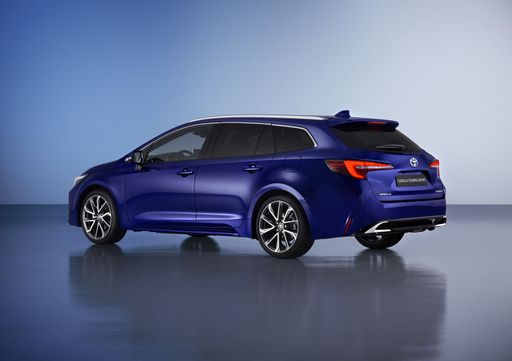
The Toyota Corolla Touring Sports showcases a sleek wagon design that blends functionality with style. With dimensions of 4650 mm in length, 1790 mm in width, and 1435 mm in height, it offers a spacious interior while maintaining a compact exterior. This makes it easier to maneuver in urban environments while providing ample trunk space of up to 596 liters.

In contrast, the Volvo XC40 exudes a rugged yet sophisticated SUV aesthetic. Measuring 4425 mm in length, 1863 mm in width, and 1652 mm in height, it stands taller and offers a commanding road presence. Though the XC40 has a smaller trunk capacity of 452 liters, its design allows for a versatile interior layout, accommodating various cargo needs.

Corolla Touring Sports

Engine and Performance

The heart of the Toyota Corolla Touring Sports lies in its hybrid engine options, producing up to 196 HP with a smooth CVT (Continuous Variable Transmission). It accelerates from 0 to 100 km/h in just 7.5 seconds, showcasing its efficiency and performance capabilities. With a fuel consumption of 4.4 L/100km and CO2 emissions of only 100 g/km, the Corolla is an environmentally friendly choice, ideal for eco-conscious drivers.

On the other side, the Volvo XC40 offers a petrol mild-hybrid engine, achieving a power output of 197 HP. Its dual-clutch automatic transmission enhances driving dynamics, allowing for a quick 0 to 100 km/h acceleration in 7.6 seconds. However, with a consumption rate of 6.5 L/100km and higher CO2 emissions of around 148 g/km, it’s clear that the XC40 is designed more around performance than efficiency.

XC40

Interior and Technology

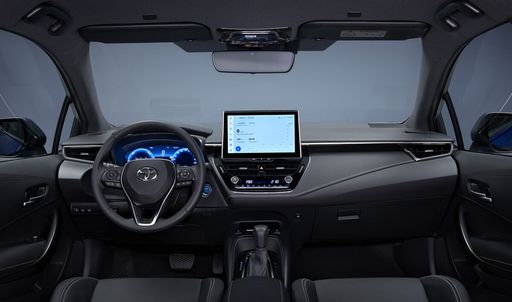
Stepping inside the Toyota Corolla Touring Sports reveals a thoughtfully designed cabin that focuses on practicality. It accommodates five passengers comfortably, with modern infotainment systems and driver assistance features designed to enhance safety and connectivity. Standard features include a touchscreen interface, supporting both Android Auto and Apple CarPlay.

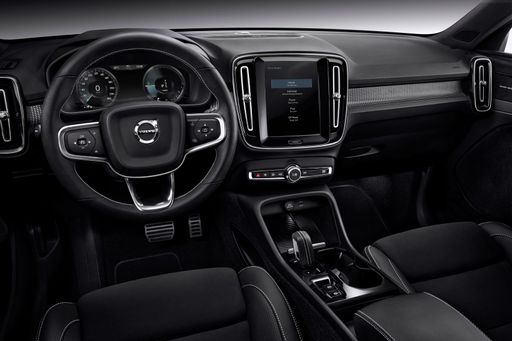
The Volvo XC40, recognized for its minimalist Scandinavian design, presents an upscale interior with premium materials and a plethora of advanced technology. The infotainment system in the XC40 is highly intuitive, featuring a large vertical touchscreen that centralizes controls and includes voice recognition for a seamless user experience. Additionally, advanced safety features are a hallmark of the Volvo brand, with numerous driver assistance offerings standard across the model.

Corolla Touring Sports

Safety and Innovation

In terms of safety, both models come equipped with high safety ratings and impressive safety technologies. The Toyota Corolla Touring Sports includes Toyota Safety Sense, which encompasses features such as adaptive cruise control, lane departure alert, and pre-collision systems. This suite underscores Toyota’s commitment to providing peace of mind for drivers and passengers alike.

The XC40, renowned for its safety credentials, includes Volvo's City Safety, which utilizes advanced sensors to detect potential hazards and aids in emergency braking. Furthermore, the XC40 features an innovative collision avoidance system, enhancing its already comprehensive safety suite.

XC40

Conclusion: Choosing Your Champion

The choice between the Toyota Corolla Touring Sports and the Volvo XC40 ultimately boils down to personal preferences and lifestyle needs. The Corolla Touring Sports stands tall for those prioritizing economy, practicality, and a low environmental impact, while the XC40 speaks to those seeking luxury, advanced technology, and a more commanding drive. Both vehicles bring unique strengths to the table, making them worthy contenders in today's versatile automotive marketplace.

Here’s where it gets real: The technical differences in detail

Corolla Touring Sports

Costs and Efficiency:

Looking at overall running costs, both models reveal some interesting differences in everyday economy.

Toyota Corolla Touring Sports is considerably cheaper – starting at 29,600 £ , while the Volvo XC40 costs 41,900 £ . That’s a price difference of around 12,300 £.

Fuel consumption also shows a difference: the Toyota Corolla Touring Sports uses 4.4 L/100km and is substantially more efficient than the Volvo XC40 with 6.5 L/100km. The difference is about 2.1 L/100km.

XC40

Engine and Performance:

Power, torque and acceleration are the classic benchmarks for car enthusiasts – and here, some clear differences start to show.

When it comes to engine power, the Volvo XC40 offers very slightly more power – delivering 197 HP compared to 178 HP. That’s roughly 19 HP more horsepower.

When accelerating from 0 to 100 km/h, the Toyota Corolla Touring Sports is barely quicker – completing the sprint in 7.5 s, while the Volvo XC40 takes 7.6 s. That’s about 0.1 s quicker.

Corolla Touring Sports

Space and Everyday Use:

Cabin size, boot volume and payload all play a role in everyday practicality. Here, comfort and flexibility make the difference.

Both vehicles offer seating for 5 people.

In terms of curb weight, Toyota Corolla Touring Sports is somewhat lighter – 1,485 kg compared to 1,688 kg. The difference is around 203 kg.

When it comes to payload, the Volvo XC40 carries somewhat more – 532 kg compared to 440 kg. That’s a difference of about 92 kg.

Who wins the race in the data check?

The Toyota Corolla Touring Sports is decisively ahead in the objective data comparison.
This result only shows which model scores more points on paper – not which of the two cars feels right for you.

from £29,600
Corolla Touring Sports

Toyota Corolla Touring Sports

  • Engine Type : Full Hybrid
  • Transmission : Automatic
  • Drive Type : Front-Wheel Drive
  • Power HP : 140 - 178 HP
  • Consumption L/100km : 4.4 L/100km
Toyota Corolla Touring Sports
Volvo XC40

Costs and Consumption

View detailed analysis

Engine and Performance

View detailed analysis

Dimensions and Body

View detailed analysis

Toyota Corolla Touring Sports

The Toyota Corolla Touring Sports is a sensible yet stylish estate that blends everyday practicality with Toyota's trademark reliability, making it the kind of car that quietly gets on with family life without drama. Inside it's cleverly packaged for luggage and kids' gear and feels calm and comfortable on the road — sensible rather than flashy, but with enough character to make daily drives more enjoyable.

details

Volvo XC40

The Volvo XC40 blends Scandinavian design with practical versatility, offering a compact luxury crossover that feels composed and easy to live with. It’s refined and focused on safety with a high-quality interior, making it a smart choice for daily city driving and weekend escapes.

details
Toyota Corolla Touring Sports
Volvo XC40

Costs and Consumption

Price
29,600 - 36,400 £
Price
41,900 - 46,100 £
Consumption L/100km
4.4 L/100km
Consumption L/100km
6.5 L/100km
Consumption kWh/100km
-
Consumption kWh/100km
-
Electric Range
-
Electric Range
-
Battery Capacity
-
Battery Capacity
-
co2
100 g/km
co2
148 g/km
Fuel tank capacity
43 L
Fuel tank capacity
-

Dimensions and Body

Body Type
Estate
Body Type
SUV
Seats
5
Seats
5
Doors
5
Doors
-
Curb weight
1,485 - 1,515 kg
Curb weight
1,688 kg
Trunk capacity
581 - 596 L
Trunk capacity
-
Length
4,650 mm
Length
-
Width
1,790 mm
Width
1,863 mm
Height
1,435 mm
Height
-
Max trunk capacity
1,591 - 1,606 L
Max trunk capacity
-
Payload
400 - 440 kg
Payload
532 kg

Engine and Performance

Engine Type
Full Hybrid
Engine Type
Petrol MHEV
Transmission
Automatic
Transmission
Automatic
Transmission Detail
CVT
Transmission Detail
Dual-Clutch Automatic
Drive Type
Front-Wheel Drive
Drive Type
Front-Wheel Drive
Power HP
140 - 178 HP
Power HP
163 - 197 HP
Acceleration 0-100km/h
7.5 - 9.2 s
Acceleration 0-100km/h
7.6 - 8.6 s
Max Speed
180 km/h
Max Speed
-
Torque
-
Torque
265 - 300 Nm
Number of Cylinders
4
Number of Cylinders
4
Power kW
103 - 131 kW
Power kW
120 - 145 kW
Engine capacity
1,798 - 1,987 cm3
Engine capacity
1,969 cm3

General

Model Year
2025
Model Year
2026
CO2 Efficiency Class
C
CO2 Efficiency Class
E
Brand
Toyota
Brand
Volvo
DriveDuel uses data analysis and artificial intelligence to evaluate vehicle data and create content. Content is regularly reviewed and improved. The displayed prices are estimates based on German list prices, adjusted to the respective country’s VAT. Country-specific registration taxes are not included. This information is not legally binding.