VS

Toyota Corolla vs Kia Niro comparison

Compare performance (178 HP vs 138 HP), boot space and price (28,600 £ vs 29,100 £ ) at a glance. Find out which car is the better choice for you – Toyota Corolla or Kia Niro?

Toyota Corolla vs Kia Niro: Key differences

Toyota Corolla

4.4 (2 Reviews)
rate
  • barely cheaper
  • noticeably more power
  • only slightly more efficient
  • clearly quicker 0–100 km/h
  • barely lighter
details

Kia Niro

4.5 (3 Reviews)
rate
  • a bit more trunk space
details

All details on performance, efficiency, range and trunk space can be found in the technical comparison below – including user reviews for both models.

By Achim Sedelmaier

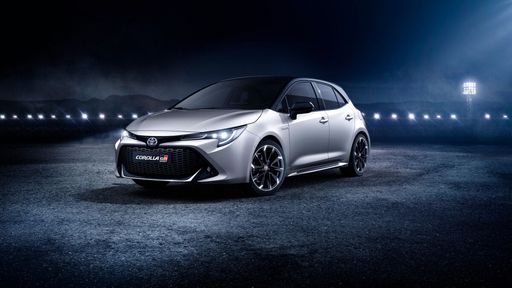
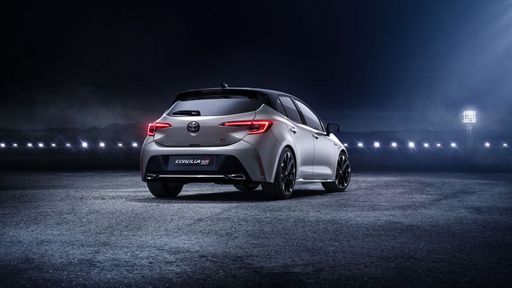
Corolla

Comparing Competitors: Kia Niro vs. Toyota Corolla

The compact SUV segment is heating up, and two notable contenders are making waves: the Kia Niro and the Toyota Corolla. As consumers seek efficiency and innovation, it's essential to dive into the technical aspects and innovations of these models to see how they stack up against each other.
Niro

Design and Body Type

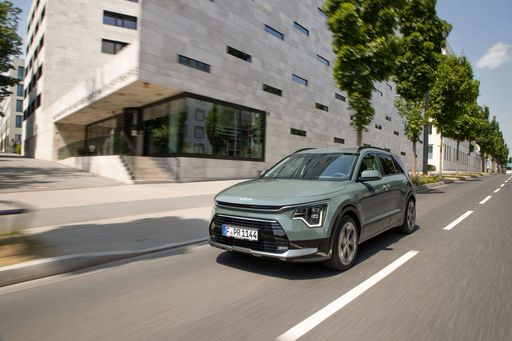
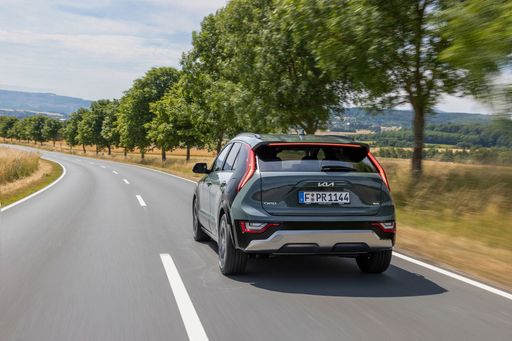
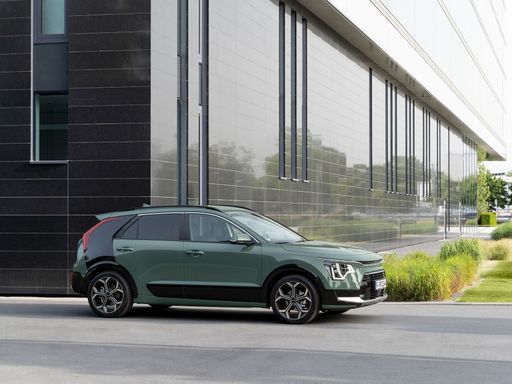
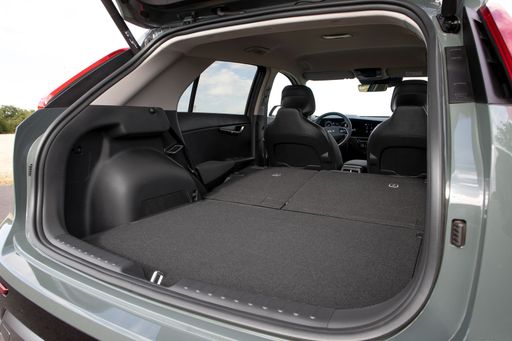
The Kia Niro presents itself as a compact SUV that boasts a modern and functional exterior. With a length of 4420 mm, width of 1825 mm, and a height of 1545 mm, it is designed for both style and practicality. The Niro offers a roomy trunk capacity of 451 liters, making it a great choice for families or those needing extra cargo space.

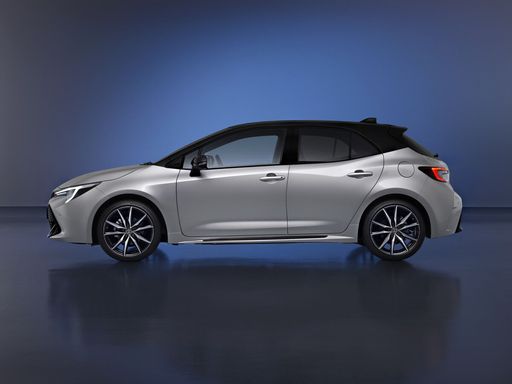
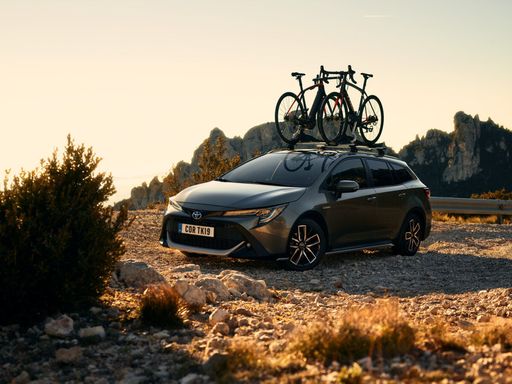
In contrast, the Toyota Corolla takes a sportier approach with its hatchback design. Measuring 4370 mm in length and 1790 mm in width, it provides a sleeker profile. Although the trunk space is smaller, at 361 liters, the Corolla's layout is efficient for urban drivers who prioritize maneuverability and style over maximum cargo capacity.

Corolla

Powertrains and Performance

When it comes to powertrains, the Kia Niro offers a choice between a full hybrid and a plug-in hybrid, producing an impressive 129 to 171 HP. The dual-clutch automatic transmission provides smooth gear changes, while the front-wheel drive configuration ensures stability on the road. Notably, the Niro features a torque rating of 265 Nm, enabling it to accelerate from 0-100 km/h in just 10.4 seconds for the plug-in hybrid variant.

The Toyota Corolla, however, also presents strong performance numbers. Its full hybrid engine delivers between 140 to 196 HP, making it slightly more powerful than the base Niro model while still maintaining efficiency with a consumption rating of 4.4 to 4.6 L/100 km. The Corolla uses a continuously variable transmission (CVT), allowing for seamless acceleration and a 0-100 km/h time of just 7.5 seconds in its top variant—a strong edge for those seeking thrill in their daily drives.

Niro

Efficiency and Environmental Impact

Fuel economy remains a significant factor for buyers. The Kia Niro excels in this category, featuring a remarkable combined consumption of only 4.4 L/100 km for its hybrid variants. Additionally, its CO2 emissions are impressively low at 100 g/km, positioning it as an environmentally friendly option.

The Toyota Corolla, while efficient, does slightly lag behind with a consumption figure of 4.4 to 4.6 L/100 km and the same CO2 output of 100 g/km in its hybrid models. However, the Corolla's prowess in performance and comfort may offset this minor disadvantage for consumers prioritizing driving dynamics.

Corolla

Technological Innovations

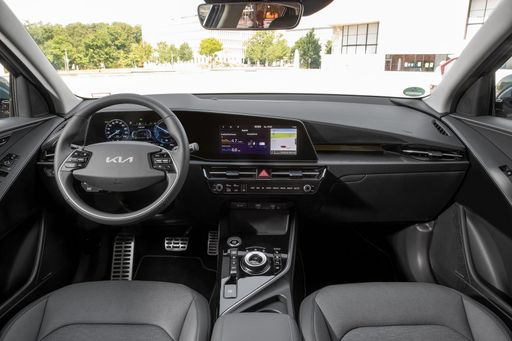
Both vehicles are equipped with a suite of technological features. The Kia Niro incorporates advanced connectivity options, including a touchscreen infotainment system, Apple CarPlay, and Android Auto, providing seamless smartphone integration. Additionally, the Niro is outfitted with numerous driver-assistance features that bolster safety and convenience.

The Toyota Corolla follows suit with its Toyota Safety Sense suite, which includes adaptive cruise control, lane departure alerts, and automatic high beams. These innovations focus on enhancing driver confidence and safety on the road, making the Corolla a reliable choice for families and safety-conscious drivers alike.

Niro

Conclusion: Which One Reigns Supreme?

In conclusion, both the Kia Niro and Toyota Corolla have their merits and appeal to different types of consumers. The Niro stands out with its SUV practicality, superior cargo space, and environmentally friendly features, making it ideal for families and eco-conscious buyers. On the other hand, the Corolla impresses with its sporty dynamics, advanced performance capabilities, and robust safety features, appealing to those who desire both style and substance.

Ultimately, the choice between these two remarkable vehicles boils down to personal preference and lifestyle requirements. Whether you prefer the practicality of an SUV or the sporty aesthetics of a hatchback, both the Niro and Corolla offer compelling reasons to take them for a spin.

Here’s where it gets real: The technical differences in detail

Corolla

Costs and Efficiency:

When it comes to price and running costs, the biggest differences usually appear. This is often where you see which car fits your budget better in the long run.

Toyota Corolla is barely cheaper – starting at 28,600 £ , while the Kia Niro costs 29,100 £ . That’s a price difference of around 557 £.

Fuel consumption also shows a difference: the Toyota Corolla uses 4.4 L/100km and is only slightly more efficient than the Kia Niro with 4.5 L/100km. The difference is about 0.1 L/100km.

Niro

Engine and Performance:

Power, torque and acceleration say a lot about how a car feels on the road. This is where you see which model delivers more driving dynamics.

When it comes to engine power, the Toyota Corolla offers noticeably more power – delivering 178 HP compared to 138 HP. That’s roughly 40 HP more horsepower.

When accelerating from 0 to 100 km/h, the Toyota Corolla is clearly quicker – completing the sprint in 7.5 s, while the Kia Niro takes 11.1 s. That’s about 3.6 s quicker.

Corolla

Space and Everyday Use:

Beyond pure performance, interior space and usability matter most in daily life. This is where you see which car is more practical and versatile.

Both vehicles offer seating for 5 people.

In terms of curb weight, Toyota Corolla is barely lighter – 1,420 kg compared to 1,474 kg. The difference is around 54 kg.

Looking at boot space, the Kia Niro offers a bit more boot space – 451 L compared to 361 L. That’s a difference of about 90 L.

When it comes to payload, the Kia Niro carries marginally more – 466 kg compared to 450 kg. That’s a difference of about 16 kg.

Who wins the race in the data check?

The Toyota Corolla is far ahead overall in the objective data comparison.
This result only shows which model scores more points on paper – not which of the two cars feels right for you.

from £28,600
Corolla

Toyota Corolla

  • Engine Type Full Hybrid
  • Transmission Automatic
  • Drive Type Front-Wheel Drive
  • Power HP 140 - 178 HP
  • Consumption L/100km 4.4 L/100km
Toyota Corolla
Kia Niro

Costs and Consumption

View detailed analysis

Engine and Performance

View detailed analysis

Dimensions and Body

View detailed analysis

Toyota Corolla

The Corolla is a reliable, no-nonsense compact car known for its practicality and composed ride. It’s economical to run, easy to maintain, and suits daily commuting while holding its value well.

details

Kia Niro

The Kia Niro is a practical crossover that blends economy and everyday versatility without sacrificing comfort. With a roomy, well-laid-out cabin and calm, composed handling, it’s an easy-to-live-with choice for commuters and families.

details
Toyota Corolla
Kia Niro

Costs and Consumption

Price
28,600 - 34,900 £
Price
29,100 - 33,800 £
Consumption L/100km
4.4 L/100km
Consumption L/100km
4.5 - 4.9 L/100km
Consumption kWh/100km
-
Consumption kWh/100km
-
Electric Range
-
Electric Range
-
Battery Capacity
-
Battery Capacity
-
co2
100 g/km
co2
102 - 111 g/km
Fuel tank capacity
43 L
Fuel tank capacity
-

Dimensions and Body

Body Type
Hatchback
Body Type
SUV
Seats
5
Seats
5
Doors
5
Doors
-
Curb weight
1,420 - 1,460 kg
Curb weight
1,474 kg
Trunk capacity
313 - 361 L
Trunk capacity
451 L
Length
4,370 mm
Length
-
Width
1,790 mm
Width
1,825 mm
Height
1,435 mm
Height
-
Max trunk capacity
1,004 - 1,052 L
Max trunk capacity
-
Payload
400 - 450 kg
Payload
466 kg

Engine and Performance

Engine Type
Full Hybrid
Engine Type
Full Hybrid
Transmission
Automatic
Transmission
Automatic
Transmission Detail
CVT
Transmission Detail
Dual-Clutch Automatic
Drive Type
Front-Wheel Drive
Drive Type
Front-Wheel Drive
Power HP
140 - 178 HP
Power HP
138 HP
Acceleration 0-100km/h
7.5 - 9.2 s
Acceleration 0-100km/h
11.1 - 11.4 s
Max Speed
180 km/h
Max Speed
-
Torque
-
Torque
265 Nm
Number of Cylinders
4
Number of Cylinders
4
Power kW
103 - 131 kW
Power kW
102 kW
Engine capacity
1,798 - 1,987 cm3
Engine capacity
1,580 cm3

General

Model Year
2025
Model Year
2025
CO2 Efficiency Class
C
CO2 Efficiency Class
C
Brand
Toyota
Brand
Kia
DriveDuel uses data analysis and artificial intelligence to evaluate vehicle data and create content. Content is regularly reviewed and improved. The displayed prices are estimates based on German list prices, adjusted to the respective country’s VAT. Country-specific registration taxes are not included. This information is not legally binding.