VS

Toyota Proace Bus vs Citroen Spacetourer comparison

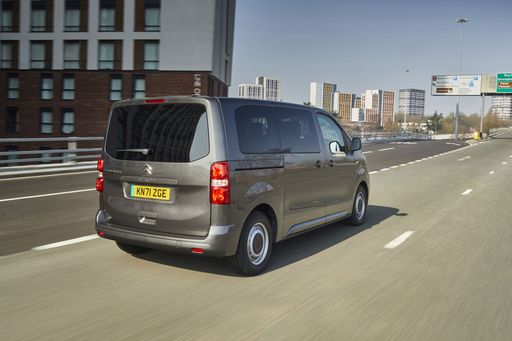
Compare performance (180 HP vs 180 HP), boot space and price (31,600 £ vs 35,100 £ ) at a glance. Find out which car is the better choice for you – Toyota Proace Bus or Citroen Spacetourer?

Toyota Proace Bus vs Citroen Spacetourer: Key differences

Toyota Proace Bus

  • somewhat cheaper
  • very slightly more efficient
  • marginally lighter
details

Citroen Spacetourer

  • barely more efficient
  • very slightly more electric range
  • noticeably quicker 0–100 km/h
  • substantially more trunk space
details

By Achim Sedelmaier

Proace Bus

Citroen Spacetourer vs Toyota Proace Bus: The Ultimate Family and Business Ride Comparison

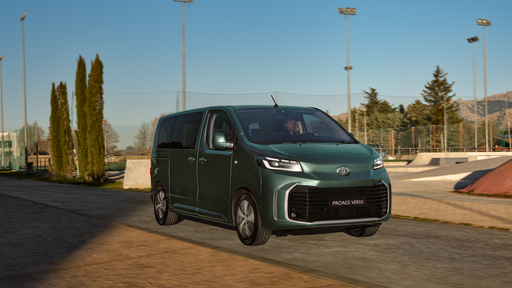
In the ever-evolving world of multi-passenger vehicles, two front-runners have emerged for 2024: the Citroen Spacetourer and the Toyota Proace Bus. While both are titans in their segment, packed with technological advancements and designed for comfort and utility, there are distinct features that set them apart. Let's dive into the details to determine which vehicle might align more with your needs.
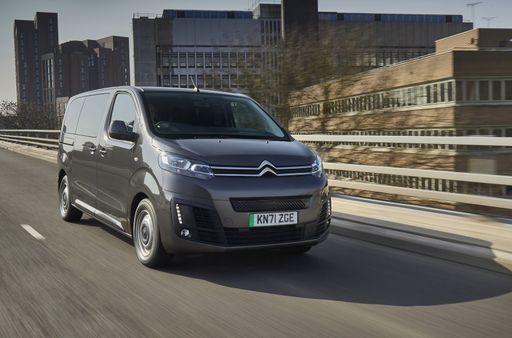
Spacetourer

Design and Dimensions

Both the Spacetourer and the Proace Bus are created with spaciousness in mind, featuring similar dimensions with a length of 4983 mm to 5333 mm, a width of 1920 mm, and a height of 1890 mm. These dimensions make them ideal for both family trips and business purposes.

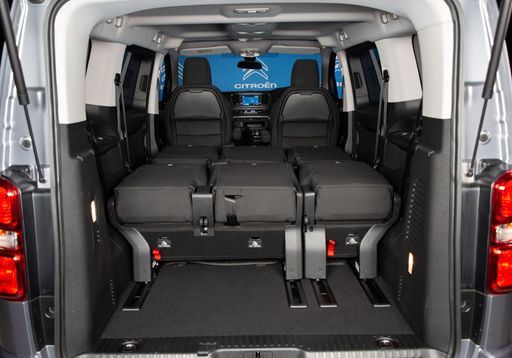
The Citroen Spacetourer offers a trunk capacity between 1624 L and 2011 L, providing ample room for luggage or equipment. In contrast, the Proace Bus doesn't primarily focus on trunk capacity, but rather on versatile seating arrangements, making it a great choice for those who often transport passengers.

Engine and Performance

Under the hood, both vehicles offer a choice between electric and diesel engines. Each vehicle's diesel variant features a 1997 cm3 engine capacity. The Spacetourer provides a slightly higher power output of up to 177 HP and torque of 400 Nm, compared to the Proace Bus's range from 136 HP to 177 HP and torque up to 400 Nm.

In terms of speed and acceleration, the Spacetourer shows a competitive edge, with an acceleration from 0-100 km/h in 10.6 to 12.1 seconds and reaching a max speed of up to 185 km/h. The Proace Bus posts a slightly slower acceleration time and max speed peaking at 170 km/h.

Fuel Efficiency and Range

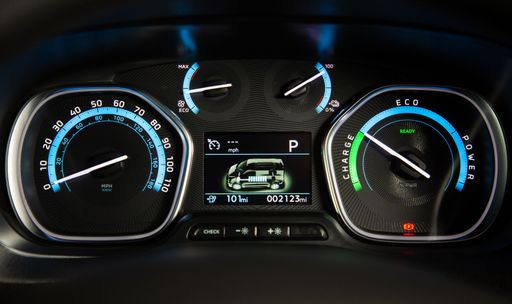
Both vehicles boast environmentally friendly variants, with zero CO2 emissions for the electric models. The Citroen Spacetourer offers an electric range between 217 km and 351 km, whereas the Toyota Proace's electric range is between 218 km and 343 km. Fuel consumption stands nearly parallel, with both models consuming around 7.3 to 7.4 L/100 km for their diesel iterations.

Seating and Comfort

Seating is a highlight for both vehicles, accommodating up to 9 passengers comfortably. The Spacetourer and Proace Bus stand out for their multi-flex seating arrangements, making them adaptable for either a full passenger load or increased cargo space. However, the Proace Bus offers various configurations down to 5 seats, adding a layer of flexibility for smaller groups or businesses needing adaptable space.

Innovations and Technologies

Technologically, both vehicles are equipped with modern conveniences such as automatic transmission options and front-wheel drive systems. They also feature advanced driver assistance systems, enhancing safety and ease of handling, especially in urban environments.

Conclusion

The choice between the Citroen Spacetourer and the Toyota Proace Bus largely depends on specific needs. The Spacetourer excels with its balance of power and speed, making it a dynamic choice for those who prioritize performance. On the other hand, the Proace Bus's flexible seating and slightly larger payload capacity offer versatility for varying passenger and cargo demands.

Both vehicles represent the pinnacle of design and functionality in the bus segment. Whether for family adventures or business transport, these vehicles promise reliability, comfort, and efficiency.

Here’s where it gets real: The technical differences in detail

Proace Bus

Costs and Efficiency:

Looking at overall running costs, both models reveal some interesting differences in everyday economy.

Toyota Proace Bus is somewhat cheaper – starting at 31,600 £ , while the Citroen Spacetourer costs 35,100 £ . That’s a price difference of around 3,518 £.

Fuel consumption also shows a difference: the Toyota Proace Bus uses 6.5 L/100km and is very slightly more efficient than the Citroen Spacetourer with 6.8 L/100km. The difference is about 0.3 L/100km.

In terms of energy consumption, the Citroen Spacetourer is barely more efficient: consuming 23.7 kWh/100km compared to 24.2 kWh/100km for the Toyota Proace Bus. That’s a difference of about 0.5 kWh/100km.

As for electric range, the Citroen Spacetourer offers very slightly more range – reaching up to 351 km, about 8 km more than the Toyota Proace Bus.

Spacetourer

Engine and Performance:

Under the bonnet, it becomes clear which model is tuned for sportiness and which one takes the lead when you hit the accelerator.

Both models deliver identical power – 180 HP each.

When accelerating from 0 to 100 km/h, the Citroen Spacetourer is noticeably quicker – completing the sprint in 11 s, while the Toyota Proace Bus takes 13.3 s. That’s about 2.3 s quicker.

Both models offer the same torque – 400 Nm.

Space and Everyday Use:

Cabin size, boot volume and payload all play a role in everyday practicality. Here, comfort and flexibility make the difference.

Both vehicles offer seating for 9 people.

In terms of curb weight, Toyota Proace Bus is marginally lighter – 1,835 kg compared to 1,953 kg. The difference is around 118 kg.

Looking at boot space, the Citroen Spacetourer offers substantially more boot space – 2,011 L compared to 0 L. That’s a difference of about 2,011 L.

When it comes to payload, the Toyota Proace Bus carries noticeably more – 1,265 kg compared to 914 kg. That’s a difference of about 351 kg.

Who wins the race in the data check?

The Citroen Spacetourer is far ahead overall in the objective data comparison.
This result only shows which model scores more points on paper – not which of the two cars feels right for you.

from £35,100
Spacetourer

Citroen Spacetourer

  • Engine Type : Electric, Diesel
  • Transmission : Automatic
  • Drive Type : Front-Wheel Drive
  • Power HP : 136 - 180 HP
  • Consumption L/100km : 6.8 L/100km
  • Consumption kWh/100km : 23.7 - 24 kWh/100km
  • Electric Range : 219 - 351 km
Toyota Proace Bus
Citroen Spacetourer

Costs and Consumption

View detailed analysis

Engine and Performance

View detailed analysis

Dimensions and Body

View detailed analysis

Toyota Proace Bus

The Toyota Proace Bus is a pragmatic people‑mover that swallows passengers and luggage with the kind of everyday practicality fleet managers and large families will appreciate. It may not thrill the enthusiast, but its sensible layout, sturdy build and Toyota badge make it a dependable, no-nonsense choice for anyone needing space and reliability rather than flash.

details

Citroen Spacetourer

The Citroën SpaceTourer is a quietly practical people carrier that turns the chaos of family transport into a calm, sensible experience. With clever interior packaging and a relaxed ride it makes long trips surprisingly pleasant — even the backseat critics might stop grumbling.

details
Toyota Proace Bus
Citroen Spacetourer

Costs and Consumption

Price
31,600 - 57,100 £
Price
35,100 - 44,900 £
Consumption L/100km
6.5 - 6.7 L/100km
Consumption L/100km
6.8 L/100km
Consumption kWh/100km
24.2 - 24.3 kWh/100km
Consumption kWh/100km
23.7 - 24 kWh/100km
Electric Range
218 - 343 km
Electric Range
219 - 351 km
Battery Capacity
-
Battery Capacity
-
co2
0 - 177 g/km
co2
0 - 180 g/km
Fuel tank capacity
-
Fuel tank capacity
-

Dimensions and Body

Body Type
Bus
Body Type
Bus
Seats
5 - 9
Seats
8 - 9
Doors
-
Doors
-
Curb weight
1,835 - 2,140 kg
Curb weight
1,953 - 2,211 kg
Trunk capacity
0 L
Trunk capacity
1,624 - 2,011 L
Length
-
Length
-
Width
1,920 mm
Width
1,920 mm
Height
-
Height
-
Max trunk capacity
-
Max trunk capacity
-
Payload
825 - 1,265 kg
Payload
877 - 914 kg

Engine and Performance

Engine Type
Electric, Diesel
Engine Type
Electric, Diesel
Transmission
Automatic, Manuel
Transmission
Automatic
Transmission Detail
Reduction Gearbox, Manual Gearbox, Automatic Gearbox
Transmission Detail
Reduction Gearbox, Automatic Gearbox
Drive Type
Front-Wheel Drive
Drive Type
Front-Wheel Drive
Power HP
136 - 180 HP
Power HP
136 - 180 HP
Acceleration 0-100km/h
13.3 s
Acceleration 0-100km/h
11 - 12.1 s
Max Speed
-
Max Speed
-
Torque
260 - 400 Nm
Torque
260 - 400 Nm
Number of Cylinders
4
Number of Cylinders
4
Power kW
100 - 132 kW
Power kW
100 - 132 kW
Engine capacity
2,184 cm3
Engine capacity
2,184 cm3

General

Model Year
2,024 - 2,025
Model Year
2,024 - 2,025
CO2 Efficiency Class
A, F, G
CO2 Efficiency Class
A, G
Brand
Toyota
Brand
Citroen
DriveDuel uses data analysis and artificial intelligence to evaluate vehicle data and create content. Content is regularly reviewed and improved. The displayed prices are estimates based on German list prices, adjusted to the respective country’s VAT. Country-specific registration taxes are not included. This information is not legally binding.